Kirjojen hintavertailu. Mukana 11 627 469 kirjaa ja 12 kauppaa.

Kirjahaku

Etsi kirjoja tekijän nimen, kirjan nimen tai ISBN:n perusteella.

4 kirjaa tekijältä Robert A. Paul

Mixed Messages

Mixed Messages

Robert A. Paul

University of Chicago Press
2015
nidottu
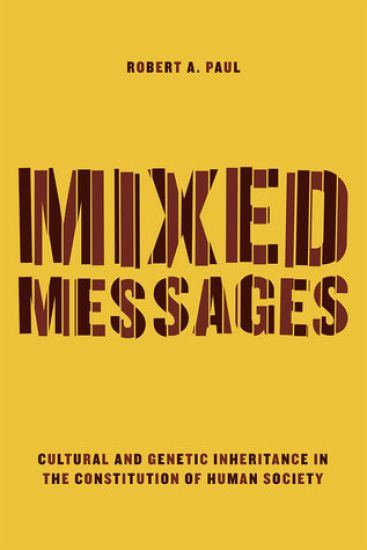
As social and symbolic animals - animals with language and systems of signs - humans are informed by two different kinds of heritage, one biological, the other cultural. Scholars have tended to study our genetic and symbolic lineages separately, but in recent years some have begun to explore them together, offering a "dual inheritance theory." In this book, Robert A Paul offers an entirely new and original consideration of our dual inheritance, going deep inside an extensive ethnographic record to outline a fascinating relationship between our genetic codes and symbolic systems. Examining a wide array of cultures, Paul reveals how the inherent tensions between these two modes of transmission generate many of the features of human society, such as marriage rules, initiation rituals, gender asymmetry, and sexual symbolism. Exploring differences in the requirements, range, and agendas of genetic and symbolic reproduction, he shows that a properly conceived dual inheritance model does a better job of accounting for the distinctive character of actual human societies than either evolutionary or sociocultural construction theories can do alone. Ultimately this book offers a powerful call for a synthesis of the traditions inspired by Darwin, Durkheim, and Freud-one that is critically necessary if we are to advance our understanding of human social life.
Moses and Civilization

Moses and Civilization

Robert A. Paul

Yale University Press
2013
pokkari
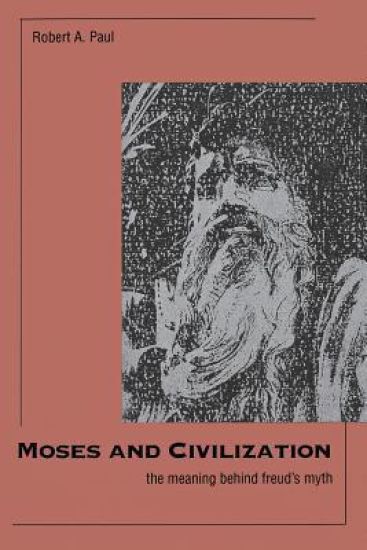
Freud's major cultural books, Totem and Taboo and Moses and Monotheism, have long been viewed as failed attempts at historical reconstruction. This book, by an anthropologist and practicing psychoanalyst, offers a brilliant reinterpretation of these works, presenting them instead as versions and unwitting analyses of the great mythic narrative underlying Judeo-Christian civilization, found principally in the Five Books of Moses.Synthesizing aspects of structural anthropology, symbolic anthropology, evolutionary theory, and psychoanalysis, Robert A. Paul reveals the numerous parallels between Freud's myth of the primal horde and the Torah text. He shows how the primal-horde scenario is the basis for the Christian myth of the life and death of Jesus. And he details the way Freud's myth corresponds to the unconscious fantasy structure of the obsessional personality—a style of personality dynamics Paul sees as essential to maintaining the bureaucratic institutions that make up Western civilization's most distinctive features. Paul thus corrects and completes Freud's project, creating a valid psychoanalytic account of Western civilization that rests not on faulty speculation, as Freud's did, but on a detailed reading of the biblical text and of the legends, folklore, commentaries, and social practices surrounding it.
Our Two-Track Minds

Our Two-Track Minds

Robert A. Paul

Bloomsbury Academic USA
2021
sidottu
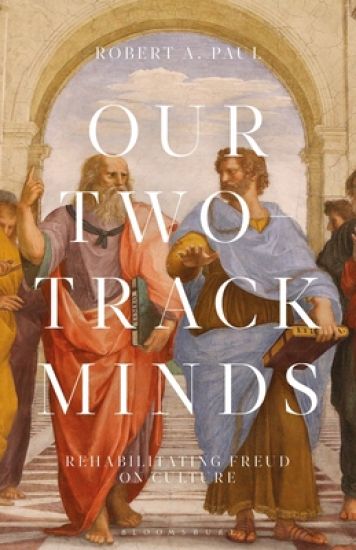
While many of Freud’s original formulations have required either revision or rejection and replacement with newer models, his cultural books, such as Civilization and Its Discontents and Totem and Taboo, though extremely influential in the early part of the 20th century, have more recently been either neglected or else dismissed as long-outdated fantasies. Robert A. Paul shows that Freud's ideas in these books, and his thinking on how human society is possible, given the unpromising materials out of which it is constructed (i.e. human beings), can appear in a different and more favorable light when viewed through the lens of contemporary anthropology, cultural studies, and evolutionary theory.
Our Two-Track Minds

Our Two-Track Minds

Robert A. Paul

Bloomsbury Academic USA
2021
nidottu
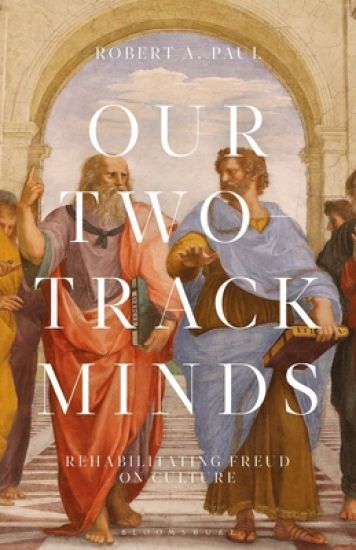
While many of Freud’s original formulations have required either revision or rejection and replacement with newer models, his cultural books, such as Civilization and Its Discontents and Totem and Taboo, though extremely influential in the early part of the 20th century, have more recently been either neglected or else dismissed as long-outdated fantasies. Robert A. Paul shows that Freud's ideas in these books, and his thinking on how human society is possible, given the unpromising materials out of which it is constructed (i.e. human beings), can appear in a different and more favorable light when viewed through the lens of contemporary anthropology, cultural studies, and evolutionary theory.