Kirjojen hintavertailu. Mukana 12 016 292 kirjaa ja 12 kauppaa.

Kirjahaku

Etsi kirjoja tekijän nimen, kirjan nimen tai ISBN:n perusteella.

4 kirjaa tekijältä Robert A. Rubinstein

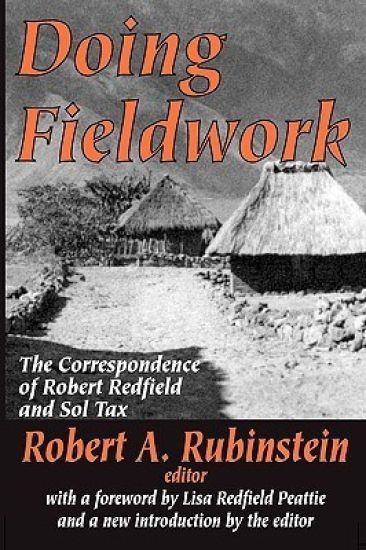
Doing Fieldwork

Doing Fieldwork

Robert A. Rubinstein

Transaction Publishers
2001
nidottu
Prior to the 1930s the highlands of Guatemala were largely undescribed, except in travelogues. Just two decades later, the highlands had become one of the most anthropologically well-investigated areas of the world. This is largely due to the research that Robert Redfield and Sol Tax carried out between 1934 and 1941. Separately and together, Redfield and Tax anticipated and guided anthropological investigations of people living in peasant and urban communities in other areas of the world. Their work helped to define the major outlines of research in the 1970s, and since then much writing about the region has been formulated in critical response to the Redfield-Tax program.Not coincidentally, since the mid-1970s anthropology has been caught up in a wave of self-doubt about the status of fieldwork and the authority of ethnographic description. This critical stance has often cast ethnography as a creative, literary enterprise. This volume presents a timely view of the process of ethnography as carried out by two of its early practitioners. Containing a wealth of ethnographic detail, the book reveals how Redfield and Tax developed and tested ethnological hypotheses, and it allows us to follow the development of their major theoretical statements. The result is an exceptionally clear picture of the process of ethnography. Redfield and Tax emerge as rigorous and sensitive observers of social life whose observations bear importantly on contemporary understandings of the ethnology of Guatemala and the enterprise of anthropology. This book will be of interest to students of method and theory in ethnography, Latin Americanists, and other professionals interested in the history of idea.
Doing Fieldwork

Doing Fieldwork

Robert A. Rubinstein

Routledge
2017
sidottu
Prior to the 1930s the highlands of Guatemala were largely undescribed, except in travelogues. Just two decades later, the highlands had become one of the most anthropologically well-investigated areas of the world. This is largely due to the research that Robert Redfield and Sol Tax carried out between 1934 and 1941. Separately and together, Redfield and Tax anticipated and guided anthropological investigations of people living in peasant and urban communities in other areas of the world. Their work helped to define the major outlines of research in the 1970s, and since then much writing about the region has been formulated in critical response to the Redfield-Tax program.Not coincidentally, since the mid-1970s anthropology has been caught up in a wave of self-doubt about the status of fieldwork and the authority of ethnographic description. This critical stance has often cast ethnography as a creative, literary enterprise. This volume presents a timely view of the process of ethnography as carried out by two of its early practitioners. Containing a wealth of ethnographic detail, the book reveals how Redfield and Tax developed and tested ethnological hypotheses, and it allows us to follow the development of their major theoretical statements. The result is an exceptionally clear picture of the process of ethnography. Redfield and Tax emerge as rigorous and sensitive observers of social life whose observations bear importantly on contemporary understandings of the ethnology of Guatemala and the enterprise of anthropology. This book will be of interest to students of method and theory in ethnography, Latin Americanists, and other professionals interested in the history of idea.

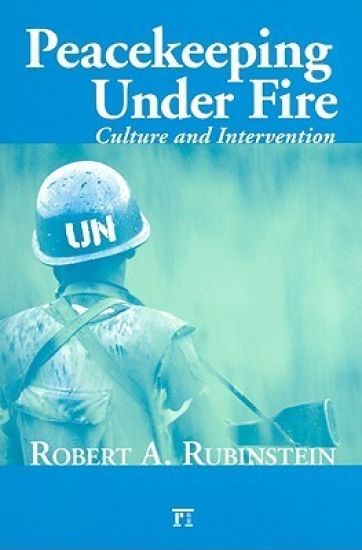
Peacekeeping Under Fire

Peacekeeping Under Fire

Robert A. Rubinstein

Paradigm
2008
sidottu
The international community increasingly responds to civil wars, humanitarian crises, and other intrastate conflicts through the instrument of UN peacekeeping. Nearly all of these interventions take place in non-Western areas and involve interactions among militaries and nongovernmental organizations from all around the globe. In this wide-ranging book, Rubinstein draws on decades of his own research on peacekeeping, and on other current and historical cases, to develop a broad understanding of the roles that culture plays in peacekeeping's success or failure. Peacekeeping under Fire shows that cultural considerations are key elements at all levels of peacekeeping operations. Culture influences what happens between peacekeepers and local populations, how military and nongovernmental organizations interact, and even how missions are planned and authorized. Peacekeeping under Fire analyzes how political symbolism and ritual are critical to peacekeeping and demonstrates how questions of power, identity, and political perception emerge from the cultural context of peacekeeping.
Peacekeeping Under Fire

Peacekeeping Under Fire

Robert A. Rubinstein

Paradigm
2008
nidottu
The international community increasingly responds to civil wars, humanitarian crises, and other intrastate conflicts through the instrument of UN peacekeeping. Nearly all of these interventions take place in non-Western areas and involve interactions among militaries and nongovernmental organizations from all around the globe. In this wide-ranging book, Rubinstein draws on decades of his own research on peacekeeping, and on other current and historical cases, to develop a broad understanding of the roles that culture plays in peacekeeping's success or failure. Peacekeeping under Fire shows that cultural considerations are key elements at all levels of peacekeeping operations. Culture influences what happens between peacekeepers and local populations, how military and nongovernmental organizations interact, and even how missions are planned and authorized. Peacekeeping under Fire analyzes how political symbolism and ritual are critical to peacekeeping and demonstrates how questions of power, identity, and political perception emerge from the cultural context of peacekeeping.