Kirjojen hintavertailu. Mukana 12 390 323 kirjaa ja 12 kauppaa.

Kirjahaku

Etsi kirjoja tekijän nimen, kirjan nimen tai ISBN:n perusteella.

26 kirjaa tekijältä Robert A. Wilson

Kin Matters

Kin Matters

Robert A. Wilson

OXFORD UNIVERSITY PRESS INC
2026
sidottu
Kin and kinship matter to us. We are social creatures and our kin or relatives are typically high on the list of those most important to us. Kin are those we care for and who care for us. Our family ties provide a sense of where and with whom we belong. Kin matters also impose boundaries on who we relate to and how, including in sexual and other intimate matters. The study of kinship has been a cornerstone of anthropology throughout its history, but kin matters matter beyond the confines of any academic discipline. Kin Matters: Relational Beings in the Fragile Sciences examines three related themes in the philosophy of anthropology concerning kin matters: the nature of relations, incest and its avoidance, and the study of kinship in cultural anthropology. It develops an integrative framework for thinking about kin matters recognizing that that there should be much more fluidity between the cognitive, biological, and social sciences--the fragile sciences--than one typically finds both in those sciences and in philosophical reflection on them. Along the way, Kin Matters offers a novel account of relations, challenges culture-first explanations of incest avoidance, and advocates for a redirection in the study of kinship. Kin Matters begins by reflecting on our standing as relational beings. We are creatures who actively relate to one another and our worlds to build social and other relationships. Much of that activity is biologically and psychologically mediated and so there is a ready-made place for each of the cognitive, biological, and social sciences in understanding ourselves as relational beings. We are also relatives: we have parents and often enough we have siblings and children. Kinship is something that changes over the course of our lives, but it is there literally from start to end. No wonder anthropologists early on made kin and the study of kinship pillars of their discipline. Yet current views of kinship in anthropology express a wariness of appeals to biology and psychology, and cultural anthropology has long pursued a separatist research strategy in kin matters. Kin Matters opens the way for a more integrative alternative.
Graphs, Colourings and the Four-Colour Theorem

Graphs, Colourings and the Four-Colour Theorem

Robert A. Wilson

Oxford University Press
2002
sidottu
The four-colour theorem is one of the famous problems of mathematics, that frustrated generations of mathematicians from its birth in 1852 to its solution (using substantial assistance from electronic computers) in 1976. The theorem asks whether four colours are sufficient to colour all conceivable maps, in such a way that countries with a common border are coloured with different colours. The book discusses various attempts to solve this problem, and some of the mathematics which developed out of these attempts. Much of this mathematics has developed a life of its own, and forms a fascinating part of the subject now known as graph theory. The book is designed to be self-contained, and develops all the graph-theoretical tools needed as it goes along. It includes all the elementary graph theory that should be included in an introduction to the subject, before concentrating on specific topics relevant to the four-colour problem. Part I covers basic graph theory, Euler's polyhedral formula, and the first published false `proof' of the four-colour theorem. Part II ranges widely through related topics, including map-colouring on surfaces with holes, the famous theorems of Kuratowski, Vizing, and Brooks, the conjectures of Hadwiger and Hajos, and much more besides. In Part III we return to the four-colour theorem, and study in detail the methods which finally cracked the problem.
Graphs, Colourings and the Four-Colour Theorem

Graphs, Colourings and the Four-Colour Theorem

Robert A. Wilson

Oxford University Press
2002
nidottu
The four-colour theorem is one of the famous problems of mathematics, that frustrated generations of mathematicians from its birth in 1852 to its solution (using substantial assistance from electronic computers) in 1976. The theorem asks whether four colours are sufficient to colour all conceivable maps, in such a way that countries with a common border are coloured with different colours. The book discusses various attempts to solve this problem, and some of the mathematics which developed out of these attempts. Much of this mathematics has developed a life of its own, and forms a fascinating part of the subject now known as graph theory. The book is designed to be self-contained, and develops all the graph-theoretical tools needed as it goes along. It includes all the elementary graph theory that should be included in an introduction to the subject, before concentrating on specific topics relevant to the four-colour problem. Part I covers basic graph theory, Euler's polyhedral formula, and the first published false `proof' of the four-colour theorem. Part II ranges widely through related topics, including map-colouring on surfaces with holes, the famous theorems of Kuratowski, Vizing, and Brooks, the conjectures of Hadwiger and Hajos, and much more besides. In Part III we return to the four-colour theorem, and study in detail the methods which finally cracked the problem.
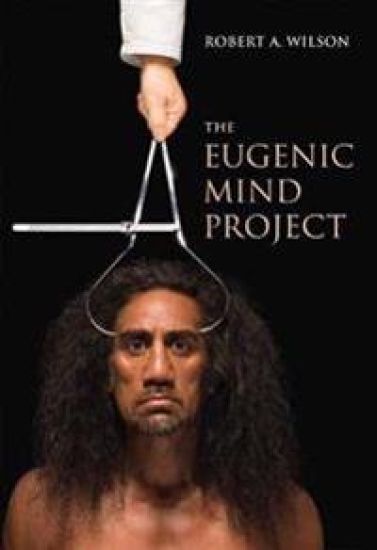
The Eugenic Mind Project

The Eugenic Mind Project

Robert A. Wilson

MIT Press
2021
nidottu
Part science and part social movement, eugenics emerged in the late nineteenth century as a tool for human improvement. In response to perceived threats of criminality, moral degeneration, feeble-mindedness, and "the rising tide of color," eugenic laws and social policies aimed to better the human race by regulating reproductive choice through science and technology. In this book, Rob Wilson examines eugenic thought and practice--from forced sterilization to prenatal screening--drawing on his experience working with eugenics survivors. Using the social sciences' standpoint theory as a framework to understand the intersection of eugenics, disability, social inclusiveness, and human variation, Wilson focuses on those who have lived through a eugenic past and those confronted by the legacy of eugenic thinking today. By doing so, he brings eugenics from the distant past to the ongoing present. Wilson discusses such topics as the conceptualization of eugenic traits; the formulation of laws regulating immigration and marriage and requiring sexual sterilization; the depiction of the targets of eugenics as "subhuman"; the systematic construction of a concept of normality; the eugenic logic in prenatal screening and contemporary bioethics; and the incorporation of eugenics and disability into standpoint theory.
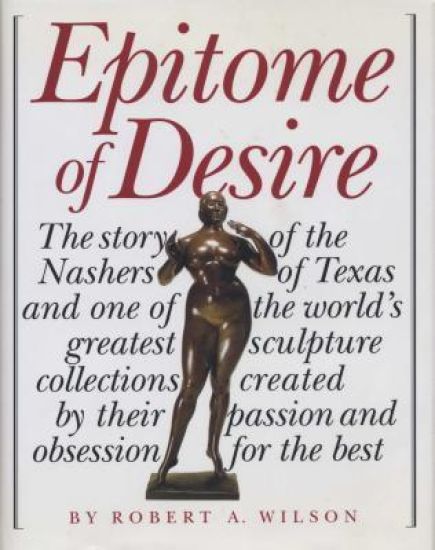
Epitome of Desire

Epitome of Desire

Robert A. Wilson

University of Texas Press
2003
sidottu
This is an American story that reminds us of the possibilities our nation offers. It's the story of the son of a Russian immigrant, Ray Nasher, who was born in Boston, lived in a three-decker house, and graduated from that great democratizer, Boston Latin School. It's the story of his entrepreneurial success in Texas and his marriage to Patsy and their creation, over the course of more than forty years, of one of the greatest sculpture collections of the twentieth century. It's also the story of how that sculpture collection and the Nashers were courted by the most powerful art institutions and their directors-the National Gallery and its director, the late Carter Brown, the Guggenheim and its impresario, Thomas Krens, the Tate in London, and the Dallas Museum of Art. It's the story about how, in the end, Nasher did it his way, buying land next to the Dallas Museum and conceiving there an extraordinary sculpture center, designed by Renzo Piano, the Italian architect of unsurpassed insight into what the museum experience should be. Picasso. Matisse. Giacommetti. Moore. Brancusi. Arp. Gauguin. The giants of the twentieth century form the core of the Nasher Collection. And for Nasher, the pursuit is without end. For him the most important acquisition remains, as it does with all true collectors, the next one. This is a book about art and ambition. And, finally, the triumph of the Nashers' will to create a collection focused only on the best.
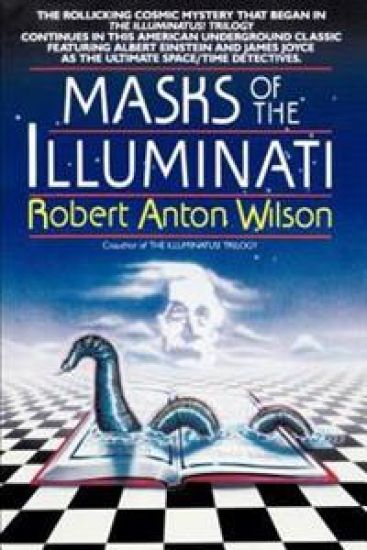
Masks of the Illuminati

Masks of the Illuminati

Robert a. Wilson

Dell
1990
nidottu
This American underground classic is a rollicking cosmic mystery featuring Albert Einstein and James Joyce as the ultimate space/time detectives. One fateful evening in a suitably dark, beer-soaked Swiss rathskeller, a wild and obscure Irishman named James Joyce would become the drinking partner of an unknown physics professor called Albert Einstein. And on that same momentous night, Sir John Babcock, a terror-stricken young Englishman, would rush through the tavern door bringing a mystery that only the two most brilliant minds of the century could solve . . . or perhaps bringing only a figment of his imagination born of the paranoia of our times. An outrageous, raunchy ride through the twists and turns of mind and space, Masks of the Illuminati runs amok with all our fondest conspiracy theories to show us the truth behind the laughter . . . and the laughter in the truth. Praise for Masks of the Illuminati "I was astonished and delighted . . . Robert Anton Wilson managed to reverse every mental polarity in me, as if I had been pulled through infinity."--Philip K. Dick " Wilson is] erudite, witty, and genuinely scary."--Publishers Weekly "A dazzling barker hawking tickets to the most thrilling tilt-a-whirls and daring loop-o-planes on the midway to a higher consciousness."--Tom Robbins "Wilson is one of the most profound, important, scientific philosophers of this century--scholarly, witty, hip, and hopeful."--Timothy Leary
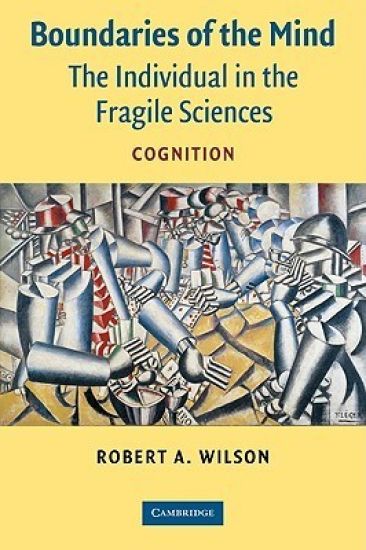
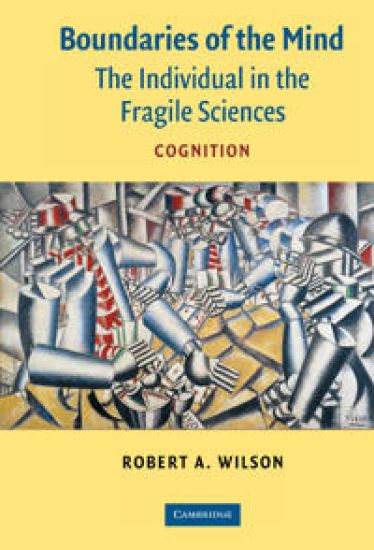
Boundaries of the Mind

Boundaries of the Mind

Robert A. Wilson

Cambridge University Press
2004
pokkari
Where does the mind begin and end? Most philosophers and cognitive scientists take the view that the mind is bounded by the skull or skin of the individual. Robert Wilson, in this provocative and challenging new book, provides the foundations for the view that the mind extends beyond the boundary of the individual. The approach adopted offers a unique blend of traditional philosophical analysis, cognitive science, and the history of psychology and the human sciences. A forthcoming companion volume Genes and the Agents of Life will explore the theme in the biological sciences. Written with verve and clarity, this ambitious book will appeal to a broad swathe of professionals and students in philosophy, psychology, cognitive science, and the history of the behavioural and human sciences.
Genes and the Agents of Life

Genes and the Agents of Life

Robert A. Wilson

Cambridge University Press
2004
pokkari
Genes and the Agents of Life undertakes to rethink the place of the individual in the biological sciences, drawing parallels with the cognitive and social sciences. Genes, organisms, and species are all agents of life but how are each of these conceptualized within genetics, developmental biology, evolutionary biology, and systematics? The book includes highly accessible discussions of genetic encoding, species and natural kinds, and pluralism above the levels of selection, drawing on work from across the biological sciences. The book is a companion to the author’s Boundaries of the Mind, also available from Cambridge, where the focus is the cognitive sciences. The book will appeal to a broad range of professionals and students in philosophy, biology, and the history of science.
Boundaries of the Mind

Boundaries of the Mind

Robert A. Wilson

Cambridge University Press
2004
sidottu
Where does the mind begin and end? Most philosophers and cognitive scientists take the view that the mind is bounded by the skull or skin of the individual. Robert Wilson, in this provocative and challenging 2004 book, provides the foundations for the view that the mind extends beyond the boundary of the individual. The approach adopted offers a unique blend of traditional philosophical analysis, cognitive science, and the history of psychology and the human sciences. A forthcoming companion volume Genes and the Agents of Life will explore the theme in the biological sciences. Written with verve and clarity, this ambitious book will appeal to a broad swathe of professionals and students in philosophy, psychology, cognitive science, and the history of the behavioural and human sciences.
Genes and the Agents of Life

Genes and the Agents of Life

Robert A. Wilson

Cambridge University Press
2004
sidottu
Genes and the Agents of Life undertakes to rethink the place of the individual in the biological sciences, drawing parallels with the cognitive and social sciences. Genes, organisms, and species are all agents of life but how are each of these conceptualized within genetics, developmental biology, evolutionary biology, and systematics? The book includes highly accessible discussions of genetic encoding, species and natural kinds, and pluralism above the levels of selection, drawing on work from across the biological sciences. The book is a companion to the author’s Boundaries of the Mind, also available from Cambridge, where the focus is the cognitive sciences. The book will appeal to a broad range of professionals and students in philosophy, biology, and the history of science.