Kirjojen hintavertailu. Mukana 11 244 527 kirjaa ja 12 kauppaa.

Kirjahaku

Etsi kirjoja tekijän nimen, kirjan nimen tai ISBN:n perusteella.

36 kirjaa tekijältä Robert Audi

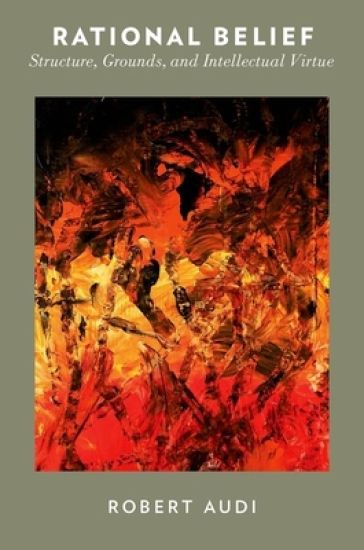
Rational Belief

Rational Belief

Robert Audi

Oxford University Press Inc
2015
nidottu
Rational Belief provides conceptions of belief and knowledge, offers a theory of how they are grounded, and connects them with the will and thereby with action, moral responsibility, and intellectual virtue. A unifying element is a commitment to representing epistemology-which is centrally concerned with belief-as integrated with a plausible philosophy of mind that does justice both to the nature of belief and to the conditions for its formation and regulation. Part One centers on belief and its relation to the will. It explores our control of our beliefs, and it describes several forms belief may take and shows how beliefs are connected with the world outside the mind. Part Two concerns normative aspects of epistemology, explores the nature of intellectual virtue, and presents a theory of moral perception. The book also offers a theory of the grounds of both justification and knowledge and shows how these grounds bear on the self-evident. Rationality is distinguished from justification; each clarified in relation to the other; and the epistemological importance of the phenomenal-for instance, of intuitional experience and other "private " aspects of mental life-is explored. The final section addresses social epistemology. It offers a theory of testimony as essential in human knowledge and a related account of the rational resolution of disagreements.
Rational Belief

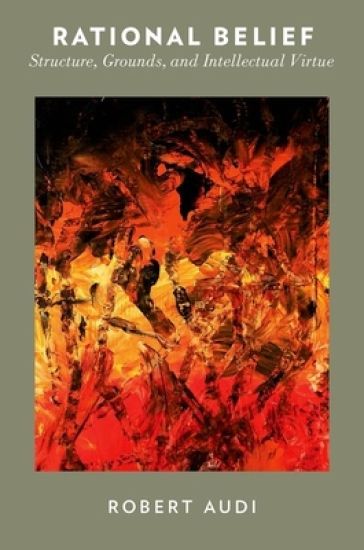
Rational Belief

Robert Audi

Oxford University Press Inc
2015
sidottu
Rational Belief provides conceptions of belief and knowledge, offers a theory of how they are grounded, and connects them with the will and thereby with action, moral responsibility, and intellectual virtue. A unifying element is a commitment to representing epistemology-which is centrally concerned with belief-as integrated with a plausible philosophy of mind that does justice both to the nature of belief and to the conditions for its formation and regulation. Part One centers on belief and its relation to the will. It explores our control of our beliefs, and it describes several forms belief may take and shows how beliefs are connected with the world outside the mind. Part Two concerns normative aspects of epistemology, explores the nature of intellectual virtue, and presents a theory of moral perception. The book also offers a theory of the grounds of both justification and knowledge and shows how these grounds bear on the self-evident. Rationality is distinguished from justification; each clarified in relation to the other; and the epistemological importance of the phenomenal-for instance, of intuitional experience and other "private " aspects of mental life-is explored. The final section addresses social epistemology. It offers a theory of testimony as essential in human knowledge and a related account of the rational resolution of disagreements.
Means, Ends, and Persons

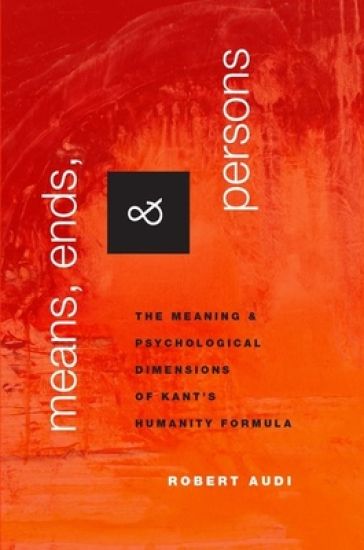
Means, Ends, and Persons

Robert Audi

Oxford University Press Inc
2015
sidottu
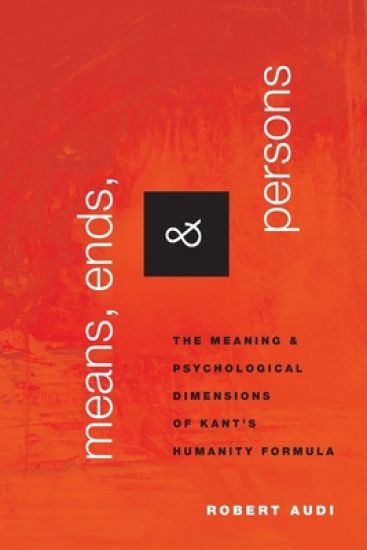
No one wants to be treated merely as a means-"used," in a sense. But just what is this repugnant treatment? Audi's point of departure is Kant's famous principle that we must treat persons as ends in themselves and never merely as means. Treatment of these kinds is conduct, a complex three-dimensional notion whose central elements are action, its motivation, and the manner of its performance. He shows how the notions of treating persons as ends and, by contrast, merely as means, can be anchored outside Kant and clarified in ways that enhance their usefulness both in ethical theory and in practical ethics, where they have much intuitive force. Audi constructs an account of treatment of persons-of what it is, how it differs from mere interpersonal action, and what ethical standards govern it. In accounting for such treatment, the book develops a wider conception of ethics than is commonly implicit in utilitarian, deontological, or virtue theories. These results contribute to ethical theory, but in its discussion of diverse narrative examples of moral and immoral conduct, the book also contributes to normative ethics. Audi's theory of conduct takes account of motivational elements that are not traits of character and of behavioral elements that are not manifestations of virtue or vice. Here it goes beyond the leading virtue approaches. The theory also advances rule ethics by framing wider conception of moral behavior-roughly, of acting morally. The results advance both normative ethics and ethical theory. For moral philosophy, the book frames conceptions, articulates distinctions, and formulates principles; and for practical ethics, it provides a multitude of cases that illustrate both the scope of moral responsibility and the normative standards for living up to it.
Means, Ends, and Persons

Means, Ends, and Persons

Robert Audi

Oxford University Press Inc
2018
nidottu
No one wants to be treated merely as a means-"used," in a sense. But just what is this repugnant treatment? Audi's point of departure is Kant's famous principle that we must treat persons as ends in themselves and never merely as means. Treatment of these kinds is conduct, a complex three-dimensional notion whose central elements are action, its motivation, and the manner of its performance. He shows how the notions of treating persons as ends and, by contrast, merely as means, can be anchored outside Kant and clarified in ways that enhance their usefulness both in ethical theory and in practical ethics, where they have much intuitive force. Audi constructs an account of treatment of persons-of what it is, how it differs from mere interpersonal action, and what ethical standards govern it. In accounting for such treatment, the book develops a wider conception of ethics than is commonly implicit in utilitarian, deontological, or virtue theories. These results contribute to ethical theory, but in its discussion of diverse narrative examples of moral and immoral conduct, the book also contributes to normative ethics. Audi's theory of conduct takes account of motivational elements that are not traits of character and of behavioral elements that are not manifestations of virtue or vice. Here it goes beyond the leading virtue approaches. The theory also advances rule ethics by framing wider conception of moral behavior-roughly, of acting morally. The results advance both normative ethics and ethical theory. For moral philosophy, the book frames conceptions, articulates distinctions, and formulates principles; and for practical ethics, it provides a multitude of cases that illustrate both the scope of moral responsibility and the normative standards for living up to it.
Moral Knowledge and Ethical Character

Moral Knowledge and Ethical Character

Robert Audi

Oxford University Press Inc
1998
sidottu
This book presents an ethical theory that uniquely integrates naturalistic and rationalistic elements. Robert Audi develops his theory in four areas: moral epistemology, the metaphysics of ethics, moral psychology, and the foundations of ethics. Comprising both new and published work, the book sets forth a moderate intuitionism, clarifies the relation between reason and motivation, constructs a theory of intrinsic value and its place in moral obligation, and presents a sophisticated account of moral justification. The concluding chapter articulates a new normative framework built from both Kantian and intuitionist elements. Connecting ethics in novel ways to both the theory of value and the philosophy of action, the essays explore topics such as ethical intuition, reason and judgement, and virtue. Audi also considers major views in the history of ethics, including those of Aristotle, Hume, Kant, Mill, Moore, and W. D. Ross, and engages contemporary work on autonomy, responsibility, objectivity, reasons, and other issues. Clear and conceptually rich, this book makes vital reading for students and scholars of ethics.
Moral Knowledge and Ethical Character

Moral Knowledge and Ethical Character

Robert Audi

Oxford University Press Inc
1998
nidottu
This book presents an ethical theory that uniquely integrates naturalistic and rationalistic elements. Robert Audi develops his theory in four areas: moral epistemology, the metaphysics of ethics, moral psychology, and the foundations of ethics. Comprising both new and published work, the book sets forth a moderate intuitionism, clarifies the relation between reason and motivation, constructs a theory of intrinsic value and its place in moral obligation, and presents a sophisticated account of moral justification. The concluding chapter articulates a new normative framework built from both Kantian and intuitionist elements. Connecting ethics in novel ways to both the theory of value and the philosophy of action, the essays explore topics such as ethical intuition, reason and judgement, and virtue. Audi also considers major views in the history of ethics, including those of Aristotle, Hume, Kant, Mill, Moore, and W. D. Ross, and engages contemporary work on autonomy, responsibility, objectivity, reasons, and other issues. Clear and conceptually rich, this book makes vital reading for students and scholars of ethics.
The Architecture of Reason

The Architecture of Reason

Robert Audi

Oxford University Press Inc
2001
sidottu
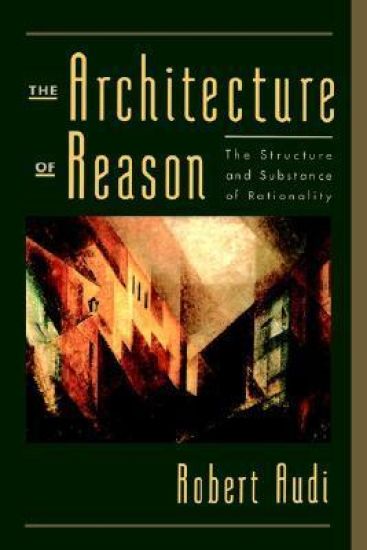
This book sets out a comprehensive theory of rationality applicable to both practical and theoretical reason. In both domains, Audi explains the role of experience in grounding rationality, delineates the structure of central elements - particuarly belief, desire and action - and attacks the egocentric view of rationality. He defends a rational altruism that supports important moral principles, and concludes with an account of global rationality - the overall rationality of persons.
The Architecture of Reason

The Architecture of Reason

Robert Audi

Oxford University Press Inc
2002
nidottu
The literature on theoretical reason has been dominated by epistemological concerns, treatments of practical reason by ethical concerns. This book overcomes the limitations of dealing with each separately. It sets out a comprehensive theory of rationality applicable to both practical and theoretical reason. In both domains, Audi explains how experience grounds rationality, delineates the structure of central elements, and attacks the egocentric conception of rationality. He establishes the rationality of altruism and thereby supports major moral principles. The concluding part describes the pluralism and relativity his conception of rationality accommodates and, taking the unified account of theoretical and practical rationality in that light, constructs a theory of global rationality--the overall rationality of persons. Rich in narrative examples, intriguing analogies, and intuitively appealing arguments, this beautifully crafted book will spur advances in ethics and epistemology as well in philosophy of mind and action and the theory of rationality itself.
Moral Value and Human Diversity

Moral Value and Human Diversity

Robert Audi

Oxford University Press Inc
2007
sidottu
This short and accessible book is designed for those learning about the search for ethical rules that can apply despite cultural differences. Robert Audi looks at several such attempts: Aristotle, Kant, Mill, and the movement known as 'common-sense' ethics associated with W.D. Ross. He shows how each attempt grew out of its own time and place, yet has some universal qualities that can be used for an ethical framework. This is a short, accessible treatment of a major topic in ethics by a senior and highly-respected figure.
Business Ethics and Ethical Business

Business Ethics and Ethical Business

Robert Audi

Oxford University Press Inc
2008
nidottu
Business Ethics and Ethical Business is a brief yet remarkably comprehensive introduction to the thought-provoking field of business ethics. The text is organized into three parts that cover the role of business in society, the ethics of internal management, and the challenges of international business. It introduces the standards essential in business ethics, explores a wide range of issues using concrete examples, and provides analytical tools for guiding ethical decisions in the real world. Features: * Includes an appendix containing sixteen short case scenarios modeled on ethical problems in business; these studies are keyed to relevant chapters and designed to stimulate class discussion and provide material for essay assignments * Introduces central ethical theories including Aristotle's virtue ethics, Kant's rule-based ethics, Mill's utilitarianism, and Ross's common-sense pluralism * Introduces a set of principles comprising a decision framework for conducting business ethically * Examines the two main competing views of business in a democratic society--the free market view and the corporate social responsibility approach * Considers both large companies and small, family-owned businesses * Includes a glossary of many key terms in business ethics Business Ethics and Ethical Business is ideal for undergraduate or MBA courses, as either a standalone text or a companion to an anthology or selected case studies. Every chapter is self-contained, so the text can be used in whole or in part and in long or short courses.
Moral Value and Human Diversity

Moral Value and Human Diversity

Robert Audi

Oxford University Press Inc
2009
nidottu
Can the moral fragmentation so prominent in the contemporary world be overcome? Are there ethical standards that deserve everyone's allegiance? Can judgments of value transcend taste and cultural preference? Moral Value and Human Diversity offers a brief but highly comprehensive introduction to ethics and value theory that argues for positive answers in a pluralistic framework.
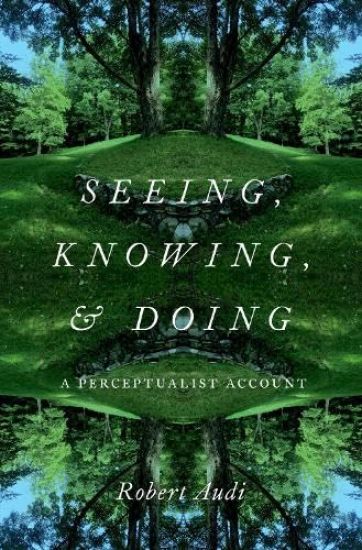
Seeing, Knowing, and Doing

Seeing, Knowing, and Doing

Robert Audi

Oxford University Press Inc
2020
sidottu
Perception is basic for human knowledge and a major concern of both epistemology and the philosophy of mind. The scholarship in this area, however, has left two important aspects of perception underexplored: its relevance to understanding a priori knowledge-traditionally conceived as independent of perception-and its role in human action. This book provides a full-scale account of perception, a theory of the a priori, and an account of how perception guides action. In exploring perception and action, it clarifies the relation between action and practical reasoning, the notion of rational action, and the relation between knowledge of the practical (of how things are done) and practical knowledge (knowing how to do things). In the first part of the book, Robert Audi lays out a theory of perception as experiential, representational, and causally connected with its objects. He argues that perception is a discriminative response to its objects; it embodies phenomenally distinctive elements; and it yields rich information that underlies human knowledge. Part Two presents a theory of self-evidence and the a priori. Audi's theory is perceptualist in that it explicates the apprehension of a priori truths by articulating its parallels to perception. The theory also unifies empirical and a priori knowledge by clarifying their reliable causal connections with their objects-connections many have thought impossible for a priori knowledge. The final part explores how perception guides action, the role of propositional knowledge in our abilities to do what we know how to do, the nature of reasons for action, the role of inference in determining it, and the overall conditions for its rationality. Addressing longstanding questions left unaddressed in the current literature, Audi's comprehensive theory of perception will appeal to scholars and students interested in philosophy of perception, mind, and epistemology.
Is This God's Country?

Is This God's Country?

Robert Audi

OXFORD UNIVERSITY PRESS INC
2024
sidottu
Can religion coexist in harmony with the American ideal of separation of church and state? Philosopher Robert Audi here explores this perennial and topical question. The notion of a religion is complex and elastic; the notion of democracy is complex and contested. Audi explores both notions in the context of American founding documents, American ideals of religious liberty and social justice, and contemporary American social problems in public education, business, and healthcare--all of which are beset by the culture wars--from perceived hostility to religion in schools, to vaccine resistance, to refusals to provide religiously objectionable services, to abortion. Is This God's Country? reflects Audi's decades of work on religion and politics, ethics, and philosophy of religion. He accessibly explains why America separates church and state, how this can benefit both religious and secular citizens, why there is nevertheless controversy about what this means, and how opposed religious and secular people can peaceably resolve their differences. With the generous use of examples, Audi proposes standards for discussing and resolving those differences in education, business, and medical care. His final chapter addresses the question whether, within those standards, America can be Christian--or religious at all--in a way that integrates religious liberty with democratic law-making and expands the common ground we need to overcome the cultural fragmentation that besets America.
Seeing, Knowing, and Doing

Seeing, Knowing, and Doing

Robert Audi

OXFORD UNIVERSITY PRESS INC
2025
nidottu
Perception is basic for human knowledge and a major concern of both epistemology and the philosophy of mind. The scholarship in this area, however, has left two important aspects of perception underexplored: its relevance to understanding a priori knowledge--traditionally conceived as independent of perception--and its role in human action. This book provides a full-scale account of perception, a theory of the a priori, and an account of how perception guides action. In exploring perception and action, it clarifies the relation between action and practical reasoning, the notion of rational action, and the relation between knowledge of the practical (of how things are done) and practical knowledge (knowing how to do things). In the first part of the book, Robert Audi lays out a theory of perception as experiential, representational, and causally connected with its objects. He argues that perception is a discriminative response to its objects; it embodies phenomenally distinctive elements; and it yields rich information that underlies human knowledge. Part Two presents a theory of self-evidence and the a priori. Audi's theory is perceptualist in that it explicates the apprehension of a priori truths by articulating its parallels to perception. The theory also unifies empirical and a priori knowledge by clarifying their reliable causal connections with their objects--connections many have thought impossible for a priori knowledge. The final part explores how perception guides action, the role of propositional knowledge in our abilities to do what we know how to do, the nature of reasons for action, the role of inference in determining it, and the overall conditions for its rationality. Addressing longstanding questions left unaddressed in the current literature, Audi's comprehensive theory of perception will appeal to scholars and students interested in philosophy of perception, mind, and epistemology.
Democratic Authority and the Separation of Church and State
Democratic states must protect the liberty of citizens and must accommodate both religious liberty and cultural diversity. This democratic imperative is one reason for the increasing secularity of most modern democracies. Religious citizens, however, commonly see a secular state as unfriendly toward religion. This book articulates principles that enable secular governments to protect liberty in a way that judiciously separates church and state and fully respects religious citizens. After presenting a brief account of the relation between religion and ethics, the book shows how ethics can be independent of religion-evidentially autonomous in a way that makes moral knowledge possible for secular citizens--without denying religious sources a moral authority of their own. With this account in view, it portrays a church-state separation that requires governments not only to avoid religious establishment but also to maintain religious neutrality. The book shows how religious neutrality is related to such issues as teaching evolutionary biology in public schools, the legitimacy of vouchers to fund private schooling, and governmental support of "faith-based initiatives." The final chapter shows how the proposed theory of religion and politics incorporates toleration and forgiveness as elements in flourishing democracies. Tolerance and forgiveness are described; their role in democratic citizenship is clarified; and in this light a conception of civic virtue is proposed. Overall, the book advances the theory of liberal democracy, clarifies the relation between religion and ethics, provides distinctive principles governing religion in politics, and provides a theory of toleration for pluralistic societies. It frames institutional principles to guide governmental policy toward religion; it articulates citizenship standards for political conduct by individuals; it examines the case for affirming these two kinds of standards on the basis of what, historically, has been called natural reason; and it defends an account of toleration that enhances the practical application of the ethical framework both in individual nations and in the international realm.
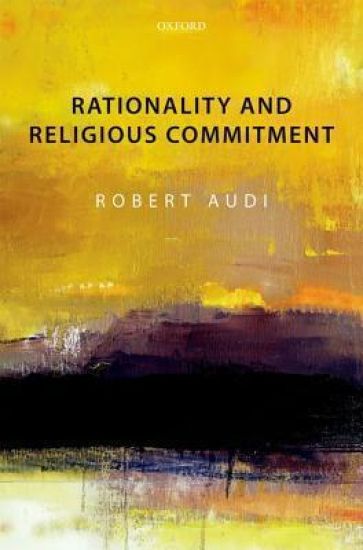
Rationality and Religious Commitment

Rationality and Religious Commitment

Robert Audi

Oxford University Press
2011
sidottu
Rationality and Religious Commitment shows how religious commitment can be rational and describes the place of faith in the postmodern world. It portrays religious commitment as far more than accepting doctrines--it is viewed as a kind of life, not just as an embrace of tenets. Faith is conceived as a unique attitude. It is irreducible to belief but closely connected with both belief and conduct, and intimately related to life's moral, political, and aesthetic dimensions. Part One presents an account of rationality as a status attainable by mature religious people--even those with a strongly scientific habit of mind. Part Two describes what it means to have faith, how faith is connected with attitudes, emotions, and conduct, and how religious experience may support it. Part Three turns to religious commitment and moral obligation and to the relation between religion and politics. It shows how ethics and religion can be mutually supportive even though ethics provides standards of conduct independently of theology. It also depicts the integrated life possible for the religiously committed--a life with rewarding interactions between faith and reason, religion and science, and the aesthetic and the spiritual. The book concludes with two major accounts. One explains how moral wrongs and natural disasters are possible under God conceived as having the knowledge, power, and goodness that make such evils so difficult to understand. The other account explores the nature of persons, human and divine, and yields a conception that can sustain a rational theistic worldview even in the contemporary scientific age.
Rationality and Religious Commitment

Rationality and Religious Commitment

Robert Audi

Oxford University Press
2013
nidottu
Rationality and Religious Commitment shows how religious commitment can be rational and describes the place of faith in the postmodern world. It portrays religious commitment as far more than accepting doctrines--it is viewed as a kind of life, not just as an embrace of tenets. Faith is conceived as a unique attitude. It is irreducible to belief but closely connected with both belief and conduct, and intimately related to life's moral, political, and aesthetic dimensions. Part One presents an account of rationality as a status attainable by mature religious people--even those with a strongly scientific habit of mind. Part Two describes what it means to have faith, how faith is connected with attitudes, emotions, and conduct, and how religious experience may support it. Part Three turns to religious commitment and moral obligation and to the relation between religion and politics. It shows how ethics and religion can be mutually supportive even though ethics provides standards of conduct independently of theology. It also depicts the integrated life possible for the religiously committed--a life with rewarding interactions between faith and reason, religion and science, and the aesthetic and the spiritual. The book concludes with two major accounts. One explains how moral wrongs and natural disasters are possible under God conceived as having the knowledge, power, and goodness that make such evils so difficult to understand. The other account explores the nature of persons, human and divine, and yields a conception that can sustain a rational theistic worldview even in the contemporary scientific age.
Democratic Authority and the Separation of Church and State
Democratic states must protect the liberty of citizens and must accommodate both religious liberty and cultural diversity. This democratic imperative is one reason for the increasing secularity of most modern democracies. Religious citizens, however, commonly see a secular state as unfriendly toward religion. This book articulates principles that enable secular governments to protect liberty in a way that judiciously separates church and state and fully respects religious citizens. After presenting a brief account of the relation between religion and ethics, the book shows how ethics can be independent of religion-evidentially autonomous in a way that makes moral knowledge possible for secular citizens-without denying religious sources a moral authority of their own. With this account in view, it portrays a church-state separation that requires governments not only to avoid religious establishment but also to maintain religious neutrality. The book shows how religious neutrality is related to such issues as teaching evolutionary biology in public schools, the legitimacy of vouchers to fund private schooling, and governmental support of "faith-based initiatives. " The final chapter shows how the proposed theory of religion and politics incorporates toleration and forgiveness as elements in flourishing democracies. Tolerance and forgiveness are described; their role in democratic citizenship is clarified; and in this light a conception of civic virtue is proposed. Overall, the book advances the theory of liberal democracy, clarifies the relation between religion and ethics, provides distinctive principles governing religion in politics, and provides a theory of toleration for pluralistic societies. It frames institutional principles to guide governmental policy toward religion; it articulates citizenship standards for political conduct by individuals; it examines the case for affirming these two kinds of standards on the basis of what, historically, has been called natural reason; and it defends an account of toleration that enhances the practical application of the ethical framework both in individual nations and in the international realm.