Kirjojen hintavertailu. Mukana 12 111 343 kirjaa ja 12 kauppaa.

Kirjahaku

Etsi kirjoja tekijän nimen, kirjan nimen tai ISBN:n perusteella.

14 kirjaa tekijältä Robert Bard

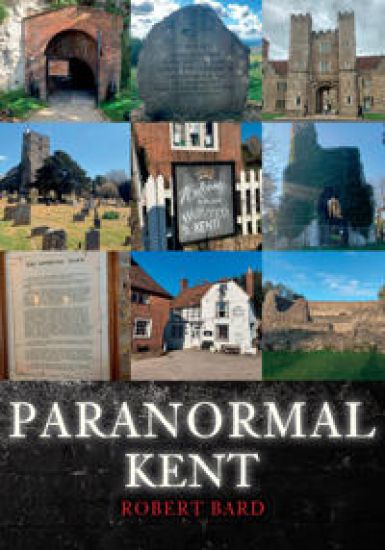
Paranormal Kent

Paranormal Kent

Robert Bard

AMBERLEY PUBLISHING
2024
nidottu
In this book author Robert Bard takes readers on a spine-tingling journey around Kent to some of its most haunted locations. He discovers tales of ghostly apparitions, unexplained events and paranormal phenomena. Among the places investigated is Pluckley, which was named in the Guinness Book of Records as England’s most haunted village. Its twelve spirits include a screaming man who fell to his death and a spectral highwayman who haunts a spot named Fright Corner. Other haunted sites are Rochester Castle, with its thirteenth-century White Lady; Chislehurst Caves, with sounds of children’s laughter, footsteps and sightings of a woman dressed in white; and Bilsington Priory, with its hooded monks. Hever Castle, once home to Anne Boleyn, lays claim to her spirit, and Dover Castle is a popular spot for organised ghost hunts, where reported apparitions include a headless child, a woman clad in red clothes and a soldier who prowls the underground tunnels. Ghostly episodes from Canterbury and Chatham also feature, together with Blue Bell Hill, where drivers have reported colliding with phantom pedestrians. Illustrated throughout, Paranormal Kent will appeal to those interested in the supernatural and local residents who want to discover their county’s haunted heritage. Are you brave enough to read on?
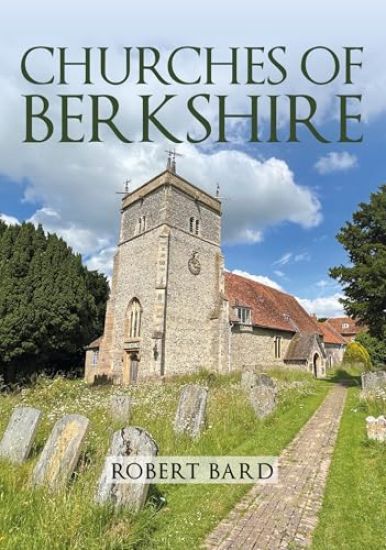
Churches of Berkshire

Churches of Berkshire

Robert Bard

AMBERLEY PUBLISHING
2026
nidottu
The county of Berkshire has a rich and varied past which is reflected in its historic churches. In Churches of Berkshire, author Robert Bard explores a selection of the most interesting churches across the whole of the county. The buildings range from churches in the county town of Reading and Windsor with its historical connections to royalty, to market towns, villages and remote locations, and represent the many different architectural eras and styles to be found in Berkshire’s churches. The book covers a cross section of churches throughout the county, both well-known and those waiting to be discovered by a wider audience. This fascinating picture of an important part of the history of Berkshire over the centuries will be of interest to all those who live in or are visiting this attractive county in England.
Secret Barnet and Hadley

Secret Barnet and Hadley

Robert Bard

AMBERLEY PUBLISHING
2026
nidottu
The town of Barnet grew up in the 12th century to the north of London. The town’s alternative nameS of Chipping Barnet or High Barnet are recognition of the market that was established there at the same time and the town’s elevation. Today the town and the integral area of Hadley adjoining Barnet are part of Greater London. This was the site of the Battle of Barnet in 1471, which was one of the key battles of the Wars of the Roses. Barnet’s position along the old Great North Road brought a large number of inns to cater for travellers, including Ye Olde Mitre Inn which was first recorded in 1553 and still stands today. Evidence of the lives of everyday folk through the centuries can still be discovered beneath the surface of today’s Barnet and Hadley, from numerous blue plaques for the rich and famous to workhouses, hospitals and alms-houses. With tales of remarkable characters, unusual events and tucked away or disappeared historical buildings and locations, Secret Barnet and Hadley will appeal to all those with an interest in the history of this distinct area of North London.
Secret Watford

Secret Watford

Robert Bard

AMBERLEY PUBLISHING
2026
nidottu
In the Middle Ages Watford was a small Hertfordshire market town, well placed on trade routes near London. In the eighteenth and nineteenth centuries, the arrival of the canal system and the railways brought industries to the town. New housing was built and the town expanded to accommodate the rising population. Beneath the surface of today’s Watford, evidence can be found of the town’s past, from the importance of religion and churches in the town’s history and how crime was dealt with to workhouses and hospitals which have now disappeared. Some historic yards and buildings remain and Cassiobury Park was part of the Earl of Essex’s estate, and the numerous famous names have been associated with Watford, not least Elton John. With tales of remarkable characters, unusual events and tucked away or disappeared historical buildings and locations, Secret Watford will appeal to all those with an interest in the history of this town in Hertfordshire.
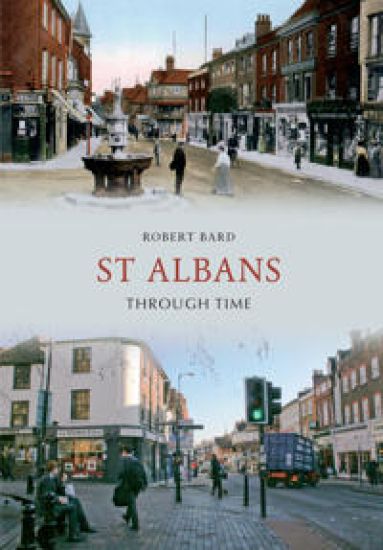
St Albans History Tour

St Albans History Tour

Robert Bard

Amberley Publishing
2016
nidottu
St Albans History Tour is a unique guide to the illustrious past of this delightful city in southern Hertfordshire. As one of the earliest recorded cities in Britain, St Albans has had a long, colourful and distinguished history. Dominated by the great abbey church of St Alban, the adjacent site was a thriving market town in Saxon, Norman, medieval and Georgian times. Robert Bard guides us through its historical streets, showing how its famous landmarks used to look and how they’ve changed over the years, as well as exploring its lesser-known sights and hidden corners. With the help of a handy location map, readers are invited to follow a timeline of events and discover for themselves the changing face of St Albans.
Paranormal Berkshire

Paranormal Berkshire

Robert Bard

Amberley Publishing
2021
nidottu
In this book, author Robert Bard guides readers on a spine-tingling journey to discover the paranormal and unexplained happenings that have occurred throughout Berkshire. From haunted sites to spectral figures and supernatural phenomena, here is an eerie exploration of the royal county and a collection of its chilling tales. Each of the chapters in Paranormal Berkshire focuses on a different location linked to ghostly occurrences and among the places featured are Windsor Castle, Old Windsor, Reading Abbey, Maidenhead, Ascot, Newbury, Hungerford, Bisham, Caversham, Cookham, Datchet, Slough, Thatcham and some of the smaller villages in the county. The author visits the traditional sites of paranormal activity and, with the assistance of the Oxfordshire and Berkshire Paranormal Research Group, reveals newly discovered material. He also participates in a local ghost hunt and provides a fascinating account of his observations accompanied by his own photographs. As well as detailing the nature of his own interest in the paranormal, and his experiences at the various paranormal sites, author Robert Bard also selects his own haunted highlights from his chilling exploration through the county. Paranormal Berkshire will appeal to those with an interest in the supernatural, and to local people who want to discover their county’s haunted heritage. Are you brave enough to read on?
The Earls of Essex

The Earls of Essex

Robert Bard

Fonthill Media
2017
sidottu
This is the dramatic, often erratic, and at times unbelievable story of the fortunes and misfortunes over 900 years to the present day of one of England’s premier aristocratic families, who in 1661 were given the Earldom of Essex by Charles II. This fascinating, previously untold story begins just after the Norman Conquest with a Hugh Capel in AD 1100 and ends at the present day, with Frederick Paul de Vere Capell, 11th Earl of Essex and the future heir presumptive, William Jennings Capell, a former shelf stacker, who lives in Yuba City, California. Over a period of 400 years the Capell family built a fortune, and over the next 500 years lost it due to an incredible number of mistakes bad judgment calls, and misfortunes. Lord Arthur Capel, one of England’s richest men, changed sides from Parliament to support Charles I, and after a further series of poor decisions, was executed at Palace Yard, Westminster at the age of 41 in 1649 by the same executioner, using the same axe as had executed King Charles I barely three months earlier. His son, also Arthur Capel, created 1st Earl of Essex by Charles II became involved in a plot against the king, and was mysteriously found with his throat cut whilst awaiting trial in the Tower of London. Did he commit suicide to avoid the consequences of treason and to save the estates and titles for his son? Conspiracy theories abounded. The king commented sadly that he owed the Earl’s father had died for his father, and he owed him a life and would have spared him. Arthur’s young son became the 3rd Earl and went down in history as `the most debauched young man in London.’ The long-lived 5th Earl had numerous mistresses and, as a close friend of the debauched Prince Regent, shared a well-known courtesan, Mrs Robinson with the Prince. Unhappily married, with no legitimate male heir, living at the family seat, Cassiobury in Watford, at the age of 81 he married secondly a 44-year-old actress and died shortly afterwards, accompanied to the grave by some very irreverent press comments. The three-times-married 6th Earl, whose father was a bankrupt debauched gambler, had an illegitimate son, George Ingerfield Capel, who had an illegitimate daughter who was the mistress of the `Sundance Kid.’ The 7th Earl, in 1892 struggling to keep Cassiobury and the family fortunes together married a title-hunting American heiress, Adele Beach Grant, who was not really an heiress, and who became a member of the Edwardian `fast set’. Her alcoholic husband, known as `sulky’ stepped in front of a cab outside his London club in 1916 and was killed. Adele was found mysteriously dead in the bath in 1922. Her step-son the 8th Earl had eloped with and married young, and by the 1920s the extensive family estates had to be sold. The much-married 9th Earl died heirless in Bermuda in 1966. A contest broke out over whom should now inherit the titles. Robert Edward de Vere Capel, the next Earl, born in 1920 was the son of a railway parcel porter and was a Royal Air Force flight sergeant during the Second World War. He fought a dramatic battle to prove his right to the Earldom. His son, Frederick Paul de Vere Capell, the 11th Earl of Essex, who lives modestly not far from Lancaster, is a retired assistant schoolmaster and a classical music devotee. He has no children and unless the inheritance laws change, the title will one day go to his American cousins in Yuba City, California.
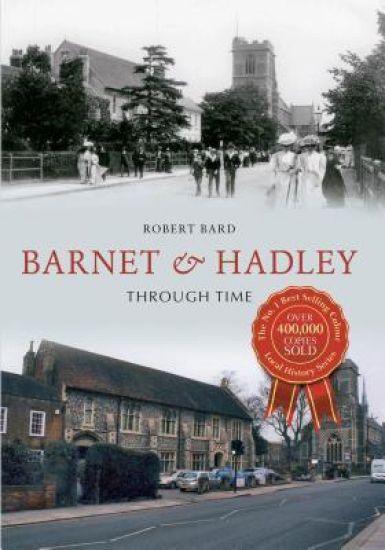
Barnet & Hadley Through Time

Barnet & Hadley Through Time

Robert Bard

Amberley Publishing
2013
nidottu
Situated in North London near the county boundary with Hertfordshire, Barnet has a long and distinguished history. Properly called Chipping Barnet or High Barnet, the area has become synonymous with its historic horse fair, founded in 1588 and now immortalised in cockney rhyming slang. The Battle of Barnet of 1471 is also rumoured to have served as the inspiration for the nursery rhyme, 'The Grand Old Duke of York'. A further glimpse of the past is provided by Barnet's sixteenth-century church. The neighbouring suburb of Hadley is no less historic and, like Barnet, has many points of interest. The childhood home of Princess Diana, Hadley is home to the 400-acre Trent Country Park, the former hunting ground of Henry VIII and Elizabeth I. Robert Bard invites you to join him on a journey through time, showcasing the changes and developments that have made Barnet & Hadley the bustling communities that they are today.
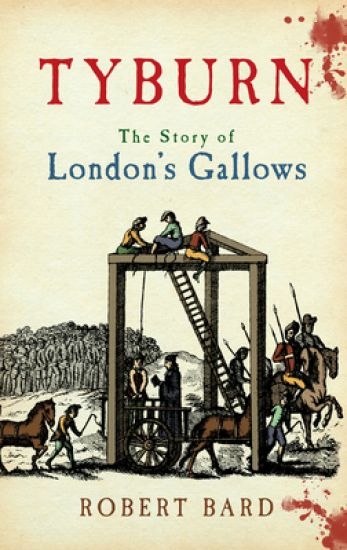
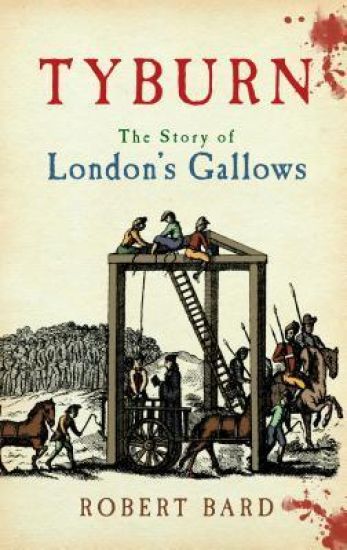
Tyburn

Tyburn

Robert Bard

Amberley Publishing
2012
sidottu
During its 600-year history 50,000 souls were executed on the gallows at Tyburn somewhere near where Oxford Street meets the Edgware Road. Many thousands of victims remain buried nearby in anonymous graves. Many of the condemned made their final journey from Newgate Prison, three miles distant. The condemned travelled in a cart seated on his or her coffin, stopping frequently for refreshments. Sometimes the condemned survived hanging. What was it like to be hanged? This book examines contemporary accounts. Most of those executed at Tyburn were from London’s underclass. An exception was Earl Ferrers on 5 May 1760 who wore the same white suit with silver trimmings that he had worn at his wedding. He travelled from the Tower to Tyburn in his own carriage but the crowds were so thick that the journey took nearly three hours. In addition to Tyburn, this book identifies a number of London’s lesser-known places of execution such as Shepherd’s Bush Green, Cricklewood, Hampstead Heath, and the City of London.
London's Hidden Burial Grounds

London's Hidden Burial Grounds

Robert Bard; Adrian Miles

Amberley Publishing
2017
nidottu
It is fascinating to think that many hundreds of generations of Londoners lie beneath the city without us knowing. Over many centuries burial grounds have been developed, built over and then forgotten, often beneath playgrounds, gardens or car parks. When modern development takes place, remains are disturbed and we are reminded of a London that has long since disappeared, particularly with recent archaeological discoveries across the city. In London’s Hidden Burial Grounds, authors Robert Bard and Adrian Miles seek to uncover many of the capital's lost graveyards, often in the unlikeliest of places.