Kirjojen hintavertailu. Mukana 11 627 463 kirjaa ja 12 kauppaa.

Kirjahaku

Etsi kirjoja tekijän nimen, kirjan nimen tai ISBN:n perusteella.

3 kirjaa tekijältä Robert Burnham; Ron McGuigan

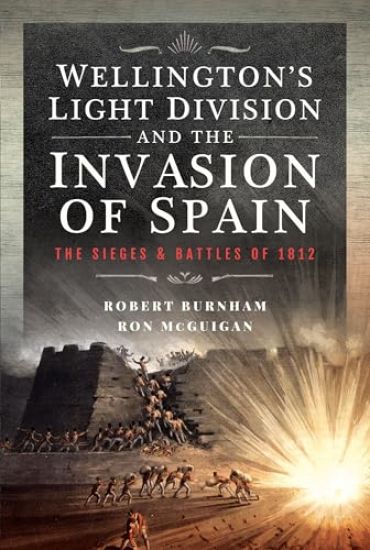
Wellington’s Light Division and the Invasion of Spain

Wellington’s Light Division and the Invasion of Spain

Robert Burnham; Ron McGuigan

PEN SWORD BOOKS LTD
2025
sidottu
After evicting the French from Portugal in 1811, the Duke of Wellington went on the offensive, having decided to attack into Spain and liberate the country. To do this, however, he first had to capture the key border fortresses of Ciudad Rodrigo and Badajoz. By doing this he would secure the main routes into Portugal and protect his supply lines. By mid-April in 1812, Wellington’s forces had captured both fortresses and he began planning to move into central Spain to liberate Madrid. Then, by late July, he fought and effectively destroyed the French Army of Portugal at the Battle of Salamanca and a month later was welcomed by the population of Madrid as its liberator. However, September saw the offensive stall and a gathering of French forces. By October, the order came to abandon Madrid and withdraw back to Portugal. Wellington’s army had to move quickly to avoid being cut off and its line of communication with Lisbon severed. The retreat soon turned into a grueling slog in miserable weather with little food, all the while the British troops were pursued by a relentless enemy hard on their heels. It would be late November before the army reached the safety of the Portuguese border. As in previous years the Light Division was in the thick of the fighting. It was part of the assault force at both the storming of Ciudad Rodrigo and of Badajoz. It led the army into Spain and was on the left flank at Salamanca. It was one of the first units to march into Madrid and during the retreat it was part of the rear guard. By the end of November 1812, the division was back in its cantonments around Ciudad Rodrigo. It had, however, taken horrendous casualties at all levels over the past eleven months, and it was only a shadow of itself. Packed with first-hand accounts and previously unpublished material, these new sources, especially the diaries, permit us to check the movements and locations of the regiments, the impact of over-extended supply lines, and the arrival of reinforcements and new commanders as never before revealed.
Wellington's Light Division and the Defence of Portugal

Wellington's Light Division and the Defence of Portugal

Robert Burnham; Ron McGuigan

PEN SWORD BOOKS LTD
2024
sidottu
There are many books on Wellington’s campaigns during the Peninsular War. Yet very few examine the pivotal year of 1811, when he went on the offensive and forced Napoleon’s armies back over 300 kilometres, from the doors of Lisbon to the Spanish border. For two months he pursued the retreating French, fighting skirmishes and rearguards virtually the whole way. The French finally halted at the Spanish border and turned on Wellington in early May, where an epic three-day battle was fought at Fuentes de Oñoro. The rest of the year, Wellington defended the border while making plans to liberate Spain in 1811. Wellington’s Light Division and the Defence of Portugal looks at the famed Light Division as it led the pursuit of the French and was involved in almost every combat and battle fought that year. The book also explores the stalemate of January and February 1811, where the division maintained outposts overlooking French positions in the vicinity of Santarem, as well as the pursuit of the French Army back to Spain in March and April, when the division fought many skirmishes, combats, and small battles, often on its own. These include the actions at Pombal, Condeixa, Redinha, Casal Novo, Foz d’Arouce, Freixada, and Sabugal. May saw the Light Division in a desperate fight at Fuentes de Oñoro, where for much of the battle it held the army’s right flank. For the rest of the year the Light Division was in the vicinity of Ciudad Rodrigo where it occupied ground that it held for much of 1810, where it served as Wellington’s advance outposts. The assumed similar positions and were engaged at Fuente Guinaldo and El Bodon. In addition to these fights, the book will examine the changes in the organization of the division, with the addition of new battalions and release of other units. It will also go into great detail on the problems it had with command and control – with its leading officers exhausted, requesting permission to return home to recuperate. Drawing on diaries, letters, and memoirs, the authors tell the story of the officers and men who fought in the division. Many of these sources have never been published before.
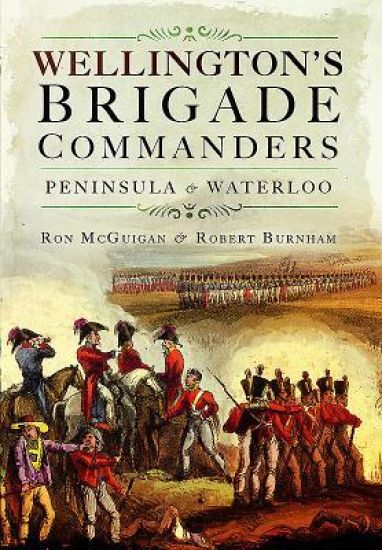
Wellington's Brigade Commanders

Wellington's Brigade Commanders

Robert Burnham; Ron McGuigan

Pen Sword Military
2017
sidottu
Recent research into the Duke of Wellington's armies during the Peninsular War and the Waterloo campaign has enhanced our understanding of the men he led, and this new biographical guide to his brigade commanders is a valuable contribution to this growing field. Ron McGuigan and Robert Burnham have investigated the lives and careers of a group of men who performed a vital role in Wellington's chain of command. These officers were the brigadiers and major generals who, for a variety of reasons, never made the jump to become permanent division commanders. Their characters, experience and level of competence were key factors in the successes and failures of the army as a whole. Their biographies give us a fascinating insight into their individual backgrounds, their strengths and weaknesses, and the makeup of the society they came from. Each biography features a table covering essential information on the individual, his birth and death dates, the dates of his promotions and details of his major commands. This is followed by a concise account of his life and service.