Kirjojen hintavertailu. Mukana 11 343 520 kirjaa ja 12 kauppaa.

Kirjahaku

Etsi kirjoja tekijän nimen, kirjan nimen tai ISBN:n perusteella.

11 kirjaa tekijältä Robert C. Smith

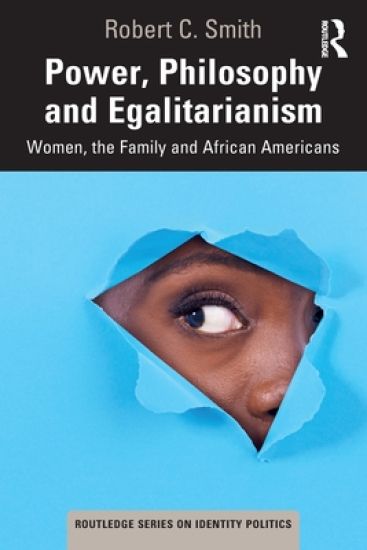
Power, Philosophy and Egalitarianism

Power, Philosophy and Egalitarianism

Robert C. Smith

Routledge
2020
nidottu
In this book, Robert C. Smith presents a philosophical and empirical examination on the subordination of women and blacks in the United States. Comparing liberalism—specifically the major social contract philosophies—and Marxism on the nature of the subordination of blacks and women and their proposals, if any, for women’s and black liberation, Smith argues that sexual and racial equalitarianism in the United States is about politics and power. He begins with a discussion of the multiple meanings of politics and its relationship to power, and an analysis of nine power bases blacks and women should acquire and manipulate in order to advance a moral and substantive equalitarianism. These power bases include money, knowledge (including technology and information), religion, morality, authority, size/solidarity, charisma, violence and status. Smith concludes by making a moral case for racial and sexual equalitarianism and advocates for black leadership to use the power bases available to it to make reparations for the civil rights issue of the 21st century.Power, Philosophy and Egalitarianism is an essential read for all those interested in race, women and politics today.
Power, Philosophy and Egalitarianism

Power, Philosophy and Egalitarianism

Robert C. Smith

Routledge
2020
sidottu
In this book, Robert C. Smith presents a philosophical and empirical examination on the subordination of women and blacks in the United States. Comparing liberalism—specifically the major social contract philosophies—and Marxism on the nature of the subordination of blacks and women and their proposals, if any, for women’s and black liberation, Smith argues that sexual and racial equalitarianism in the United States is about politics and power. He begins with a discussion of the multiple meanings of politics and its relationship to power, and an analysis of nine power bases blacks and women should acquire and manipulate in order to advance a moral and substantive equalitarianism. These power bases include money, knowledge (including technology and information), religion, morality, authority, size/solidarity, charisma, violence and status. Smith concludes by making a moral case for racial and sexual equalitarianism and advocates for black leadership to use the power bases available to it to make reparations for the civil rights issue of the 21st century.Power, Philosophy and Egalitarianism is an essential read for all those interested in race, women and politics today.
Observational Astrophysics

Observational Astrophysics

Robert C. Smith

Cambridge University Press
1995
pokkari
This work provides a comprehensive and accessible introduction to the whole of modern astrophysics beyond the solar system. It combines a critical account of observational methods (telescopes and instrumentation) with a lucid description of the Universe, including stars, galaxies and cosmology.
Racism in the Post-Civil Rights Era

Racism in the Post-Civil Rights Era

Robert C. Smith

State University of New York Press
1996
pokkari
Convincingly demonstrates that racism continues to exist in contemporary American society twenty-five years after the civil rights revolution.This is the first book to assess in a systematic and theoretically informed way the course and status of racism in the post-civil rights era. It convincingly demonstrates that racism continues to exist in contemporary American society twenty-five years after the civil rights revolution. Smith clarifies the concept of racism through a historical analysis of the doctrine and practice of white supremacy. Then, drawing on a variety of data-surveys, court cases, the academic literature, government and privately collected statistical reports and studies, and personal experiences-Smith traces the present-day manifestations of racism ideologically, attitudinally, behaviorally, and institutionally. The final chapter presents a detailed critique of the literature on the black underclass and of William Julius Wilson's thesis on the declining significance of racism in explaining the underclass. In the process, it presents a persuasive argument that the persistence and growth of the underclass is itself major evidence of the prevalence of racism today.
Keeping Track: Success in Track and Field

Keeping Track: Success in Track and Field

Robert C. Smith

Productivity Publications
2007
nidottu
The man veteran Notre Dame Head Track Coach Joe Piane calls "The Gentleman Coach" shares his insights into how to succeed at track and field and cross country as an athlete and as a coach. Bob Smith has experienced track as a Central High School and University of Notre Dame athlete, then as Riley High School coach and later as Notre Dame assistant coach. From sports washout to the Olympic Trials, from student to teacher and coach, his story shows the triumph of hope and perseverance. The book is more than a memoir. It covers every aspect of the sport from the tribulations of a beginning runner to the insights of a master coach. Many area track athletes and coaches are mentioned and/or pictured in the book. The appendices give statistics for years of area and regional competitions. Joe Piane, awardwinning head track coach at the University of Notre Dame for over 30 years, has written the foreword, giving his views of track as a sport and its potential to change lives, encourage growth, and prepare a person to succeed in life.
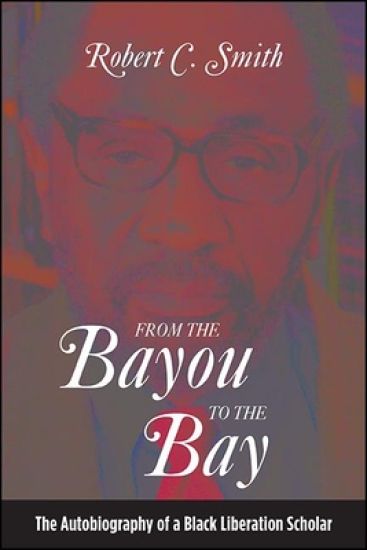
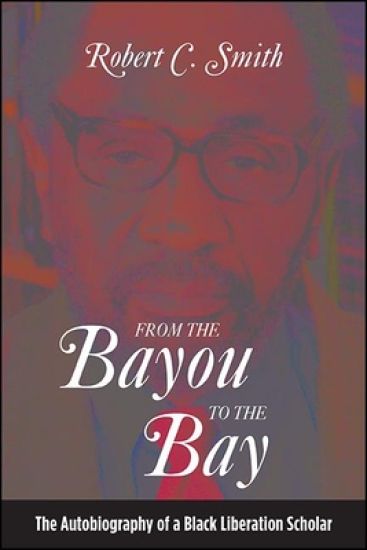
From the Bayou to the Bay

From the Bayou to the Bay

Robert C. Smith

State University of New York Press
2021
sidottu
The intellectual autobiography of a leading scholar in the field of African American Studies.In this refreshingly candid intellectual autobiography, Robert C. Smith traces the evolution of his consciousness and identity from his early days in rural Louisiana to his emergence as one of the nation's leading scholars of African American politics. He interweaves this personal narrative with the significant events and cultural flashpoints of the last half of the twentieth century, including the Watts Rebellion, the rise of the Black Power movement, the tumultuous protests at Berkeley, and the sex and drug revolutions of the 1960s. As a graduate student he experiences the founding of Black Studies, the grounding in blackness at Howard University, and, as a professor, the swirling controversies and contradictions of Black Studies and feminism at San Francisco State University. Smith also locates his story in the context of the scholarly literature on African American politics, imbuing it with his own personal perspective. His account illuminates the past but, at the same time, looks toward the future of the long struggle by African American scholars to use knowledge as a base of power in the fight against racism and white supremacy.
From the Bayou to the Bay

From the Bayou to the Bay

Robert C. Smith

State University of New York Press
2021
pokkari
The intellectual autobiography of a leading scholar in the field of African American Studies.In this refreshingly candid intellectual autobiography, Robert C. Smith traces the evolution of his consciousness and identity from his early days in rural Louisiana to his emergence as one of the nation's leading scholars of African American politics. He interweaves this personal narrative with the significant events and cultural flashpoints of the last half of the twentieth century, including the Watts Rebellion, the rise of the Black Power movement, the tumultuous protests at Berkeley, and the sex and drug revolutions of the 1960s. As a graduate student he experiences the founding of Black Studies, the grounding in blackness at Howard University, and, as a professor, the swirling controversies and contradictions of Black Studies and feminism at San Francisco State University. Smith also locates his story in the context of the scholarly literature on African American politics, imbuing it with his own personal perspective. His account illuminates the past but, at the same time, looks toward the future of the long struggle by African American scholars to use knowledge as a base of power in the fight against racism and white supremacy.
Has Medicine Lost Its Mind?

Has Medicine Lost Its Mind?

Robert C. Smith

GLOBE PEQUOT PRESS
2025
sidottu
Modern health care wreaks havoc on patients with mental disorders. Sadly, only 25 percent of patients with a mental disorder, such as depression or drug abuse, receive any care at all. Worse yet, medical physicians conduct over three-fourths of this care, but it’s almost universally characterized as low quality because they have not been trained in mental illnesses. Contrast this to 60 to 80 percent of patients who receive high quality care for their physical diseases, such as diabetes and heart disease, from the same doctors.One fact illustrates the societal impact of compromised mental health care: mental illnesses are the most common health condition in the US. Most don’t realize this, but the number of people with mental disorders exceed those of heart disease and cancer combined. And one in four Americans will have a major mental illness in any 12-month period, totaling some 90,000,000 individuals; twice that number, one in two, will suffer over their lifetime. Why Society Should Take Note: Poor mental care reverberates throughout America. The familiar problems of unnecessary prescription overdose deaths and deaths by suicide pale before the more widespread but less-recognized effect on patients with undiagnosed and untreated mental illnesses—depression, anxiety, and substance abuse the most common. The disability from these illnesses harms not only individual patients but also their families, communities, and society; astronomical, unnecessary healthcare costs result, in the range of hundreds of billions, even trillions of dollars, and society picks up the tab.Because medicine fails to recognize the problem, the author recommends that the public and its decision-makers take charge. Politicians and policy makers must exert strong pressure and insist that, via policy and funding leverage, medicine include mental disorders on an equal footing with physical diseases. To operationalize this change, a Presidential Commission, a Congressional Commission, or the National Academies of Science, Engineering, and Medicine would analyze present medical education practices to determine how well they adhere to modern scientific understanding. The modern systems view of science is presented in Chapter 6. It integrates patients’ mental and social dimensions with their physical illnesses, thus correcting modern medicine’s isolated focus on physical disorders. Based on this evaluation, they would make recommendations to policy makers about the necessary changes needed to ensure a new direction in medicine that included training medical students and residents to be competent in mental health care and other psychological and social features of patients. That is, to return humanity to medicine. This high-level review mechanism to induce change was successful in changing medicine over 100 years ago in what was called the Flexner Report of 1910. Hence, the author calls for a “New Flexner Report.”
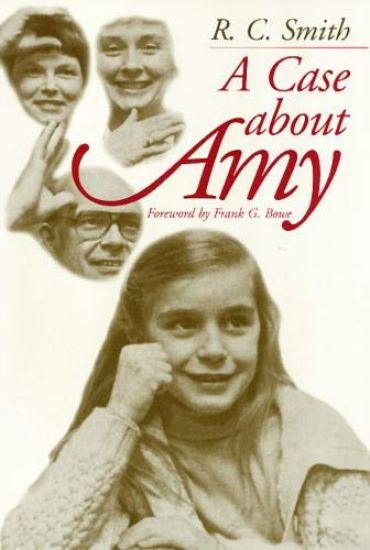
Case About Amy

Case About Amy

Robert C. Smith

Temple University Press,U.S.
1996
sidottu
The Rowley family's struggle began when Amy entered kindergarten and culminated five years later in a pivotal decision by the U.S. Supreme Court. In effect, the Court majority concluded that the Individuals with Disabilities Education Act did not mandate equal opportunity for children with disabilities in classes with typical children; a disappointing decision for disability advocates. The Supreme Court decided that schools were required only to provide enough help for children with disabilities to pass from grade to grade. The Court reversed the lower courts' rulings, which had granted Amy an interpreter, setting a precedent that could affect the quality of education for all individuals with disabilities. From the time Amy entered kindergarten in Peekskill, New York, her parents battled with school officials to get a sign language interpreter in the classroom. Nancy and Clifford Rowley, also deaf, struggled with officials for their own right to a communications process in which they could fully participate. Stuck in limbo was a bright, inquisitive child, forced to rely on partial lipreading of rapid classroom instruction and interaction, and sound amplifiers that were often broken and always cumbersome. R.C. Smith chronicles the Rowley family's dealings with school boards, lawyers, teachers, expert consultants, advocates, and supporters, and their staunch determination to get through the exhaustive process of presenting the case time after time to school adjudicative bodies and finally the federal courts. The author also documents his own "coming to awareness" about how the "able" see the "disabled." In the series Health, Society, and Policy, edited by Sheryl Ruzek and Irving Kenneth Zola.
Hanes Walton, Jr.: Architect of the Black Science of Politics
Hanes Walton Jr. (1941-2013) was a pioneering and prolific scholar of African American politics, and the architect of the modern scientific study of the subject.The first person to earn a PhD in political science from Howard University, Walton devoted his career to laying the intellectual foundations in his writings, and lobbying for the establishment of black politics as a subfield in political science. This study comprehensively analyses Walton’s corpus, while providing a history of the development of the study of black politics in political science. It concludes with an analysis of how the subfield has evolved since Walton’s pioneering work.