Kirjojen hintavertailu. Mukana 12 141 387 kirjaa ja 12 kauppaa.

Kirjahaku

Etsi kirjoja tekijän nimen, kirjan nimen tai ISBN:n perusteella.

14 kirjaa tekijältä Robert Conquest

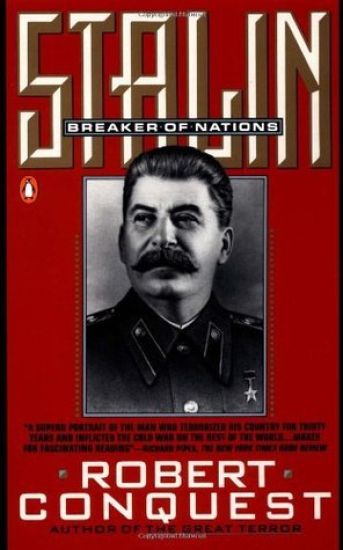
Stalin: Breaker of Nations

Stalin: Breaker of Nations

Robert Conquest

PENGUIN BOOKS
1992
nidottu
Of all the despots of our time, Joseph Stalin lasted the longest and wielded the greatest power, and his secrets have been the most jealously guarded--even after his death. In this book, the first to draw from recently released archives, Robert Conquest gives us Stalin as a child and student; as a revolutionary and communist theoretician; as a political animal skilled in amassing power and absolutely ruthless in maintaining it. He presents the landmarks of Stalin's rule: the class with Lenin; collectivization; the Great Terror; the Nazi-Soviet pact and the Nazi-Soviet war; the anti-Semitic campaign that preceded his death; and the legacy he left behind. Distilling a lifetime's study, weaving detail, analysis, and research, Conquest has given us an extraordinarily powerful narrative of this incredible figure. -Thoughtful and thorough and shot through with insight.---The Washington Post Book World-Definitive . . . a magnificent, even poetic, act of historical retribution.---The New Leader-Brilliant . . . this book probably is the most cogent and readable account of Stalin's life yet published.---The San Diego Union
The Harvest of Sorrow: Soviet Collectivization and the Terror-Famine
The Harvest of Sorrow is the first full history of one of the most horrendous human tragedies of the 20th century. Between 1929 and 1932 the Soviet Communist Party struck a double blow at the Russian peasantry: dekulakization, the dispossession and deportation of millions of peasant families, and collectivization, the abolition of private ownership of land and the concentration of the remaining peasants in party-controlled "collective" farms. This was followed in 1932-33 by a "terror-famine," inflicted by the State on the collectivized peasants of the Ukraine and certain other areas by setting impossibly high grain quotas, removing every other source of food, and preventing help from outside--even from other areas of the Soviet Union--from reaching the starving populace. The death toll resulting from the actions described in this book was an estimated 14.5 million--more than the total number of deaths for all countries in World War I. Ambitious, meticulously researched, and lucidly written, The Harvest of Sorrow is a deeply moving testament to those who died, and will register in the Western consciousness a sense of the dark side of this century's history.
The Harvest of Sorrow

The Harvest of Sorrow

Robert Conquest

OUP Australia and New Zealand
1987
nidottu
The Harvest of Sorrow is the first full history of one of the most horrendous human tragedies of the 20th century. Between 1929 and 1932 the Soviet Communist Party struck a double blow at the Russian peasantry: dekulakization, the dispossession and deportation of millions of peasant families, and collectivization, the abolition of private ownership of land and the concentration of the remaining peasants in party-controlled "collective" farms. This was followed in 1932-33 by a "terror-famine," inflicted by the State on the collectivized peasants of the Ukraine and certain other areas by setting impossibly high grain quotas, removing every other source of food, and preventing help from outside--even from other areas of the Soviet Union--from reaching the starving populace. The death toll resulting from the actions described in this book was an estimated 14.5 million--more than the total number of deaths for all countries in World War I. Ambitious, meticulously researched, and lucidly written, The Harvest of Sorrow is a deeply moving testament to those who died, and will register in the Western consciousness a sense of the dark side of this century's history.
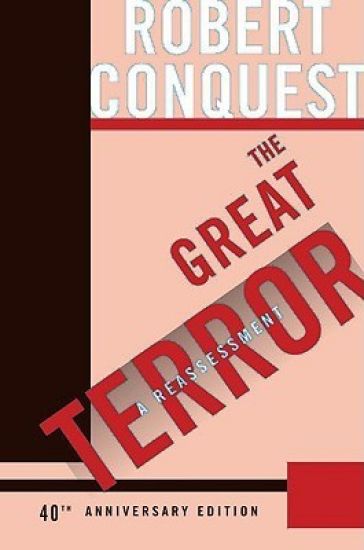
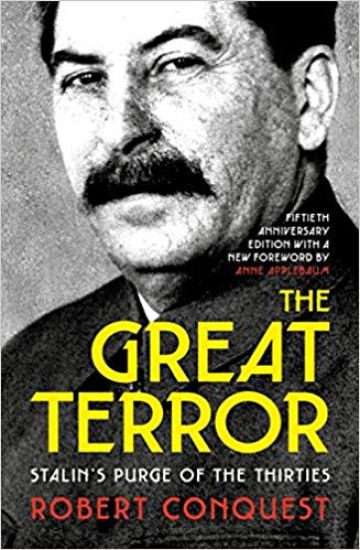
The Great Terror: A Reassessment, 40th Anniversary Edition

The Great Terror: A Reassessment, 40th Anniversary Edition

Robert Conquest

Oxford University Press
2007
sidottu
The definitive work on Stalin's purges, Robert Conquest's The Great Terror was universally acclaimed when it first appeared in 1968. Harrison Salisbury called it "brilliant...not only an odyssey of madness, tragedy, and sadism, but a work of scholarship and literary craftsmanship." And in recent years it has received equally high praise in the former Soviet Union, where it is now considered the definitive account of the period. When Conquest wrote the original volume, he relied heavily on unofficial sources. With the advent of glasnost, an avalanche of new material became available, and Conquest mined this enormous cache to write, in 1990, a substantially new edition of his classic work, adding enormously to the detail. Both a leading historian and a highly respected poet, Conquest blends profound research with evocative prose, providing not only an authoritative account of Stalin's purges, but also a compelling and eloquent chronicle of one of this century's most tragic events. He provides gripping accounts of everything from the three great "Moscow Trials," to methods of obtaining confessions, the purge of writers and other members of the intelligentsia, life in the labor camps, and many other key matters. On the fortieth anniversary of the first edition, in the light of further archival releases, and new material published in Moscow and elsewhere, it remains remarkable how many of Conquest's most disturbing conclusions have continued to bear up. This volume, featuring a new preface by Conquest, rounds out the picture of this huge historical tragedy, further establishing the book as the key study of one of the twentieth centurys most lethal, and longest-misunderstood, offenses against humanity.
The Great Terror: A Reassessment

The Great Terror: A Reassessment

Robert Conquest

Oxford University Press
2007
nidottu
The definitive work on Stalin's purges, Robert Conquest's The Great Terror was universally acclaimed when it first appeared in 1968. Harrison Salisbury called it "brilliant...not only an odyssey of madness, tragedy, and sadism, but a work of scholarship and literary craftsmanship." And in recent years it has received equally high praise in the former Soviet Union, where it is now considered the definitive account of the period. When Conquest wrote the original volume, he relied heavily on unofficial sources. With the advent of glasnost, an avalanche of new material became available, and Conquest mined this enormous cache to write, in 1990, a substantially new edition of his classic work, adding enormously to the detail. Both a leading historian and a highly respected poet, Conquest blends profound research with evocative prose, providing not only an authoritative account of Stalin's purges, but also a compelling and eloquent chronicle of one of this century's most tragic events. He provides gripping accounts of everything from the three great "Moscow Trials," to methods of obtaining confessions, the purge of writers and other members of the intelligentsia, life in the labor camps, and many other key matters. On the fortieth anniversary of the first edition, in the light of further archival releases, and new material published in Moscow and elsewhere, it remains remarkable how many of Conquest's most disturbing conclusions have continued to bear up. This volume, featuring a new preface by Conquest, rounds out the picture of this huge historical tragedy, further establishing the book as the key study of one of the twentieth centurys most lethal, and longest-misunderstood, offenses against humanity.
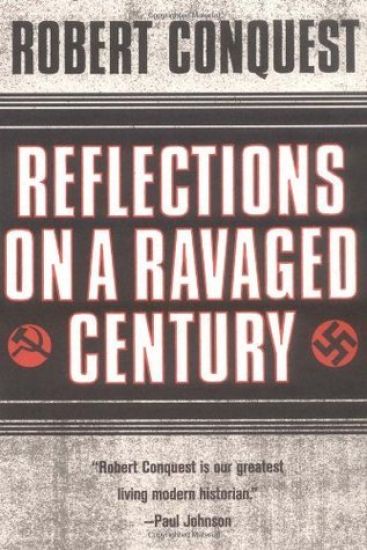
Reflections on a Ravaged Century

Reflections on a Ravaged Century

Robert Conquest

W. W. Norton Company
2001
nidottu
Robert Conquest has been called by Paul Johnson "our greatest living modern historian." As a new century begins, Conquest offers an illuminating examination of our past failures and a guide to where we should go next. Graced with one of the most acute gifts for political prescience since Orwell, Conquest assigns responsibility for our century s cataclysms not to impersonal economic or social forces but to the distorted ideologies of revolutionary Marxism and National Socialism. The final, sobering chapters of Reflections on a Ravaged Century concern themselves with some coming storms, notably that of the European Union, which Conquest believes is an economic, cultural, and geographical misconception divisive of the West and doomed to failure. Winner of the Ingersoll Prize; winner of the Richard M. Weaver Prize; a New York Times Notable Book.
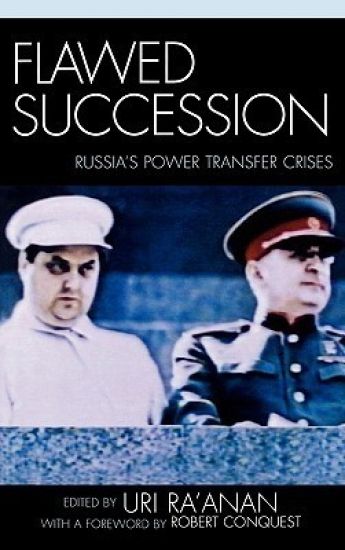
Flawed Succession

Flawed Succession

Robert Conquest

Lexington Books
2005
sidottu
This authoritative study examines Russia's four key succession crises: after Stalin's death, throughout Khrushchev's primacy, during the implosion of the USSR, and with Putin's ascent to power. The distinguished authors argue that the common denominator has been the absence of a transparent, non-arbitrary, and lawful mechanism for the transfer of political power. Consequently, contenders for leadership have engaged in vicious power struggles followed by pseudo-legitimation of the victor. As Moscow reemerges as a major international actor, its unpredictability domestically triggers after shocks well beyond Russia's borders. Drawing on newly available primary sources, this book provides essential insights for practitioners and students of policy alike.
Flawed Succession

Flawed Succession

Robert Conquest

Lexington Books
2005
nidottu
This authoritative study examines Russia's four key succession crises: after Stalin's death, throughout Khrushchev's primacy, during the implosion of the USSR, and with Putin's ascent to power. The distinguished authors argue that the common denominator has been the absence of a transparent, non-arbitrary, and lawful mechanism for the transfer of political power. Consequently, contenders for leadership have engaged in vicious power struggles followed by pseudo-legitimation of the victor. As Moscow reemerges as a major international actor, its unpredictability domestically triggers after shocks well beyond Russia's borders. Drawing on newly available primary sources, this book provides essential insights for practitioners and students of policy alike.
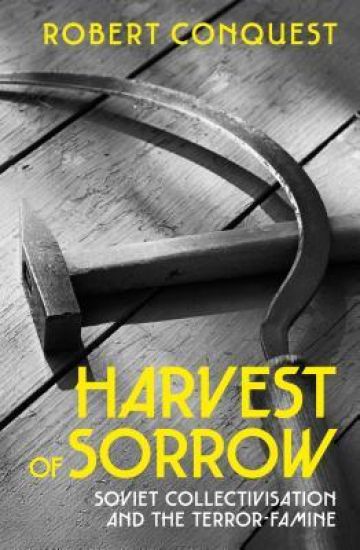
Harvest of Sorrow

Harvest of Sorrow

Robert Conquest

Vintage Publishing
2018
pokkari
Robert Conquest's The Harvest of Sorrow helped to reveal to the West the true and staggering human cost of the Soviet regime in its deliberate starvation of millions of peasants and remains one of the most important works of Soviet history ever written.
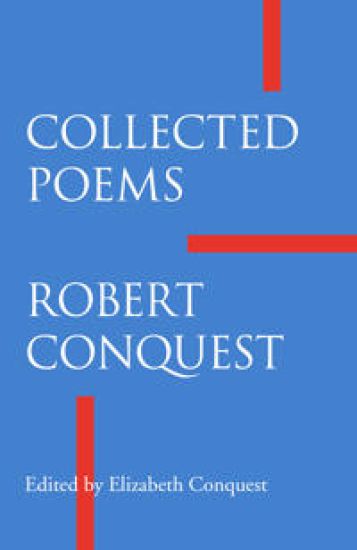
Collected Poems

Collected Poems

Robert Conquest

The Waywiser Press
2020
sidottu
Poetry. Edited by Elizabeth Conquest. This volume brings together eight decades of work by a writer described in the Dictionary of National Biography as "a man of letters, attaining equal distinction as poet, historian, and political commentator." Robert Conquest's many honours include the PEN Brazil Prize (for the best long poem about the Second World War), a Festival of Britain verse prize, and the Michael Braude Award for Light Verse. His poems cover an astonishing range: Clive James praised his "fastidiously chiselled poems which proved his point that cool reason was not necessarily lyricism's enemy," while Philip Larkin, applauding Conquest's virtuosity with the limerick form, inscribed a copy of High Windows "To Bob, Il Miglior Fabbro (or whatever it was) -- at least over five lines." Conquest neatly skewered pretension wherever he found it, but throughout his long life also wrote eloquent poems of love, longing, and loss. As the poet and critic David Mason observed, "These are poems by a man of the world who has seen and studied much and has apparently lived with gusto. It is good to be in his company.""All Conquest's strengths are evident here -- wit, love of life, ferocious technique, and the infinite taking of pains."--Martin Amis"These vigorous poems have an exquisite colour sense ... They linger wittily over longing ... They are irreverent to the cosmos ... and, with a nod to Larkin, savage to biographers."--Alison Brackenbury, Poetry Review"Much of Conquest's best-known poetry is funny, even absurdly hilarious, but when it is serious it is continuous with the voice that wrote on history and politics."--Dick Davis, The Hopkins Review"A strong and individual voice talking about things that matter ... hard energetic movement ... lucidity and power."--Thom Gunn, The Spectator"Only a first-rate poet could have written stanzas of such deceptive lightness and ease."--Selina Hastings"In poems about love, the subversive, lyrical proof that desire goes on into old age is alive in every cadence and perception. As ever, he makes many a younger writer look short of energy."--Clive James" Conquest's] virtues--precision, wit, craftsmanship--only seem old fashioned to those who believe poetry can do without them. For others, this book will be a continual reminder of times when poetry was turned to in the sure and certain hope of pleasure and instruction."--Alan Jenkins"The poems ... are smart, funny, tough-minded, generous, and utterly individual."--Zachary Leader"A fully developed and impressive style ... he writes with clarity, authority and cunning."--New York Times Book Review"Among the most original short pieces to be published in recent years ... remarkable in their combination of lyrical rhetoric and delicate observation."--The Times Literary Supplement"Conquest's red-blooded approach to Eros in these poems refreshes rather than repels. For someone critics have accused of blokishness, Conquest writes with great subtlety and often with great tenderness."--David Yezzi, The New Criterion