Kirjojen hintavertailu. Mukana 12 437 811 kirjaa ja 12 kauppaa.

Kirjahaku

Etsi kirjoja tekijän nimen, kirjan nimen tai ISBN:n perusteella.

8 kirjaa tekijältä Robert D. Bullard

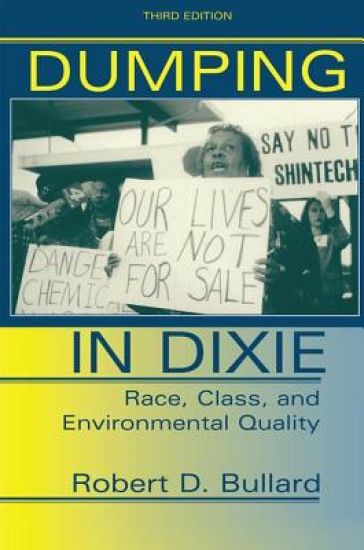
Dumping In Dixie

Dumping In Dixie

Robert D. Bullard

Routledge
2019
sidottu
This book provides the major economic, social, and psychological impacts associated with the siting of noxious facilities and their significance in mobilizing the African American community. It explores the barriers to environmental and social justice experienced by African Americans.
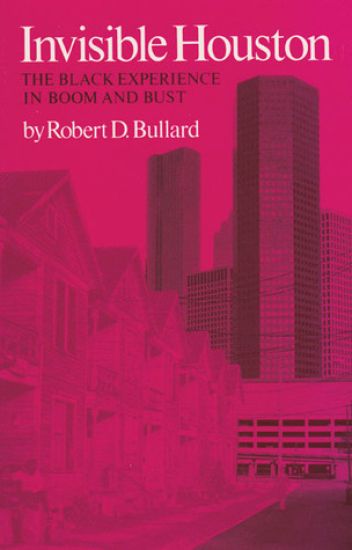
Invisible Houston

Invisible Houston

Robert D. Bullard

Texas A M University Press
2000
nidottu
Houston was Boomtown USA in the 1970s, growing through tremendous immigration of people and through frequent annexation of outlying areas. But in the shadow of the high-rise "petropolis" was another city ignored by and invisible to Houston municipal boosters and the national media. Black Houston, the largest black community in the South, remained largely untouched by the benefits of the boom but bore many of the burdens. Robert D. Bullard systematically explores major demographic, social, economic, and political factors that helped make Houston the "golden buckle" of the Sunbelt. He then chronicles the rise of Houston's black neighborhoods and analyzes the problems that have accrued to the black community over the years, concentrating on the boom era of the 1970s and the dwindling of the economy and of government commitment to affirmative action in the late 1980s. Case studies conducted in Houston's Third Ward--a microcosm of the larger black community--provide data on housing patterns, discrimination, pollution, law enforcement, and leadership, issues that the author discusses and relates to the larger ones of institutional racism, poverty, and politics. During Houston's rapid growth, freeways were built over black neighborhoods and municipal services were stretched away from the inner city and poverty pockets to the new, far-flung, and mostly white city limits. Businesses thrived, but many jobs called for advanced education and skills, while black youth still suffered from inadequate schools, inexperienced teachers, and, later, unemployment rates nearly double those of whites. When the oil-based economy collapsed in the early eighties, many blacks again bore a heavier share of the burdens. Invisible Houston describes the rich cultural history of the South's largest black community and analyzes the contemporary issues that offer the chance for black Houston to become visible to itself, to the larger community, and to the nation.
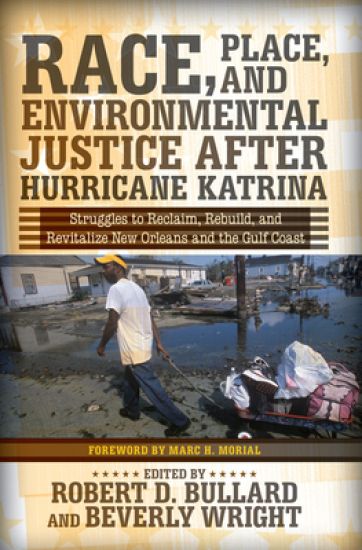
Race, Place, and Environmental Justice After Hurricane Katrina

Race, Place, and Environmental Justice After Hurricane Katrina

Robert D. Bullard; Beverly Wright

Routledge
2019
sidottu
On August 29, 2005, Hurricane Katrina made landfall near New Orleans leaving death and destruction across the Louisiana, Mississippi, and Alabama Gulf Coast counties. The lethargic and inept emergency response that followed exposed institutional flaws, poor planning, and false assumptions that are built into the emergency response and homeland security plans and programs. Questions linger: What went wrong? Can it happen again? Is our government equipped to plan for, mitigate, respond to, and recover from natural and manmade disasters? Can the public trust government response to be fair? Does race matter? Racial disparities exist in disaster response, cleanup, rebuilding, reconstruction, and recovery. Race plays out in natural disaster survivors' ability to rebuild, replace infrastructure, obtain loans, and locate temporary and permanent housing. Generally, low-income and people of color disaster victims spend more time in temporary housing, shelters, trailers, mobile homes, and hotels - and are more vulnerable to permanent displacement. Some 'temporary' homes have not proved to be that temporary. In exploring the geography of vulnerability, this book asks why some communities get left behind economically, spatially, and physically before and after disasters strike.
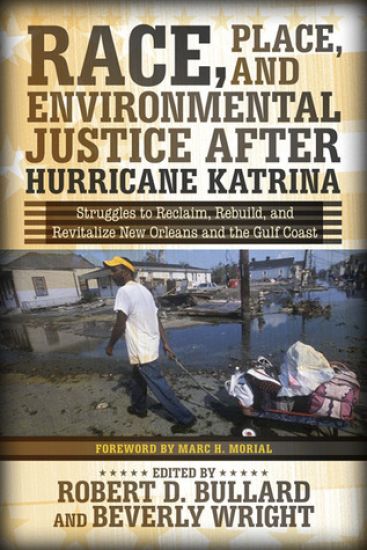
Race, Place, and Environmental Justice After Hurricane Katrina

Race, Place, and Environmental Justice After Hurricane Katrina

Robert D. Bullard; Beverly Wright

Westview Press Inc
2009
nidottu
On August 29, 2005, Hurricane Katrina made landfall near New Orleans leaving death and destruction across the Louisiana, Mississippi, and Alabama Gulf Coast counties. The lethargic and inept emergency response that followed exposed institutional flaws, poor planning, and false assumptions that are built into the emergency response and homeland security plans and programs. Questions linger: What went wrong? Can it happen again? Is our government equipped to plan for, mitigate, respond to, and recover from natural and manmade disasters? Can the public trust government response to be fair? Does race matter? Racial disparities exist in disaster response, cleanup, rebuilding, reconstruction, and recovery. Race plays out in natural disaster survivors' ability to rebuild, replace infrastructure, obtain loans, and locate temporary and permanent housing. Generally, low-income and people of color disaster victims spend more time in temporary housing, shelters, trailers, mobile homes, and hotels - and are more vulnerable to permanent displacement. Some 'temporary' homes have not proved to be that temporary. In exploring the geography of vulnerability, this book asks why some communities get left behind economically, spatially, and physically before and after disasters strike.
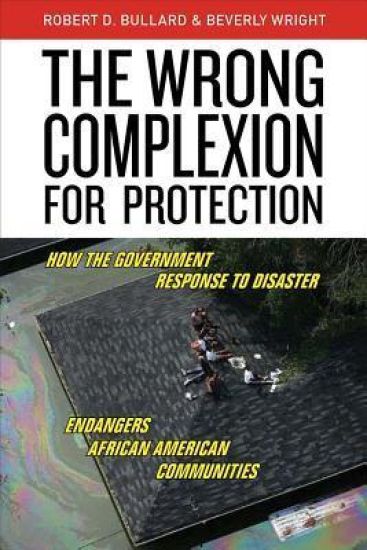
The Wrong Complexion for Protection

The Wrong Complexion for Protection

Robert D. Bullard; Beverly Wright

New York University Press
2012
sidottu
Uncovers the ways the United States government responds to natural and human-induced disasters in relation to race over the past eight decades When the images of desperate, hungry, thirsty, sick, mostly black people circulated in the aftermath of Hurricane Katrina, it became apparent to the whole country that race did indeed matter when it came to government assistance. In The Wrong Complexion for Protection, Robert D. Bullard and Beverly Wright place the government response to natural and human-induced disasters in historical context over the past eight decades. They compare and contrast how the government responded to emergencies, including environmental and public health emergencies, toxic contamination, industrial accidents, bioterrorism threats and show that African Americans are disproportionately affected. Bullard and Wright argue that uncovering and eliminating disparate disaster response can mean the difference between life and death for those most vulnerable in disastrous times.
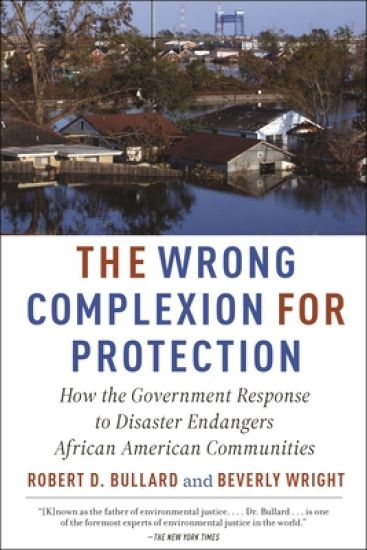
The Wrong Complexion for Protection

The Wrong Complexion for Protection

Robert D. Bullard; Beverly Wright

NEW YORK UNIVERSITY PRESS
2023
pokkari
Uncovers the ways the United States government responds to natural and human-induced disasters in relation to race over the past eight decades When the images of desperate, hungry, thirsty, sick, mostly black people circulated in the aftermath of Hurricane Katrina, it became apparent to the whole country that race did indeed matter when it came to government assistance. In The Wrong Complexion for Protection, Robert D. Bullard and Beverly Wright place the government response to natural and human-induced disasters in historical context over the past eight decades. They compare and contrast how the government responded to emergencies, including environmental and public health emergencies, toxic contamination, industrial accidents, bioterrorism threats and show that African Americans are disproportionately affected. Bullard and Wright argue that uncovering and eliminating disparate disaster response can mean the difference between life and death for those most vulnerable in disastrous times.
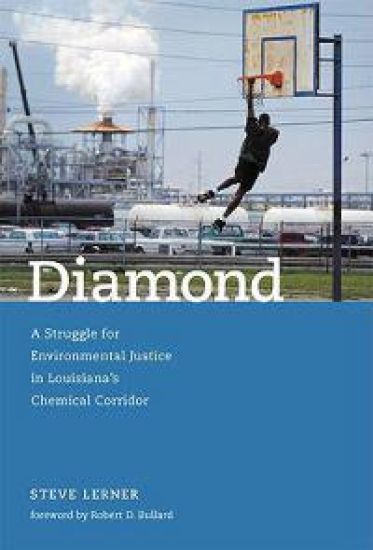
Diamond

Diamond

Steve Lerner; Robert D. Bullard

MIT Press
2006
pokkari
The story of how a mixed-income minority community in Louisiana's Chemical Corridor fought Shell Oil and won.For years, the residents of Diamond, Louisiana, lived with an inescapable acrid, metallic smell-the "toxic bouquet" of pollution-and a mysterious chemical fog that seeped into their houses. They looked out on the massive Norco Industrial Complex: a maze of pipelines, stacks topped by flares burning off excess gas, and huge oil tankers moving up the Mississippi. They experienced headaches, stinging eyes, allergies, asthma, and other respiratory problems, skin disorders, and cancers that they were convinced were caused by their proximity to heavy industry. Periodic industrial explosions damaged their houses and killed some of their neighbors. Their small, African-American, mixed-income neighborhood was sandwiched between two giant Shell Oil plants in Louisiana's notorious Chemical Corridor. When the residents of Diamond demanded that Shell relocate them, their chances of success seemed slim: a community with little political clout was taking on the second-largest oil company in the world. And yet, after effective grassroots organizing, unremitting fenceline protests, seemingly endless negotiations with Shell officials, and intense media coverage, the people of Diamond finally got what they wanted: money from Shell to help them relocate out of harm's way. In this book, Steve Lerner tells their story.Around the United States, struggles for environmental justice such as the one in Diamond are the new front lines of both the civil rights and the environmental movements, and Diamond is in many ways a classic environmental-justice story: a minority neighborhood, faced with a polluting industry in its midst, fights back. But Diamond is also the history of a black community that goes back to the days of slavery. In 1811, Diamond (then the Trepagnier Plantation) was the center of the largest slave rebellion in United States history. Descendants of these slaves were among the participants in the modern-day Diamond relocation campaign.Steve Lerner talks to the people of Diamond, and lets them tell their story in their own words. He talks also to the residents of a nearby white neighborhood-many of whom work for Shell and have fewer complaints about the plants-and to environmental activists and Shell officials. His account of Diamond's 30-year ordeal puts a human face on the struggle for environmental justice in the United States.