Kirjojen hintavertailu. Mukana 11 699 587 kirjaa ja 12 kauppaa.

Kirjahaku

Etsi kirjoja tekijän nimen, kirjan nimen tai ISBN:n perusteella.

20 kirjaa tekijältä Robert Duncan

Robert Duncan

Robert Duncan

Robert Duncan

University of California Press
2012
sidottu
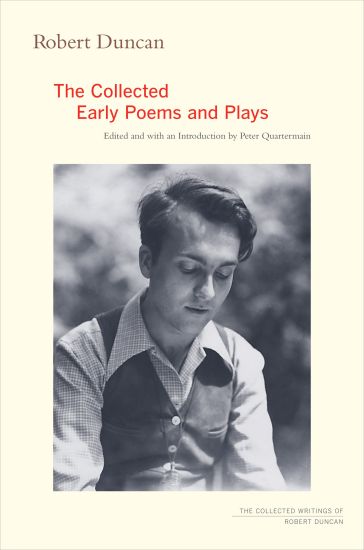
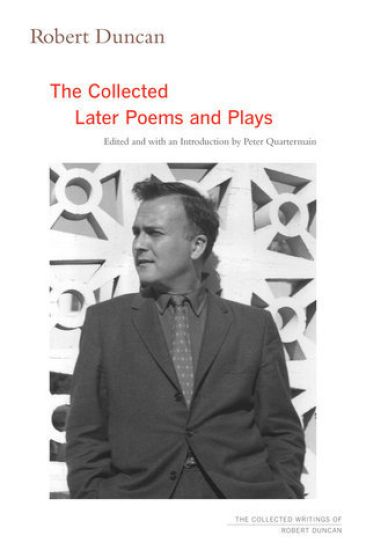
A landmark in the publication of twentieth-century American poetry, this first volume of the long-awaited collected poetry, non-critical prose, and plays of Robert Duncan gathers all of Duncan's books and magazine publications up to and including "Letters: Poems 1953-1956". Deftly edited, it thoroughly documents the first phase of Duncan's distinguished life in writing, making it possible to trace the poet's development as he approaches the brilliant work of his middle period. This volume includes the celebrated works "Medieval Scenes" and "The Venice Poem", all of Duncan's long unavailable major ventures into drama, his extensive "imitations" of Gertrude Stein, and the remarkable poems written in "Majorca" as responses to a series of collaged paste-ups by Duncan's life-long partner, the painter Jess. Books appear in chronological order of publication, with uncollected periodical and other publications arranged chronologically, following each book. The introduction includes a biographical commentary on Duncan's early life and works, and clears an initial path through the textual complexities of his early writing. Notes offer brief commentaries on each book and on many of the poems. The volume to follow, "The Collected Later Poetry and Plays", will include "The Opening of the Field" (1960), "Roots and Branches" (1964), "Bending the Bow" (1968), "Ground Work" (1984), and "Ground Work II" (1987).
Robert Duncan

Robert Duncan

Robert Duncan

University of California Press
2014
sidottu
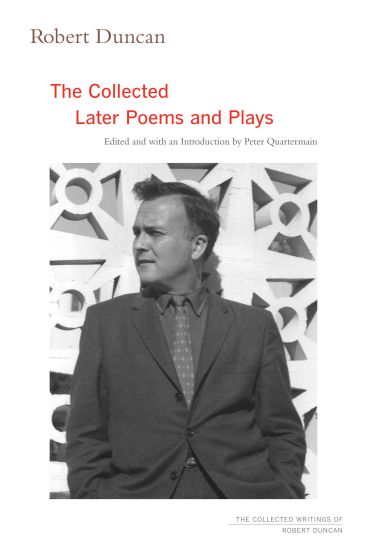
Profoundly original yet insistent on the derivative quality of his work, transgressive yet affirmative of tradition, Robert Duncan (1919-1988) was a generative force among American poets, and his poetry and poetics establish him as a major figure in mid- and late- 20th-century American letters. This second volume of Robert Duncan's collected poetry and plays presents authoritative annotated texts of both collected and uncollected work from his middle and late writing years (1958-1988), with commentaries on each of the five books from this period: The Opening of the Field, Roots and Branches, Bending the Bow, and the two volumes of Ground Work. The biographical and critical introduction discusses Duncan as a late Romantic and postmodern American writer; his formulation of a homosexual poetics; his development of the serial poem; the notation and centrality of sound as organizing principle; his relations with such fellow poets as Robin Blaser, Charles Olson, and Jack Spicer; his indebtedness to Alfred North Whitehead; and his collaborations with the painter Jess Collins, his lifelong partner. Texts include his anti-war poems of the 1960s and 70s, his homages to Dante and other canonical poets, and his translations from the French of Gerard de Nerval, as well as the complete Structure of Rime and Passages series.
Robert Duncan

Robert Duncan

Robert Duncan

University of California Press
2014
sidottu
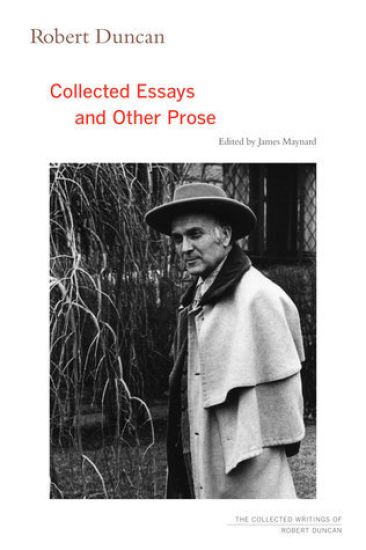
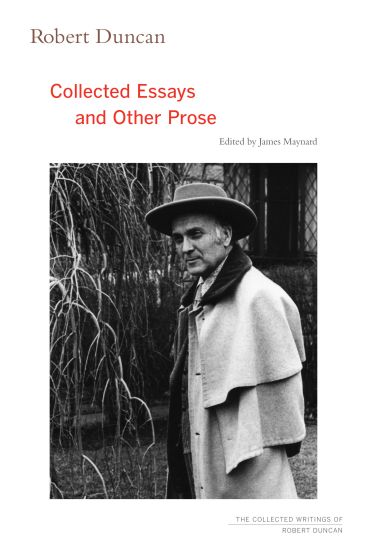
This volume in the Collected Writings of Robert Duncan series gathers a far-reaching selection of Robert Duncan's prose writings including most of his longer and more well-known essays along with other prose that has never been widely available. Ranging in original publication dates between 1940 and 1985, the forty-one titles reveal a great deal about Duncan's life in poetry - including his impressions of poets whose work he admires, both contemporaries and precursors. Evocative and eclectic, this work delineates the intellectual contexts and sources of Duncan's poetics, and opens a window onto the literary communities in which he participated.
Robert Duncan

Robert Duncan

Robert Duncan

University of California Press
2019
pokkari
This volume in the Collected Writings of Robert Duncan series gathers a far-reaching selection of Robert Duncan’s prose writings including most of his longer and more well-known essays along with other prose that has never been widely available. Ranging in original publication dates between 1940 and 1985, the forty-one titles reveal a great deal about Duncan’s life in poetry—including his impressions of poets whose work he admires, both contemporaries and precursors. Evocative and eclectic, this work delineates the intellectual contexts and sources of Duncan’s poetics, and opens a window onto the literary communities in which he participated.
Robert Duncan

Robert Duncan

Robert Duncan

University of California Press
2019
pokkari
A landmark in the publication of twentieth-century American poetry, this first volume of the long-awaited collected poetry, non-critical prose, and plays of Robert Duncan gathers all of Duncan’s books and magazine publications up to and including Letters: Poems 1953–1956. Deftly edited, it thoroughly documents the first phase of Duncan’s distinguished life in writing, making it possible to trace the poet’s development as he approaches the brilliant work of his middle period. This volume includes the celebrated works Medieval Scenes and The Venice Poem, all of Duncan’s long unavailable major ventures into drama, his extensive “imitations” of Gertrude Stein, and the remarkable poems written in Majorca as responses to a series of collaged paste-ups by Duncan’s life-long partner, the painter Jess. Books appear in chronological order of publication, with uncollected periodical and other publications arranged chronologically, following each book. The introduction includes a biographical commentary on Duncan’s early life and works, and clears an initial path through the textual complexities of his early writing. Notes offer brief commentaries on each book and on many of the poems.The volume to follow, The Collected Later Poetry and Plays, will include The Opening of the Field (1960), Roots and Branches (1964), Bending the Bow (1968), Ground Work (1984), and Ground Work II (1987).
Robert Duncan

Robert Duncan

Robert Duncan

University of California Press
2019
pokkari
Profoundly original yet insistent on the derivative quality of his work, transgressive yet affirmative of tradition, Robert Duncan (1919-1988) was a generative force among American poets, and his poetry and poetics establish him as a major figure in mid- and late- 20th-century American letters. This second volume of Robert Duncan’s collected poetry and plays presents authoritative annotated texts of both collected and uncollected work from his middle and late writing years (1958-1988), with commentaries on each of the five books from this period: The Opening of the Field, Roots and Branches, Bending the Bow, and the two volumes of Ground Work. The biographical and critical introduction discusses Duncan as a late Romantic and postmodern American writer; his formulation of a homosexual poetics; his development of the serial poem; the notation and centrality of sound as organizing principle; his relations with such fellow poets as Robin Blaser, Charles Olson, and Jack Spicer; his indebtedness to Alfred North Whitehead; and his collaborations with the painter Jess Collins, his lifelong partner. Texts include his anti-war poems of the 1960s and 70s, his homages to Dante and other canonical poets, and his translations from the French of Gérard de Nerval, as well as the complete Structure of Rime and Passages series.
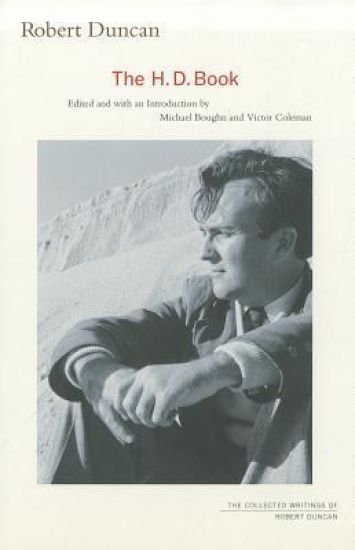
The H.D. Book

The H.D. Book

Robert Duncan

University of California Press
2011
pokkari
This magisterial work, long awaited and long the subject of passionate speculation, is an unprecedented exploration of modern poetry and poetics by one of America's most acclaimed and influential postwar poets. What began in 1959 as a simple homage to the modernist poet H.D. developed into an expansive and unique quest to arrive at a poetics that would fuel Duncan's great work in the 1970s. A meditation on both the roots of modernism and its manifestation in the work of H.D., Ezra Pound, D.H. Lawrence, William Carlos Williams, Edith Sitwell, and many others, Duncan's wide-ranging book is especially notable for its illumination of the role women played in creation of literary modernism. Until now, "The H.D. Book" existed only in mostly out-of-print little magazines in which its chapters first appeared. Now, for the first time published in its entirety, as its author intended, this monumental work - at once an encyclopedia of modernism, a reinterpretation of its key players and texts, and a record of Duncan's quest toward a new poetics - is at last complete and available to a wide audience.
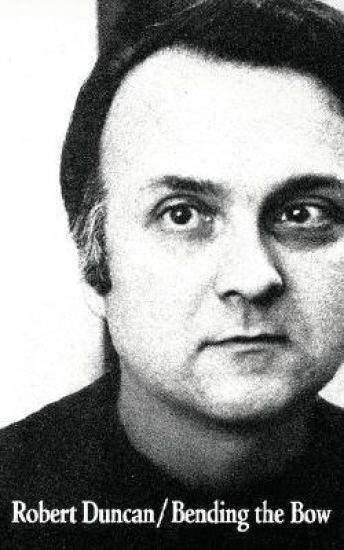
Bending the Bow

Bending the Bow

Robert Duncan

New Directions Publishing Corporation
1982
nidottu
In "Structures of Rime," the open series begun in The Opening of the Field and continued in this volume, Duncan works with ideas, forces, and persons created in language itself––the life and identity of the poet in the poem. With the first thirty poems of "Passages," which form the structural base in Bending the Bow, he has begun a second open series––a multiphasic projection of movements in a field, an imagined universe of the poem that moves out to include all the terms of experience as meaning. Here Duncan draws upon and in turn contributes to a mode in American poetry where Pound’s Cantos, Williams’s Paterson, Zukofsky’s “A,” and Olson’s Maximus Poems have led the way. The chronological composition of Bending the Bow emphasizes Duncan’s belief that the significance of form is that of an event in process. Thus, the poems of the two open series belong ultimately to the configuration of a life in poetry in which there are forms moving within and interpenetrating forms. Versions of Verlaine’s Saint Graal and Parsifal and a translation of Gérard de Nerval’s Les Chimères enter the picture; narrative bridges for the play Adam’s Way have their place in the process; and three major individual poems––"My Mother Would Be a Falconress," "A Shrine to Ameinias," and "Epilogos"––among others make for an interplay of frames of reference and meaning in which even such resounding blasts of outrage at the War in Vietnam as "Up Rising" and "The Soldiers" are not for the poet things in themselves but happenings in a poetry that involve all other parts of his experience.
Roots and Branches

Roots and Branches

Robert Duncan

New Directions Publishing Corporation
1969
nidottu
The poet has said of himself and his work: "I am not an experimentalist or an inventor, but a derivative poet, drawing my art from the resources given by a generation of masters––Stein, Williams, Pound; back of that by the generations of poets that have likewise been dreamers of the Cosmos as Creation and Man as Creative Spirit; and by the work of contemporaries: Zukofsky, Olson, Creeley and Denise Levertov."
The Opening of the Field

The Opening of the Field

Robert Duncan

New Directions Publishing Corporation
1973
nidottu
Speaking of his own work, Robert Duncan (1919-1987) said: "I make poetry as other men make war or make love or make states or revolutions: to exercise my faculties at large." The Opening of the Field, his first major collection, was originally brought out in 1960; in it, Duncan introduced his "Structures of Rime," the open series he continued in his subsequent collections, Roots and Branches (1964) and Bending the Bow (1968), Ground Work: Before the War (1983), and Ground Work II: In the Dark (1987). "Structures of Rime" affirms his belief in the universal integrity of the poem itself in the living process of language. Thus in "The Structure of Rime I" he declares: "O Lasting Sentence, / sentence after sentence I make in your image. In the feet that measure the dance of my pages I hear cosmic intoxications of the man I will be."
Ground Work II

Ground Work II

Robert Duncan

New Directions Publishing Corporation
1988
sidottu
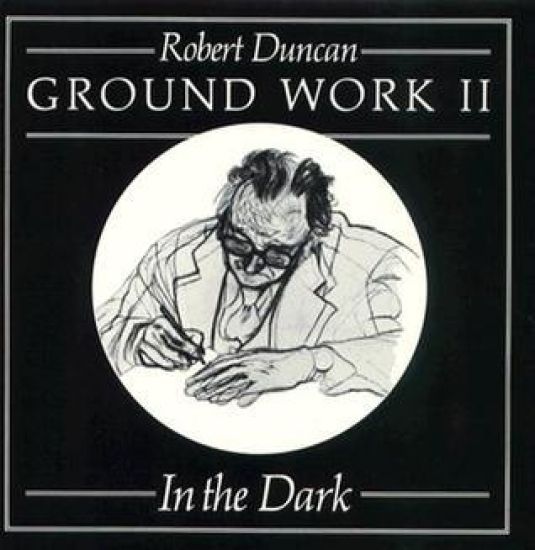
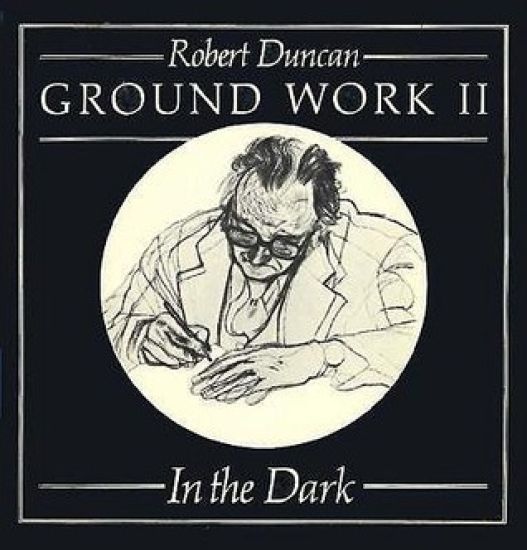
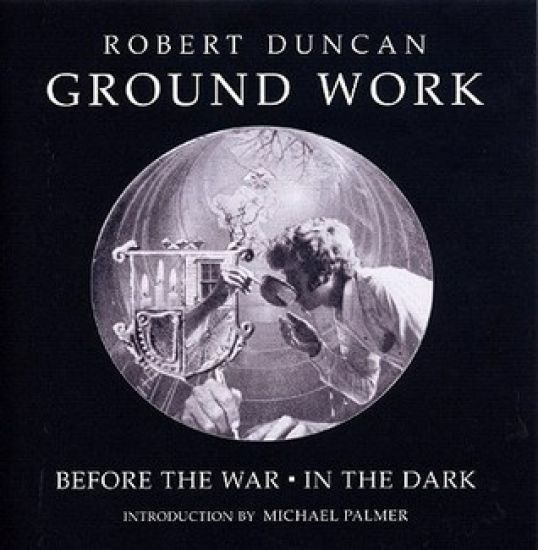
Ground Work II: In the Dark is the concluding volume of Robert Duncan’s later poems. The collection taken as a whole was proposed by the author in 1968 but withheld from publication for fifteen years in order, as he has said, for the poetry of his maturity to gestate. The first volume, Ground Work: Before the War, was published in 1983 to immediate acclaim: it was nominated for the National Book Critics Circle Award and won for Duncan the first National Poetry Award, “for his lifetime devotion to the art of poetry and his grand achievement..” Like Before the War, this second volume is built upon thematic groups of poems: “An Alternate Life,” “To Master Baudelaire,” “Veil, Turbine, Cord, & Bird,” “Regulators,” and “The Five Songs”––the latter two further “Passages” and “Structures of Rime,” sequences that resonate throughout Duncan’s work of the last thirty years. In the Dark, however, echoes a special note of intimacy, rung by the self against eternity, as the poet contemplates “this state/that knows nor sleep nor waking, nor dream…”
Ground Work II

Ground Work II

Robert Duncan

New Directions Publishing Corporation
1988
nidottu
Ground Work II: In the Dark is the concluding volume of Robert Duncan’s later poems. The collection taken as a whole was proposed by the author in 1968 but withheld from publication for fifteen years in order, as he has said, for the poetry of his maturity to gestate. The first volume, Ground Work: Before the War, was published in 1983 to immediate acclaim: it was nominated for the National Book Critics Circle Award and won for Duncan the first National Poetry Award, “for his lifetime devotion to the art of poetry and his grand achievement..” Like Before the War, this second volume is built upon thematic groups of poems: “An Alternate Life,” “To Master Baudelaire,” “Veil, Turbine, Cord, & Bird,” “Regulators,” and “The Five Songs”––the latter two further “Passages” and “Structures of Rime,” sequences that resonate throughout Duncan’s work of the last thirty years. In the Dark, however, echoes a special note of intimacy, rung by the self against eternity, as the poet contemplates “this state/that knows nor sleep nor waking, nor dream…”
A Selected Prose

A Selected Prose

Robert Duncan

New Directions Publishing Corporation
1998
sidottu
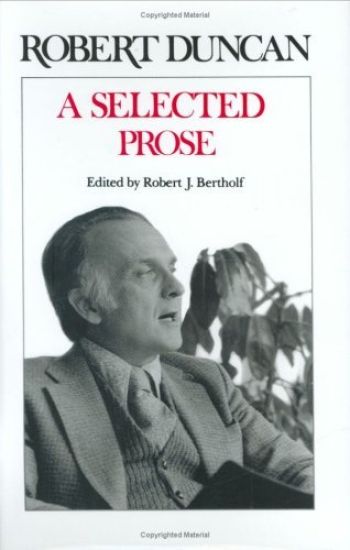
Editor Robert J. Bertholf has taken three core essays from Fictive Certainties (1985), an earlier prose collection that was limited to works written after 1955; to these have been added a variety of Duncan's writings on contemporary artists and such fellow poets as Ezra Pound, Marianne Moore, Louis Zukofsky, Charles Olson, Robert Creeley, Denise Levertov, and Jack Spicer. Included as well are "Rites of Participation, " an excerpt from the still unpublished "H.D. Book"; a long meditation on Edmond Jabes' The Book of Questions, and a revised version of Duncan's controversial and provocative essay of 1944, "The Homosexual in Society."
Selected Poems

Selected Poems

Robert Duncan

NEW DIRECTIONS PUBLISHING CORPORATION
1997
nidottu
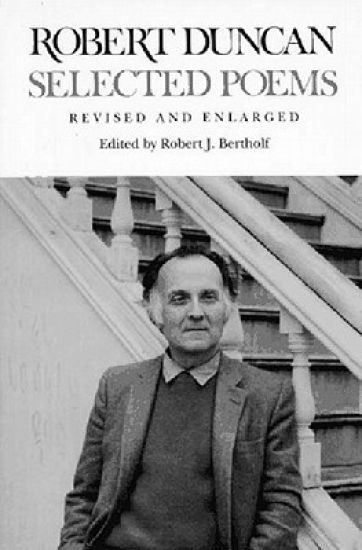
Duncan, like Dante, was a poet of cosmic imagination, intensely aware of his and poetry's role in the ever-expanding logos of creation. His Selected Poems, first published in 1993, is a "useful and portable compilation," says critic Tom Clark, that "provides the most comprehensive available look at the career of the Bay Area's greatest lyric poet." Editor Robert J. Bertholf has enlarged the original collection to include eleven additional poems and excerpts. The second edition of the Selected Poems fully fleshes out the retrospective of works chosen from the whole of Duncan's writing life. From his early poems through his final Ground Work volumes, as well as his serial poems, "Structures of Rime" and "Passages," composed over the course of thirty years, there emerges a prophetic voice of great perception.
Groundwork

Groundwork

Robert Duncan

New Directions Publishing Corporation
2006
nidottu
I am speaking now of the Dream in which America sleeps, the New World, moaning, floundering, in three hundred years of invasions, our own history out of Europe and enslaved Africa.Robert Duncan, from Groundwork Robert Duncan has been widely venerated as one of America's most essential poets: Allen Ginsberg described his poetry as "rapturous wonderings of inspiration," Gwendolyn Brooks called it "a subtle spice," and Susan Howe pointed to Duncan as "my precursor father," Lawrence Ferlinghetti said he "had the finest ear this side of Dante," and Robert Creeley called him "the magister, the singular Master of the Dance." Now Duncan's magnum opus, Groundwork, is available in one groundbreaking edition. The first volume, Groundwork I: Before the War, was published in 1984, after a fifteen-year publishing silence, and received immediate acclaim: it was nominated for a National Book Critics Circle Award and won the first National Poetry Award for Duncan's "lifetime devotion to the art of poetry and his grand achievement...." The second volume, Groundwork II: In the Dark, was published in February 1988, the month of Duncan's death. The internationally renowned poet Michael Palmer has written a marvelous introduction for this new edition, where "the singlemindedness of [Duncan's] life's work shows itself in the confident energy of every line" (Voice Literary Supplement).
Pubs and Patriots

Pubs and Patriots

Robert Duncan

Liverpool University Press
2013
sidottu
In the midst of the First World War concern arose as to the virtues of pursuing intoxication at a time of national emergency. As the military front was supposedly let down by drinkers and shirkers at home, attention quickly turned to British drinking practices. Britain, it seemed, was under the duress of a widespread addiction to boozing. When prohibition was deemed too extreme to contemplate, and nationalisation too impractical, the government created an organisation known as the Central Control Board (CCB). This body soon set about reforming the drinking habits of a nation. Loved by a few, but disliked by most, this group was responsible for the most radical and unique experiment in alcohol control ever conducted in Britain. The story of the CCB, how and why it was formed, its history and its legacy upon the British war effort are told within Pubs and Patriots: The Drink Crisis in Britain during World War One.
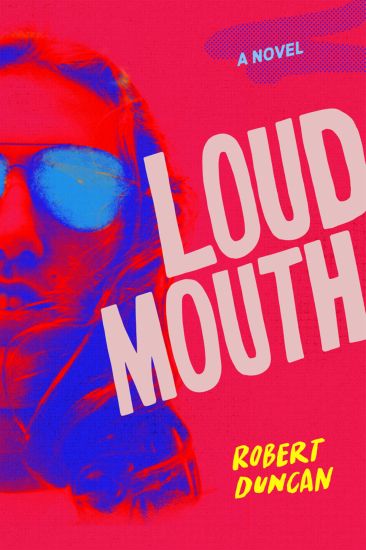
Loudmouth

Loudmouth

Robert Duncan

Three Rooms Press
2020
pokkari
“Read this book immediately if you like truth, drugs, generation gaps, guitars, and lifelong quests for freedom and kicks.” --Craig Finn, The Hold Steady Thomas Ransom, born to a severely dysfunctional southern family transplanted to New York City, is left to his own devices by neglectful parents, and spends his childhood shadowing his criminally-inclined half-brother and roaming the city with hard-drinking teenage pals. He eventually finds an outlet as the flamboyant singer of a downtown rock band, and later as the young editor of the Detroit-based magazine that invented punk, only to return to New York, at the height of the 1970s bacchanal, and crash. But it isn’t music that saves him. It’s a soft-spoken painter, who turns out to be the most outrageous character of all. With echoes of Almost Famous and Just Kids, LOUDMOUTH tracks an impassioned musician and writer out among the punks, hippies, and wild geniuses of rock when music was the center of the world. Author Robert Duncan was barely out of his teens when he started writing for the influential music magazine Creem, becoming its managing editor at 22. He went on to write for Rolling Stone, Circus, Life, and dozens of other publications, interviewing hundreds of rock stars at the top of their game. In the process, Duncan became a rock Zelig: he shares tales of his time with a young, scrawny Bruce Springsteen while driving him around Detroit; he introduces The Clash‘s Mick Jones and Joe Strummer to a broken-down piano player of dubious ability, leading to a hilariously disastrous recording session with the band; he works alongside legendary rock critic Lester Bangs, witnesses his tragic spiral, and finally discovers him dead of an OD in the apartment next door. These experiences, and many others, provide the fuel for his debut novel, LOUDMOUTH, making it what Brian Jonestown Massacre's Joel Gion calls, “A sonic wail of a tale about the youthful beginnings of one of the Mount Rushmore ‘heads’ of rock ’n’ roll journalism.”