Kirjojen hintavertailu. Mukana 11 342 296 kirjaa ja 12 kauppaa.

Kirjahaku

Etsi kirjoja tekijän nimen, kirjan nimen tai ISBN:n perusteella.

6 kirjaa tekijältä Robert E. Butts

Historical Pragmatics

Historical Pragmatics

Robert E. Butts

Springer
1993
sidottu
For 35 years, the critical and creative writings of Robert E. Butts have been a notable and welcome part of European and North American philosophy. A few years ago, James Robert Brown and Jiirgen Mittelstrass feted Professor Butts with a volume entitled An Intimate Relation (Boston Studies vol. 116, 1989), essays by twenty-six philosophers and historians of the sciences. And that joining of philosophers and historians was impressive evidence of the 'intimate relation' between historical illumination and philosophical understanding which is characteristic of Butts throughout his work. Not alone, Butts has been, and is, one of this generation's most incisive thinkers, devoted to responsible textual scholarship and equally responsible imaginative interpretation. Brown and Mittelstrass said that "throughout his writings, science, its philosophy, and its history have been treated as a seamless web", and I would add only that philosophy per se is a part of the web too. Here in this book before us are the results, a lovely collection from the work of Robert Butts, who is for so many of his colleagues, students and readers, Mr. HPS, the model philosophical historian and historical philosopher of the sciences. July 1993 Robert S. Cohen Center for Philosophy and History of Science, Boston University TABLE OF CONTENTS BIBLIOGRAPHICAL NOTE IX INTRODUCTION Xl PART I EARLY MODERN PHILOSOPHY OF SCIENCE 1 1. Some tactics in Galileo's propaganda for the mathematization of scientific experience 3 2.
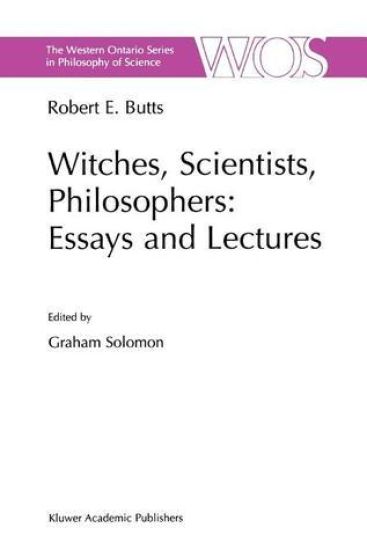
Witches, Scientists, Philosophers: Essays and Lectures
Robert E. Butts (1928-1997) was a philosopher and historian of science whose central concerns were the distinction between the rational and the irrational. He viewed scientific rationality as our major defence against the various conditions that encourage witch hunts and similar outbursts of irrationality, with all their attendant pain and terror. Butts saw himself as a pragmatic realist, combining what he took to be the best aspects of logical empiricism with a historically informed pragmatism, deeply appreciative of the methods of science, trying to describe a kind of rationality essential in the struggle to preserve human values. This volume gathers previously unpublished essays and lectures with some previously published, thematically related essays. It includes essays and lectures on philosophical aspects of the European witch hunt, on scientific rationality and methodology, and on the relationships between science and philosophy exhibited in the writings of such historically significant figures as Leibniz, D'Alembert, Hume, Kant, Carnap and Kuhn.
Kant and the Double Government Methodology

Kant and the Double Government Methodology

Robert E. Butts

Kluwer Academic Publishers
1984
sidottu
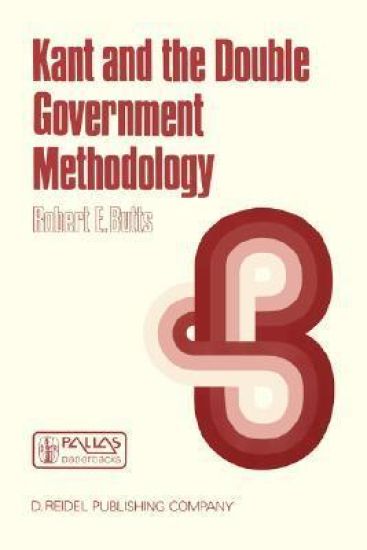
This is a book about dreaming and knowing, and about thinking that one can ascertain the difference. It is a book about the Bernards of the world who would have us believe that there is a humanly uncreated world existing en Boi that freely dis­ closes its forever fixed ontology, even though they too must accept that -many of the worlds we make as we try to under­ stand ourselves are counterfeit. It is a book about the real estate of the human mind. The book is about Leibniz and Kant, and about methods of science. It is also about what is now called pseudo-science. It tries to show how Kant struggled to mark the limits of the humanly knowable, and how thi s strug­ gle involved him in trying to answer questions of importance then and now. Some are philosophers' questions: the epistemo­ logical status of mathematics, the role of space and time in knowing, the nature of the conceptual constraints on our ef­ forts to hypothesize the possible. Some are questions of per­ ennial human interest: Can spirits exist? How is the soul re­ lated to the body? How can we legitimately talk about God, if at all? Finally, Kant teaches that these are all questions bearing on our entitlements in claiming to know. Leibniz fashioned a way of talking about nature and super­ nature that I call the Double Government Methodology.
Kant and the Double Government Methodology

Kant and the Double Government Methodology

Robert E. Butts

Kluwer Academic Publishers
1987
nidottu
This is a book about dreaming and knowing, and about thinking that one can ascertain the difference. It is a book about the Bernards of the world who would have us believe that there is a humanly uncreated world existing en Boi that freely dis­ closes its forever fixed ontology, even though they too must accept that -many of the worlds we make as we try to under­ stand ourselves are counterfeit. It is a book about the real estate of the human mind. The book is about Leibniz and Kant, and about methods of science. It is also about what is now called pseudo-science. It tries to show how Kant struggled to mark the limits of the humanly knowable, and how thi s strug­ gle involved him in trying to answer questions of importance then and now. Some are philosophers' questions: the epistemo­ logical status of mathematics, the role of space and time in knowing, the nature of the conceptual constraints on our ef­ forts to hypothesize the possible. Some are questions of per­ ennial human interest: Can spirits exist? How is the soul re­ lated to the body? How can we legitimately talk about God, if at all? Finally, Kant teaches that these are all questions bearing on our entitlements in claiming to know. Leibniz fashioned a way of talking about nature and super­ nature that I call the Double Government Methodology.
Historical Pragmatics

Historical Pragmatics

Robert E. Butts

Springer
2010
nidottu
For 35 years, the critical and creative writings of Robert E. Butts have been a notable and welcome part of European and North American philosophy. A few years ago, James Robert Brown and Jiirgen Mittelstrass feted Professor Butts with a volume entitled An Intimate Relation (Boston Studies vol. 116, 1989), essays by twenty-six philosophers and historians of the sciences. And that joining of philosophers and historians was impressive evidence of the 'intimate relation' between historical illumination and philosophical understanding which is characteristic of Butts throughout his work. Not alone, Butts has been, and is, one of this generation's most incisive thinkers, devoted to responsible textual scholarship and equally responsible imaginative interpretation. Brown and Mittelstrass said that "throughout his writings, science, its philosophy, and its history have been treated as a seamless web", and I would add only that philosophy per se is a part of the web too. Here in this book before us are the results, a lovely collection from the work of Robert Butts, who is for so many of his colleagues, students and readers, Mr. HPS, the model philosophical historian and historical philosopher of the sciences. July 1993 Robert S. Cohen Center for Philosophy and History of Science, Boston University TABLE OF CONTENTS BIBLIOGRAPHICAL NOTE IX INTRODUCTION Xl PART I EARLY MODERN PHILOSOPHY OF SCIENCE 1 1. Some tactics in Galileo's propaganda for the mathematization of scientific experience 3 2.
Witches, Scientists, Philosophers: Essays and Lectures
Robert E. Butts (1928-1997) was a philosopher and historian of science whose central concerns were the distinction between the rational and the irrational. He viewed scientific rationality as our major defence against the various conditions that encourage witch hunts and similar outbursts of irrationality, with all their attendant pain and terror. Butts saw himself as a pragmatic realist, combining what he took to be the best aspects of logical empiricism with a historically informed pragmatism, deeply appreciative of the methods of science, trying to describe a kind of rationality essential in the struggle to preserve human values. This volume gathers previously unpublished essays and lectures with some previously published, thematically related essays. It includes essays and lectures on philosophical aspects of the European witch hunt, on scientific rationality and methodology, and on the relationships between science and philosophy exhibited in the writings of such historically significant figures as Leibniz, D'Alembert, Hume, Kant, Carnap and Kuhn.