Kirjojen hintavertailu. Mukana 12 390 323 kirjaa ja 12 kauppaa.

Kirjahaku

Etsi kirjoja tekijän nimen, kirjan nimen tai ISBN:n perusteella.

6 kirjaa tekijältä Robert E. Lerner

Heresy of the Free Spirit in the Later Middle Ages, the

Heresy of the Free Spirit in the Later Middle Ages, the

Robert E. Lerner

University of Notre Dame Press
1991
nidottu
The Heresy of the Free Spirit in the Later Middle Ages has been widely recognized as the standard work on the subject in any language. Robert E. Lerner examines this fourteenth-century European heresy as it appeared in its own age. He concludes that the Free-Spirit movement was not a tightly organized sect of anarchistic deviants, but rather a spectrum of belief that emphasized voluntary poverty and quietist mysticism.

Heresy of the Free Spirit in the Later Middle Ages, the

Heresy of the Free Spirit in the Later Middle Ages, the

Robert E. Lerner

University of Notre Dame Press
2017
sidottu
The Heresy of the Free Spirit in the Later Middle Ages has been widely recognized as the standard work on the subject in any language. Robert E. Lerner examines this fourteenth-century European heresy as it appeared in its own age. He concludes that the Free-Spirit movement was not a tightly organized sect of anarchistic deviants, but rather a spectrum of belief that emphasized voluntary poverty and quietist mysticism.
The Powers of Prophecy

The Powers of Prophecy

Robert E. Lerner

Cornell University Press
2009
pokkari
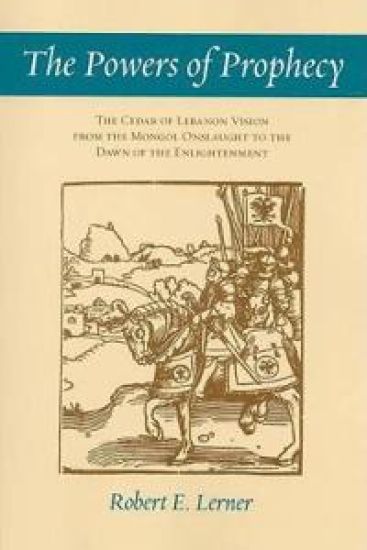
The Powers of Prophecy is an original attempt to investigate the subject of medieval eschatological prophecies: how and in what circumstances they were written; how they circulated; what they told people about the future; and how they were received. Although scholars have studied the ideas of a few outstanding medieval prophetic thinkers or the role of prophecies in heretical movements and popular insurrections, up to now there has been no attempt to study the most commonplace medieval prophetic ideas as they were communicated in the most frequently copied and widely read anonymous prophetic texts.Dedicated to pursuing the typical, Lerner's book traces the fortunes of an eschatological prophecy that was first written around 1240 and thereafter circulated throughout Western Europe for more than four centuries. Originally composed as a response to the Mongol onslaught, the prophecy was resurrected and reconceived to apply to other crises such as the fall of the Holy Land, the Black Death, and the Protestant Reformation. Although it was supposed to have descended form on high, allegedly being a message written by a disembodied moving hand over an altar during mass, countless scribes felt no qualms about recirculating the text with substantial changes. Among the many who took note of the prophecy in one or another of its numerous guises were the scholastic theological John of Paris; the Infante Peter, a prince of the house of Aragon; John Clyn, an Irish monk who entered it into his chronicle shortly before dying of the bubonic plague; and Martin Luther.
The Feast of Saint Abraham

The Feast of Saint Abraham

Robert E. Lerner

University of Pennsylvania Press
2000
sidottu
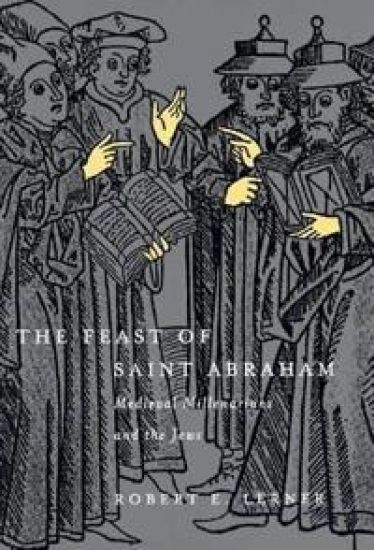
Robert E. Lerner uncovers a strain of medieval millennial thought that conceived of a peaceful place for Jews at the end of time. Its proponents maintained that "the candelabra of the Church would return to the Synagogue" and that the millennial Church would celebrate the feasts of "Saint Abraham" and "Saint David." Rejecting the common assumption that all millenarians were of necessity anti-Jewish, Lerner reveals a Christian prophetic tradition that foresaw a world in which Jews and Gentiles would come together to mutual benefit. As imagined by the twelfth century Calabrian Abbot Joachim of Fiore, God's plan, entailed a march of progress from Abraham until the wondrous transformation of human life upon the defeat of Antichrist. While the march of progress transpired on earth, a spiritual movement impelled God's chosen ones to heaven in phases, on a stairway to paradise. The divine plan had first entrusted the Jews with adherence to the letter of the Old Testament; then it had entrusted the Gentiles with the more spiritual New Testament. At the culmination of history, God would endow both Jews and Gentiles with a full understanding of both testaments. The word of God would return to the people from whence it came, and the Jews would be converted peacefully instead of damned.
La Festa Di Sant'abramo: Millenarismo Gioachimita Ed Ebrei Nel Medioevo
Questo volume ci fa scoprire una tradizione profetica medievale che prevedeva un mondo in cui Ebrei e Gentili si sarebbero riunificati e che la Chiesa nel millennio (il futuro regno di Cristo sulla terra sarebbe durato mille anni) avrebbe celebrato le feste di "sant'Abramo" e di "san Davide". Al principio di questa tradizione troviamo Gioacchino da Fiore, secondo il quale inizialmente il piano divino era stato affidato agli. Ebrei, perche lo custodissero con l'adesione alla lettera dell'Antico Testamento; successivamente era stato affidato ai Gentili mediante un Nuovo Testamento piu "spirituale". Presto Dio avrebbe prodotto una trasformazione donando a Ebrei e Gentili una piena comprensione di entrambi i Testamenti. Nel punto culminante della storia gli Ebrei non solo non sarebbero stati dannati, ma, al contrario, sarebbero stati convertiti in maniera pacifica. La parola di Dio sarebbe ritornata presso il popolo dal quale inizialmente era venuta. Tale visione fu portata avanti nel corso del XIII e XIV secolo nell'Europa occidentale dai membri dell'ordine francescano e, alla fine, ebbe una parte di rilievo nelle carriere di numerosi eretici tardo medievali. Attingendo a piene mani a nuove fonti, l'autore propone un punto di vista inaspettato nell'ambito degli studi sull'intolleranza nell'Europa occidentale e sulle complicate relazioni che intercorrevano tra Cristiani ed Ebrei.