Kirjojen hintavertailu. Mukana 11 342 296 kirjaa ja 12 kauppaa.

Kirjahaku

Etsi kirjoja tekijän nimen, kirjan nimen tai ISBN:n perusteella.

5 kirjaa tekijältä Robert E. May

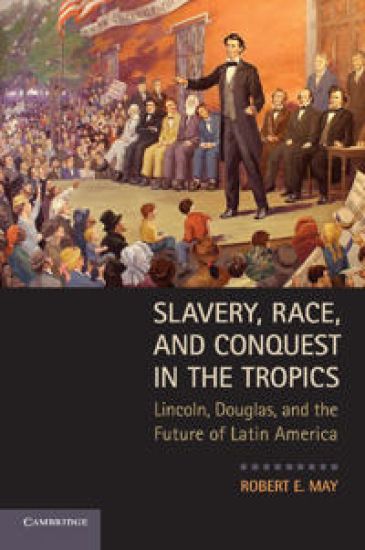
Slavery, Race, and Conquest in the Tropics

Slavery, Race, and Conquest in the Tropics

Robert E. May

Cambridge University Press
2013
pokkari
Slavery, Race, and Conquest in the Tropics challenges the way historians interpret the causes of the American Civil War. Using Abraham Lincoln and Stephen Douglas's famed rivalry as a prism, Robert E. May shows that when Lincoln and fellow Republicans opposed slavery in the West, they did so partly from evidence that slaveholders, with Douglas's assistance, planned to follow up successes in Kansas by bringing Cuba, Mexico, and Central America into the Union as slave states. A skeptic about 'Manifest Destiny', Lincoln opposed the war with Mexico, condemned Americans invading Latin America, and warned that Douglas's 'popular sovereignty' doctrine would unleash US slaveholders throughout Latin America. This book internationalizes America's showdown over slavery, shedding new light on the Lincoln-Douglas rivalry and Lincoln's Civil War scheme to resettle freed slaves in the tropics.
Slavery, Race, and Conquest in the Tropics

Slavery, Race, and Conquest in the Tropics

Robert E. May

Cambridge University Press
2013
sidottu
Slavery, Race, and Conquest in the Tropics challenges the way historians interpret the causes of the American Civil War. Using Abraham Lincoln and Stephen Douglas's famed rivalry as a prism, Robert E. May shows that when Lincoln and fellow Republicans opposed slavery in the West, they did so partly from evidence that slaveholders, with Douglas's assistance, planned to follow up successes in Kansas by bringing Cuba, Mexico, and Central America into the Union as slave states. A skeptic about 'Manifest Destiny', Lincoln opposed the war with Mexico, condemned Americans invading Latin America, and warned that Douglas's 'popular sovereignty' doctrine would unleash US slaveholders throughout Latin America. This book internationalizes America's showdown over slavery, shedding new light on the Lincoln-Douglas rivalry and Lincoln's Civil War scheme to resettle freed slaves in the tropics.
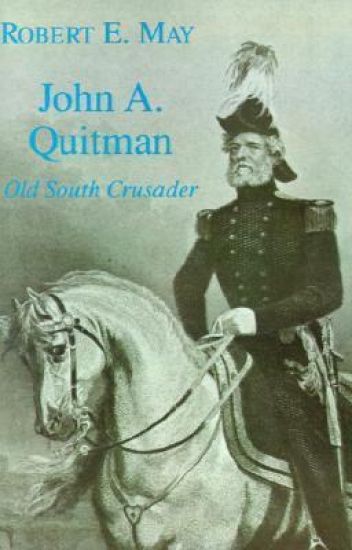
John A. Quitman

John A. Quitman

Robert E. May

Louisiana State University Press
1985
nidottu
The premier secessionist of antebellum Mississippi, John A. Quitman was one of the half-dozen or so most prominent radicals in the entire South. In this full-length biography, Robert E. May takes issue with the recent tendency to portray secessionists as rabble-rousing, maladjusted outsiders bent on the glories of separate nationhood. May reveals Quitman to have been an ambitious but relatively stable insider who reluctantly advocated secession because of a despondency over slavery's long-range future in the Union and a related conviction that northerners no longer respected southern claims to equality as American citizens.A fervent disciple of South Carolina ""radical"" John C. Calhoun's nullification theories, Quitman also gained notoriety as his region's most strident slavery imperialist. He articulated the case for new slaver territory, participated in the Texas Revolution, won national acclaim as a volunteer general in the Mexican War, and organised a private military, or ""filibustering"", expedition with the intent of liberating Cuba from Spanish rule and making the island a new slave state. In 1850, while governor of Mississippi during the California crisis, Quitman wielded his influence in a vain attempt to induce Mississippi secession. Later, in Congress, he marked out an extreme southern position on Kansas. Mississippi's most vehement ""fire-eater,"" Quitman played a significant role in the North-South estrangement that led to the American Civil War.The first critical biography of this important figure, May's study sheds light on such current historical controversies as whether antebellum southerners were peculiarly militaristic or ""antibourgeois"" and helps illuminate the slave-master relations, mobility, intraregional class and geographic friction, partisan politics, and family customs of the Old South.
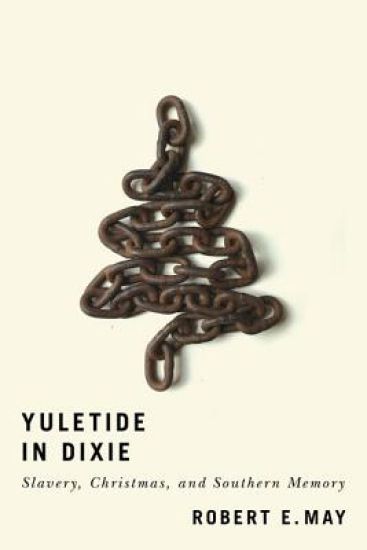
Yuletide in Dixie

Yuletide in Dixie

Robert E. May

University of Virginia Press
2019
sidottu
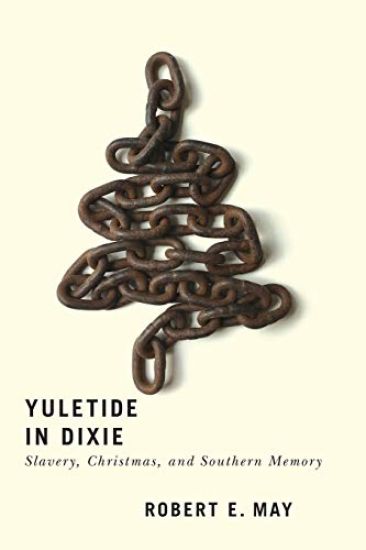
How did enslaved African Americans in the Old South really experience Christmas? Did Christmastime provide slaves with a lengthy and jubilant respite from labor and the whip, as is generally assumed, or is the story far more complex and troubling? In this provocative, revisionist, and sometimes chilling account, Robert E. May chides the conventional wisdom for simplifying black perspectives, uncritically accepting southern white literary tropes about the holiday, and overlooking evidence not only that countless southern whites passed Christmases fearful that their slaves would revolt but also that slavery’s most punitive features persisted at holiday time.In Yuletide in Dixie, May uncovers a dark reality that not only alters our understanding of that history but also sheds new light on the breakdown of slavery in the Civil War and how false assumptions about slave Christmases afterward became harnessed to myths undergirding white supremacy in the United States. By exposing the underside of slave Christmases, May helps us better understand the problematic stereotypes of modern southern historical tourism and why disputes over Confederate memory retain such staying power today. A major reinterpretation of human bondage, Yuletide in Dixie challenges disturbing myths embedded deeply in our culture.
Yuletide in Dixie

Yuletide in Dixie

Robert E. May

University of Virginia Press
2020
pokkari
How did enslaved African Americans in the Old South really experience Christmas? Did Christmastime provide slaves with a lengthy and jubilant respite from labor and the whip, as is generally assumed, or is the story far more complex and troubling? In this provocative, revisionist, and sometimes chilling account, Robert E. May chides the conventional wisdom for simplifying black perspectives, uncritically accepting southern white literary tropes about the holiday, and overlooking evidence not only that countless southern whites passed Christmases fearful that their slaves would revolt but also that slavery's most punitive features persisted at holiday time.In Yuletide in Dixie, May uncovers a dark reality that not only alters our understanding of that history but also sheds new light on the breakdown of slavery in the Civil War and how false assumptions about slave Christmases afterward became harnessed to myths undergirding white supremacy in the United States. By exposing the underside of slave Christmases, May helps us better understand the problematic stereotypes of modern southern historical tourism and why disputes over Confederate memory retain such staying power today. A major reinterpretation of human bondage, Yuletide in Dixie challenges disturbing myths embedded deeply in our culture.