Kirjojen hintavertailu. Mukana 11 244 527 kirjaa ja 12 kauppaa.

Kirjahaku

Etsi kirjoja tekijän nimen, kirjan nimen tai ISBN:n perusteella.

3 kirjaa tekijältä Robert E. Terrill

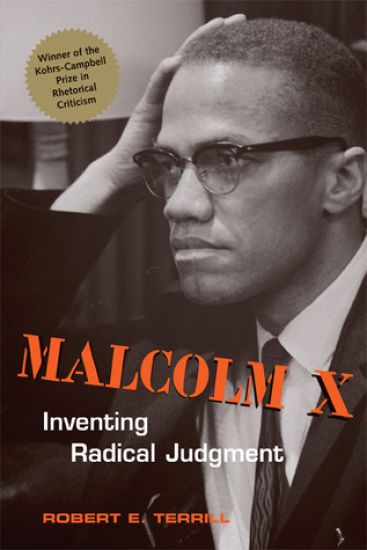
Malcolm X

Malcolm X

Robert E. Terrill

Michigan State University Press
2007
pokkari
Few figures haunt the collective American psyche like Malcolm X. Hoodlum, convict, convert, prophet, nationalist, and martyr, Malcolm's life spans the civil rights era like an index of America's racial anxiety. Dozens of books and hundreds of articles have analyzed his life, his work, and the various ways that his image has been appropriated by American culture. Little has been done, however, to analyze his speeches. This would be a glaring omission in the body of scholarship about almost any public figure, but is especially troubling with regard to Malcolm X. His legacy does not consist of marches preserved on newsreels, legislation passed by Congress, or holidays observed by the state; his legacy consists almost exclusively of his words. Malcolm X, like any orator, did not fashion his discourse in a vacuum but worked within and modified modes fashioned by his predecessors. "Malcolm X: Inventing Radical Judgement" begins by exploring the interpretive strategies presented in key texts from the history of African American protest, establishing a spectrum against which Malcolm's oratory can be assessed.Then the texts of speeches that Malcolm delivered while he was a minister for the Nation of Islam and of speeches and statements he made after he left the Nation are analyzed to discern the strategies of interpretation and judgement that he enacted and fostered in his audiences. Finally, this radical judgement, presented in and through Malcolm's public discourse, is re-contextualized by using three disparate theoretical approaches. The purpose of this triangulation is not to contain the rhetoric of Malcolm X within the limitations of these vocabularies, but rather to show that the changing potential of Malcolm's rhetoric lies, in part, in its iconoclastic refusal to be constrained by definitive boundaries.
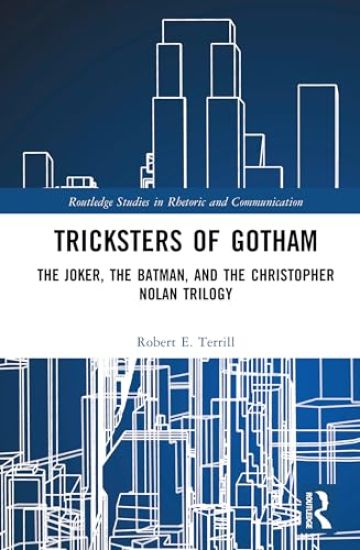
Tricksters of Gotham

Tricksters of Gotham

Robert E. Terrill

TAYLOR FRANCIS LTD
2025
sidottu
Tricksters of Gotham explores the ‘trickster’ tale through an in-depth look at Christopher Nolan’s Batman trilogy: Batman Begins, The Dark Knight, and The Dark Knight Rises.The trickster figure is an ancient and variable figure, versions of which populate the myths and folklore of many human cultures worldwide. Conceptualising the trilogy as a single aggregate text with a clear narrative arc, the author explores the variety of trickster figures present in the films and draws clear parallels with the surrounding social and political context. Departing from the central argument that the Batman trilogy shows a variety of trickster characters, even Batman himself, this book shows contemporary trickster figures to be rich and relevant cultural resources that can focus our attention on those elements of the social order that have become too rigid, hierarchical, or exclusionary. The author argues that they can model tactics for engaging with tricksters when they inevitably arise in civic culture, offering insights about how to manage interactions with these figures who can be both productively disruptive and potentially destructive. This book pays close attention to the characters portrayed in the Nolan Batman trilogy -- not only the Batman and the Joker, but the more minor characters as well -- to discover what trickster-like tactics they may offer. In this way, the book intends to render these films as a sort of equipment for civic life, and to encourage similar analyses of other contemporary cultural artifacts.Through close readings of these films, the book renders the Nolan Batman trilogy as what rhetorical theorist Kenneth Burke refers to as “equipment for living.” This book will interest scholars and students of rhetoric and public culture, film studies and communication.
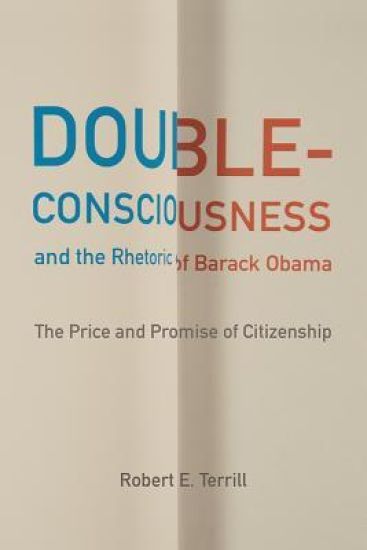
Double-Consciousness and the Rhetoric of Barack Obama

Double-Consciousness and the Rhetoric of Barack Obama

Robert E. Terrill

University of South Carolina Press
2015
sidottu
Terrill, Robert E. argues that, in order to invent a robust manner of addressing one another as citizens, Americans must learn to draw on the delicate indignities of racial exclusion that have stained citizenship since its inception. In Double-Consciousness and the Rhetoric of Barack Obama, Terrill demonstrates how President Barack Obama's public address models such a discourse.Terrill contends that Obama's most effective oratory invites his audiences to experience a form of ""double-consciousness,"" which was famously described by W. E. B. Du Bois as a feeling of ""two-ness"" resulting from the African American experience of ""always looking at one's self through the eyes of others."" It is described as an effect of cruel alienation that can also bring a gift of ""second-sight"" in the form of perspectives on practices of citizenship not available to those in positions of privilege. When addressing fellow citizens, Obama is asking each to share in the ""peculiar sensation"" that Du Bois described. The racial history of U.S. citizenship is a resource for inventing contemporary ways of speaking about race. Joining with other work that suggests that double-consciousness may be a vital democratic attitude, Terrill extends those insights to consider it as a mode of address. Through close analyses of selected speeches from Obama's 2008 campaign and first presidential term, this book argues that Obama does not present double-consciousness merely as a point of view but rather as an idiom with which we might speak to one another. Of course, as Du Bois's work reminds us, double-consciousness results from imposition and encumbrance, so that Obama's oratory presents a mode of address that emphasizes the burdens of citizenship together with the benefits, the price as well as the promise.