Kirjojen hintavertailu. Mukana 11 699 587 kirjaa ja 12 kauppaa.

Kirjahaku

Etsi kirjoja tekijän nimen, kirjan nimen tai ISBN:n perusteella.

8 kirjaa tekijältä Robert Edgar

Tom Tuff to the Rescue

Tom Tuff to the Rescue

Robert Edgar

Moshpit Publishing
2013
pokkari
Can Tom Tuff rescue the big ship in time?The story of Tom Tuff to the Rescue is about a little tug boat who could - a brave boat who had to venture out of his comfort zone, who had to try really, really hard to help another ship out, and who made it home, saving the container ship from sinking during a terrible storm.Youngsters will love this pre-schooler and early childhood adventure story from Robert Edgar, author of SOS from Rhodon Valley, and the wonderfully detailed, yet humanistic, illustrations from artist Todd Sharp.Ideal for children aged 4 to 7, and boys in particular, Tom Tuff is a pre reader for pre-school children and a solid early reader for the beginning readers.
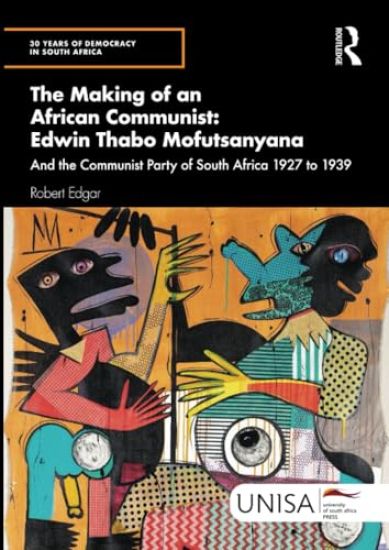
The Making of an African Communist: Edwin Thabo Mofutsanyana
This book is a short biography of the life of Edwin Thabo Mofutsanyana – the General Secretary of the Communist Party of South Africa. Set against the backdrop of political crisis in South Africa, the subject matter in this book discusses Mofutsanyana’s political endeavors and his service and contribution to the freedom struggle.Print editions not for sale in Sub-Saharan Africa. This book is part of Routledge’s co-published series 30 Years of Democracy in South Africa, in collaboration with UNISA Press, which reflects on the past years of a democratic South Africa and assesses the future opportunities and challenges.
Imagine That

Imagine That

Robert Edgar

Robert Seay
2020
nidottu
Your subconscious mind is your personal servant for as long as you live. Always prepared and ready. Always standing by to serve only you and only at your command. Your imagination, limitless in its scope, proves that nothing is impossible when combined.The combination of these two entities under your control is more powerful than any other combination constructively or destructively, known to mankind, and when you fully understand this and recognize the power you alone hold as an individual, then you alone must know that this power must never be left to chance. Humanity as we know it, would never survive in the hands of evil or be more welcomed in the hands of the responsible and moral. - Robert Edgar
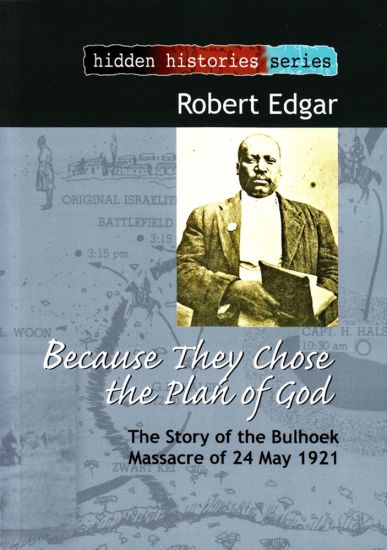
Because they chose the plan of God

Because they chose the plan of God

Robert Edgar

Unisa Press
2010
nidottu
On the morning of 24 May 1921, a force of 800 white policemen and soldiers marched to a place called Bulhoek, about 25 kilometres southwest of Queenstown in the Eastern Cape. The white government had instructed them to confront an African prophet, Enoch Mgijima, and his followers, called the Israelites, who refused to leave their holy village Ntabelanga (`The Mountain Of The Rising Sun’) where they had gathered to await the end of the world. The government was not prepared to allow them to pray and worship in peace, because it claimed the Israelites were illegally squatting on land that was not theirs. After many months of negotiating, it finally sent out an armed force to expel the Israelites. They did not want to fight the Israelites, but, if it came to that, they had modern weapons and they were prepared to use them. When the Israelites and the police did not settle their differences, they clashed. The police were armed with rifles, machine guns, and cannons, while the Israelites had only sticks, swords, and spears to defend themselves. After the 20-minute skirmish nearly 200 Israelites lay dead and many others were wounded. This event would soon be called the `Bulhoek Massacre’. To understand why this clash at Bulhoek happened we will look at the life history of Enoch Mgijima and the religous group he founded, the Israelites. We discuss the political, economic, and social background to the massacre. We try to understand why the Israelites settled at Ntabelanga and why the government opoposed them. We explore why the two sides were not able to find a solution to their differences. We examine why the government decided to send an armed force to expel the Israelites from their holdy village and why the Israelites were prepared to face the policemen's guns on the plain outside Ntabelanga. Finally we learn about how people have written and spoken about the Bulhoek massacre over the years and how the South African government before and after 1994 represented the event in museums and memorials.