Kirjojen hintavertailu. Mukana 12 390 323 kirjaa ja 12 kauppaa.

Kirjahaku

Etsi kirjoja tekijän nimen, kirjan nimen tai ISBN:n perusteella.

7 kirjaa tekijältä Robert F. Carley

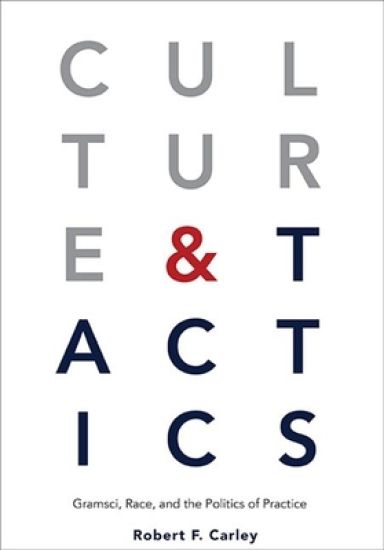
Culture and Tactics

Culture and Tactics

Robert F. Carley

State University of New York Press
2020
pokkari
Juxtaposes Antonio Gramsci's work and critical race theory to offer a new understanding of tactics as a transformative practice.While scholars of social and political movements tend to analyze tactics in terms of their effectiveness in achieving specific outcomes, Robert F. Carley argues by contrast that tactics are, above all, what social movements do. They are not mere means to an end so much as they are a public form of expression pointing out injustices and making just demands. Rooted in a highly original analysis of the tactically mediated relationship between race and mobilization in the work of Italian philosopher and revolutionary Antonio Gramsci, Culture and Tactics demonstrates how tactics impact the organizational structures of social movements and expand the affinities of political communities. Carley looks at how Gramsci used innovative tactics to bridge perceptions of racial differences between factory workers and subaltern groups, the latter having been denigrated to the point of subhumanity by a complex Italian national racial economy. Newly envisioning Gramsci as a theorist of race within a broader context of social struggle, Carley connects Gramsci's insights into the political mobilizations of racialized subaltern groups to contemporary critical race theory and cultural studies of racialization and racism. Speaking across disciplines and drawing on a number of empirical examples, Carley offers a battery of original concepts to assist scholars and activists in analyzing the tactical practices of protests in which race is a central factor.
Collectivities

Collectivities

Robert F. Carley

Lexington Books
2016
sidottu
Collectivities, in brief, is a term describing the intellectual and creative potential of groups. Collectivities then mark a position in the connection between disciplinary fields; a position that is simultaneously productive of new knowledge and new politics. In Collectivities: Politics at the Intersections of Disciplines Robert Carley looks at the classical ideas and theorists that have influenced interdisciplinary work in the humanistic and social-scientific disciplines as well as contemporary cases of interdisciplinary meeting points, specifically cultural studies, Chicana/o studies and radical sociology (e.g. critical, liberation, public, and Marxist approaches). He discusses the intellectual, creative, and political potential of these groupings. Noting that interdisciplinary groups often come together to address political or social problems, Carley provides an analysis of these groupings as well as ways of understanding their work. He suggests that we might understand interdisciplinarity as more than merely a constellation of scholarly fields. By looking at the political contexts that inform our understanding of as well as the approaches of interdisciplinary groups Collectivities suggests some new ways to think about the production of knowledge when it occurs between disciplines.
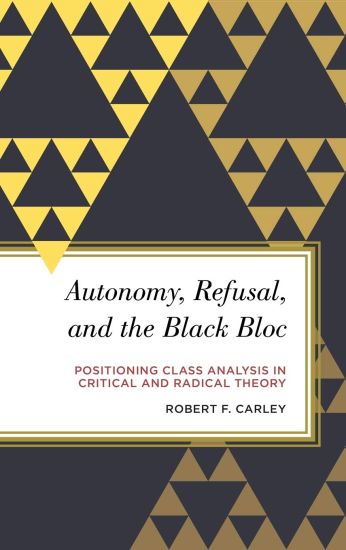
Autonomy, Refusal, and the Black Bloc

Autonomy, Refusal, and the Black Bloc

Robert F. Carley

Rowman Littlefield
2019
sidottu
Autonomy, Refusal, and The Black Bloc reinterprets the positioning of critical and radical theory by focusing squarely on the role of class analysis. It also argues that the survivance of The Frankfurt School style of critique is wholly dependent upon the traditions of radical theory that find their same departure point from out of “the great refusals” of the 1960s and 1970s. By linking together the traditions of critical and radical theory through the work of Marcuse and Negri and by demonstrating their conjunctural and historiographical connections, Carley argues that the inventive strategic and organizational contexts that give rise to the black bloc tactic constitute a new political expression of class and, more forcefully, constitute the meaning of class politics for the late 20th and 21st century.
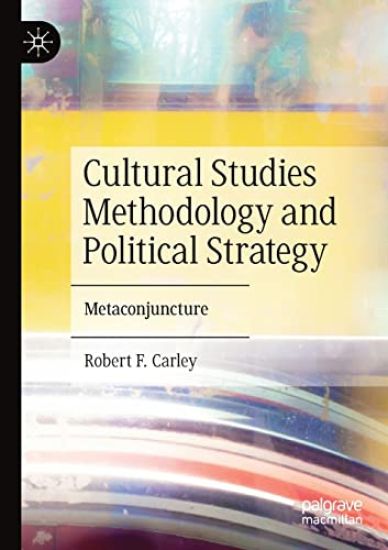
Cultural Studies Methodology and Political Strategy

Cultural Studies Methodology and Political Strategy

Robert F. Carley

Springer Nature Switzerland AG
2021
sidottu
This book is an intervention into cultural studies' theoretical and methodological foundations. It addresses a crisis in conjunctural analysis: that there is no theorized method for conjunctural analysis as it pertains to recognizing a conjunctural shift or the emergence of an organic crisis. This crisis is connected to the belief that the definition of the conjuncture is ambiguous in Gramsci’s work, but using a broader range of primary, secondary, and also untranslated sources on the conjuncture, Carley demonstrates that Gramsci has decisively settled that ambiguity. Through a philological approach to Gramsci’s original texts, this book alters the debate around conjunctural analysis and offers means to reinterpret cultural studies and its relationship to its founding thinkers.
Cultural Studies Methodology and Political Strategy

Cultural Studies Methodology and Political Strategy

Robert F. Carley

Springer Nature Switzerland AG
2022
nidottu
This book is an intervention into cultural studies' theoretical and methodological foundations. It addresses a crisis in conjunctural analysis: that there is no theorized method for conjunctural analysis as it pertains to recognizing a conjunctural shift or the emergence of an organic crisis. This crisis is connected to the belief that the definition of the conjuncture is ambiguous in Gramsci’s work, but using a broader range of primary, secondary, and also untranslated sources on the conjuncture, Carley demonstrates that Gramsci has decisively settled that ambiguity. Through a philological approach to Gramsci’s original texts, this book alters the debate around conjunctural analysis and offers means to reinterpret cultural studies and its relationship to its founding thinkers.
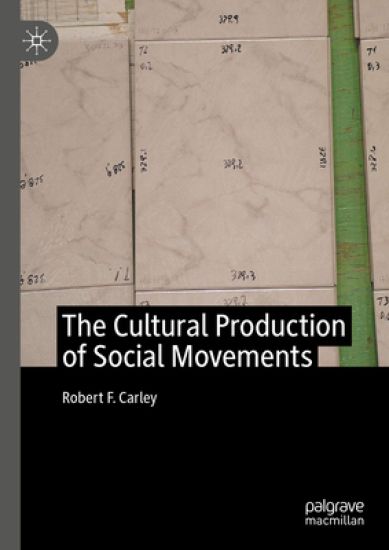
The Cultural Production of Social Movements

The Cultural Production of Social Movements

Robert F. Carley

Springer International Publishing AG
2023
sidottu
The Cultural Production of Social Movements offers a theory of cultural practices, protest tactics, strategic planning and deliberation, and movement organizational structures: “ideological contention.” It is a theory of ideology “from below.” The Cultural Production of Social Movements shows how conflicts—both with external political forces and disagreements, dissensus, and the decision-making process internal to social movements—produce knowledge and meanings that, in turn, impact upon and change the practices that contribute to how social movements are structured and organized. The Cultural Production of Social Movements theorizes the relationship between consciously held superordinate ideas, the changing composition of progressive and oppositional social struggles, and the social worlds they hope to inhabit. Analyzing the Black Panther Party, specifically Kathleen Cleaver’s break with the Student Non-violent Coordinating Committee and her contributions to the Party, Operaismo (or Workerism) in Italy and the relationship between shifting organizational strategies, inventive tactics, and novel and expansive ways to theorize class struggles, and the communal composition of “Worker-Recovered Enterprise Movements” in contemporary Argentina, this book shows how movement ideologies change and how meanings structure organizations, mobilizations, and futures. In The Cultural Production of Social Movements ideology is neither a static set of principles, nor is an unconscious orientation towards power and governance. Rather, it is the contentious, democratizing, and deliberative processes—which become realized as tactics in protests, struggles, defeats, and victories—that makes the relationship between movements, and what they “mean” conscious to its participants.
The Cultural Production of Social Movements

The Cultural Production of Social Movements

Robert F. Carley

Springer International Publishing AG
2024
nidottu
The Cultural Production of Social Movements offers a theory of cultural practices, protest tactics, strategic planning and deliberation, and movement organizational structures: “ideological contention.” It is a theory of ideology “from below.” The Cultural Production of Social Movements shows how conflicts—both with external political forces and disagreements, dissensus, and the decision-making process internal to social movements—produce knowledge and meanings that, in turn, impact upon and change the practices that contribute to how social movements are structured and organized. The Cultural Production of Social Movements theorizes the relationship between consciously held superordinate ideas, the changing composition of progressive and oppositional social struggles, and the social worlds they hope to inhabit. Analyzing the Black Panther Party, specifically Kathleen Cleaver’s break with the Student Non-violent Coordinating Committee and her contributions to the Party, Operaismo (or Workerism) in Italy and the relationship between shifting organizational strategies, inventive tactics, and novel and expansive ways to theorize class struggles, and the communal composition of “Worker-Recovered Enterprise Movements” in contemporary Argentina, this book shows how movement ideologies change and how meanings structure organizations, mobilizations, and futures. In The Cultural Production of Social Movements ideology is neither a static set of principles, nor is an unconscious orientation towards power and governance. Rather, it is the contentious, democratizing, and deliberative processes—which become realized as tactics in protests, struggles, defeats, and victories—that makes the relationship between movements, and what they “mean” conscious to its participants.