Kirjahaku
Etsi kirjoja tekijän nimen, kirjan nimen tai ISBN:n perusteella.
85 kirjaa tekijältä Robert Ferguson

Ferguson, R: Teutonic Name System applied to the Family Name
Robert Ferguson
Antigonos Verlag
2025
nidottu
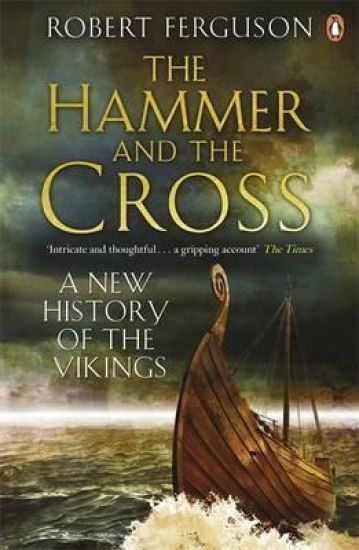
For those living outside Scandinavia, the Viking Age effectively began in 793 with an attack on the monastery at Lindisfarne, a characteristically violent harbinger of what was in store for Britain and much of Europe from the Vikings for the next 300 years, until the final destruction of the heathen temple to the Norse gods at Uppsala around 1090. Robert Ferguson is a sure guide across what he calls 'the treacherous marches which divide legend from fact in Viking Age history'. His long familiarity with the literary culture of Scandinavia - the eddas, the poetry of the skalds and the sagas - is combined with the latest archaeological discoveries and the evidence of picture-stones, runes, ships and objects scattered all over northern Europe, to make the most convincing modern portrait of the Viking Age in any language. The Hammer and the Cross ranges from Scandinavia itself to Kievan Rus and Byzantium in the east, to Iceland, Greenland and the north American settlements in the west. Beyond its geographical boundaries the book takes us on a journey to a misty region inhabited by Hallfred the Troublesome Poet, Harald Bluetooth, Ragnar Hairy-Breeches, Ivar the Boneless and Eyvind the Plagiarist, in which literature, history and myth dissolve into one another.
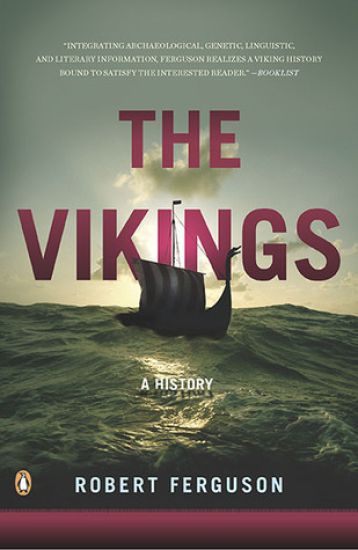
A comprehensive and thrilling history of the Vikings for fans of the History Channel series, soon to return for its fifth season From Harald Bluetooth to Cnut the Great, the feared seamen and plunderers of the Viking Age ruled Norway, Sweden, and Denmark but roamed as far as Byzantium, Greenland, and America. Raiders and traders, settlers and craftsmen, the medieval Scandinavians who have become familiar to history as Vikings never lose their capacity to fascinate, from their ingeniously designed longboats to their stormy pantheon of Viking gods and goddesses, ruled by Odin in Valhalla. Robert Ferguson is a sure guide across what he calls "the treacherous marches which divide legend from fact in Viking Age history." His long familiarity with the literary culture of Scandinavia with its skaldic poetry is combined with the latest archaeological discoveries to reveal a sweeping picture of the Norsemen, one of history's most amazing civilizations. Impeccably researched and filled with compelling accounts and analyses of legendary Viking warriors and Norse mythology, The Vikings is an indispensable guide to medieval Scandinavia and is a wonderful companion to the History Channel series. "Integrating archaeological, genetic, linguistic, and literary information, Ferguson realizes a Viking history bound to satisfy." -Booklist
Productive media analysis is like an iceberg, argues Roger Ferguson. The vast bulk beneath water is the intellectual, historical and analytical base without which media analysis may become superficial, mechanical or glib. Representing 'Race' argues that the study of 'race' and the media cannot be seriously undertaken without engaging with theories of ideology and without awareness of contemporary theoretical work, such as approaches to Orientalism and critical discourse analysis. Drawing on examples from newspapers, film, radio and television, Ferguson provides an overview and assessment of existing research in the area. Representing 'Race' is a challenge to intellectual complacency and a warning against the temptation to normalise the very term 'race'.
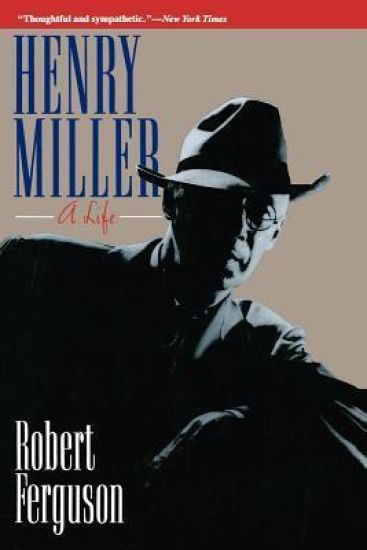
The only biography Henry Miller ever wanted was the one he himself wrote in the brash, life-affirming fictions of The Tropic of Capricorn, The Tropic of Cancer, and The Rosy Crucifixion. But Robert Ferguson's new biography tells a different tale; for where the novels are sexually explicit and brutally frank--woundingly so to those close to Miller--they are also the fantasies of a man escaping from his past, and from himself.
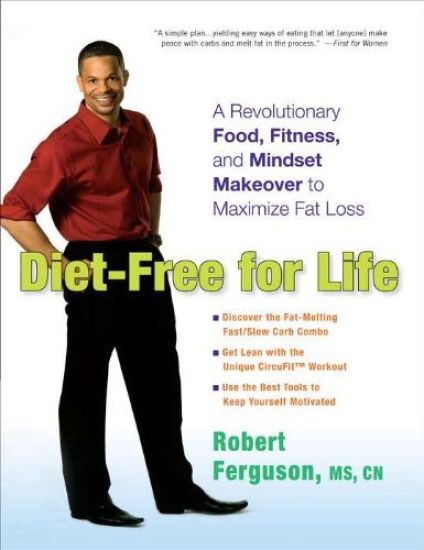
..".a simple plan ... yielding easy ways to of eating that let (anyone) make peace with carbs and melt fat in the process." -First for WomenFitness and diet expert Robert Ferguson offers a weight-loss program that shifts fat storing to fat burning. Ferguson's plan teaches readers how to customize their meals to include fast and slow carbs, protein and fat, and get immediate and sustainable results. This 21-day Mindset Makeover includes: A guide to eliminate wrong-headed diet mindsets Daily prompts to sustain the plan Nutrition and exercise tips Simple recipes to create fat-burning meals Advice for shopping and eating-out
English Surnames And Their Place In The Teutonic Family
Robert Ferguson
KESSINGER PUBLISHING, LLC
2007
sidottu
The beginning of Robert Ferguson's introduction is arresting. 'If they've heard of him at all, people tend to know two things about Knut Hamsun: that he wrote Hunger, and that he met Hitler. Those who know a little more know that in Hunger, Mysteries and Pan, he produced novels that have had a decisive effect on European and American literature of the twentieth century. Ernest Hemingway tried to write like him; so did Henry Miller, who called him 'the Dickens of my generation'; 'never has the Nobel Prize been awarded to one worthier of it.' Thomas Mann wrote in 1929. Hermann Hesse called him 'my favourite author'. Russian writers like Andre Bely and Boris Pasternak read him keenly in their youth, and Andre Gide thought him arguable superior to Dostoevsky. They all read him - Kafka, Brecht, Gorky, Wells, Musil. Rebecca West described him as the possessor of 'qualities that belong to the very great - the completest omniscience about human nature'. And Isaac Bashevis Singer stated that Hamsun was quite simply 'the father of the modern school of literature in his every aspect - his subjectiveness, his fragmentariness, his use of flashbacks, his lyricism'. Singer, in his foreword to Hunger, goes on to say that 'The whole modern school of fiction in the twentieth century stems from Hamsun.' Yet in discussions of the history of modern literature, Hamsun's name is rarely mentioned. His reputation, which probably reached its height around 1929 with the world celebrations of his seventieth birthday, was in ruins by the end of the Second World War. Alone among the major European writers, he had supported Hitler. Brazenly alone, he had hailed he rise and bemoaned the fall of the epitome of spiritual tyranny in recent history.'What a subject, and in this, the first biography, Robert Ferguson brilliantly gets the measure of this awkward, paradoxical writer, or, as he calls him 'a multiple paradox, a living riddle; a human question-mark'.'Enigma is scholarly, very readable, warm, intelligent, shrewd, refreshingly unpretentious, invaluable, essential. A magnificent achievement.' Martin Seymour-Smith, Washington Post'Enigma is simply a pleasure to read. When Ferguson writes of the demonic muse that haunted Hamsun throughout his life, we glimpse something profound about the creative act of writing, and we come very close to the exalted emotion that every writer feels - or hopes to feel. Indeed, the highest praise that can be bestowed on Ferguson's work is to declare that Enigma is one of the most moving, inspiring and exciting books on the subject of writing that I have ever encountered.' Jonathan Kirsch, Los Angeles Times'Robert Ferguson's is the first full length English biography of Knut Hamsun and no one could ahve done a more expert job.' John Carey, Sunday Times

First published in 1996, Robert Ferguson's controversial Henrik Ibsen: A New Biography is perhaps the most irreverent and critical of all the Ibsen biographies. Ferguson provides insight into Ibsen's personal life, his creative work, and the world in which he lived. He paints the portrait of a complex, emotionally tormented artist - not one who is necessarily likable, but one whom we can understand and appreciate.Using previously unavailable material, including a letter in which Ibsen admits paternity of his illegitimate son, Ferguson chips through the hard enamel of Ibsen's public reputation. He details many of Ibsen's private traumas, such as how his inability to pay for the child's support very nearly landed him in jail, and shows the real impact of these experiences on Ibsen's growth, both as a man and as a playwright. The book clearly demonstrates that Ibsen was one of the great therapeutic artists.Henrik Ibsen: A New Biography is a deeply researched, wide-ranging account of the man often called the founder of modern drama. At the time of its publication it polarised the critics and stirred up a great deal of debate. Essential reading for anyone interested in Ibsen and in the development of the modern theatre.
Bohemian, egoist and prophet of sensualism, Henry Miller remains to many writers and readers a literary lion. Born in Brooklyn in 1891, son of a tailor of German extraction, Miller would embrace a freewheeling existence that carried him through umpteen jobs and sexual encounters, providing rich source material for the novels he would write. Greenwich Village and Paris in the 1920s offered rich pickings, as did Miller's ten-year affair with Anais Nin. But he was 69 before Tropic of Cancer was legally published in the US and made him famous, almost 30 years from its composition and long after his peers had devoured it in contraband French editions.Robert Ferguson reveals Miller as a amalgam of vulnerability and insouciance, who endured thirty years of official opprobrium but won the respect of Orwell, T.S. Eliot and Lawrence Durrell, and readers by the thousand.'This impressive biography [is] good, dirty fun.' Observer'Engaging and perceptive.' Economist'Lively and entertaining.' J.G. Ballard
Prior to the First World War T.E. Hulme was one of the most original and striking creative personalities in England, strongly admired by both Pound and Eliot. Yet he died in 1917, virtually unknown. A key figure in the genesis of Modernism, Hulme mixed among a great range of gifted artists and was never shy of courting controversy. Unusually among poets of his generation, he was convinced of the rightness of Britain's role in the war (and criticised Bertrand Russell for his pacifism.) Robert Ferguson offers the first modern biography of Hulme, drawing upon access to Hulme's papers and later interviews with his associates.'A humane, comprehensive biography... By the end, Ferguson's final judgment of his subject - 'the conservative character at its best' - seems justified.' Jeremy Noel-Todd, Observer
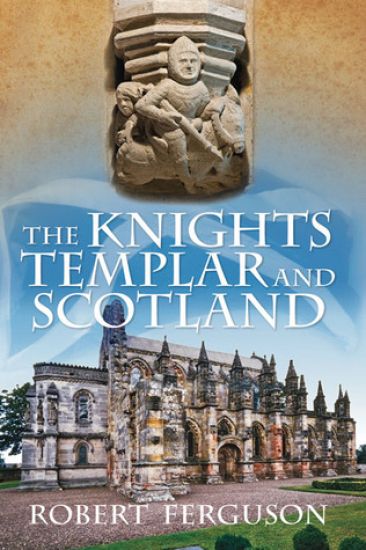
Places and books like Rosslyn Chapel and The Da Vinci Code have focused attention on Scotland’s Knights Templar. Who they were and what they did has been touched upon, but never properly explored until now. They were close advisors to Scotland’s early kings; they were major property owners and respected landlords in a harsh and unforgiving time; and they were secretive and arrogant. But did they really flee from France to Scotland just prior to their arrest in 1307? Did they fight with Robert the Bruce at Bannockburn in 1314? And how did the Templars continue on after Bannockburn? In The Knights Templar and Scotland Robert Ferguson intertwines Templar and Scottish history, from the foundation of the order in the early twelfth century right up to the present day. Including a comparison of the arrest of the Templars in France with the Templar Inquisition at Holyrood, and an examination of the part they played at Bannockburn, this is an essential book for anyone with an interest in history of the Knights Templar.

Places and books like Rosslyn Chapel and The Da Vinci Code have focused attention on Scotland’s Knights Templar. Who they were and what they did has been touched upon, but never properly explored until now. They were close advisors to Scotland’s early kings; they were major property owners and respected landlords in a harsh and unforgiving time; and they were secretive and arrogant. But did they really flee from France to Scotland just prior to their arrest in 1307? Did they fight with Robert the Bruce at Bannockburn in 1314? And how did the Templars continue on after Bannockburn?In The Knights Templar and Scotland Robert Ferguson intertwines Templar and Scottish history, from the foundation of the order in the early twelfth century right up to the present day. Including a comparison of the arrest of the Templars in France with the Templar Inquisition at Holyrood, and an examination of the part they played at Bannockburn, this is an essential book for anyone with an interest in the history of the Knights Templar.