Kirjojen hintavertailu. Mukana 11 521 312 kirjaa ja 12 kauppaa.

Kirjahaku

Etsi kirjoja tekijän nimen, kirjan nimen tai ISBN:n perusteella.

16 kirjaa tekijältä Robert Fox

X-Splitter

X-Splitter

Robert Fox

Lulu.com
2010
pokkari
An Ordinary man by the name of Pierce Splitter is bathed in nuclear radiation after an atomic bomb goes off in a shipping yard. soon after Pierce begins to aquire superhuman ability's. Looking for answers Pierce recives training from a doctor who also has info of a dark past that involves Pierce's entire family. This bring a question to Pierce asking him is this Fate or Destiny?
The Culture of Science in France, 1700–1900
This volume treats a remarkable period in the history of science in France. The articles in the first of its two sections, concerned with patronage and institutions, explore the structures that fostered research and the diffusion of scientific and technological knowledge, not only in the great institutions under state control but also in the very different world of the independent academies and the many scientific and industrial societies in Paris and the provinces. The second section focuses on the physical sciences, in particular the physics of heat and the imponderable fluids, and their relations with experimental and technological practice. It contains studies of figures of outstanding importance in the history of French science, including J.H. Lambert, P.S. de Laplace, and Sadi Carnot. Taken together, the articles provide an unusually coherent picture of a nation’s science over a period of a century, developing a methodological perspective that unites cognitive and social considerations. Cet ouvrage traite d’une période remarquable de l’histoire scientifique française. Les articles dans la première des deux sections, concernant le mécénat et les institutions, explorent les structures qui encourageaient la recherche et la diffusion des connaissances scientifiques et technologiques; ce, non seulement dans les grandes institutions sous contrôle étatique, mais aussi dans le monde très différent des académies indépendantes et des nombreuses sociétés scientifiques et industrielles à Paris et en province. La seconde section porte sur les sciences physiques, en particulier la physique thermique et les fluides impondérables, ainsi que leurs relations avec la pratique expérimentale et technologique. Elle contient des études de grands personnages d’une importance exceptionnelle dans l’histoire de la science française, comprenant: J.H. Lambert, P.S. de Laplace et Sadi Carnot. Dans leur ensemble, ces textes fournissent une image cohérente
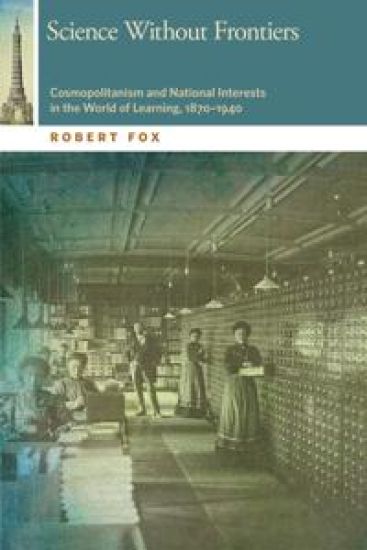
Science Without Frontiers

Science Without Frontiers

Robert Fox

Oregon State University
2016
nidottu
In his long and distinguished academic career, historian Robert Fox has specialized in the modern history of physical science, particularly in France, from 1700 onward. In Science Without Frontiers, he explores the discipline of science as a model for global society.Fostered by international congresses and societies, scientific collaboration flourished across linguistic and national borders from the mid-nineteenth century up until, and even after, the First World War. Projects such as the universal language Esperanto and the Dewey decimal system relied on optimistic visions of the future and were fueled by dramatic improvements in communications and transportation. The Institut internationale de bibliographie, founded in Brussels in 1895, emerged as a center for this collaborative endeavor.After the First World War, scientific internationalism met with a new set of challenges as governments increasingly sought to control the uses of science and technology. Fox details the fate of cooperative scientific internationalism in Europe and the challenges posed to it by the rise of totalitarianism and the increasingly conflicting force of nationalism. He explores public expressions of scientific nationalism in museum exhibits and, most tellingly, in rival national pavilions at such celebrations of internationalism as the Paris International Exposition of 1937.World War II might have shattered internationalist ideals for good, but grounds for optimism still remain in the successes of international organizations like UNESCO and in the potential of electronic media as a way to achieve the internationalists’ vision of universal access to knowledge. Science Without Frontiers offers a new way to think about science and culture and its relationship to politics amid the crises of the twentieth century.
Thomas Garnett

Thomas Garnett

Robert Fox

BLOOMSBURY PUBLISHING PLC
2024
sidottu
Thomas Garnett was a man of science and physician whose career took him from rural obscurity in 18th-century Westmorland to metropolitan prominence as the first professor of natural philosophy and chemistry at the newly founded Royal Institution in London in 1799. His rise to the summit of British science was far from straightforward, but is brought to life in vivid detail by Robert Fox. Fox gives an engrossing and moving account of the trials, triumphs, and tragedies of Garnett’s life, exploring his disputes with established doctors concerning the medicinal virtues of mineral waters, his involvement in the contested politics surrounding the creation of the Royal Institution of Great Britain and his premature death. In doing so, Fox deftly shows how Garnett’s life can illuminate a wide canvas of the social history of British science and medicine in the crucial period of early industrialisation
Thomas Garnett

Thomas Garnett

Robert Fox

BLOOMSBURY PUBLISHING PLC
2025
nidottu
Thomas Garnett was a man of science and physician whose career took him from rural obscurity in 18th-century Westmorland to metropolitan prominence as the first professor of natural philosophy and chemistry at the newly founded Royal Institution in London in 1799. His rise to the summit of British science was far from straightforward, but is brought to life in vivid detail by Robert Fox. Fox gives an engrossing and moving account of the trials, triumphs, and tragedies of Garnett’s life, exploring his disputes with established doctors concerning the medicinal virtues of mineral waters, his involvement in the contested politics surrounding the creation of the Royal Institution of Great Britain and his premature death. In doing so, Fox deftly shows how Garnett’s life can illuminate a wide canvas of the social history of British science and medicine in the crucial period of early industrialisation
The Savant and the State

The Savant and the State

Robert Fox

Johns Hopkins University Press
2012
sidottu
There has been a tendency to view science in nineteenth-century France as the exclusive territory of the nation's leading academic centers and the powerful Paris-based administrators who controlled them. Ministries and the great savants and institutions of the capital seem to have defined the field, while historians have ignored or glossed over traditions on the periphery of science. In "The Savant and the State", Robert Fox charts new historiographical territory by synthesizing the practices and thought of state-sanctioned scientists and those of independent communities of savants and commentators with very different political, religious, and cultural priorities. Fox provides a comprehensive history of the public face of French science from the Bourbon Restoration to the outbreak of the Great War. Following the Enlightenment, many different interests competed to define the role of science and technology in French society. Political and religious conservatives tended to blame the scientific community for upsetting traditional values and, implicitly, delivering France into the hands of revolutionary extremists and Napoleonic bureaucrats. Scientists, for their part, embraced the belief that observation and experimentation offered the surest way to the knowledge and wisdom on which the welfare of society depended. This debate, Fox argues, became a contest for the hearts and minds of the French citizenry.
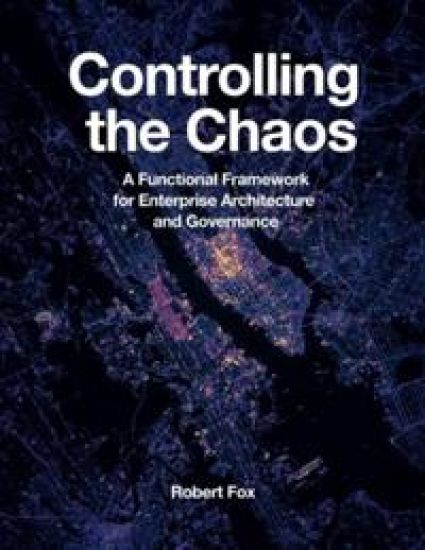
Controlling the Chaos

Controlling the Chaos

Robert Fox

Technics Publications LLC
2018
nidottu
Controlling the Chaos uses a deceptively simple "functional framework" approach that builds upon the groundwork laid down by Zachman, NIST, Spewack, TOGAF, COBIT, and ITIL, to create a vision of IT management that is easy to grasp and implement. Using this framework, the mind-numbing array of functionality that IT manages on behalf of the business is organized into a few simple, intuitive lifecycles. The framework then paints a clear, compelling picture of how to organize both your enterprise architecture and your IT governance efforts for all of these IT functions into a consistent, comprehensive program that is easy to understand and manage.This framework treats architecture and governance as two sides of the same coin: managing your future vision and the roadmap to get there (architecture) and managing your day-to-day operations using policies, standards, processes and roles (governance). This novel approach combines the holistic view of IT functions with the structures to manage each function's architecture and governance in a holistic program.After describing the functional framework concept, the text brings life to the structure, drawing practical insights from the author's 30 years of architecture and governance experience across several industries. The examples illustrate the difference between managing IT functions in isolation and managing them as part of an integrated enterprise solution, frankly admitting where and why architecture and governance programs are failing to provide their promised value. The book admits that the root causes of these failures are sometimes found in poor processes, but are just as often the result of poor staffing and office politics, all of which must be addressed to be successful.From a governance standpoint, the framework paints a picture of IT governance which brings a clarity and vision that has been sadly lacking in most industry discussions. It is an imminently practical approach to building a governance program that allows any IT organization to manage their infrastructure simply and consistently using a mature, time-tested approach. Using this framework will elevate your governance from vaguely defined departmental efforts to a coordinated, easily understood, easily managed enterprise-level program that simplifies the management of IT infrastructure while keeping it focused on supporting the business and returning value.From an architectural standpoint, the framework squarely faces challenges such as complying with emerging security standards, the increasing role of data analytics, and the virtualization of hardware and software into the cloud - discussing how and when to begin preparing for the disruptive technology of the near future. And the book addresses the frequent failure of enterprise architecture programs to provide business value, discussing the simple changes that must be made to transform these money-pits into valuable business partners.This is not a training manual for managing individual IT functions. Rather, it is a vision for how to manage all of these functions as parts of a single, integrated, comprehensive enterprise architecture and governance program that is focused on providing value to the business. This book is intended for both IT and business professionals, from executives to front-line technicians, who are trying to control their IT infrastructure.
Dead Man's Party

Dead Man's Party

Robert Fox

Createspace Independent Publishing Platform
2018
nidottu
It's been two weeks of nightmares since the dead started attacking the living. Survivors struggle to carve a safe haven from the corpse of the world.To find clean water. To eat.To avoid being bitten. To stay sane.Zombies aren't the only reason to be afraid. It's a dead man's party, and everyone's invited.
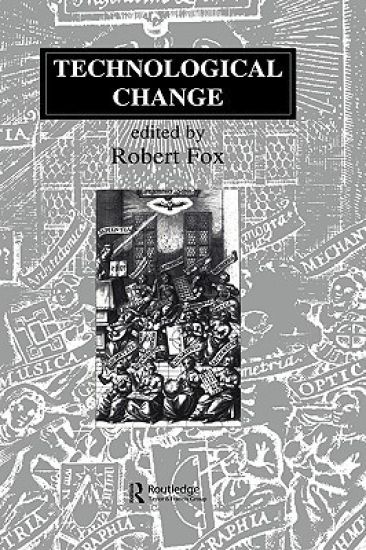
Technological Change

Technological Change

Robert Fox

Harwood-Academic Publishers
1996
sidottu
In this volume, scholars from these two very different traditions are brought together. Never before has a single volume contained such a distinguished and diverse group of historians of technology.
Technological Change

Technological Change

Robert Fox

Harwood Academic Publishers,The Netherlands
1998
nidottu
In this volume, scholars from these two very different traditions are brought together. Never before has a single volume contained such a distinguished and diverse group of historians of technology.