Book 2 of the series: SUNNY OF THE OLD SOUTHWESTNewly married Aaron and his Navajo wife, J hona , leave the comfort of their home at Mission San Vicente in the Sangre de Cristo Mountains to look for her two cousins who have been released from the reservation/concentration camp at Bosque Redondo in 1868. Unfortunately the two orphaned sisters cannot be found and may have been taken by slavers to be sold into prostitution. The search leads east into desolate and rugged West Texas, putting the searchers themselves at risk. Will Sunny (J hona ) save them or share their fate. Will Aaron's and Sunny's life together, blending two American cultures, be a tragically short one.Mature themes / no graphic sexual content
SANGRE DE CRISTO, (Volume I of Sunny of the Old Southwest)WARNING _ For the reader's information: This book (the shortest of the trilogy) has some emphasis on narrative style in its first chapters (about 1/3). This point is elaborated on below. Some, who prefer conversational dialogue, may find this part tedious at times. It is part of the creative intent and serves a purpose. read more]DESCRIPTION _ Aaron Jefferson and his best friend Josh face the challenges of life in the Old West when they leave their postwar Shenandoah Valley for the Great Plains in 1865. Unanticipated trouble changes their lives, and they continue on to the Southern Rocky Mountains. In the foothills of the Sangre de Cristo Mountains in New Mexico they encounter: love, clash of cultures, struggle, hardship, spiritual discovery, and what it means to sacrifice for others.Interaction between Native Americans and the two young men, who have decided to try their hand at life in the still somewhat unspoiled West, brings new insight to them as they mature as individuals. The same can be said for the young Navajo woman who they meet, who is a refugee from the U.S. Government's cruel interment of her people.Young people matured fast on the American frontier. It had been true since the first European stepped off of a wooden ship into the West Atlantic surf and true for Native American youth ages before that. A hard, rugged, beautiful land that molded and honed you or killed you, America made men and women out of children in a heartbeat.SANGRE DE CRISTO is an adventurous love story set in tumultuous historical times, especially for the characters involved. While the main characters' cultures are in conflict, the reader observes their attempts to rise above the issues that divide the larger groups. EARLY NARRATIVE STYLE _ While relating interesting family history and new encounters and experiences for Aaron Jefferson as he and his friend Josh travel from the Shenandoah Valley to the foothills of the Sangre de Cristo Mountains, the early pages have a narrative style that some, who prefer conversational dialogue, may find tedious at times. The purpose of this beginning is to echo the tedium and tension the two young men faced in that crossing of the desolate Southwest and to place more emphasis on the importance of the later events in this first book. The long rides between the events that are related in the early pages can only be briefly described, and the irritable tension caused by the violent event on the Brazos can only be alluded to. But the tedium the reader experiences while waiting for the story to become more warm and engaging simulates those two emotions experienced by Aaron and Josh. The style also echoes the writing of the time the story is historically set.While most readers have enjoyed and even praised this book in its entirety, they have found that the last two thirds of this first book and the second and third volumes are even more engaging but needed the early narrative in volume one to complete the story fully.
Book 3 of the series: SUNNY OF THE OLD SOUTHWESTIn Canyon de Chelly, among the magnificent red rock formations and under the blue skies of Arizona, three little girls played in the desert sand. All three were a bit small, but they were hard workers. Trading more and more of the play of youth for the work of adulthood, they grew into capable young women. They were sisters, and not, because two were and the third was a cousin. But they were like sisters. The real sisters were two years apart, and the cousin called J hona sat in the middle. Later her true love from another culture would interpret that name as 'Sunny'. All were born in the middle of the nineteenth century, between 1845 and 1847, a turbulent time. The United States and Mexico fought a short, hard, controversial war at that time, and land that The People, the young girls' people, thought was theirs went from Mexican control to American control.These desert maidens of the Din might have lived out their lives in the beautifully austere land of their birth had the Navajo not made war on the invading U.S. government and others. But there would have been trouble anyway as whites encroached upon Din lands, treating The People as if they weren't good enough to own land.And so life, in the guise of history, kicked them in the gut with defeat, internment, and long marches of either surrender or escape, depending on the fate of each particular girl. They lost loved ones and each other, becoming like scattered pieces of a puzzle. Finding themselves within the society of their enemy, each woman sought to put their small three piece part of the broader puzzle together again, sought to find each other and to find solace in their own tormented lives. Finding the good in life where it lay, even among the invading conquerors, these daughters of the Old Southwest dealt with what life and the Creator handed them, whether meager or bountiful.
The year is 1902, and America has ventured into overseas imperialism during the War with Spain in 1898 and the Philippine American War that followed. Now, as the latter conflict winds to an end, the forces of history, an adventurous son, and noble deeds draw two ordinary yet unique Westerners into danger once again. Having long ago bravely ventured into a deeply loving marriage that was daring for their times and having been heroes to each other and to those around them, Sunny and Aaron Jefferson bring their unique abilities and courage to a different, beautifully exotic, and sometimes dangerous land.Through the mission of two American adventurers, this novel introduces the reader to the early moments of the complicated relationship between the people of the picturesque and sometimes troubled Philippine Islands and both official America and her people. It is a relationship that remains an enigma even now, 117 years later. Like the experience of the American conquest, endured in her small part of it by the Navajo woman, J hona (Sunny), it is a story of missed opportunities. But what of Aaron and Sunny Jefferson's voyage to America's new tropical colony? Their goal is always to do the right thing, and they do not miss opportunities.
This culminating novel in the four volume "Sunny of the Old Southwest" collection follows Virginian Aaron Jefferson and his Navajo wife, now residng in Texas and heirs to a big ranch, as they take a role in the Red River War, the last gasp of the Comanche Nation (the remants of Comancheria) and then return to each others homelands to visit. First, in Virgina and trapped by her snows, they see the first child born in the cabin of Aaron's birth. Decades later, they take all four children (spaced each a year apart and the youngest then nine) to the home of Sunny's Dine People (Navajo), "Dinetah" in the beautiful, austere, red, rocky deserts and canyons. There the youngsters learn of "Mama's" past. Staying for months, the family helps the people, who are still those years later healing and rebuilding from the "Long Walk of the Navajo People," the years in internment in the concentration camp at Bosque Redondo, and the long walk back to their devastated homeland.
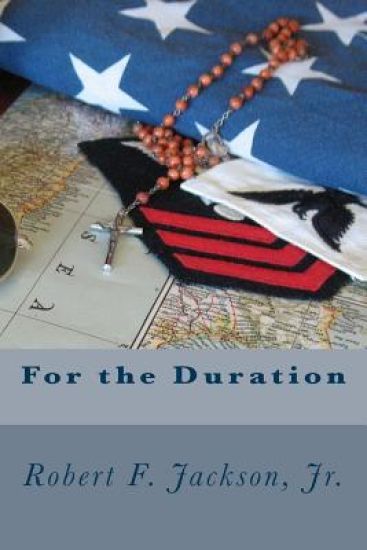
FOR THE DURATION is an understated story, without theatrical hyperbole, of two ordinary young Americans caught up in the greatest upheaval of their time and perhaps of any era. Forced by circumstances in 1941 into the great war in the Pacific . . finding himself at the start closer than most of his countrymen . . 24 year old Jake Pierce has little choice but to face responsibilities he never sought. At the same time, Sarah Willowood, a younger mixed race girl from Jake's past, faces the world and her own adult responsibilities alone as an eighteen year old orphan managing her inheritance: a small family farm in the Sierra foothills and the town's only grill/cafe style restaurant.Each faces their challenges. Sarah struggles alone, marginalized by her peers in the otherwise all white mountain community, while her work ethic, quality restaurant, and charm make her popular with the older generations and marginally accepted by her own. Jake's prewar adventures have placed him at the heart of Japanese aggression; and, with uncommon skills, the young American, a competent sailing vessel officer and flying boat pilot, is forced into a world of fire and death, at sea and in the air. His success and injuries result in him bringing the war back home to the mountains, his parents, and Sarah, a little over five years his junior.Bonds of friendship between several people are renewed and strengthened during Jake's stay of over a month. But, healed and retrained to fly a bigger airplane, the war's iconic Consolidated PBY Catalina flying boat, the young adventurer turned warrior must return to the cauldron of fire and the overwhelming, ubiquitous presence of death. Therein, Jake carries two gifts from another mixed race woman, perhaps in a way an older reflection of Sarah. Sunny Kathleen Jefferson, an early Twentieth Century heroine and philanthropist, has become a mentor to the young American man, sharing his skills, abilities, and interests as well has his concern for Sarah, though she's never met her. The strong, educated, wealthy half Navajo woman had been Jake's mentor during his years in Southeast Asia before the enemy's attacks, and she taught him to fight better with a knife and to hone his jungle skills, as she also encouraged him to return to Sarah, a quarter white, a quarter Navajo, and half Blackfoot.When he returns to the fray, the young warrior, now Chief Petty Officer Jake Pierce, USNR, carries 'Lola Sunny's' lessons and the gift of her ( formerly her Navajo mother's ) mysterious, exotic Himalayan fighting knife. The new chief, young for the rank, also carries a certain unique level of courage, one that knows fear and thus is all the more courageous. All the while, Sarah, back home in 'the States', exhibits her own unique courage over and over, even as she leaves the mountains for the war.FOR THE DURATION reiterates the age old truth that ordinary people are made extraordinary by extraordinary circumstances. Those 'ordinary' people may have possessed within them an out of the ordinary strength they never realized they had. But that may describe us all.Most of all perhaps, it was a time for necessary, hard decisions, ultimate sacrifice . . and of death all around . . when women took a greater role in society and young people really willingly, metaphorically agreed to remit to their country an amount of effort up to giving their own life.