Kirjojen hintavertailu. Mukana 12 390 323 kirjaa ja 12 kauppaa.

Kirjahaku

Etsi kirjoja tekijän nimen, kirjan nimen tai ISBN:n perusteella.

5 kirjaa tekijältä Robert Galvin

Crime Scene Documentation

Crime Scene Documentation

Robert Galvin

CRC Press
2020
sidottu
When a criminal act or vehicle crash occurs, most often a local law enforcement agency responds and is responsible for both investigating the scene and for documenting it. It is critical that scene evidence is collected and recorded efficiently, as the scene can quickly change. The sooner evidence can be collected, reviewed, and analyzed, the better an understanding investigators will have as to how and why the incident occurred. Crime Scene Documentation: Preserving the evidence and the growing role of 3D laser scanning demonstrates at length the value of laser scanning through the use of numerous case studies of investigators who have utilized various 3D technologies and laser scanning to document scenes. Thorough and accurate scene documentation is an essential function at a science and proves particularly valuable in courtroom presentations to help jurors understand a crime or accident’s likely chain of events. The more advanced a scene documentation method is, the better it can be utilized to capture details that will lead to optimal scene diagramming. Currently, 3D laser scanning is the most advanced method of scene documentation available, capturing detailed and realistic digital scans—capturing scenes in their entirety—and yielding a permanent representation of the scene for study and analysis at any time, even years after a crime scene has vanished. The book explains current technology, the latest advances, and how to best utilize the technology. Case examples come from various applications, from tools to programs, can help crash scene investigators understand how scanning can improve scene documentation, provide better and more evidence details, and build more credible diagrams that possibly may be used in court presentations to help support a case. Key Features: Describes 3Dscene recording methods in use and how well they work Outlines the variables and inherent challenges associated with documenting crime and crash scenes Illustrates the positive, and dramatic, impact of having a well-documented scene, particularly in the courtroom Explores how 3D laser scanning has vastly changed the way and extent to which crime and crash scenes can be captured accurately and completely, and subsequently analyzed Explains how laser scanning is highly flexible and presents strategies to integrate it into other crime scene incident recording techniques and technologiesCrime Scene Documentation details the many benefits of 3D laser scanning technology relative to its reliability and accuracy as well as the multiple case scenarios in which it can be used. The book serves as an invaluable resource to crime scene technicians, investigators, and reconstructionists on the best ways to document a crime or crash scene.
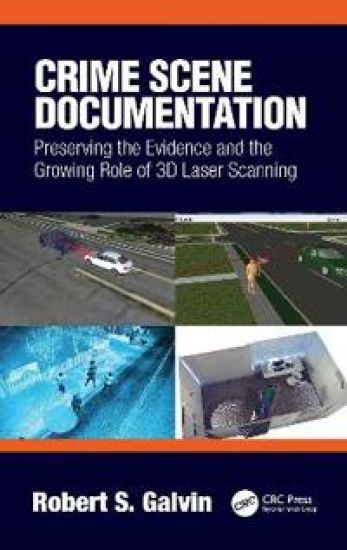
Crime Scene Documentation

Crime Scene Documentation

Robert Galvin

TAYLOR FRANCIS LTD
2024
nidottu
When a criminal act or vehicle crash occurs, most often a local law enforcement agency responds and is responsible for both investigating the scene and for documenting it. It is critical that scene evidence is collected and recorded efficiently, as the scene can quickly change. The sooner evidence can be collected, reviewed, and analyzed, the better an understanding investigators will have as to how and why the incident occurred. Crime Scene Documentation: Preserving the evidence and the growing role of 3D laser scanning demonstrates at length the value of laser scanning through the use of numerous case studies of investigators who have utilized various 3D technologies and laser scanning to document scenes. Thorough and accurate scene documentation is an essential function at a science and proves particularly valuable in courtroom presentations to help jurors understand a crime or accident’s likely chain of events. The more advanced a scene documentation method is, the better it can be utilized to capture details that will lead to optimal scene diagramming. Currently, 3D laser scanning is the most advanced method of scene documentation available, capturing detailed and realistic digital scans—capturing scenes in their entirety—and yielding a permanent representation of the scene for study and analysis at any time, even years after a crime scene has vanished. The book explains current technology, the latest advances, and how to best utilize the technology. Case examples come from various applications, from tools to programs, can help crash scene investigators understand how scanning can improve scene documentation, provide better and more evidence details, and build more credible diagrams that possibly may be used in court presentations to help support a case. Key Features: Describes 3Dscene recording methods in use and how well they work Outlines the variables and inherent challenges associated with documenting crime and crash scenes Illustrates the positive, and dramatic, impact of having a well-documented scene, particularly in the courtroom Explores how 3D laser scanning has vastly changed the way and extent to which crime and crash scenes can be captured accurately and completely, and subsequently analyzed Explains how laser scanning is highly flexible and presents strategies to integrate it into other crime scene incident recording techniques and technologiesCrime Scene Documentation details the many benefits of 3D laser scanning technology relative to its reliability and accuracy as well as the multiple case scenarios in which it can be used. The book serves as an invaluable resource to crime scene technicians, investigators, and reconstructionists on the best ways to document a crime or crash scene.
PERFECT POWER: How the Microgrid Revolution Will Unleash Cleaner, Greener, More Abundant Energy
What's the solution to the world's growing energy problem?PERFECT POWERElectric usage is rising. Fuel costs are rocketing. Blackouts are happening more frequently. Why? Because our electrical power system--built on a vast network of resources including nuclear energy, natural gas, water, and coal--has become woefully outdated, increasingly expensive, and dangerously fragile. We need to change the current system, and we need to do it now.Written by business visionary and former Motorola chairman Robert Galvin, Perfect Power shows us how to create a “perfect” system that can deliver power where needed, at an astonishing reliability standard of 99.9999999 percent. By super-charging the “Six Sigma” concepts that Galvin developed as the founder and CEO at Motorola, we canMeet the energy reliability and quality needs of the Digital AgeGenerate new goods and services that create jobs, empower consumers, and lower energy cost Eliminate wasteful spending on our electrical infrastructure that can be used for peak power needsFacilitate local, regional, and, ultimately, national energy independenceFundamentally reduce the impact of energy on the environmentInvest in the microgrid revolutionEnergy providers and policy makers will reinvent today's centralized power systems and integrate them with new, efficient “microgrids." Investors and entrepreneurs will spot tomorrow's hottest technologies. Consumers will demand change from “the powers that be.” And environmentalists will take advantage of cleaner, greener energy sources available.We have the power to fulfill our energy needs, fix our old systems, forge ahead with new ideas, and fuel our dreams. It's Perfect Power.