Kirjojen hintavertailu. Mukana 11 699 587 kirjaa ja 12 kauppaa.

Kirjahaku

Etsi kirjoja tekijän nimen, kirjan nimen tai ISBN:n perusteella.

20 kirjaa tekijältä Robert Garland

Daily Life of the Ancient Greeks

Daily Life of the Ancient Greeks

Robert Garland

Greenwood Press
2008
sidottu
Ancient Greece comes alive in this exploration of the daily lives of ordinary people-men and women, children and the elderly, slaves and foreigners, rich and poor. With new information drawn from the most current research, this volume presents a wealth of information on every aspect of ancient Greek life. Discover why it was more desirable to be a slave than a day laborer. Examine cooking methods and rules of ancient warfare. Uncover Greek mythology. Learn how Greeks foretold the future. Understand what life was like for women, and what prevailing attitudes were toward sexuality, marriage, and divorce. This volume brings ancient Greek life home to readers through a variety of anecdotes and primary source passages from contemporary authors, allowing comparison between the ancient world and modern life. A multitude of resources will engage students and interested readers, including a Making Connections feature which offers interactive and fun ideas for research assignments. The concluding chapter places the ancient world in the present, covering new interpretations like the movie 300, the founding of modern Greece, and the ways in which classical culture still affects our own. With over 60 illustrations, a timeline of events, a glossary of terms, and an extensive print and nonprint bibliography, this volume offers a unique and descriptive look at one of the most influential eras in human history.
Wandering Greeks

Wandering Greeks

Robert Garland

Princeton University Press
2014
sidottu
Most classical authors and modern historians depict the ancient Greek world as essentially stable and even static, once the so-called colonization movement came to an end. But Robert Garland argues that the Greeks were highly mobile, that their movement was essential to the survival, success, and sheer sustainability of their society, and that this wandering became a defining characteristic of their culture. Addressing a neglected but essential subject, Wandering Greeks focuses on the diaspora of tens of thousands of people between about 700 and 325 BCE, demonstrating the degree to which Greeks were liable to be forced to leave their homes due to political upheaval, oppression, poverty, warfare, or simply a desire to better themselves. Attempting to enter into the mind-set of these wanderers, the book provides an insightful and sympathetic account of what it meant for ancient Greeks to part from everyone and everything they held dear, to start a new life elsewhere--or even to become homeless, living on the open road or on the high seas with no end to their journey in sight. Each chapter identifies a specific kind of "wanderer," including the overseas settler, the deportee, the evacuee, the asylum-seeker, the fugitive, the economic migrant, and the itinerant, and the book also addresses repatriation and the idea of the "portable polis." The result is a vivid and unique portrait of ancient Greece as a culture of displaced persons.
Wandering Greeks

Wandering Greeks

Robert Garland

Princeton University Press
2016
pokkari
Most classical authors and modern historians depict the ancient Greek world as essentially stable and even static, once the so-called colonization movement came to an end. But Robert Garland argues that the Greeks were highly mobile, that their movement was essential to the survival, success, and sheer sustainability of their society, and that this wandering became a defining characteristic of their culture. Addressing a neglected but essential subject, Wandering Greeks focuses on the diaspora of tens of thousands of people between about 700 and 325 BCE, demonstrating the degree to which Greeks were liable to be forced to leave their homes due to political upheaval, oppression, poverty, warfare, or simply a desire to better themselves. Attempting to enter into the mind-set of these wanderers, the book provides an insightful and sympathetic account of what it meant for ancient Greeks to part from everyone and everything they held dear, to start a new life elsewhere--or even to become homeless, living on the open road or on the high seas with no end to their journey in sight. Each chapter identifies a specific kind of "wanderer," including the overseas settler, the deportee, the evacuee, the asylum-seeker, the fugitive, the economic migrant, and the itinerant, and the book also addresses repatriation and the idea of the "portable polis." The result is a vivid and unique portrait of ancient Greece as a culture of displaced persons.
What to Expect When You're Dead

What to Expect When You're Dead

Robert Garland

PRINCETON UNIVERSITY PRESS
2025
sidottu
An entertaining and enlightening book about how ancient peoples dealt with death—and what we might learn from themA lively story of death, What to Expect When You’re Dead explores the fascinating death-related beliefs and practices of a wide range of ancient cultures and traditions—Mesopotamian, Egyptian, Hindu, Jewish, Zoroastrian, Etruscan, Greek, Roman, Early Christian, and Islamic. By drawing on the latest scholarship on ancient archaeology, art, literature, and funerary inscriptions, Robert Garland invites readers to put themselves in the sandals of ancient peoples and to imagine their mental state moment by moment as they sought—in ways that turn out to be remarkably similar to ours—to assist the dead on their journey to the next world and to understand life’s greatest mystery.What to Expect When You’re Dead chronicles the ways ancient peoples answered questions such as: How to achieve a good death and afterlife? What’s the best way to dispose of a body? Do the dead face a postmortem judgement—and where do they end up? Do the dead have bodies in the afterlife—and can they eat, drink, and have sex? And what can the living do to stay on good terms with the nonliving?Filled with intriguing stories and frequent humor, What to Expect When You’re Dead will be a morbidly delicious treat for every reader alive.
The Greek Way of Life

The Greek Way of Life

Robert Garland

Bristol Classical Press
1996
pokkari
The Greek Way of Life is a survey of the major life experiences which constituted the social reality of classical Greece, broken down into the general topics of conception and pregnancy, birth, childhood, coming of age, early adulthood, and elders and the elderly. What emerges is a conception of the human being as a social animal par excellence whose nature was largely realised in the attainment of paradigmatic social roles: military service for men and childbearing for women. Among the subtopics are Greek medical ideas, the roles of women and children, marriage, care of the elderly, and the role of religious ideas. An engaging narrative and a useful sourcebook, this will appeal to both general readers and scholars.
Surviving Greek Tragedy

Surviving Greek Tragedy

Robert Garland

Bristol Classical Press
2004
pokkari
"Surviving Greek Tragedy" is a history of the physical survival to the present day of the thirty-two extant tragedies of Aeschylus, Sophocles and Euripides. Beginning with the first revival of the plays in the fourth century BC, it charts the course of their transmission down the centuries as they passed through the hands of actors, readers, scholars, schoolteachers, monks, publishers, translators, theatre directors, and so on. Over the course of this 2,400-year period, the plays were at different times performed, copied, quoted, emended, excerpted, analysed, taught, translated, censored, adapted, or merely left to moulder in a library, as each successive culture charged with their safe-keeping saw fit. In the last thirty years Greek tragedy has become the medium through which most people encounter the classical heritage, and in the book Garland gives extensive coverage to modern stagings of the plays all over the world, taking this story right up to the present.
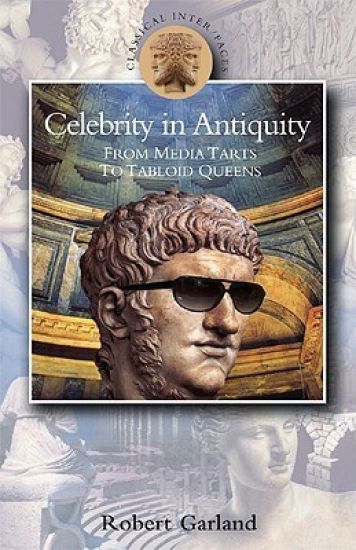
Celebrity in Antiquity

Celebrity in Antiquity

Robert Garland

Bristol Classical Press
2006
nidottu
What sort of people were able to grab the attention of the public in the ancient world? How was celebrity achieved? What methods did people use to achieve it? Robert Garland turns the spotlight on the careers of some of the most successful and colourful self-promoters ever to have lived, including Alcibiades, Socrates, Alexander the Great, Julius Caesar, Cleopatra, Augustus, Jesus, Nero and Theodosia, and investigates the secrets of their success. He also looks at ways in which other highly talented individuals turned themselves into celebrities, including sports personalities, entertainers, philosophers, founders of new religions, and internationally renowned prostitutes. The reader may be forgiven for supposing that celebrity is a phenomenon that has no equivalent in antiquity. This book proves that it did!
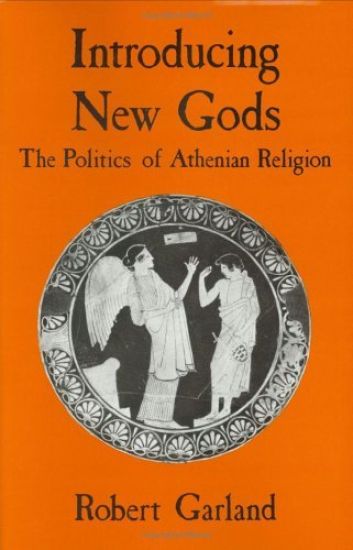
Introducing New Gods

Introducing New Gods

Robert Garland

Cornell University Press
1992
sidottu
The religious imagination of the Greeks, Robert Garland observes, was populated by divine beings whose goodwill could not be counted upon, and worshipers faced a heavy burden of choice among innumerable deities to whom they might offer their devotion. These deities—and Athenian polytheism itself—remained in constant flux as cults successively came into favor and waned. Examining the means through which the Athenians established and marketed cults, this handsomely illustrated book is the first to illuminate the full range of motives—political and economic, as well as spiritual—that prompted them to introduce new gods.
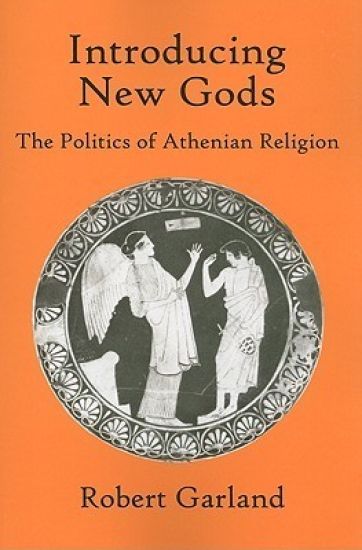
Introducing New Gods

Introducing New Gods

Robert Garland

CORNELL UNIVERSITY PRESS
2008
pokkari
The religious imagination of the Greeks, Robert Garland observes, was populated by divine beings whose goodwill could not be counted upon, and worshipers faced a heavy burden of choice among innumerable deities to whom they might offer their devotion. These deities—and Athenian polytheism itself—remained in constant flux as cults successively came into favor and waned. Examining the means through which the Athenians established and marketed cults, this handsomely illustrated book is the first to illuminate the full range of motives—political and economic, as well as spiritual—that prompted them to introduce new gods.
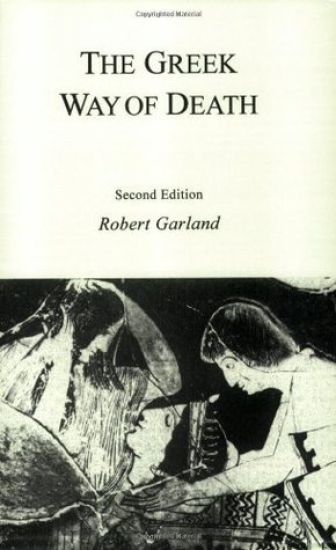
The Greek Way of Death

The Greek Way of Death

Robert Garland

Cornell University Press
2001
pokkari
Surveying funerary rites and attitudes toward death from the time of Homer to the fourth century B.C., Robert Garland seeks to show what the ordinary Greek felt about death and the dead. The Second Edition features a substantial new prefatory essay in which Garland addresses recent questions and debates about death and the early Greeks. The book also includes an updated Supplementary Bibliography. Praise for the first edition: "This [volume] contains a rich and remarkably complete collection of the abundant but scattered literary, artistic, and archaeological evidence on death in the ancient world as well as an extensive bibliography on the subject. Robert Garland conceives of death as a process, a rite of passage, a mutual but changing relationship between the deceased and [his or her] survivors.... A most useful collection of evidence, sensibly organized (no small feat) and lucidly presented.... A valuable source on the Greeks and on the always-lively subject of death."-American Historical Review "Much can be learned from this engaging survey of popular attitudes toward death, the dying, and the dead in Greece down to the end of the Classical period.... Appealing to scholars and the general audience."-Religious Studies Review
Roman Legends Brought to Life

Roman Legends Brought to Life

Robert Garland

PEN SWORD BOOKS LTD
2022
sidottu
The legends of early Rome are among the most memorable of any in the world. They are also highly instructive. They taught generations of Romans about duty and obedience. Duty and obedience might not seem to amount to much these days, but it was precisely these virtues that made Rome great. The legends are not, however, merely self-congratulatory and they are rarely simple exercises in nationalist propaganda. On the contrary, many reveal their ancestors' dark side, which they expose unflinchingly. As in the case of Greek mythology, there is no authorised version of any Roman legend. The legends survived because they reminded the Romans who they were, what modest beginnings they came from, how on many occasions their city nearly imploded, and what type of men and women shaped their story. Defeat, loss, failure. That's where this story - the story of the boldest, most enduring, and most successful political experiment in human history - begins. It's the story of how a band of refugees escaped from the ruins of a burning city and came to establish themselves hundreds of miles to the west in the land of Hesperia, the Western Land, the land where the sun declines, aka Italia. It's the story of a people who by intermingling, compromise and sheer doggedness came to dominate first their region, then the whole of peninsula Italy, and finally the entire Mediterranean and beyond.
Athens Burning

Athens Burning

Robert Garland

Johns Hopkins University Press
2017
sidottu
Between June 480 and August 479 BC, tens of thousands of Athenians evacuated, following King Xerxes' victory at the Battle of Thermopylae. Abandoning their homes and ancestral tombs in the wake of the invading Persian army, they sought refuge abroad. Women and children were sent to one safe haven, the elderly to another, while all men of military age were conscripted into the fleet. During this difficult year of exile, the city of Athens was set on fire not once, but twice. In Athens Burning, Robert Garland explores the reasons behind the decision to abandon Attica, the peninsular region of Greece that includes Athens, while analyzing the consequences, both material and psychological, of the resulting invasion. Garland introduces readers to the contextual background of the Greco-Persian wars, which include the famous Battle of Marathon. He describes the various stages of the invasion from both the Persian and Greek point of view and explores the siege of the Acropolis, the defeat of the Persians first by the allied Greek navy and later by the army, and, finally, the return of the Athenians to their land. Taking its inspiration from the sufferings of civilians, Athens Burning also works to dispel the image of the Persians as ruthless barbarians. Addressing questions that are largely ignored in other accounts of the conflict, including how the evacuation was organized and what kind of facilities were available to the refugees along the way, Garland demonstrates the relevance of ancient history to the contemporary world. This compelling story is especially resonant in a time when the news is filled with the suffering of nearly 5 million people driven by civil war from their homes in Syria. Aimed at students and scholars of ancient history, this highly accessible book will also fascinate anyone interested in the burgeoning fields of refugee and diaspora studies.
Athens Burning

Athens Burning

Robert Garland

Johns Hopkins University Press
2017
pokkari
Between June 480 and August 479 BC, tens of thousands of Athenians evacuated, following King Xerxes' victory at the Battle of Thermopylae. Abandoning their homes and ancestral tombs in the wake of the invading Persian army, they sought refuge abroad. Women and children were sent to one safe haven, the elderly to another, while all men of military age were conscripted into the fleet. During this difficult year of exile, the city of Athens was set on fire not once, but twice. In Athens Burning, Robert Garland explores the reasons behind the decision to abandon Attica, the peninsular region of Greece that includes Athens, while analyzing the consequences, both material and psychological, of the resulting invasion. Garland introduces readers to the contextual background of the Greco-Persian wars, which include the famous Battle of Marathon. He describes the various stages of the invasion from both the Persian and Greek point of view and explores the siege of the Acropolis, the defeat of the Persians first by the allied Greek navy and later by the army, and, finally, the return of the Athenians to their land. Taking its inspiration from the sufferings of civilians, Athens Burning also works to dispel the image of the Persians as ruthless barbarians. Addressing questions that are largely ignored in other accounts of the conflict, including how the evacuation was organized and what kind of facilities were available to the refugees along the way, Garland demonstrates the relevance of ancient history to the contemporary world. This compelling story is especially resonant in a time when the news is filled with the suffering of nearly 5 million people driven by civil war from their homes in Syria. Aimed at students and scholars of ancient history, this highly accessible book will also fascinate anyone interested in the burgeoning fields of refugee and diaspora studies.
How to Survive in Ancient Greece

How to Survive in Ancient Greece

Robert Garland

Pen Sword History
2020
sidottu
Imagine you were transported back in time to Ancient Greece and you had to start a new life there. How would you fit in? Where would you live? What would you eat? Where would you go to have your hair done? Who would you go to if you got ill, or if you were mugged in the street? All these questions, and many more, will be answered in this new how-to guide for time travellers. Part self-help guide, part survival guide, this lively and engaging book will help the reader deal with the many problems and new experiences that they will face, and also help them to thrive in this strange new environment.
Greek Mythology

Greek Mythology

Robert Garland

Pen Sword History
2020
nidottu
Greek mythology isn't the equivalent of the Bible or the Qur'an. There is no standardized version of any myth. Myths aren't sacred. Whether you happen to be Homer, Aeschylus, Sophocles, Euripides or any other Greek, or even you or me, every myth is yours to tell and interpret any way you like. Just to give one example. An oracle has decreed that Oedipus will kill his father and marry his mother. In Homer's version, Oedipus carries on ruling in Thebes when he discovers he has fulfilled the oracle, whereas in the version that Sophocles gives us in his play Oedipus the King, Oedipus blinds himself and goes into voluntary exile. That said, certain details are unalterable. Oedipus has to be ignorant of the fact that the man whom he kills is his father and that the woman whom he marries is his mother; he has to fulfil the awful prophecy of the oracle; and he has to come to a realisation of what he has done afterwards. But everything else is pretty much up for grabs. Greek mythology is very much alive and well in the contemporary world. There are many narrative versions of the myths currently available, but this book will do something very different: it will give the characters the chance to tell their stories in their own words. In so doing, it will give both gods and humans the opportunity to reflect upon their life stories and, in places, justify their actions. In this way they will come across as real people, just as they are, say, in the plays of the dramatists.
Daily Life of the Ancient Greeks

Daily Life of the Ancient Greeks

Robert Garland

Hackett Publishing Co, Inc
2014
nidottu
Significantly expanded and updated in light of the most recent scholarship, the second edition of Garland's engaging introduction to ancient Greek society brings this world vividly to life--and, in doing so, explores the perspectives and morals of typical ancient Greek citizens across a wide range of societal levels. Food and drink, literacy, the plight of the elderly, the treatment of slaves, and many more aspects of daily life in ancient Greece also come into sharp focus. More than sixty illustrations are included, as are maps, a chronology, a glossary of Greek terms, and suggestions for further reading.
Religion and the Greeks

Religion and the Greeks

Robert Garland

Bristol Classical Press
1998
nidottu
No area of Greek life was wholly untouched by religion, and a basic knowledge of this aspect of life is essential to anyone seeking a proper understanding of the classical world. In this engaging survey Robert Garland brings out the unique quality of Greek religion - its practical and worldly approach to man's relationship with the divine - and shows how religious ritual was integral to the daily routine of both public and private life.
The Piraeus

The Piraeus

Robert Garland

Bristol Classical Press
2001
nidottu
The Piraeus was one of the largest and most impressive ancient ports in the Mediterranean. During the fifth century BC it was laid out on a grid pattern by the urban planner Hippodamos and linked by the Long Walls with the city of Athens, some 8km away. It served as headquarters for the Athenian navy during the time of Athens' Aegean empire. Its emporion or commercial sector handled the bulk of Athenian imports, especially the grain on which the Athenians were wholly dependent. In conventional histories the story of the Piraeus is mostly hidden amidst material centred almost exclusively on Athens herself. Here Garland treats the Piraeus in its own right as an integral yet idiosyncratic component of Attika - one which exercised a decisive influence on Athenian history: its demographic profile linked it indissolubly with radical democracy; its Long Walls enabled Athenian leaders to pursue a policy which abandoned the Attic countryside in favour of a predominantly maritime strategy; later its Macedonian garrison could exercise control over Athens by threatening to cut off her essential imports. Garland analyses the demography of the Piraeus, its separate administrative organisation, its crucial economic and commercial importance, its key strategic and naval role, and its distinctive religious identity. He also traces the layout of the ancient town which lies largely buried beneath its no less vital modern successor.
Hannibal

Hannibal

Robert Garland

Bristol Classical Press
2010
nidottu
Few people in history have achieved more yet with such fatal consequences for the cause that they supported than Hannibal. In this lively and accessible study Robert Garland explores Hannibal's fascinating but complex personality in the light of his extraordinary military and political career, which made him one of history's greatest survivors. He was certainly Rome's most formidable adversary, and the man who came closest to destroying her power base in Italy. At the same time Hannibal did more than anyone else to bring Carthage to the edge of ruin. His endurance in guiding his army and his elephants over the Alps tested the limits of what is humanly possible. And even at the end of his life, he never yielded an inch to his enemies. Garland investigates Hannibal's unintended yet powerful legacy and concludes that he is both an inspiration and a warning to anyone who dreams big dreams.