Kirjojen hintavertailu. Mukana 11 244 527 kirjaa ja 12 kauppaa.

Kirjahaku

Etsi kirjoja tekijän nimen, kirjan nimen tai ISBN:n perusteella.

13 kirjaa tekijältä Robert Gildea

France Since 1945

France Since 1945

Robert Gildea

Oxford University Press
2002
nidottu
The last fifty years of French history have seen immense challenges for the French: constructing a new European order, building a modern economy, searching for a stable political system. It has also been a time of anxiety and doubt. The French have had to come to terms with the legacy of the German Occupation, the loss of Empire, the political and social implications of the influx of foreign immigrants, the rise of Islam, the destruction of rural life, and the threat of Anglo-American culture to French language and civilization. Robert Gildea's account examines the French political system and France's role in the world from 1945 to 2000. He looks at France's attempt to recover national greatness after the Second World War, its attempt to deal with the fear of German resurgence by building the European Community, and its struggle to preserve its Empire. He also discusses the Algerian War and its legacy, and the later development of a neo-colonialism to preserve its influence in Africa and the Pacific. Gildea also examines the rise and fall of the two Republics, the rise of and fall of De Gaulle, and the revolution of 1968, along with topics such as the construction of the myth of the Resistance, the painful truths of French involvement in anti-Semitic persecution, and France's continuing obsession with national identity.
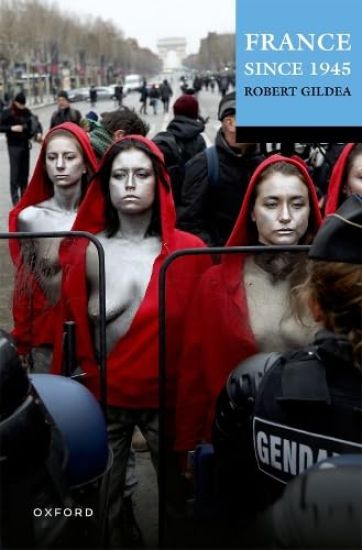
France Since 1945

France Since 1945

Robert Gildea

Oxford University Press
2025
nidottu
Robert Gildea presents an ambitious and wide-ranging but succinct history of France from 1945 to 2024, which seeks to provide a sympathetic understanding of the forces that have shaped a country that is so close to Britain and yet so different. This third edition, following the second in 2002 and first in 1996, takes into account twenty more years of French history, history writing, and changing historical approaches, notably in colonial history and gender history. France Since 1945 explores France's bid to restore political stability and international greatness after the Second World War which was marked by defeat and occupation, and the loss of greatness and crisis of democracy that began in the 1990s. These chapters are interleaved by eight thematic chapters, on the legacy of the Second World War and the Algerian War, which arguably continues in France to this day; on the economy and society; on French culture; and on gender and sexuality.
Barricades and Borders

Barricades and Borders

Robert Gildea

Oxford University Press
2003
nidottu
This is a survey of European history, from the coup d'etat of Napoleon, to the assassination of Archduke Ferdinand at Sarajevo. It concentrates on the twin themes of revolution and nationalism, which often combined, but which increasingly became rival creeds.
The Past in French History

The Past in French History

Robert Gildea

Yale University Press
1996
pokkari
This fascinating book examines how the past pervades French public life, how the French both commemorate their past triumphs, heroes, and martyrs and attempt to erase the more violent events in their history. The book surveys the ways that various political communities in France during the past two centuries have manufactured different versions of the past in order to define their identities and legitimate their goals. Beginning with a discussion of the bicentenary of the French Revolution in 1989, Robert Gildea moves backward in time to show how rival factions have used various elements of French political culture—from the grandeur of the ancien régime to Catholicism, Jacobinism, Anarchism, and Bonapartism—to further their ends. Gildea shows how proponents of revolution and counterrevolution, church and state, centralism and regionalism, and national identity and nationalism campaigned to achieve the widest possible acceptance of their own view of the past. He describes the continuing battle between Left and Right for association with national heroes such as Joan of Arc and Napoleon. He exposes the reworking of collective views of the past by political communities, in order to increase or recover political legitimacy. Written in clear and trenchant prose, the book offers a new perspective on French history and political culture.
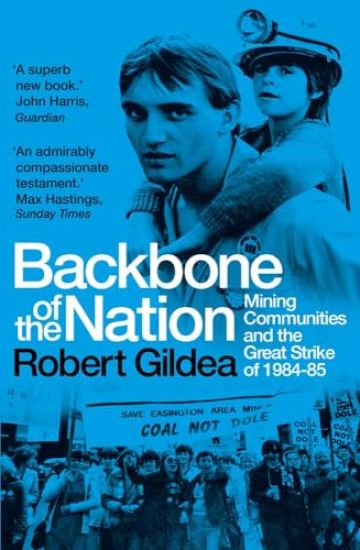
Backbone of the Nation

Backbone of the Nation

Robert Gildea

YALE UNIVERSITY PRESS
2024
pokkari
A powerful new history of the Great Strike in the miners’ own voices, based on more than 140 interviews with former miners and their families Forty years ago, Arthur Scargill led the National Union of Mineworkers on one of the largest strikes in British history. A deep sense of pride existed within Britain’s mining communities who thought of themselves as the backbone of the nation’s economy. But they were vilified by Margaret Thatcher’s government and eventually broken: deprived of their jobs, their livelihoods, and in some cases, their lives. In this groundbreaking new history, Robert Gildea interviews those miners and their families who fought to defend themselves. Exploring mining communities from South Wales to the Midlands, Yorkshire, County Durham, and Fife, Gildea shows how the miners and their families organized to protect themselves, and how a network of activists mobilized to support them. Amid the recent wave of industrial action in the United Kingdom, Backbone of the Nation highlights anew the importance of labor organization—and intimately records the triumphs, losses, and resilience of these mining communities.
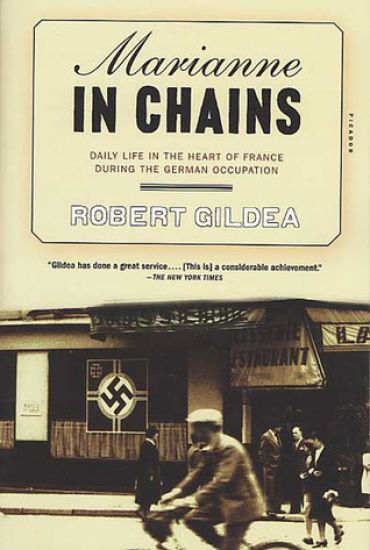
Marianne in Chains: Daily Life in the Heart of France During the German Occupation
A startling and original view of the occupation of the French heartland, based on a new investigation of everyday life under Nazi rule In France, the German occupation is called simply the "dark years." There were only the "good French" who resisted and the "bad French" who collaborated. Marianne in Chains, a broad and provocative history, uncovers a rather different story, one in which the truth is more complex and humane. Drawing on previously unseen archives, firsthand interviews, diaries, and eyewitness accounts, Robert Gildea reveals everyday life in the heart of occupied France. He describes the pressing imperatives of work, food, transportation, and family obligations that led to unavoidable compromise and negotiation with the army of occupation. In the process, he sheds light on such subjects as forced labor, the role of the Catholic Church, the "horizontal collaboration" between French women and German soldiers, and, most surprisingly, the ambivalent attitude of ordinary people toward the Resistance. A great work of reconstruction, Marianne in Chains provides a clear view, unobscured by romance or polemics, of the painful ambiguities of living under tyranny.
Fighters in the Shadows

Fighters in the Shadows

Robert Gildea

Faber Faber
2016
pokkari
The story of the French Resistance is central to French identity, but it is a story built on myths. Robert Gildea returns to the testimonies of those involved, asking who they were, and what compelled them to take the terrible risks they did, bringing to the fore stories of the women resisters, whom history has neglected.
Children of the Revolution: The French, 1799-1914

Children of the Revolution: The French, 1799-1914

Robert Gildea

HARVARD UNIVERSITY PRESS
2010
nidottu
For those who lived in the wake of the French Revolution, from the storming of the Bastille to Napoleon's final defeat, its aftermath left a profound wound that no subsequent king, emperor, or president could heal. Children of the Revolution follows the ensuing generations who repeatedly tried and failed to come up with a stable regime after the trauma of 1789. The process encouraged fresh and often murderous oppositions between those who were for, and those who were against, the Revolution's values. Bearing the scars of their country's bloody struggle, and its legacy of deeply divided loyalties, the French lived the long nineteenth century in the shadow of the revolutionary age. Despite the ghosts raised in this epic tale, Robert Gildea has written a richly engaging and provocative book. His is a strikingly unfamiliar France, a country with an often overwhelming gap between Paris and the provinces, a country torn apart by fratricidal hatreds and a tortured history of feminism, the site of political catastrophes and artistic triumphs, and a country that managed--despite a pervasive awareness of its own fall from grace--to fix itself squarely at the heart of modernity. Indeed, Gildea reveals how the collective recognition of the great costs of the Revolution galvanized the French to achieve consensus in a new republic and to integrate the tumultuous past into their sense of national identity. It was in this spirit that France's young men went to the front in World War I with a powerful sense of national confidence and purpose.
Fighters in the Shadows

Fighters in the Shadows

Robert Gildea

The Belknap Press
2015
sidottu
Robert Gildea's penetrating history of France during World War II sweeps aside the French Resistance of a thousand cliches. Gaining a true understanding of the Resistance means recognizing how its image has been carefully curated through a combination of French politics and pride, ever since jubilant crowds celebrated Paris's liberation in 1944.
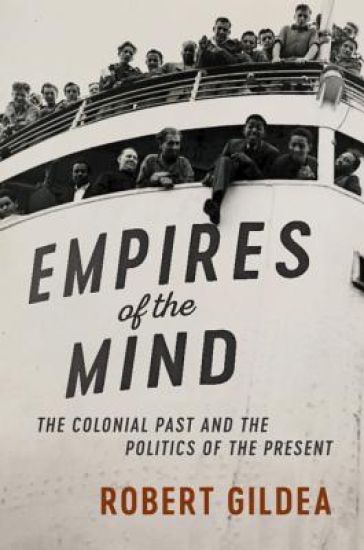
Empires of the Mind

Empires of the Mind

Robert Gildea

Cambridge University Press
2019
sidottu
'The empires of the future would be the empires of the mind' declared Churchill in 1943, envisaging universal empires living in peaceful harmony. Robert Gildea exposes instead the brutal realities of decolonisation and neo-colonialism which have shaped the postwar world. Even after the rush of French and British decolonisation in the 1960s, the strings of economic and military power too often remained in the hands of the former colonial powers. The more empire appears to have declined and fallen, the more a fantasy of empire has been conjured up as a model for projecting power onto the world stage and legitimised colonialist intervention in Afghanistan, Iraq, and Syria. This aggression, along with the imposition of colonial hierarchies in metropolitan society, has excluded, alienated and even radicalised immigrant populations. Meanwhile, nostalgia for empire has bedevilled relations with Europe and played a large part in explaining Brexit.
France 1870-1914

France 1870-1914

Robert Gildea

Routledge
2016
sidottu
The period 1870 - 1914 in France saw the consolidation of republican government and the recovery of national self-confidence. Though political crises such as the Dreyfus Affair threatened to tear it apart, the Republic established firm parliamentary rule, built up an Empire and an army which was to see it through the Great War. The new edition of this key text - first published as The Third Republic From 1870 to 1914 - offers a clear introduction to the period and incorporates the latest research.
Empires of the Mind

Empires of the Mind

Robert Gildea

Cambridge University Press
2021
pokkari
'The empires of the future would be the empires of the mind' declared Churchill in 1943, envisaging universal empires living in peaceful harmony. Robert Gildea exposes instead the brutal realities of decolonisation and neo-colonialism which have shaped the postwar world. Even after the rush of French and British decolonisation in the 1960s, the strings of economic and military power too often remained in the hands of the former colonial powers. The more empire appears to have declined and fallen, the more a fantasy of empire has been conjured up as a model for projecting power onto the world stage and legitimised colonialist intervention in Afghanistan, Iraq, and Syria. This aggression, along with the imposition of colonial hierarchies in metropolitan society, has excluded, alienated and even radicalised immigrant populations. Meanwhile, nostalgia for empire has bedevilled relations with Europe and played a large part in explaining Brexit.
What Is History For?

What Is History For?

Robert Gildea

Bristol University Press
2024
nidottu
“History”, suggests Robert Gildea, “is a battlefield.” Questions of power, rights, identity and nationhood always have an ancient and modern historical dimension and countries still go to war over their interpretation of history. Yet accounts of history are just as prone to fabrication as fake news, so how can we tell good history from bad? How can history be critical, learning from the past and righting wrongs, rather than divisive, such as riding roughshod over the rights of others? In this passionately argued book, Gildea suggests that the more people who really understand what good history entails, the more likely history is to triumph over myth. He sees positive signs in public history, citizen historians and community projects, among other developments. And he debunks claims that ‘you cannot rewrite history’, arguing that good history that’s attuned to its times must be rewritten time and again.