
Kirjahaku
Etsi kirjoja tekijän nimen, kirjan nimen tai ISBN:n perusteella.
36 kirjaa tekijältä Robert Gordon

Case of Sir Robert Gordon, Bart. (Claiming the Title, Honour and Dignity Of) Earl of Sutherland.
Robert Gordon
Gale Ecco, Print Editions
2010
pokkari
In the Question Concerning the Peerage of Sutherland. for the Counsel of Sir Robert Gordon, Bart. to Be Heard at the Bar of the House of Lords, Before the Committee of the Privileges.
Robert Gordon
Gale Ecco, Print Editions
2010
pokkari

Mortification and Disposition, Robert Gordon Merchant in Aberdeen. 1731.
Robert Gordon
Gale Ecco, Print Editions
2010
pokkari
Case of Sir Robert Gordon, Bart. (claiming the Title, Honour and Dignity of) Earl of Sutherland
Robert Gordon
Gale Ecco, Print Editions
2018
sidottu
The 18th century was a wealth of knowledge, exploration and rapidly growing technology and expanding record-keeping made possible by advances in the printing press. In its determination to preserve the century of revolution, Gale initiated a revolution of its own: digitization of epic proportions to preserve these invaluable works in the largest archive of its kind. Now for the first time these high-quality digital copies of original 18th century manuscripts are available in print, making them highly accessible to libraries, undergraduate students, and independent scholars.This collection reveals the history of English common law and Empire law in a vastly changing world of British expansion. Dominating the legal field is the Commentaries of the Law of England by Sir William Blackstone, which first appeared in 1765. Reference works such as almanacs and catalogues continue to educate us by revealing the day-to-day workings of society.++++The below data was compiled from various identification fields in the bibliographic record of this title. This data is provided as an additional tool in helping to insure edition identification: ++++British LibraryT110099Drop-head title. Signed on p. 7: Ja. Montgomery. Al. Forrester. Tho. Lockhart. "To be heard at the bar of the House of Lords, upon Thursday the 16th day of March, 1769" (docket title). London, 1769]. 15, 1]p.; 2
In the Question Concerning the Peerage of Sutherland. For the Counsel of Sir Robert Gordon, Bart. To be Heard at the bar of the House of Lords, Before the Committee of the Privileges
Robert Gordon
Gale Ecco, Print Editions
2018
sidottu
The 18th century was a wealth of knowledge, exploration and rapidly growing technology and expanding record-keeping made possible by advances in the printing press. In its determination to preserve the century of revolution, Gale initiated a revolution of its own: digitization of epic proportions to preserve these invaluable works in the largest archive of its kind. Now for the first time these high-quality digital copies of original 18th century manuscripts are available in print, making them highly accessible to libraries, undergraduate students, and independent scholars.This collection reveals the history of English common law and Empire law in a vastly changing world of British expansion. Dominating the legal field is the Commentaries of the Law of England by Sir William Blackstone, which first appeared in 1765. Reference works such as almanacs and catalogues continue to educate us by revealing the day-to-day workings of society.++++The below data was compiled from various identification fields in the bibliographic record of this title. This data is provided as an additional tool in helping to insure edition identification: ++++British LibraryT110375'Observations on the examination of the argument for the high antiquity of the regiam majestatem' and 'Appendix to the case of Sir Robert Gordon', which was also issued separately, have separate pagination and register, but are linked by catchwords. With London?, 1771]. 4],158;11, 1]; 2],42, *1-*35, 3]p.; 4
Mortification and Disposition, Robert Gordon Merchant in Aberdeen. 1731
Robert Gordon
Gale Ecco, Print Editions
2018
sidottu
The 18th century was a wealth of knowledge, exploration and rapidly growing technology and expanding record-keeping made possible by advances in the printing press. In its determination to preserve the century of revolution, Gale initiated a revolution of its own: digitization of epic proportions to preserve these invaluable works in the largest archive of its kind. Now for the first time these high-quality digital copies of original 18th century manuscripts are available in print, making them highly accessible to libraries, undergraduate students, and independent scholars.Delve into what it was like to live during the eighteenth century by reading the first-hand accounts of everyday people, including city dwellers and farmers, businessmen and bankers, artisans and merchants, artists and their patrons, politicians and their constituents. Original texts make the American, French, and Industrial revolutions vividly contemporary.++++The below data was compiled from various identification fields in the bibliographic record of this title. This data is provided as an additional tool in helping to insure edition identification: ++++National Library of ScotlandT170702 Edinburgh, 1731]. 38p.; 4

Drawn from in-depth research and detailed interviews, an authoritative biography of the father of modern blues details his turbulent life, from the cotton fields of rural Mississippi to his extraordinary rise to success, forever changing the music industry. Reprint. 18,000 first printing.

The latest volume in the Michigan Modern Dramatists series offers an authoritative but accessible look at Harold Pinter, one of the greatest and most influential postwar British playwrights and author of classic works such as The Birthday Party and The Homecoming. Pinter was awarded the Nobel Prize for Literature in 2005 for his remarkable body of work and plays that "uncover the precipice under everyday prattle and force entry into oppression's closed rooms."Harold Pinter: The Theatre of Power focuses on the playwright's continuously innovative experiments in theatrical form while tracing the recurrence of a consistent set of ethical and epistemological concerns. Exploring important plays from across this prolific writer’s career, author Robert Gordon argues that the motivating force in almost all of Pinter's drama is the ceaseless desire for power, represented in his work as a compulsive drive to achieve or maintain dominance—whether it be the struggle to defend one's own territory from intruders, the father's battle with his sons to assert his patriarchal position in the family, the manipulation of erotic feelings in the gender warfare that motivates sexual relationships, the abuse of brute force by dictatorships and democracies, or simply the masculine obsession to dominate. Gordon demonstrates the adventurousness of Pinter's experimentation with form while at the same time exposing the ethical, epistemological, and aesthetic preoccupations that have persisted with remarkable consistency throughout his career.
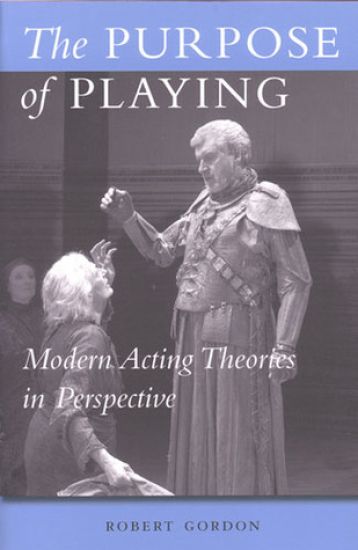
The Purpose of Playing providesthe first in-depth introduction to modern critical acting, enabling students, teachers, and professionals to comprehend the different aesthetic possibilities available to today’s actors. The book presents a comparative survey of the major approaches to Western acting since the nineteenth century, their historical evolution, and their relationship to one another. Author Robert Gordon explores six categories of acting: realistic approaches to characterization (Stanislavski, Vakhtangov, Strasberg, Chekhov); the actor as a scenographic instrument (Appia, Craig, Meyerhold); improvisation and games (Copeau, Saint-Denis, Laban, Lecoq); political theater (Brecht, Boal); exploration of the self and other (Artaud, Grotowski); and performance as cultural exchange (Brook, Barba). The synthesis of these principal theories of dramatic performance in a single text offers practitioners the knowledge they need to contextualize their own practice within the wider field of performance, while encouraging theorists and scholars to be more sensitive to the material realities of artistic practice.“This analysis of major movements and figures from the early nineteenth century to the present is clear, thorough, and penetrating, and its scope across periods, countries, and styles is impressive.” --Xerxes Mehta, University of Maryland-Baltimore CountyRobert Gordon is Reader in Drama, Goldsmiths College, University of London.

The latest volume in the Michigan Modern Dramatists series offers an authoritative but accessible look at Harold Pinter, one of the greatest and most influential postwar British playwrights and author of classic works such as The Birthday Party and The Homecoming. Pinter was awarded the Nobel Prize for Literature in 2005 for his remarkable body of work and plays that "uncover the precipice under everyday prattle and force entry into oppression's closed rooms."Harold Pinter: The Theatre of Power focuses on the playwright's continuously innovative experiments in theatrical form while tracing the recurrence of a consistent set of ethical and epistemological concerns. Exploring important plays from across this prolific writer’s career, author Robert Gordon argues that the motivating force in almost all of Pinter's drama is the ceaseless desire for power, represented in his work as a compulsive drive to achieve or maintain dominance—whether it be the struggle to defend one's own territory from intruders, the father's battle with his sons to assert his patriarchal position in the family, the manipulation of erotic feelings in the gender warfare that motivates sexual relationships, the abuse of brute force by dictatorships and democracies, or simply the masculine obsession to dominate. Gordon demonstrates the adventurousness of Pinter's experimentation with form while at the same time exposing the ethical, epistemological, and aesthetic preoccupations that have persisted with remarkable consistency throughout his career.

An unsuspecting United Nations staffer, Emlen Ferguson, is deceived by his boss into thinking that he is being sent on a routine mission to a country in Africa, but he belatedly discovers that in reality it is to ferret out the details of a brewing rebellion against a corrupt dictator ruling the country. He gets romantically involved with a Dutch woman in the local U.N. office, is captured by the rebels, endures death threats and double-crossings, engages in philosophical and religious debates with a shady Russian expatriate, and finds himself transformed into an entirely different person than before.

This book is a humorous picture story of hicc'ups. Most children go through this problem, let's hope it's not as bad as John's experience
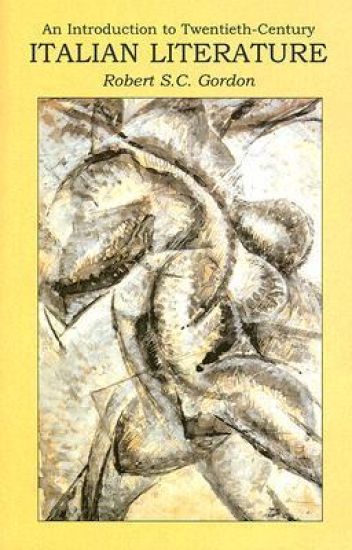
Introduction to Twentieth Century Italian Literature
Robert Gordon
Bristol Classical Press
2005
pokkari
Short accessible introductions to European literature and culture. Twentieth-century Italy was marked by a profound and often convulsive transformation in both society and culture, accompanied at various stages by war, violence and dictatorship. This was Italy's 'difficult' entry into modernity. The voices of Italian literature responded to this transformation with a bewildering combination of excitement and anxiety, from the loud embrace of the new in Futurism to melancholy laments for tradition. In the process, some of the greatest works of modern literature were created. Robert Gordon offers a vivid overview of the century's literature, charting a series of motifs of Italy's 'difficult modernity' - from war to the city, from language to geography, from marginal groups to avant-garde movements - through a wide array of writers and texts.
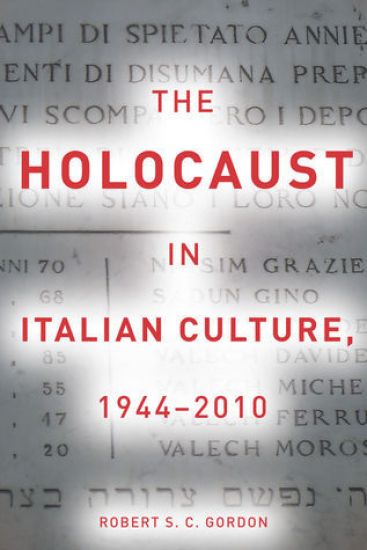
The Holocaust in Italian Culture, 1944–2010 is the first major study of how postwar Italy confronted, or failed to confront, the Holocaust. Fascist Italy was the model for Nazi Germany, and Mussolini was Hitler's prime ally in the Second World War. But Italy also became a theater of war and a victim of Nazi persecution after 1943, as resistance, collaboration, and civil war raged. Many thousands of Italians—Jews and others—were deported to concentration camps throughout Europe. After the war, Italian culture produced a vast array of stories, images, and debate through which it came to terms with the Holocaust's difficult legacy. Gordon probes a rich range of cultural material as he paints a picture of this shared encounter with the darkest moment of twentieth-century history. His book explores aspects of Italian national identity and memory, offering a new model for analyzing the interactions between national and international images of the Holocaust.
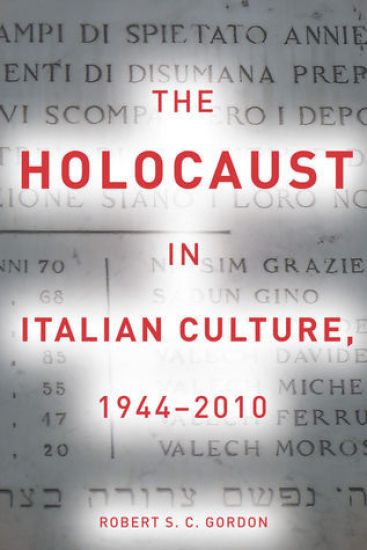
The Holocaust in Italian Culture, 1944–2010 is the first major study of how postwar Italy confronted, or failed to confront, the Holocaust. Fascist Italy was the model for Nazi Germany, and Mussolini was Hitler's prime ally in the Second World War. But Italy also became a theater of war and a victim of Nazi persecution after 1943, as resistance, collaboration, and civil war raged. Many thousands of Italians—Jews and others—were deported to concentration camps throughout Europe. After the war, Italian culture produced a vast array of stories, images, and debate through which it came to terms with the Holocaust's difficult legacy. Gordon probes a rich range of cultural material as he paints a picture of this shared encounter with the darkest moment of twentieth-century history. His book explores aspects of Italian national identity and memory, offering a new model for analyzing the interactions between national and international images of the Holocaust.

'Can't Be Satisfied is that rare thing in musical biographies: a book that maps out not just a single, extraordinary life but the cultural forces that shaped it' Sean O'Hagan, Observer Muddy Waters was the greatest blues musician ever, and the most influential. He invented electric blues, inspired the Rolling Stones and created the template for the rock 'n' roll band and its wild lifestyle. Robert Gordon's definitive biography vividly chronicles the extraordinary life and personality of the musical legend who changed the course of modern popular music.

This book is the first comprehensive overview of Buddhist architecture in North America and provides an analysis of Buddhist architecture and communities.Exploring the arrival of Buddhist architecture in America, the book lays out how Buddhists have expressed their spiritual beliefs in structural form in the United States. The story follows the parallel history of the religion’s emergence in the United States since the California Gold Rush to the present day. Conceived of as a general history, the book investigates Buddhist structures with respect to the humanistic qualities associated with Buddhist doctrine and how Buddhist groups promote their faith and values in an American setting. The author’s point of view starts from the ground floor of the buildings to move deeper into the space of Buddhist practice, the mind that seeks enlightenment, and the structures that help one to do so. It discusses Buddhist architecture in the United States in a manner consistent with the intensely human context of its use.A unique and ground-breaking analysis, this book adds to the study of Buddhist architecture in America while also addressing the topic of how and why Buddhists use architecture in general. It will be of interest to scholars of religion, architecture, space and place, U.S. history, Asian Studies, and Buddhist Studies. It will also be a valuable addition to the libraries of Buddhist communities across the United States and the world, since many of the observations about Buddhist architecture in the United States may also apply to structures in Europe and Asia.
This book is the first comprehensive overview of Buddhist architecture in North America and provides an analysis of Buddhist architecture and communities.Exploring the arrival of Buddhist architecture in America, the book lays out how Buddhists have expressed their spiritual beliefs in structural form in the United States. The story follows the parallel history of the religion’s emergence in the United States since the California Gold Rush to the present day. Conceived of as a general history, the book investigates Buddhist structures with respect to the humanistic qualities associated with Buddhist doctrine and how Buddhist groups promote their faith and values in an American setting. The author’s point of view starts from the ground floor of the buildings to move deeper into the space of Buddhist practice, the mind that seeks enlightenment, and the structures that help one to do so. It discusses Buddhist architecture in the United States in a manner consistent with the intensely human context of its use.A unique and ground-breaking analysis, this book adds to the study of Buddhist architecture in America while also addressing the topic of how and why Buddhists use architecture in general. It will be of interest to scholars of religion, architecture, space and place, U.S. history, Asian Studies, and Buddhist Studies. It will also be a valuable addition to the libraries of Buddhist communities across the United States and the world, since many of the observations about Buddhist architecture in the United States may also apply to structures in Europe and Asia.