Kirjojen hintavertailu. Mukana 11 244 527 kirjaa ja 12 kauppaa.

Kirjahaku

Etsi kirjoja tekijän nimen, kirjan nimen tai ISBN:n perusteella.

12 kirjaa tekijältä Robert H. Ferrell

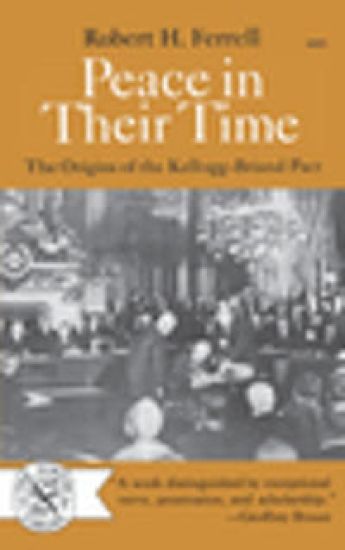
Peace in Their Time

Peace in Their Time

Robert H. Ferrell

WW Norton Co
1969
nidottu
After World War I, private peace groups proliferated and rapidly became a significant force in American politics. These groups' activities were regarded by the Harding and Coolidge administrations as a bungling interference with the regular conduct of diplomacy. Ultimately, however, President Coolidge yielded to domestic pressure and the efforts of French foreign minister Aristide Briand to conclude a peace treaty. A protracted series of negotiations between the United States and France resulted in the multilateral Kellogg-Briand Pact, the treaty to "outlaw war." The Kellogg-Briand Pact, Mr. Ferrell writes, was the peculiar result of some very shrewd diplomacy and some very unsophisticated popular enthusiasm for peace. In analyzing the forces that produced the treaty, Peace in Their Time reveals significant aspects of American foreign policy in the interwar period.
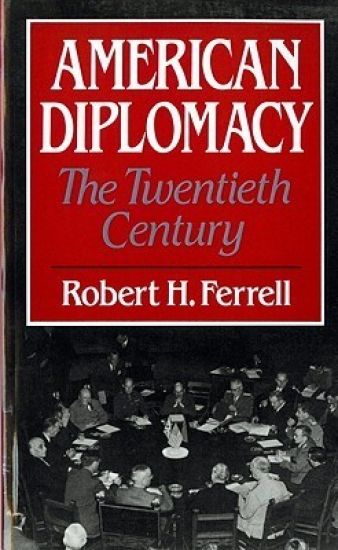
American Diplomacy

American Diplomacy

Robert H. Ferrell

WW Norton Co
1988
nidottu
From the war with Spain to the latest summit with the Soviet Union, through the glorious and tragic events that have marked America's emergence as a world power, American Diplomacy: The Twentieth Century provides a vigorous, thorough narrative of American diplomatic history. Among the prominent themes in the text are: nuclear diplomacy and the problem of arms control, the often critical connection between domestic policies and foreign policy, and America's uneasy relations with emerging nations of Asia, Africa, and Latin America.
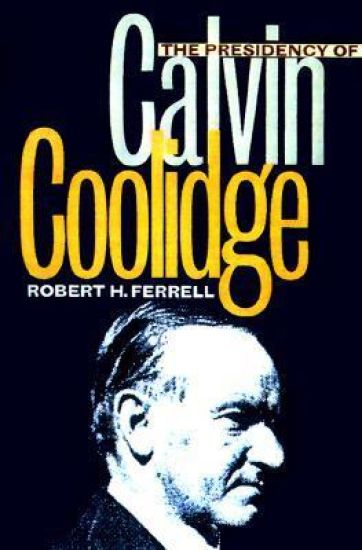
The Presidency of Calvin Coolidge

The Presidency of Calvin Coolidge

Robert H. Ferrell

University Press of Kansas
1998
sidottu
Perhaps no American president has seemed less suited to his office or his times than Calvin Coolidge. The taciturn New Englander became a vice presidential candidate by chance, then with the death of Warren G. Harding was thrust into the White House to preside dourly over the Roaring Twenties.Robert Ferrell, one of America's most distinguished historians, offers the first book-length account of the Coolidge presidency in thirty years, drawing on the recently opened papers of White House physician Joel T. Boone to provide a more personal appraisal of the thirtieth president than has previously been possible. Ferrell shows Coolidge to have been a hard-working, sensitive individual who was a canny politician and a clever judge of people. He reveals how after being dubbed the "odd little man from Vermont" by the press, Coolidge cultivated that image in order to win the 1924 election. Alas, Coolidge's long-suffering wife often had to serve as a safety valve for his temper.Ferrell's analysis of the Coolidge years shows how the President represented the essence of 1920s Republicanism. A believer in laissez-faire economics and the separation of powers, he was committed to small government, and he and his predecessors reduced the national debt by a third. More a manager than a leader, he coped successfully with the Teapot Dome scandal and crises in Mexico, Nicaragua, and China, but ignored an overheating economy. Ferrell makes a persuasive case for not blaming Coolidge for the failures of his party's foreign policy; he does maintain that the President should have warned Wall Street about the dangers of overspeculating but lacked sufficient knowledge of economics to do so.Drawing on the most recent literature on the Coolidge era, Ferrell has constructed a meticulous and highly readable account of the President's domestic and foreign policy. His book illuminates this pre-Depression administration for historians and reveals to general readers a President who was stern in temperament and dedicated to public service.
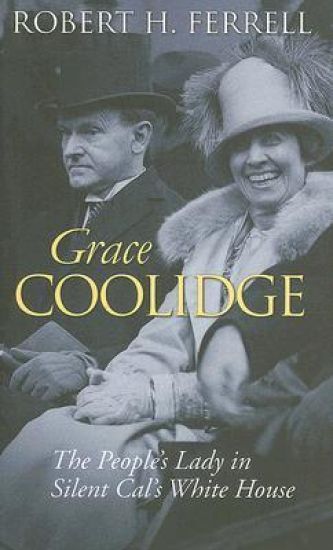
Grace Coolidge

Grace Coolidge

Robert H. Ferrell

University Press of Kansas
2008
sidottu
When Grace Anna Goodhue wed Calvin Coolidge in 1905, she thought then that marriage ""has seldom united two people of more vastly different temperaments and tastes."" Warm and vivacious to her husband's dour and taciturn, Grace was to be a contrast to Calvin for years to come. But as Robert Ferrell shows, their marriage ensured her husband's rise to high office.Ferrell focuses on Grace Coolidge's years in the White House, 1923-1929. Although the president did his best to rein her in - even forbidding her to speak on public issues - Grace quickly became one of the most popular and stylish of first ladies. Among the best-dressed women of her time (famously in red), she became the nation's fashion leader. She also opened the White House to the public, sponsored musicales within its walls, and worked on behalf of the deaf and disabled - all despite a less than supportive spouse. Ferrell recounts how she accomplished all of this, finding strength through the years in her Burlington background, her family, and her faith.In this lively book Ferrell provides a perceptive and often moving account of Grace Coolidge. From his insightful portrait of her Vermont roots to a frank assessment of the Coolidges and their sons, he offers a fresh perspective on a much-admired woman who was perhaps her husband's greatest political asset.Ferrell also takes readers inside Grace's strained marriage to the famously taciturn president who kept his wife in the dark about his plans, both political and personal. He offers a much more subtle look at the Coolidges and their relationship in the public eye than we've had, shedding new light on how she managed to deal with his irascible temper - and how the marriage ultimately triumphed over difficulties that Calvin could not have handled alone.Alternately charming and analytic, Ferrell's narrative will leave readers with the real sense of Grace Coolidge as a human being and a contributor to the historical legacy of presidential wives. For she did more than simply enliven a quiet White House - she set the tone for a nation and for first ladies to come.
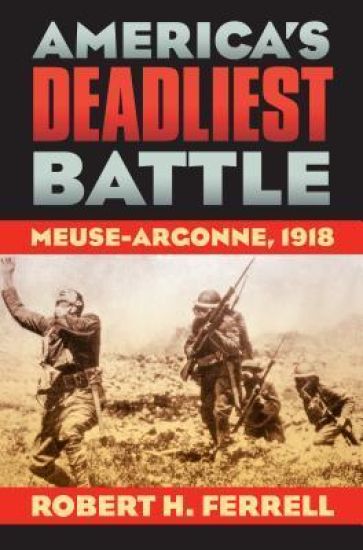
America's Deadliest Battle

America's Deadliest Battle

Robert H. Ferrell

University Press of Kansas
2007
nidottu
American fighting men had never seen the likes of it before. The great battle of the Meuse-Argonne was the costliest conflict in American history, with 26,000 men killed and tens of thousands wounded. Involving 1.2 million American troops over 47 days, it ended on November 11—what we now know as Armistice Day—and brought an end to World War I, but at a great price. Distinguished historian Robert Ferrell now looks back at this monumental struggle to create the definitive study of the battle—and to determine just what made it so deadly. Ferrell re-examines factors in the war that many historians have chosen to disregard. He points first to the failure of the Wilson administration to mobilise the country for war. American industry had not been prepared to produce the weaponry or transport ships needed by our military, and the War Department—with outmoded concepts of battle shaped by the Spanish-American War—shared equal blame in failing to train American soldiers for a radically new type of warfare. Once in France, under trained American doughboys were forced to learn how to conduct mobile warfare through bloody experience. Ferrell assesses the soldiers’ lack of skill in the use of artillery, the absence of tactics for taking on enemy machine gun nests, and the reluctance of American officers to use poison gas—even though by 1918 it had become a staple of warfare. In all of these areas, the German army held the upper hand. Ferrell relates how, during the last days of the Meuse-Argonne, the American divisions had finally learned up-to-date tactics, and their final attack on November 1 is now seen as a triumph of military art. Yet even as the armistice was being negotiated, some American officers—many of whom had never before commanded men in battle—continued to spur their troops on, wasting more lives in an attempt to take new ground mere hours before the settlement. Besides the U.S. shortcomings in mobilisation and tactics, Ferrell points to the greatest failure of all: the failure to learn from the experience, as after the armistice the U.S. Army retreated to its prewar mindset. Enhanced by more than four dozen maps and photographs, America’s Deadliest Battle is a riveting revisit to the forests of France that reminds us of the costs of World War I—and of the shadow that it cast on the twentieth century. This book is part of the Modern War Studies series.
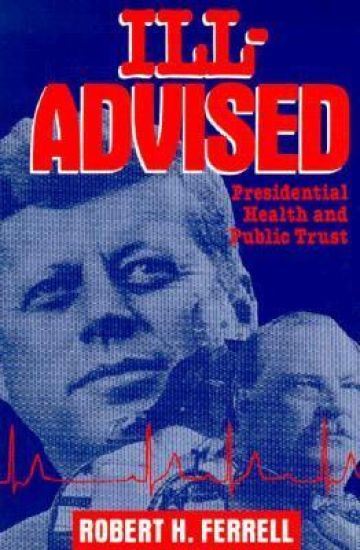
Ill-advised

Ill-advised

Robert H. Ferrell

University of Missouri Press
1992
sidottu
In ""Ill Advised - Presidential Health and Public Trust"" the historian Robert H. Ferrell presents powerful evidence of frightening medical cover-ups in the White House. Ferwell traces often shocking incidents - from Grover Cleveland's secret surgery for cancer to the questionable reporting of details on the health of both Ronald Reagan and George Bush. Malpractice, missing public records and politically motivated cover-ups have hidden sometimes severe presidential illnesses from the American people for more than a century. A massive stroke in 1919 crippled Woodrow Wilson both mentally and physically. But it was the ensuing cover-up that paralysed both foreign and domestic affairs, as the incompetent leader continued to serve. Certain that an ailing Franklin D. Roosevelt would never survive a fourth term, White House insiders worked frantically behind Roosevelt's back to orchestrate the nomination of their own choice for the vice-presidential candidate. Roosevelt's health never became a public issue, and Harry S. Truman became the 33rd president of the United States just two months after the election, having been handpicked by a handful of politically motivated White House insiders. At the heart of ""Ill Advised"" is important new documentation of the serious physical conditional of President Dwight D. Eisenhower. Using previously untapped evidence, including exclusive interviews with Eisenhower's cardiologist, Brigadier General Thomas W. Mattingly, Ferrell uncovers convincing evidence of Eisenhower's ill health, which probably should have kept him from ever running for the presidency. Ferrell discusses possible cover-ups in the presidencies of John F. Kennedy and Ronald Reagan, and leaves readers to draw their own conclusions about George Bush's arrhythmic heart and the possibility of Dan Quayle as a sudden, accidental president of the United States. As the 1992 election campaign heats up, some commentators are already watching for Bush's health to become a political issue. ""In a time of great crisis,"" writes Ferrwell, ""a president hid his illness from the American people."" For every citizen concerned with the accountability of government, ""Ill Advised: Presidential Health and Public Trust"" offers a crucial look at a frightening phenomenon that threatens to repeat itself.
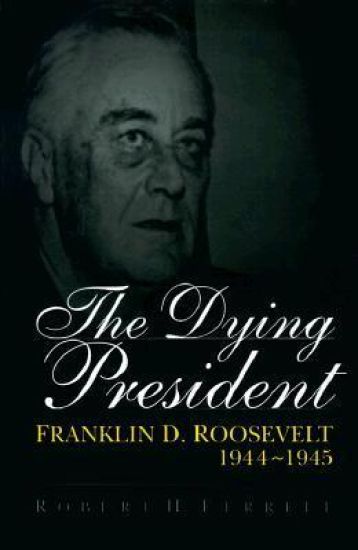
The Dying President

The Dying President

Robert H. Ferrell

University of Missouri Press
1998
sidottu
In this account, the author shows that the treatment of President Franklin D. Roosevelt's illnesses in 1944-1945 was managed by none other than the President himself. Although this powerful American president knew that he suffered from cardiovascular disease, he went to great lengths to hide the fact - both from his physician and from the public. Why Roosevelt disguised the nature of his illness may be impossible to discern fully. He was a secretive man who liked to assign only parts of tasks to his assistants so that he, the president would be the only one to know the whole story. The president's duplicity, though not easily measurable, had a critical impact upon his performance. Placed on a four-hour-a-day schedule by his physicians, Roosevelt could apply very little time to his presidential duties. He took long vacations in South Carolina, Warm Springs, the Catocin mountains and Hyde Park as well as lengthy journeys to Hawaii, Canada and Yalta. Important decisions were delayed or poorly made. America's previous policy toward Germany was temporarily abandoned in favour of the so-called Morgenthau Plan, which proposed the ""pastoralization"" of Germany, turning the industrial heart of Europe into farmland. Roosevelt nearly ruined the choice of Senator Harry S. Truman as his running mate in 1944 by wavering in the days prior to the party's national convention, He negotiated an agreement with Winston Churchill on sharing postwar development of nuclear weapons, but failed to let the State Department know. And, in perhaps the most profoundly unwise decision, Roosevelt accepted a fourth term when he knew that he could not possibly survive it. Reading like a mystery story, this book clears up many of the myths and misunderstandings that have surrounded Roosevelt's final year.
The Strange Deaths of President Harding

The Strange Deaths of President Harding

Robert H. Ferrell

University of Missouri Press
1998
nidottu
This text examines the mystery around Warren G. Harding's death. After Harding's death a variety of attacks and unsubstantiated claims left the public with a tainted impression. This work examines the claims against this unpopular president and presents material to counter the accusations.
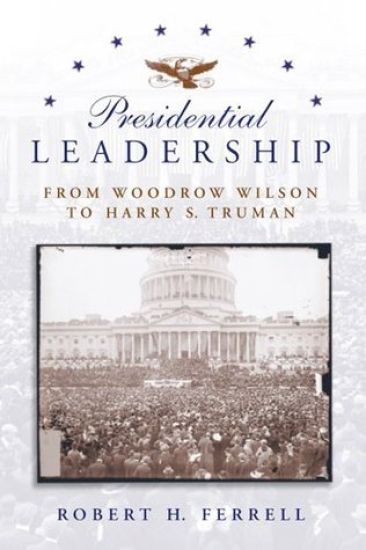
Presidential Leadership

Presidential Leadership

Robert H. Ferrell

University of Missouri Press
2006
sidottu
Ever since the presidency of Richard M Nixon, scholars have been in a quandary over how much they really know about our country's presidents. Nixon, as is now understood, was unstable in personality. The signs appeared well before the discovery of the infamous Watergate tapes, an appalling example of what the presidency could come to. Many Americans have difficulty penetrating the public persona of their leaders. But to know the private side of such figures - the cores of their being - is important, because this side often governs what they do publicly. In ""Presidential Leadership"", Robert H Ferrell examines four sometimes maligned, sometimes misunderstood presidents: Woodrow Wilson, Warren G Harding, Calvin Coolidge, and Harry S Truman. Along with these portraits, Ferrell incorporates comments on Hoover and Franklin Delano Roosevelt as well as key figures in each president's administration. Also included in this volume is historian John A Garraty's interview with Ferrell on American foreign policy from 1919 to 1945. As is his style, Ferrell draws from many sources previously untapped. In the case of Wilson, Ferrell relies on the diary of Colonel Edward M House, who served under Wilson during his presidency. Ferrell uses White House physician Joel T Boone's diary to provide an insider's look at Harding, Coolidge, and Hoover. In dealing with these presidents, Ferrell debunks long-held myths and approaches the presidencies with fresh insights into what drove them to make the decisions they made. Throughout the book, Ferrell emphasizes the personal styles of each president. He not only shows how they made their own determinations but also evaluates those whom they appointed to important positions. Scholars of American history will welcome this insightful look at the men who saw the United States through the first half of the twentieth century.
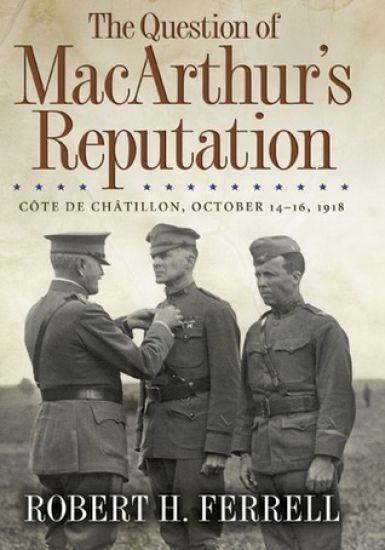
The Question of MacArthur's Reputation

The Question of MacArthur's Reputation

Robert H. Ferrell

University of Missouri Press
2008
sidottu
Perhaps the best known of all American five-star generals, Douglas MacArthur established his military reputation at the hill of Chatillon during the great battle of the Meuse-Argonne in World War I. The thirty-eight-year-old brigadier general in command of the Eighty-fourth Infantry Brigade boasted to a fellow general that he had inspired his troops by example, taking the hill and breaking the main German line in northern France. Ever since, historical accounts and biographies have celebrated his leadership and bravery.That MacArthur's forces prevailed is beyond question, as military historians have shown. Yet in all the annals of the Great War there is no detailed description of what happened at Chatillon, nor of what MacArthur had to do with it. Robert Ferrell examines those events and comes to an unusual conclusion - one that will revise how we view this archetypal American hero.After sifting through the inexact accounts of the battle found in regimental and divisional histories - and through the many biographies of MacArthur that assert his leadership at Chatillon but do not describe it - Ferrell has gone into Army records to determine if what MacArthur claimed was true. In a moment-by-moment account of the battle, he reconstructs the movements of troops and the decisions of officers to show in detail how MacArthur's subordinates were the true heroes.Ferrell describes how the taking of Cote de Chatillon could have been a disaster had the Eighty-fourth Brigade followed MacArthur's original plan, a bayonet charge at night. Wiser heads prevailed, and the attack of the Iowa and Alabama regiments was a great success.Ferrell has completed a chapter in the history of World War I that has stood unfinished for years, showing in masterly fashion how MacArthur exaggerated his reputation at Chatillon. ""The Question of MacArthur's Reputation"" will reward historians seeking to fill gaps in the record, engage readers who enjoy descriptions of battle, and startle all who take their heroes for granted.
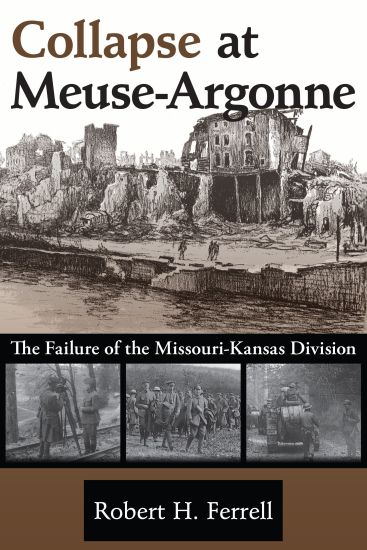
Collapse at Meuse-Argonne

Collapse at Meuse-Argonne

Robert H. Ferrell

University of Missouri Press
2017
nidottu
During World War I, the Thirty-fifth Division was made up of National Guard units from Missouri and Kansas. Composed of thousands of men from the two states, the Missouri-Kansas Division entered the great battle of the Meuse-Argonne with no battle experience and only a small amount of training, a few weeks of garrisoning in a quiet sector in Alsace. The division fell apart in five days, and the question Robert Ferrell attempts to answer is why.The Thirty-fifth Division was based at Camp Doniphan on the Fort Sill reservation in Oklahoma and was trained essentially for stationary, or trench, warfare. In March 1918, the German army launched a series of offensives that nearly turned the tide on the Western Front. The tactics were those of open warfare, quick penetrations by massive forces, backed by heavy artillery and machine guns. The American Expeditionary Forces (AEF) commanded by Gen. John J. Pershing were unprepared for this change in tactics. When the Thirty-fifth Division was placed in the opening attack in the Meuse-Argonne on September 26, 1918, it quickly fell.In addition to the Thirty-fifth Division’s lack of experience, its problems were compounded by the necessary confusions of turning National Guard units into a modern assemblage of men and machines. Although the U.S. Army utilized observers during the initial years of World War I, their dispatches had piled up in the War College offices in Washington and, unfortunately, were never studied.The Thirty-fifth Division was also under the command of an incompetent major general and an incompetent artillery brigadier. The result was a debacle in five days, with the division line pushed backward and held only by the 110th Engineer Regiment of twelve hundred men, bolstered by what retreating men could be shoved into the line, some of them at gunpoint.Although three divisions got into trouble at the outset of the Meuse-Argonne, the Thirty-fifth’s failure was the worst. After the collapse, the Red Cross representative of the division, Henry J. Allen, became governor of Kansas and instigated investigations by both houses of Congress. Secretary of War Newton D. Baker testified in an effort to limit the political damage. But the hullabaloo gradually died down, and the whole sad episode passed into the darker corridors of history.By focusing on a single event in history, Collapse at Meuse-Argonne offers a unique glimpse into one of the most critical battles of World War I. Historians, as well as the general reader, will find this new perspective on what really happened to the Thirty-fifth Division fascinating.
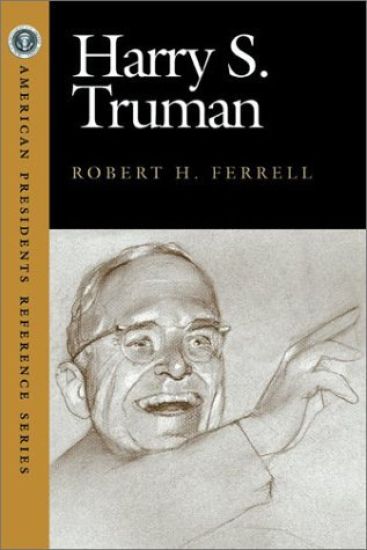
Harry S. Truman

Harry S. Truman

Robert H. Ferrell

CQ Press
2003
sidottu
Each volume in the new American Presidents Reference Series is organized around an individual presidency and gathers a host of biographical, analytical, and primary source historical material that will analyze the presidency and bring the president, his administration, and his times to life. The series focuses on key moments in U.S. political history as seen through the eyes of the most influential presidents to take the oath of office. Unique headnotes provide the context to data, tables and excerpted primary source documents. Harry Truman was born on May 8, 1884. He served with distinction during World War I as a commander of an artillery battery, and he ultimately attained the rank of major. In 1922, with the support of political boss Tom Pendergast, Truman was elected as a county judge. He lost reelection, but then won again as presiding judge in 1926 and 1930. In 1934 Truman was elected to the U.S. Senate, where he supported President Franklin Roosevelt's New Deal policies and entry into World War II. When Vice President Henry Wallace alienated Democratic Party leaders, Truman was nominated for vice president. On April 12, 1945, eighty-two days into Truman's vice presidency, Roosevelt died in Warm Springs, Georgia. At the age of sixty-one, Truman was sworn in as the thirty-third president of the United States. Key events during the Truman presidency include victory in World War II and Truman's decision to drop atomic bombs on Japan, the start of the cold war with the Soviet Union and its eastern European satellites, the Marshall Plan, the Berlin airlift, the Fair Deal, price-control legislation, and the McCarthy hearings. In March 1952 Truman announced that he would not seek reelection. Harry S. Truman died on December 26, 1972. This new volume on the presidency of Harry S. Truman will cover campaigns, elections, and the Pendergast connection,Senator Truman, particularly his chairmanship of the Special Committee to Investigate the National Defense Program,FDR, World War II, and the atomic bomb decision,Joseph McCarthy, the cold war, and the police action in Korea,civil rights.