Kirjojen hintavertailu. Mukana 12 083 983 kirjaa ja 12 kauppaa.

Kirjahaku

Etsi kirjoja tekijän nimen, kirjan nimen tai ISBN:n perusteella.

13 kirjaa tekijältä Robert Hass

Time and Materials

Time and Materials

Robert Hass

ECCO Press
2008
nidottu
Robert Hass has, for a long time, held a prominent position among the most revered of all living poets. Unlike the more difficult, cerebral poetry of writers like John Ashbery, Hass' work is grounded in the beauty of the physical world, in the smaller details of natural, human life. His poetry is graceful, humble, curious, and wise. Because he has published so little work, every new book is a major event in poetry, and this will be no exception.
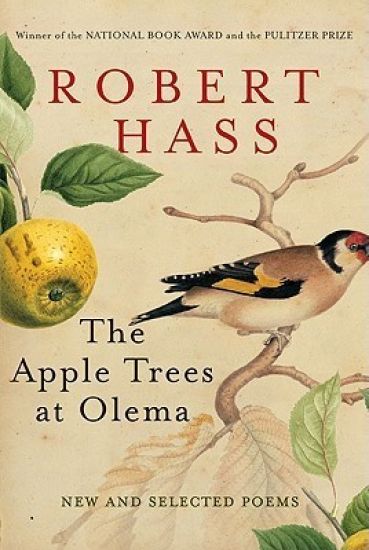
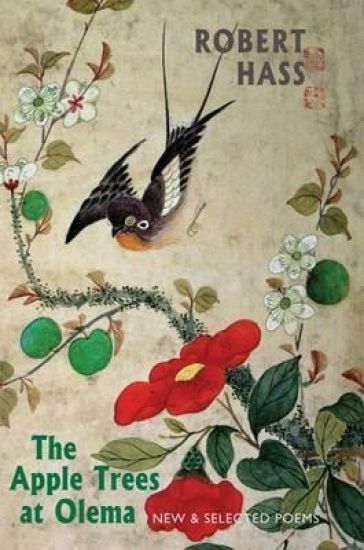
The Apple Trees at Olema: New and Selected Poems
"No practicing poet has more talent than Robert Hass."--Atlantic Monthly The National Book Award-winning author of Time and Materials, Robert Hass is one of the most revered of all living poets. With The Apple Trees at Olema, the former Poet Laureate and winner of the 2008 Pulitzer Prize offers twenty new and selected poems grounded in the beauty of the physical world. As with all of the collections of this great artist's work, published far too infrequently, The Apple Trees at Olema is a cause for celebration.
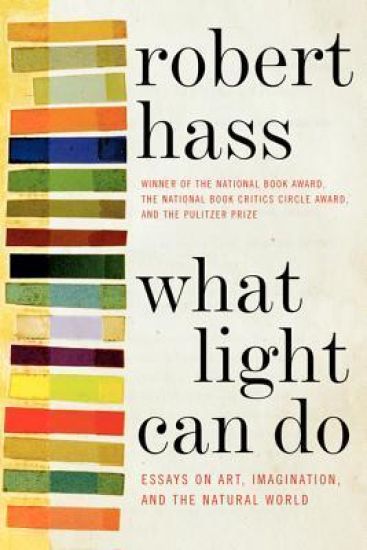
What Light Can Do

What Light Can Do

Robert Hass

ECCO Press
2013
nidottu
Renowned for his magisterial verse, Robert Hass is also a brilliant essayist. The New York Times hailed him as a writer who is so intelligent that to read his poetry or prose, or to hear him speak, gives one an almost visceral pleasure. Now, with What Light Can Do, Hass' first collection of essays in more than twenty-five years, the lauded author returns to and enlarges the territory of his critically acclaimed and much-loved collection Twentieth Century Pleasures, recipient of the National Book Critics Circle Award. These acute and deeply engaging essays are as much a portrait of the elegant thought processes of an unconventional and virtuoso mind as they are inquiries into their subjects, which range from meditations on how we see and treat the earth to the relationship between literature and religion, from explorations of the works of writers as diverse as Korean poet Ko Un, Wallace Stevens, Cormac McCarthy, and Anton Chekhov to the ways in which photography - much like an essay-embodies a sustained act of attention. A perceptive and evocative mixture of memory, philosophical interrogation, and criticism, the essays in What Light Can Do, finely attuned to the pleasures and pains of being human, are always grounded in the beauty of the material world and its details, and in the larger political and social realities we inhabit.
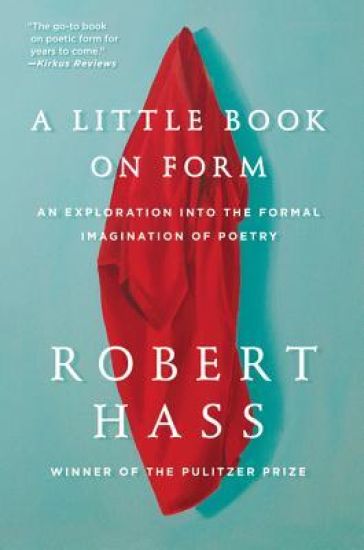
A Little Book on Form

A Little Book on Form

Robert Hass

ECCO Press
2018
nidottu
From the former U.S. Poet Laureate, Pulitzer Prize and National Book Award-winner, an illuminating dissection of poetic form for students, enthusiasts, and newcomers alikeA Little Book on Form brilliantly synthesizes Hass’s formidable gifts as both a poet and essayist. In it he takes up the central tension between poetry as genre and the poetics of the imagination. A wealth of vocabulary exists with which to talk about poetry in traditional formal terms. But the more intuitive, creative parts of a poet’s work and processes are more elusive: if the most interesting aspect of form is the shaping power of the essential, expressive gestures inside it, how do we come to a language in which to speak about form as the search for the radiant shapes— the wholeness or brokenness—we experience inside powerful works of art? In suggestive, informal “notes,” Haas thinks through the idea of a poem from its barest building blocks—the one line haiku, the brief epigram or prayer—to the complex villanelle and sonnet, and beyond them, to the grand forms of elegy and ode through which poets across human cultures have investigated the shapes of grieving and desiring. His approach singularly employs postmodern perspectives on shape, thought, feeling, content, and movement, calling on Catullus and Allen Ginsberg, Kobayashi Issa and Czeslaw Milosz. Begunb as a project for students of poetry, A Little Book on Form is anything but—Hass investigates the ancient roots of the poetic impulse, taking a wide-ranging look at the most intense experience of human thought and feeling in language.
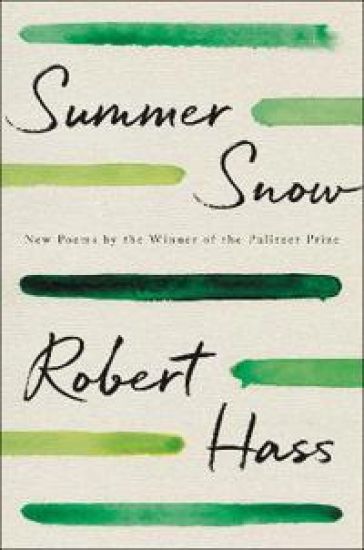
Summer Snow

Summer Snow

Robert Hass

HARPERCOLLINS PUBLISHERS INC
2022
sidottu
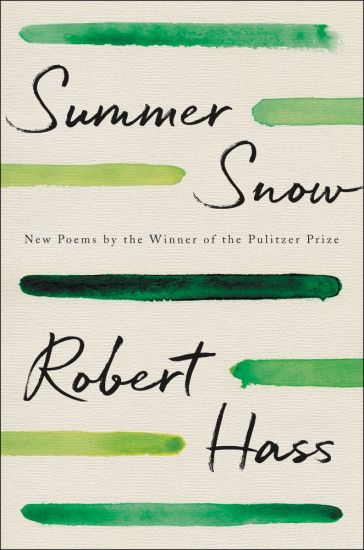
A major collection of entirely new poems from the Pulitzer Prize and National Book Award-winning author of Time and Materials and The Apple Trees at OlemaA new volume of poetry from Robert Hass is always an event. In Summer Snow, his first collection of poems since 2010, Hass further affirms his position as one of our most highly regarded living poets. Hass's trademark careful attention to the natural world, his subtle humor, and the delicate but wide-ranging eye he casts on the human experience are fully on display in his masterful collection. Touching on subjects including the poignancy of loss, the serene and resonant beauty of nature, and the mutability of desire, Hass exhibits his virtuosic abilities, expansive intellect, and tremendous readability in one of his most ambitious and formally brilliant collections to date.
Summer Snow

Summer Snow

Robert Hass

ECCO Press
2021
nidottu
A major collection of entirely new poems from the Pulitzer Prize and National Book Award-winning author of Time and Materials and The Apple Trees at OlemaA new volume of poetry from Robert Hass is always an event. In Summer Snow, his first collection of poems since 2010, Hass further affirms his position as one of our most highly regarded living poets. Hass’s trademark careful attention to the natural world, his subtle humor, and the delicate but wide-ranging eye he casts on the human experience are fully on display in his masterful collection. Touching on subjects including the poignancy of loss, the serene and resonant beauty of nature, and the mutability of desire, Hass exhibits his virtuosic abilities, expansive intellect, and tremendous readability in one of his most ambitious and formally brilliant collections to date.
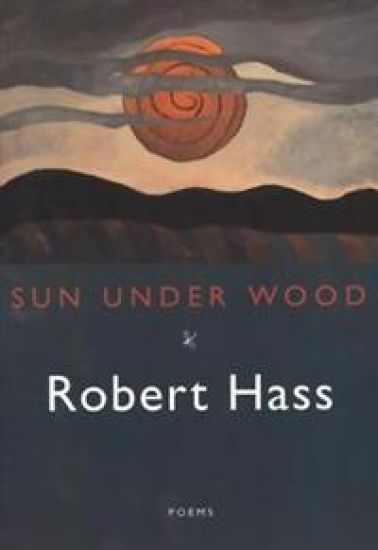
Sun Under Wood

Sun Under Wood

Robert Hass

Ecco Press
1998
nidottu
Robert Hass demonstrates once again the unmistakable intelligence and original voice that have won him both literary acclaim and the affection of a broad general readership. Here Hass extends and deepens his ongoing explorations of nature and human history, solitude, and the bonds of children, parents, and lovers. Here his passion for apprehending experience with language--for creating experience with language--finds supple form in poems that embrace all that is alive and full of joy. Sun Under Wood is the most impressive collection yet from one of our most accomplished poets.
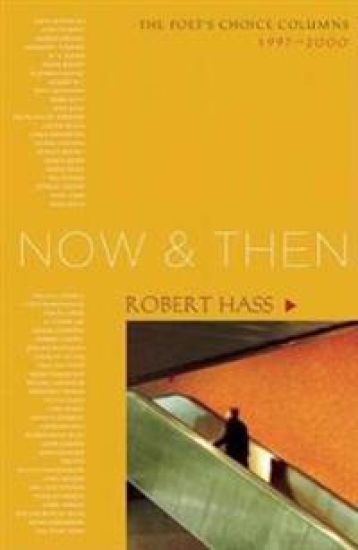
Now And Then

Now And Then

Robert Hass

Counterpoint
2008
nidottu
During his years as Poet Laureate, Robert Hass revived a popular 19th-century tradition: including poetry in our daily newspapers. Â Poet's Choice" went on to appear as a nationally syndicated column across the country from 1997 to 2000. The column, which featured poems relevant to current headlines, serves as a symbol of the continuing importance of poetry in our daily lives. This collection contains well-known poets such as Wallace Stevens, Rita Dove, John Ashbery, and Robert Frost, as well as emerging and translated poets such as Jaime Sabines and Czeslaw Milosz. Also included are Hass's essays that accompanied the poems. Encapsulating a world before 9/11, this collection serves as both remembrance and reminder of a period in our history, and as a celebration of the poets whose works transcend time.
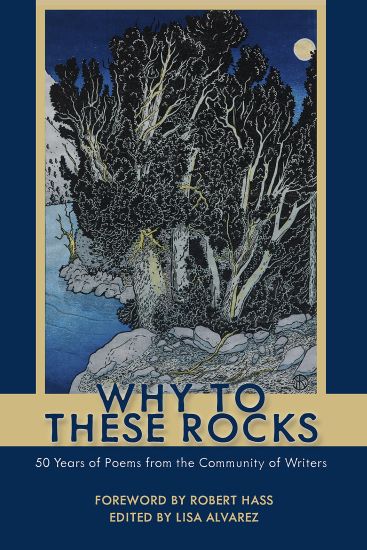
Why to These Rocks

Why to These Rocks

Robert Hass

Heyday Books
2021
sidottu
Fifty years of poems from the Community of Writers’ poetry workshop The Community of Writers (formerly Community of Writers at Squaw Valley) celebrates fifty years of its annual summer poetry workshop in Olympic Valley, California, with this collection of one hundred and forty poems first composed there. Edited by writers workshop codirector Lisa Alvarez and introduced by longtime poetry director Robert Hass, the book is divided into three sections: poems that evoke the Valley’s physical setting, with its granite-and-pine mountain beauty; poems that peer into the poetic process, filled with inspiration and idiosyncrasy; and poems of all shapes and kinds that owe their origins to the workshop and its productive morning review sessions. Contributors include both workshop staff and participants, among them Lucille Clifton, Sharon Olds, Al Young, Matthew Zapruder, Harryette Mullen, Galway Kinnell, Rita Dove, Cornelius Eady, Robert Hass, and Forrest Gander. The title of the collection comes from a question posed by original poetry director Galway Kinnell: “Then why to these rocks / Do I keep coming back why.” It speaks to the special community nurtured in this stunning setting, one that has inspired poets worldwide—many of whom developed significant bodies of award-winning work in its creative and generative atmosphere.
The Apple Trees at Olema

The Apple Trees at Olema

Robert Hass

Bloodaxe Books Ltd
2011
nidottu
Robert Hass is an American poet of great eloquence, clarity, and force whose work is rooted in the landscapes of his native Northern California. 'The Apple Trees at Olema' includes work from five books - 'Field Guide', 'Praise', 'Human Wishes', 'Sun Under Wood' and 'Time and Materials' - as well as a substantial gathering of new poems, including a suite of elegies, a series of poems in the form of notebook musings on the nature of storytelling, a suite of summer lyrics, and two experiments in pure narrative that meditate on personal relations in a violent world and read like small, luminous novellas. From the beginning, his poems have seemed entirely his own: a complex hybrid of the lyric line, with an unwavering fidelity to human and non-human nature, and formal variety and surprise, and a syntax capable of thinking through difficult things in ways that are both perfectly ordinary and really unusual. Over the years, he has added to these qualities a range and a formal restlessness that seem to come from a sceptical turn of mind, an acute sense of the artifice of the poem and of the complexity of the world of lived experience that a poem tries to apprehend. Hass's work is grounded in the beauty of the physical world. His familiar landscapes - San Francisco, the northern California coast, the Sierra high country - are vividly alive in his work. His themes include art, the natural world, desire, family life, the life between lovers, the violence of history, and the power and inherent limitations of language. He is a poet who is trying to say, as fully as he can, what it is like to be alive in his place and time. His style - formed in part by American modernism, in part by his long apprenticeship as a translator of the Japanese haiku masters and Czeslaw Milosz - combines intimacy of address, a quick intelligence, a virtuosic skill with long sentences, intense sensual vividness, and a light touch.
Essential Haiku

Essential Haiku

Robert Hass

Bloodaxe Books Ltd
2013
nidottu
The Essential Haiku brings together Robert Hass's beautifully fresh translations of the three great masters of the Japanese haiku tradition: Matsuo Basho (1644-94), the ascetic and seeker, and the haiku poet most familiar to English readers; Yosa Buson (1716-83), the artist, a painter renowned for his visually expressive poetry; and Kobayashi Issa (1763-1827), the humanist, whose haiku are known for their poignant or ironic wit. Each haiku master's section of the book is prefaced with an eloquent and informative introduction by Robert Hass, followed by a selection of over 100 poems and then by other poetry or prose by the poet, including journals and nature writing. Opening with Hass's superb introductory essay on haiku, the book concludes with a section devoted to Basho's writings and conversations on poetry. The seventeen-syllable haiku form is rooted in a Japanese tradition of close observation of nature, of making poetry from subtle suggestion. Each haiku is a meditation, a centring, a crystalline moment of realisation. Reading them has a way of bringing about calm and peace within the reader. The symbolism of the seasons and the Japanese habit of mind blend together in these poems to create an alchemy of reflection that is unsurpassed in literature. Infused by its great practitioners with the spirit of Zen Buddhism, the haiku served as an example of the power of direct observation to the first generation of American modernist poets like Ezra Pound and William Carlos Williams as well as an example of spontaneity and Zen alertness to the new poets of post-war America and Britain. Universal in its appeal, Robert Hass's The Essential Haiku is the definitive introduction to haiku and its greatest poets, and has been a bestseller in America for twenty years. 'I know that for years I didn't see how deeply personal these poems were or, to say it another way, how much they have the flavour - Basho might have said "the scent" - of particular human life, because I had been told and wanted to believe that haiku were never subjective. I think it was D.H. Lawrence who said the soul can get to heaven in one leap but that, if it does, it leaves a demon in its place. Better to sink down through the level of these poems - their attention to the year, their ideas about it, the particular human consciousness the poems reflect, Basho's profound loneliness and sense of suffering, Buson's evenness of temper, his love for the materials of art and for the colour and shape of things, Issa's pathos and comedy and anger' - Robert Hass.