Award winning international photographer Robert Herman elevates the practice of street photography in The Phone Book. With the iPhone™, he has created compelling images from his travels around the world. Inspired by the new Hipstamatic App™, The Phone Book compendium is a creative labyrinth that invites the viewer to discover their own connections between the images. As the follow up to his critically acclaimed first monograph, The New Yorkers, Robert Herman captures the world in brilliant spontaneity; unique in his artistry and universal in its humanity.
This collection combines two important endeavors. First, in various pieces evidence about the behavior and performance of non-profit boards is reviewed and important additional evidence is presented. Noting the disparity between reality and widely-accepted beliefs is a long and necessary role for empirical researchers. The second endeavor in this collection is to present useful and realistic ideas and techniques for improving board functioning and board-staff relations. Nearly all the pieces have implicit or explicit applications.
This collection combines two important endeavors. First, in various pieces evidence about the behavior and performance of non-profit boards is reviewed and important additional evidence is presented. Noting the disparity between reality and widely-accepted beliefs is a long and necessary role for empirical researchers. The second endeavor in this collection is to present useful and realistic ideas and techniques for improving board functioning and board-staff relations. Nearly all the pieces have implicit or explicit applications.
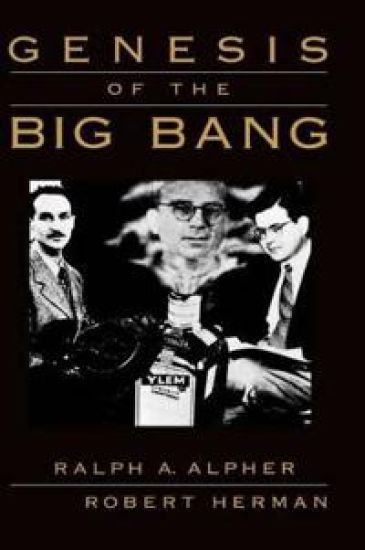
The authors of this volume have been intimately connected with the conception of the Big Bang model since 1947. Following the late George Gamov's ideas in 1942 and more particularly in 1946 that the early universe was an appropriate site for the synthesis of the elements, they became deeply involved in the question of cosmic nucleosynthesis and particularly the synthesis of the light elements. In the course of this work they developed a general relativistic model of the expanding universe with physics folded in, which led in a progressive, logical sequence to our prediction of the existence of a present cosmic background radiation some seventeen years before the observation of such radiation was reported by Penzias and Wilson. In addition, they carried out with James W. Follin, Jr., a detailed study of the physics of what was then considered to be the very early universe, starting a few seconds after the Big Bang, which still provides a methodology for studies of light element nucleosynthesis. Because of their involvement, they bring a personal perspective to the subject. They present a picture of what is now believed to be the state of knowledge about the evolution of the expanding universe and delineate the story of the development of the Big Bang model as they have seen and lived it from their own unique vantage point.