
Kirjahaku
Etsi kirjoja tekijän nimen, kirjan nimen tai ISBN:n perusteella.
14 kirjaa tekijältä Robert Higgs
Other books exist that warn of the dangers of empire and war. However, few, if any, of these books do so from a scholarly, informed economic standpoint. In Depression, War, and Cold War , Robert Higgs, a highly regarded economic historian, makes pointed, fresh economic arguments against war, showing links between government policies and the economy in a clear, accessible way. He boldly questions, for instance, the widely accepted idea that World War II was the chief reason the Depression-era economy recovered. The book as a whole covers American economic history from the Great Depression through the Cold War. Part I centers on the Depression and World War II. It addresses the impact of government policies on the private sector, the effects of wartime procurement policies on the economy, and the economic consequences of the transition to a peacetime economy after the victorious end of the war. Part II focuses on the Cold War, particularly on the links between Congress and defense procurement, the level of profits made by defense contractors, and the role of public opinion andnt ideological rhetoric in the maintenance of defense expenditures over time. This new book extends and refines ideas of the earlier book with new interpretations, evidence, and statistical analysis. This book will reach a similar audience of students, researchers, and educated lay people in political economy and economic history in particular, and in the social sciences in general.
Competition and Coercion: Blacks in the American economy, 1865–1914 is a reinterpretation of black economic history in the half-century after Emancipation. Its central theme is that economic competition and racial coercion jointly determined the material condition of the blacks. The book identifies a number of competitive processes that played important roles in protecting blacks from the racial coercion to which they were peculiarly vulnerable. It also documents the substantial economic gains realized by the black population between 1865 and 1914. Professor Higgs's account is iconoclastic. It seeks to reorganize the present conceptualization of the period and to redirect future study of black economic history in the post-Emancipation period. It raises new questions and suggests new answers to old questions, asserting that some of the old questions are misleadingly framed or not worth pursuing at all.
An unflinching critical analysis of government is contained in this work, which distills complex economic and political issues for the layperson. Combining an economist’s analytical scrutiny with an historian’s respect for empirical evidence, the book attacks the data on which governments base their economic management and their responses to an ongoing stream of crises. Among the topics discussed are domestic economic busts, foreign wars, welfare programs such as social security, the arts of political leadership, the intrusive efforts of governments to protect people from themselves, and the mismanagement of the economy. Though focused on U.S. government actions, the book also makes revealing comparisons with similar government actions abroad and in China, Japan, and Western Europe. This book furthers the disscussions in Higgs' bestseller Crisis and Leviathan.

Crisis and Leviathan: Critical Episodes in the Growth of American Government
Robert Higgs
Independent Institute
2025
nidottu
Crisis and Leviathan is Higgs' masterwork on how government grows in size, scope, and power in response to real or imagined "crises." From war to economic upheavals, government overreach endures long after each crisis has passed, impinging on civil liberties and fostering extensive corporate welfare. Few topics are as timely as the growth of government. To understand why government has grown, Robert Higgs asserts, one must understand how it has grown. This book offers a coherent, multi-causal explanation, guided by a novel analytical framework firmly grounded in historical evidence. More than a study of trends in governmental spending, taxation, and employment, Crisis and Leviathan is a thorough analysis of the actual occasions when and the specific means by which Big Government developed in the United States. More than an abstract account, it names names and highlights the actions of significant individuals. The author examines how 20th-century national emergencies--mainly wars, depressions, and labor disturbances--have prompted federal officials to take over previously private rights and activities. When the crises passed, a residue of new governmental powers remained. Even more significantly, each great crisis and the subsequent governmental measures went hand in hand with reinforcing shifts in public beliefs and attitudes toward the government's proper role in American life. Integrating the contributions of scholars in diverse disciplines, including history, law, political philosophy, and the social sciences, Crisis and Leviathan makes compelling reading for all those who seek to understand the transformation of America's political economy over the past century.

Against Leviathan: Government Power and a Free Society
Robert Higgs
Independent Institute
2025
nidottu

Depression, War, and Cold War: Challenging the Myths of Conflict and Prosperity
Robert Higgs
Independent Institute
2025
nidottu

Resurgence of the Warfare State: The Crisis Since 9/11
Robert Higgs
Independent Institute
2026
nidottu

Neither Liberty Nor Safety: Fear, Ideology, and the Growth of Government
Robert Higgs
Independent Institute
2026
nidottu

Neither Liberty Nor Safety: Fear, Ideology, and the Growth of Government
Robert Higgs
Independent Institute
2007
nidottu
"Those who would give up essential Liberty, to purchase a little temporary Safety, deserve neither Liberty nor Safety," wrote Benjamin Franklin. Attempting to gain security by sacrificing liberty is also a foolish action because it only increases the potential for harm. In Neither Liberty Nor Safety: Fear, Ideology, and the Growth of Government, economist and historian Robert Higgs illustrates the false trade-off between freedom and security by showing how the U.S. government's economic and military interventions reduced the civil and economic liberties, prosperity, and genuine security of Americans in the 20th century. Extending the theme of Higgs's earlier books, Neither Liberty Nor Safety stresses the role of misguided ideas in the expansion of government power at the expense of individual liberty. Higgs illuminates not only many underappreciated aspects of the Great Depression, the two world wars, and the postwar era, but also the government's manipulation of public opinion and the role that ideologies play in influencing political outcomes and economic performance.
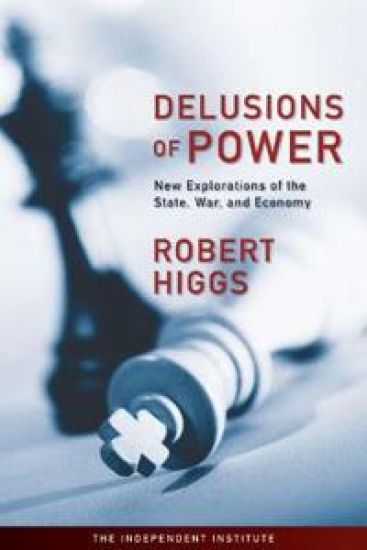
Taking a close look at the dense fabric that our government weaves between war, state power, and economics, this collection of essays reveals the growing authority—and corruption—of the American state. Covering topics from the Lyndon Johnson presidency to the provocatively titled article “Military-Economic Fascism” on the military-industrial-congressional complex, it argues that the U.S. government consistently exploits national crises and then invents timely rhetoric that limits the rights and liberties of all citizens for the benefit of the few, be they political leaders or various industrialists in the areas of defense and security. As its title suggests, this book presents a clear narrative of trends and events—from the United States’ entry into World War II to the origins of income tax—causing individuals to question whether those in power are truly blind to the effects and causes of their policies.
Voices From the Hills: Selected Readings of Southern Appalachia
Robert Higgs; Ambrose Manning
Kendall/Hunt Publishing Co ,U.S.
2001
nidottu
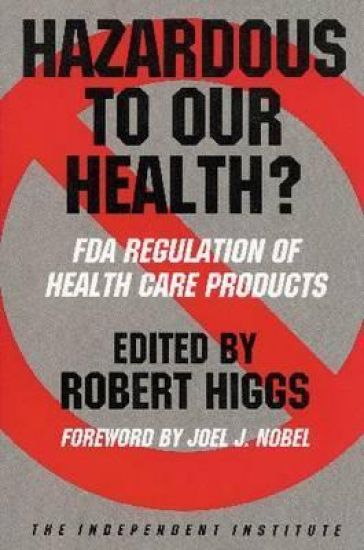
Hazardous to Our Health?
Robert Higgs; Ronald W. Hansen; Paul H. Rubin; Joel J. Nobel
Independent Institute,U.S.
1995
nidottu
Some have described the Food and Drug Administration (FDA) as a scientific bureaucracy with police powers. Does a “cult of infallibility” exist within the FDA, leading to decisions that are contrary to the best interests of patients and their physicians? The Food and Drug Administration (FDA) is one of the most powerful of federal regulatory agencies, if not the most powerful. It regulates over 25% of all consumer goods sold in the United States. It makes decisions on a daily basis that affect the lives of millions of people. While the FDA was created to protect the public, how well is it fulfilling this mission and whose interests is it actually protecting? In this book, four outstanding scholars examine how the FDA accumulated its enormous power and what effects it has had on the public. It also explores who actually benefits and loses from FDA actions, and whether alternatives exist to safeguard the health of Americans. This book raises serious questions about the wisdom of giving policing power to scientists with little oversight or appeal process, as the FDA currently does. It also argues forcefully that the FDA unnecessarily delays beneficial medicines and medical devices, many of which are routinely available in Europe, from being available to Americans.
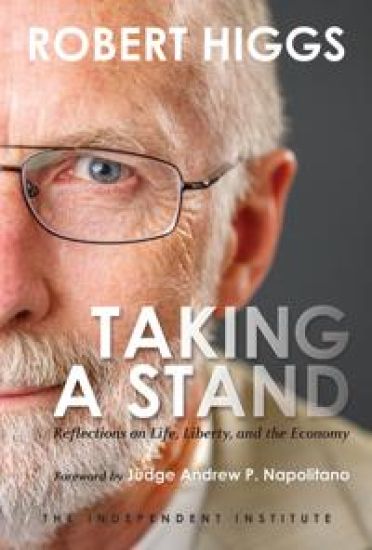
In his academic work, Robert Higgs has dissected the government's shrewd secret excesses that lead to the Welfare State, the Warfare State, and the Administrative State. For several decades he has unstintingly chronicled the federal, state, and local governments' malfeasance in these many areas of life that all levels of government have intruded upon without Constitutional mandate. In this book, however, are essays that show a whimsical, introspective, and personal side of this world renowned scholar. From the myth that the government has derived its powers from the consent of the governed to the role of independent experts in formulating monetary and fiscal policy; from the government's duplicity in announcing the unemployment rate in a given month to how the state entraps us, if you want to see a true polymath at work, these lofty, serious, sad, and illuminating essays will educate you beyond what you had thought possible about life, liberty, and the economy.