Kirjojen hintavertailu. Mukana 12 373 493 kirjaa ja 12 kauppaa.

Kirjahaku

Etsi kirjoja tekijän nimen, kirjan nimen tai ISBN:n perusteella.

5 kirjaa tekijältä Robert J. Cottrol

Brown V. Board of Education

Brown V. Board of Education

Robert J. Cottrol

University Press of Kansas
2003
nidottu
Before 1954, both law and custom mandated strict racial segregation throughout much of the nation. That began to change with Brown v. Board of Education, the landmark decision that overturned the pernicious "separate but equal" doctrine. In declaring that legally mandated school segregation was unconstitutional, the Supreme Court played a critical role in helping to dismantle America's own version of apartheid, Jim Crow.This new study of Brown—the title for a group of cases drawn from Kansas, Virginia, South Carolina, Delaware, and the District of Columbia—offers an insightful and original overview designed expressly for students and general readers. It is concise, up-to-date, highly readable, and very teachable.The authors, all recognized authorities on legal history and civil rights law, do an admirable job of examining the fight for legal equality in its broad cultural and historical context. They convincingly show that Brown cannot be understood apart from the history of caste and exclusion in American society. That history antedated the very founding of the country and was supported by the nation's highest institutions, including the Supreme Court whose decision in Plessy v. Ferguson (1896) supported the notion of "separate but equal."Their book traces the lengthy court litigations, highlighting the pivotal role of the National Association for the Advancement of Colored People and including incisive portraits of key players, including co-plaintiff Oliver Brown, newly appointed Chief Justice Earl Warren, NAACP lawyer and future Supreme Court justice Thurgood Marshall, and Justice Felix Frankfurter, who recognized the crucial importance of a unanimous court decision and helped produce it. The authors simply but powerfully narrate the obstacles these individuals faced and the opportunities they grasped and clearly show that there was much more at stake than educational rights. Brown not only changed the national equation of race and caste—it also changed our view of the Court's role in American life.The dramatic story of the road to and from Brown, despite the retrenchments of recent years, needs to be heard anew. As we prepare to commemorate the decision's fiftieth anniversary in May 2004, this book invites readers to walk that road again and appreciate the lasting importance of what is indisputably a landmark case.
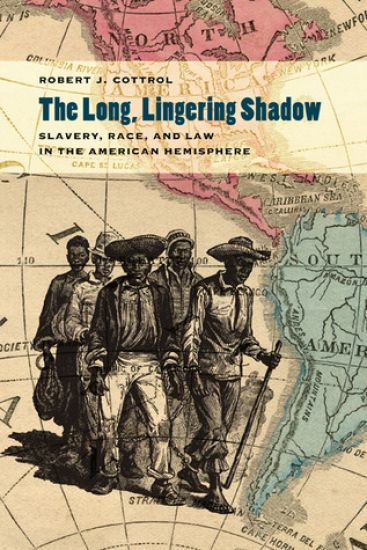
The Long, Lingering Shadow

The Long, Lingering Shadow

Robert J. Cottrol

University of Georgia Press
2013
sidottu
Students of American history know of the law’s critical role in systematizing a racial hierarchy in the United States. Showing that this history is best appreciated in a comparative perspective, The Long, Lingering Shadow looks at the parallel legal histories of race relations in the United States, Brazil, and Spanish America. Robert J. Cottrol takes the reader on a journey from the origins of New World slavery in colonial Latin America to current debates and litigation over affirmative action in Brazil and the United States, as well as contemporary struggles against racial discrimination and Afro-Latin invisibility in the Spanish-speaking nations of the hemisphere.Ranging across such topics as slavery, emancipation, scientific racism, immigration policies, racial classifications, and legal processes, Cottrol unravels a complex odyssey. By the eve of the Civil War, the U.S. slave system was rooted in a legal and cultural foundation of racial exclusion unmatched in the Western Hemisphere. That system’s legacy was later echoed in Jim Crow, the practice of legally mandated segregation. Jim Crow in turn caused leading Latin Americans to regard their nations as models of racial equality because their laws did not mandate racial discrimination— a belief that masked very real patterns of racism throughout the Americas. And yet, Cottrol says, if the United States has had a history of more-rigid racial exclusion, since the Second World War it has also had a more thorough civil rights revolution, with significant legal victories over racial discrimination. Cottrol explores this remarkable transformation and shows how it is now inspiring civil rights activists throughout the Americas.
The Long, Lingering Shadow

The Long, Lingering Shadow

Robert J. Cottrol

University of Georgia Press
2013
pokkari
Students of American history know of the law’s critical role in systematizing a racial hierarchy in the United States. Showing that this history is best appreciated in a comparative perspective, The Long, Lingering Shadow looks at the parallel legal histories of race relations in the United States, Brazil, and Spanish America. Robert J. Cottrol takes the reader on a journey from the origins of New World slavery in colonial Latin America to current debates and litigation over affirmative action in Brazil and the United States, as well as contemporary struggles against racial discrimination and Afro-Latin invisibility in the Spanish-speaking nations of the hemisphere.Ranging across such topics as slavery, emancipation, scientific racism, immigration policies, racial classifications, and legal processes, Cottrol unravels a complex odyssey. By the eve of the Civil War, the U.S. slave system was rooted in a legal and cultural foundation of racial exclusion unmatched in the Western Hemisphere. That system’s legacy was later echoed in Jim Crow, the practice of legally mandated segregation. Jim Crow in turn caused leading Latin Americans to regard their nations as models of racial equality because their laws did not mandate racial discrimination— a belief that masked very real patterns of racism throughout the Americas. And yet, Cottrol says, if the United States has had a history of more-rigid racial exclusion, since the Second World War it has also had a more thorough civil rights revolution, with significant legal victories over racial discrimination. Cottrol explores this remarkable transformation and shows how it is now inspiring civil rights activists throughout the Americas.
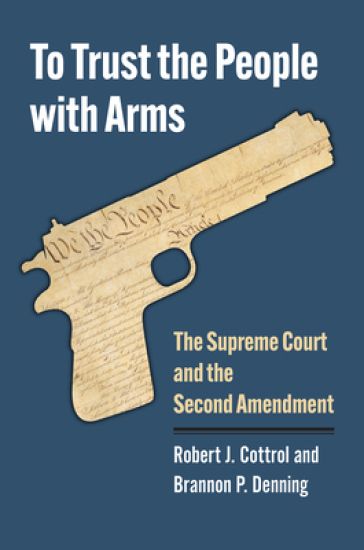
To Trust the People with Arms

To Trust the People with Arms

Robert J. Cottrol; Brannon P. Denning

UNIVERSITY PRESS OF KANSAS
2023
sidottu
In 2007, for the first time in nearly seventy years, the Supreme Court decided to hear a case involving the Second Amendment. The resulting decision in District of Columbia v. Heller (2008) was the first time the Court declared a firearms restriction to be unconstitutional on the basis of the Second Amendment. It was followed two years later by a similar decision in McDonald v. City of Chicago, and in 2022, the Court further expanded its support for Second Amendment rights in New York State Rifle and Pistol Association v. Bruen—a decision whose far-reaching implications are still being unraveled. To Trust the People with Arms explores the remarkable and complex legal history of how the right to bear arms was widely accepted during the nation’s founding, was near extinction in the late twentieth century, and is now experiencing a rebirth in the Supreme Court in the twenty-first century.Robert J. Cottrol and Brannon P. Denning link the right to bear arms with other major themes in American history. Prompted by the eighteenth-century belief that arms played a vital role in preserving the liberties of the citizen, the Second Amendment met many challenges in the nation’s history. Among the most acute of these were racism, racial violence, and the extension of the right to bear arms to African Americans and other marginalized groups. The development of modern firearms and twentieth-century urbanization also challenged traditional notions concerning the value of an armed population. Cottrol and Denning make a particularly important contribution linking the nation’s participation in the wars of the twentieth century and the strengthening of the American gun culture. Most of all, they give us a nuanced and sophisticated legal history, one that engages legal realism, different varieties of originalism, and the role of chance and accident in history. To Trust the People with Arms integrates history, politics, and law in an interdisciplinary way to illustrate the roles that guns and the right to keep and bear arms have played in American history, culture, and law.
To Trust the People with Arms

To Trust the People with Arms

Robert J. Cottrol; Brannon P. Denning

UNIVERSITY PRESS OF KANSAS
2026
nidottu
Winner: Thomas M. Cooley Book Prize In 2007, for the first time in nearly seventy years, the Supreme Court decided to hear a case involving the Second Amendment. The resulting decision in District of Columbia v. Heller (2008) was the first time the Court declared a firearms restriction to be unconstitutional on the basis of the Second Amendment. It was followed two years later by a similar decision in McDonald v. City of Chicago, and in 2022, the Court further expanded its support for Second Amendment rights in New York State Rifle and Pistol Association v. Bruen—a decision whose far-reaching implications are still being unraveled. To Trust the People with Arms explores the remarkable and complex legal history of how the right to bear arms was widely accepted during the nation’s founding, was near extinction in the late twentieth century, and is now experiencing a rebirth in the Supreme Court in the twenty-first century. Robert J. Cottrol and Brannon P. Denning link the right to bear arms with other major themes in American history. Prompted by the eighteenth-century belief that arms played a vital role in preserving the liberties of the citizen, the Second Amendment met many challenges in the nation’s history. Among the most acute of these were racism, racial violence, and the extension of the right to bear arms to African Americans and other marginalized groups. The development of modern firearms and twentieth-century urbanization also challenged traditional notions concerning the value of an armed population. Cottrol and Denning make a particularly important contribution linking the nation’s participation in the wars of the twentieth century and the strengthening of American gun culture. Most of all, they give a nuanced and sophisticated legal history that engages legal realism, different varieties of originalism, and the role of chance and accident in history. To Trust the People with Arms integrates history, politics, and law in an interdisciplinary way to illustrate the roles that guns and the right to keep and bear arms have played in American history, culture, and law.