Kirjojen hintavertailu. Mukana 12 390 323 kirjaa ja 12 kauppaa.

Kirjahaku

Etsi kirjoja tekijän nimen, kirjan nimen tai ISBN:n perusteella.

15 kirjaa tekijältä Robert J. Kelly

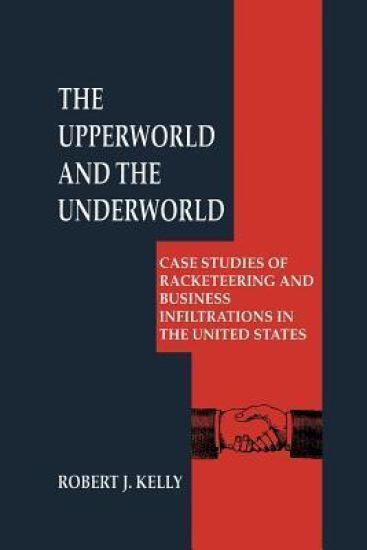
The Upperworld and the Underworld

The Upperworld and the Underworld

Robert J. Kelly

Kluwer Academic/Plenum Publishers
1999
sidottu
From Damon Runyan's colorful tough guys in black shirts and white ties to recent media coverage of John Gotti, the `dapper don', public depictions of racketeers in the United States have drawn attention away from the true nature of organized crime and its extensive penetrations into mainstream business. The Upperworld and the Underworld: Case Studies of Racketeering and Business Infiltrations in the United States strips away the romantic patina and reveals the significant impact of racketeering on vital segments of American industry. In this informative study Robert Kelly explores two fundamental questions: `Why is organized crime a serious problem in some businesses and industries, and not in others?' and `What are the consequences of racketeering activities for labor organizations and businesses tainted by a criminal presence?' He examines the blurred demarcation between the legitimate and illegitimate sectors of society and explains the reasons for this occurrence. In the process, Kelly provides a distinct vantage point for understanding organized crime, not just as an `outlaw fringe' preying on society, but as a disturbingly integral element of our social and economic structure. Moreover, he confirms a widely held thesis that organized crime is not merely parasitic but an institutional component of American society. The Upperworld and the Underworld affords a fascinating view of the current state of organized crime in the United States and the rise of nontraditional criminal organizations in new immigrant communities. The volume is an essential resource for students and scholars concerned with issues of crime and its effects on the economy.
Deadly Confessions

Deadly Confessions

Robert J. Kelly

AuthorHouse
2004
pokkari
"Bless me Father, for I have sinned." Father Francis Beacon listens to the confession of a serial killer before retiring to his room with a Dewar's. Frustrated by his vows, the dying priest struggles to find a way to bring the psychopath to justice without breaching the Sacrament and turning his life into a lie. Meanwhile, Detective Larry Wright is getting indigestion more often as bodies begin to litter the streets of Philadelphia. When the killer contacts a local newspaper reporter and the FBI arrives, on behalf of the Office of Homeland Security, Wright begins to wonder what he's been pulled into and how he'll ever get out.
The Upperworld and the Underworld

The Upperworld and the Underworld

Robert J. Kelly

Springer-Verlag New York Inc.
2012
nidottu
From Damon Runyan's colorful tough guys in black shirts and white ties to recent media coverage of John Gotti, the `dapper don', public depictions of racketeers in the United States have drawn attention away from the true nature of organized crime and its extensive penetrations into mainstream business. The Upperworld and the Underworld: Case Studies of Racketeering and Business Infiltrations in the United States strips away the romantic patina and reveals the significant impact of racketeering on vital segments of American industry. In this informative study Robert Kelly explores two fundamental questions: `Why is organized crime a serious problem in some businesses and industries, and not in others?' and `What are the consequences of racketeering activities for labor organizations and businesses tainted by a criminal presence?' He examines the blurred demarcation between the legitimate and illegitimate sectors of society and explains the reasons for this occurrence. In the process, Kelly provides a distinct vantage point for understanding organized crime, not just as an `outlaw fringe' preying on society, but as a disturbingly integral element of our social and economic structure. Moreover, he confirms a widely held thesis that organized crime is not merely parasitic but an institutional component of American society. The Upperworld and the Underworld affords a fascinating view of the current state of organized crime in the United States and the rise of nontraditional criminal organizations in new immigrant communities. The volume is an essential resource for students and scholars concerned with issues of crime and its effects on the economy.

Illicit Trafficking

Illicit Trafficking

Robert J. Kelly; Jesse L. Maghan; Joseph D. Serio

ABC-CLIO
2005
sidottu
A detailed survey of a growing scourge of the global economy—the smuggling of people, materials, and money.Smuggling used to be a family business. Today it is big business. Illicit Trafficking: A Reference Handbook offers a thorough introduction to the problems of illegal trafficking that have emerged from and been intensified by globalization. This title provides an examination of how criminal enterprises have exploited opportunities to enrich themselves and broadened their involvement in many areas of illegal trafficking while compromising or evading legal authorities.The coverage includes a brief history of illicit trafficking, analyzes current problems, and examines local and global containment policies such as Presidential Decision Directive 42. It also explores key international agreements on money laundering, bank secrecy laws, extradition treaties, and technologies that have exploited legitimate business opportunities to enrich their profits while compromising or evading legal authorities.Entries include transnational organized criminal groups involved in illicit trafficking activities, including profiles of prominent figures engaged in money laundering, drug smuggling, and arms traffickingAnnotated chronology of key events concerning international agreements on fighting illegal trafficking
Film, Television and the Psychology of the Social Dream

Film, Television and the Psychology of the Social Dream

Robert W. Rieber; Robert J. Kelly

Springer-Verlag New York Inc.
2013
sidottu
?This book demonstrates how social distress or anxiety is reflected, modified, and evolves through the medium of the motion picture. Tracing cinema from its earliest forms, the authors show how film is a perfect medium for generating and projecting dreams, fantasies, and nightmares, on the individual as well as the societal level. Arising at the same time as Freud’s influential ideas, cinema has been intertwined with the wishes and fears of the greater culture and has served as a means of experiencing those feelings in a communal and taming environment. From Munsterberg’s original pronouncements in the early 20th century about the psychology of cinema, through the pioneering films of Melies, the works of the German expressionists, to James Bond and today’s superheroes this book weaves a narrative highlighting the importance of the social dream. It develops the idea that no art form goes beyond the ordinary process of consciousness in the same way as film, reflecting, as it does, the cognitive, emotional, and volitional aspects of human nature.?
Film, Television and the Psychology of the Social Dream

Film, Television and the Psychology of the Social Dream

Robert W. Rieber; Robert J. Kelly

Springer-Verlag New York Inc.
2016
nidottu
?This book demonstrates how social distress or anxiety is reflected, modified, and evolves through the medium of the motion picture. Tracing cinema from its earliest forms, the authors show how film is a perfect medium for generating and projecting dreams, fantasies, and nightmares, on the individual as well as the societal level. Arising at the same time as Freud’s influential ideas, cinema has been intertwined with the wishes and fears of the greater culture and has served as a means of experiencing those feelings in a communal and taming environment. From Munsterberg’s original pronouncements in the early 20th century about the psychology of cinema, through the pioneering films of Melies, the works of the German expressionists, to James Bond and today’s superheroes this book weaves a narrative highlighting the importance of the social dream. It develops the idea that no art form goes beyond the ordinary process of consciousness in the same way as film, reflecting, as it does, the cognitive, emotional, and volitional aspects of human nature.?
Handbook of Organized Crime in the United States

Handbook of Organized Crime in the United States

Ko Lin Chin; Robert J. Kelly; Rufus Schatzberg

Greenwood Press
1994
sidottu
Internationally known authorities in criminal justice provide one of the most comprehensive and detailed surveys today of the diverse ethnic and racial groups in the criminal underworld and their grave threats to the very fabric of American society. This coherent overview describes Mafia, Chinese, African American, Russian, and other criminal activities in different cities currently with historical background, showing the pernicious effects that their illicit operations have had on the economic, social, political, and moral life of the nation. This one-volume reference also assesses law enforcement and crime control programs during the 20th century, defines key problems, analyzes recent trends, and reviews the basic research about organized crime through the years. Lengthy bibliographical data and a full index further enrich this landmark study. This sobering overview should be required reading for specialist and general audiences alike and for broad library use given the serious threat of organized crime to all Americans in the 1990s.
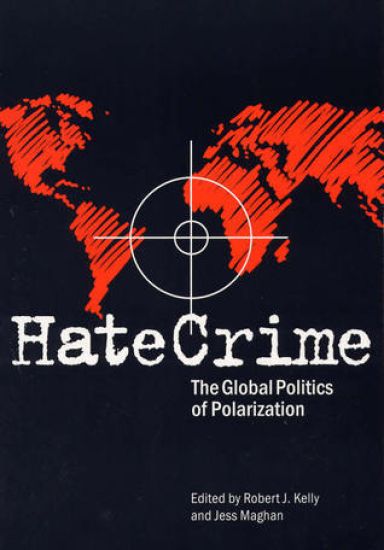
Hate Crime: The Global Politics of Polarization

Hate Crime: The Global Politics of Polarization

Jess Maghan; Robert J. Kelly

SOUTHERN ILLINOIS UNIVERSITY PRESS
1998
nidottu
These twelve previously unpublished essays explore the international phenomenon of hate crime, examining the socio-psychological dynamics of these crimes and the settings in which they occur, the relationships between offenders and their victims, the emotional states of the participants, and the legal and law enforcement responses to these crimes. The essays address religious, racial, ethnic, and sexual crimes in the United States, Latin America, Africa, Europe, and the Middle East. The essayists provide historical reviews of the problems and the ways local authorities understand and cope with the dilemmas as well as prognoses about the persistence of hate crime and the measures that can be taken to control and contain it.