Kirjojen hintavertailu. Mukana 11 244 527 kirjaa ja 12 kauppaa.

Kirjahaku

Etsi kirjoja tekijän nimen, kirjan nimen tai ISBN:n perusteella.

67 kirjaa tekijältä Robert Lee

The Revolutionary War Memoirs Of General Henry Lee
At age twenty-two, General Henry Lee commanded the elite Lee's Legion and earned an enviable record: capturing the fort at Paulus Hook distinguishing himself in the battles at Haw River, Guilford Courthouse, Eutaw Springs, and others and helping in the siege of Yorktown. But by 1809 Lee's fortunes had tragically altered: He wrote these memoirs while jailed in a debtor's prison. Originally published in 1812 in two volumes as Memoirs of the War in the Southern Department of the United States, this third 1869 edition includes Robert E. Lee's biographical essay on his father, the only substantial piece of writing by the celebrated Confederate general. From Grant and Sherman to Eisenhower and De Gaulle, classic military accounts have emerged from the carnage of nearly every war Lee's Memoirs are unique in that they are unrivaled in the history of the American Revolution.
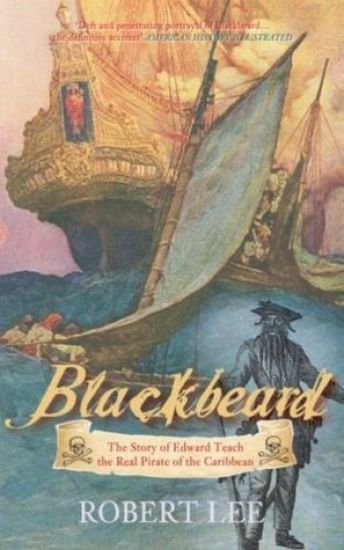
Blackbeard

Blackbeard

Robert Lee

The History Press Ltd
2008
nidottu
Edward Teach, better known as Blackbeard, was one of the most notorious pirates ever to plague the Atlantic coast. He was also one of the most colourful pirates of all time, becoming the model for countless blood-and-thunder tales of sea rovers. His daring exploits, personal courage, terrifying appearance, and fourteen wives made him a legend in his own lifetime.The legends and myths about Blackbeard have become wilder rather than tamer in the 250 years since his gory but valiant death at Ocracoke Inlet. It is difficult for historians, and all but impossible for the general reader, to separate fact from fiction. Author Robert E. Lee has studied virtually every scrap of information available about the pirate and his contemporaries in an attempt to find the real Blackbeard. The result is a fascinating and authoritative study that reads like an exciting swashbuckler. Lee goes beyond the myths and the image Teach so carefully cultivated to reveal a new Blackbeard - infinitely more interesting as a man than as a legend. In the process, he has captured the spirit and character of a vanished age, ‘the golden age of piracy.’
Environmental Law and Economics, Volumes I and II

Environmental Law and Economics, Volumes I and II

Robert Lee

Ashgate Publishing Limited
2007
sidottu
The regulation of environmental pollution has long been a serious subject of study for scholars of economic analysis of law. This two volume collection explores central issues in the relationship between these two topics. It includes material on private law and property rights, presenting a critique of market failure and asking questions about the role of tort law remedies in regulating the environment. It is concerned not only with the remedies as such, but also with the impact of the common law in shaping the behaviour of actors in the market. It then moves on to issues of public law and interventions in market arrangements, looking at events of market failure, the idea of pollution as an externality, modes of regulation and instances of regulatory failure. These volumes contain the classic law and economics literature relating to environmental regulation, creating an indispensable source of reference.
Recollections and Letters (Barnes & Noble Library of Essential Reading)
Just as its subject, General Robert E. Lee, was no ordinary man, "The Recollections and Letters" is no ordinary book. In defeat, the formal Confederate general became the personification of the South. This was a remarkable evolution for a man who in 1861 took up arms against the nation of his birth and subsequently led an army to a devastating end. Lee's transformation from defeated general to American hero was due in part to Robert E. Lee, Jr.'s, dedication to his father's memory. In 1904 the younger Lee produced "The Recollections and Letters", a book made up primarily of the general's personal correspondence, much of which was written to his wife and children. The book provided touching insights into the general's family life, allowing readers to connect with him on a more human level. Any study of Robert E. Lee, the South, the Civil War, or American history is incomplete without "The Recollections and Letters".
Fort Meade and the Black Hills

Fort Meade and the Black Hills

Robert Lee

Bison Books
1991
pokkari
Fort Meade was the home of the famous Seventh Cavalry after its ignominious defeat in the Battle of the Little Bighorn. Troops from Fort Meade played a pivotal role in the events that led to the tragedy at Wounded Knee in 1890. It was the scene of imprisonment of Ute Indians who made the mistake of interpreting their new citizenship status as freedom from government control. The fort survived the mechanization of the horse cavalry, aided the record-breaking Stratosphere Balloon flight of 1935, and became a training site for the nation's first airborne troops. Fort Meade existed for sixty-six years, from 1878 to 1944. Robert Lee examines the strategic importance of its location on the northern edge of the Black Hills and the role it played in the settlement of the region, as well as the role played by the citizens of Sturgis in keeping it alive. One of the chief delights of Fort Meade and the Black Hills is a gallery of characters including the unfortunate Major Marcus Reno, the beautiful and fatal Ella Sturgis, and the cigar-smoking Poker Alice Tubbs. They, and events scaled to their larger-than-life size, are part of this long overdue story of Fort Meade.
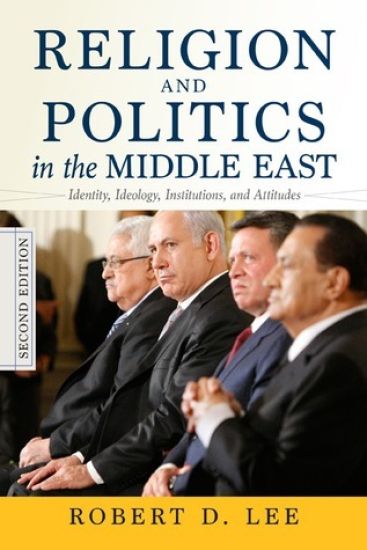
Religion and Politics in the Middle East, 2nd Edition
This innovative book analyzes the relationship between religion and politics in the Middle East through a comparative study of five countries- Egypt, Israel, Turkey, Iran, and Saudi Arabia. Robert D. Lee examines each country in terms of four domains in which state and religion necessarily interact: national identity, ideology, institutions, and political culture. In each domain he considers contradictory hypotheses, some of them asserting that religion is a positive force for political development and others identifying it as an obstacle. Among the questions the book confronts: Is secularization a necessary prerequisite for democratic development? How is it and why is it that religion and politics are so deeply entangled in these five countries? And, why is it that all five countries differ so markedly in the way they identify themselves and use religion for political purposes? The book argues that the nature of religious organization and practice in the Middle East must be understood in the context of individual nation states. The second edition is updated throughout and includes an entirely new chapter discussing the political and religious climate in Saudi Arabia. Earlier introductory analysis has been condensed to make room for new material, and chronologies at the end of each chapter have been added to help students understand the broader context. The second edition of Religion and Politics in the Middle East is a robust addition to courses on the Middle East.
The Social Capital of Entrepreneurial Newcomers
'Lee takes the oft cited belief that entrepreneurial endeavour lives and dies by the quality of the networks set in play, and subjects it to a rigorous and sustained analysis. In this he not only provides the reader with an authoritative theoretical and empirical foray into how entrepreneurs can create and sustain different forms of social capital, he does so with a strong sense of how power frames and taints its acquisition and use. Lee¹s book is a valuable contribution to our understanding of how in entrepreneurial activity, as in many walks of life, it is those with already established status who set the agenda by which opportunity and its pursuit is constituted'.Robin Holt, Professor of Entrepreneurship, Politics and Society, Copenhagen Business School, DenmarkRobert Lee drives forward the agenda of socially-situated cognition research, moving beyond a static model of entrepreneurial cognition and offering instead a dynamic, socially embedded, communication-based perspective. He breaks from the traditional focus on either the individual entrepreneurial agent or the social and institutional context of entrepreneurship and makes a serious and skilful effort to provide an integrative understanding of the entrepreneur as placed in a complex, relational and ambiguous context. Recognising that entrepreneurship is both cognitive and relational, he plays with the idea of power within legitimacy creation and through this illustrates the ultimately distributed nature of entrepreneurial processes. This book adds to the growing domain of socially-situated entrepreneurial cognition research and will appeal to those interested in understanding the connection between cognition, communication and legitimacy in the context of entrepreneurship. Jean Clarke, Professor of Entrepreneurship and Organization, Leeds University Business School, University of Leeds, UK‘In a very welcome contribution to the literature, RobertLee explores the social capital mobilised by entrepreneurs and develops a communicative action approach that yields important insights into how would-be entrepreneurs achieve legitimacy through navigating the complex web of power and status relations in which they are enmeshed. This book will appeal not only to those interested in entrepreneurship, but also be a valuable reference source for those interested in the workings of social capital’.Michael Bresnen, Professor of Organisation Studies, Alliance Manchester Business School, University of Manchester, UKThis book presents a novel and intellectually stimulating account of the understudied links between entrepreneurial newcomers’ bridging ties and their networked cognition. With a paucity of research addressing cognitively specific features of networked language and conduct, The Social Capital of Entrepreneurial Newcomers explores how entrepreneurial newcomers attune their cognition when interacting with high status and powerful vertical bridges. Largely reflecting communication accommodation perspectives, the author theoretically and empirically examines entrepreneurial newcomers’ cognitive ‘convergence’ and ‘divergence’ when bridging.