Kirjojen hintavertailu. Mukana 11 342 296 kirjaa ja 12 kauppaa.

Kirjahaku

Etsi kirjoja tekijän nimen, kirjan nimen tai ISBN:n perusteella.

5 kirjaa tekijältä Robert M. Fogelson

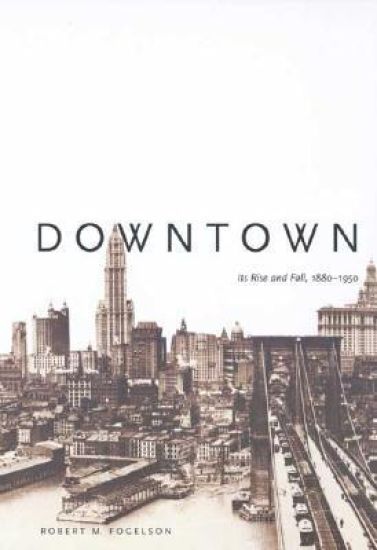
Downtown

Downtown

Robert M. Fogelson

Yale University Press
2003
pokkari
Written by one of this country’s foremost urban historians, Downtown is the first history of what was once viewed as the heart of the American city. It tells the fascinating story of how downtown—and the way Americans thought about downtown—changed over time. By showing how businessmen and property owners worked to promote the well-being of downtown, even at the expense of other parts of the city, it also gives a riveting account of spatial politics in urban America.Drawing on a wide array of contemporary sources, Robert M. Fogelson brings downtown to life, first as the business district, then as the central business district, and finally as just another business district. His book vividly recreates the long-forgotten battles over subways and skyscrapers in the late nineteenth and early twentieth centuries. And it provides a fresh, often startling perspective on elevated highways, parking bans, urban redevelopment, and other controversial issues. This groundbreaking book will be a revelation to scholars, city planners, policymakers, and general readers interested in American cities and American history.
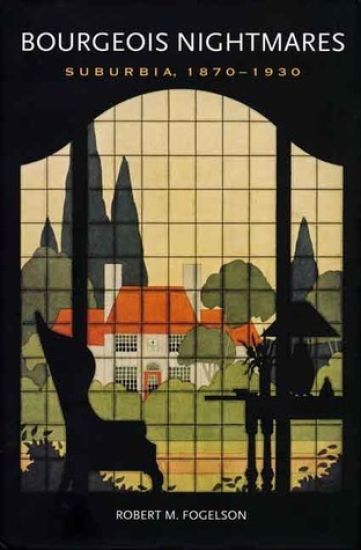
Bourgeois Nightmares

Bourgeois Nightmares

Robert M. Fogelson

Yale University Press
2007
pokkari
An eminent urban historian uncovers the long-neglected history of the restrictive covenants that played a pivotal role in shaping America’s suburbs The quintessential American suburbs, with their gracious single-family homes, large green lawns, and leaf-shaded streets, reflected not only residents’ dreams but nightmares, not only hopes but fears: fear of others, of racial minorities and lowincome groups, fear of themselves, fear of the market, and, above all, fear of change. These fears, and the restrictive covenants that embodied them, are the subject of Robert M. Fogelson’s fascinating new book. As Fogelson reveals, suburban subdividers attempted to cope with the deep-seated fears of unwanted change, especially the encroachment of “undesirable” people and activities, by imposing a wide range of restrictions on the lots. These restrictions ranged from mandating minimum costs and architectural styles for the houses to forbidding the owners to sell or lease their property to any member of a host of racial, ethnic, and religious groups. These restrictions, many of which are still commonly employed, tell us as much about the complexities of American society today as about its complexities a century ago.
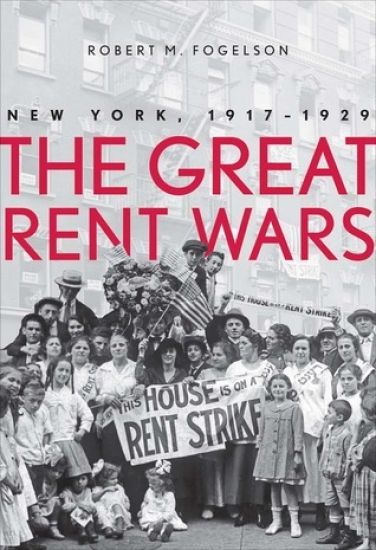
The Great Rent Wars

The Great Rent Wars

Robert M. Fogelson

Yale University Press
2013
sidottu
A groundbreaking account of the early history of rent control Written by one of the country’s foremost urban historians, The Great Rent Wars tells the fascinating but little-known story of the battles between landlords and tenants in the nation’s largest city from 1917 through 1929. These conflicts were triggered by the post-war housing shortage, which prompted landlords to raise rents, drove tenants to go on rent strikes, and spurred the state legislature, a conservative body dominated by upstate Republicans, to impose rent control in New York, a radical and unprecedented step that transformed landlord-tenant relations. The Great Rent Wars traces the tumultuous history of rent control in New York from its inception to its expiration as it unfolded in New York, Albany, and Washington, D.C. At the heart of this story are such memorable figures as Al Smith, Fiorello H. La Guardia, and Oliver Wendell Holmes, as well as a host of tenants, landlords, judges, and politicians who have long been forgotten. Fogelson also explores the heated debates over landlord-tenant law, housing policy, and other issues that are as controversial today as they were a century ago.
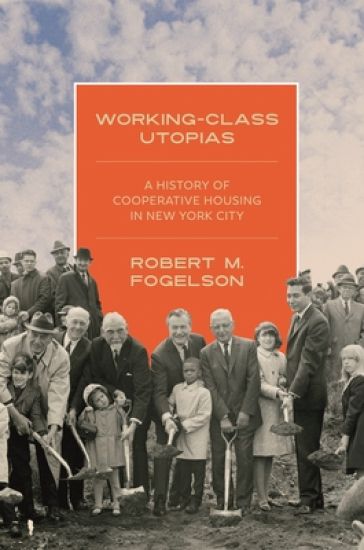
Working-Class Utopias

Working-Class Utopias

Robert M. Fogelson

PRINCETON UNIVERSITY PRESS
2022
sidottu
One of the nation’s foremost urban historians traces the history of cooperative housing in New York City from the 1920s through the 1970sAs World War II ended and Americans turned their attention to problems at home, union leaders and other prominent New Yorkers came to believe that cooperative housing would solve the city’s century-old problem of providing decent housing at a reasonable cost for working-class families. Working-Class Utopias tells the story of this ambitious movement from the construction of the Amalgamated Houses after World War I to the building of Co-op City, the world’s largest housing cooperative, four decades later.Robert Fogelson brings to life a tumultuous era in the life of New York, drawing on a wealth of archival materials such as community newspapers, legal records, and personal and institutional papers. In the early 1950s, a consortium of labor unions founded the United Housing Foundation under the visionary leadership of Abraham E. Kazan, who was supported by Nelson A. Rockefeller, Robert F. Wagner Jr., and Robert Moses. With the help of the state, which provided below-market-rate mortgages, and the city, which granted tax abatements, Kazan’s group built large-scale cooperatives in every borough except Staten Island. Then came Co-op City, built in the Bronx in the 1960s as a model for other cities but plagued by unforeseen fiscal problems, culminating in the longest and costliest rent strike in American history. Co-op City survived, but the United Housing Foundation did not, and neither did the cooperative housing movement.Working-Class Utopias is essential reading for anyone seeking to understand the housing problem that continues to plague New York and cities across the nation.