Kirjojen hintavertailu. Mukana 11 627 378 kirjaa ja 12 kauppaa.

Kirjahaku

Etsi kirjoja tekijän nimen, kirjan nimen tai ISBN:n perusteella.

6 kirjaa tekijältä Robert Markley

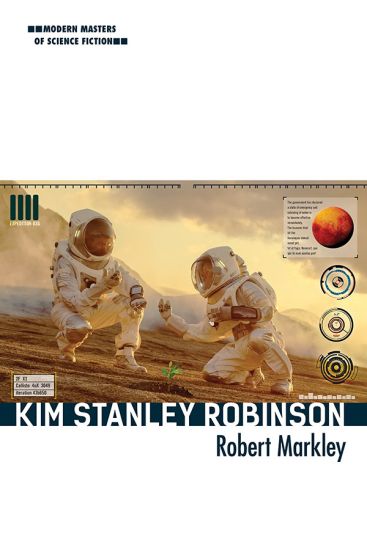
Kim Stanley Robinson

Kim Stanley Robinson

Robert Markley

University of Illinois Press
2019
sidottu
Award-winning epics like the Mars trilogy and groundbreaking alternative histories like The Days of Rice and Salt have brought Kim Stanley Robinson to the forefront of contemporary science fiction. Mixing subject matter from a dizzying number of fields with his own complex ecological and philosophical concerns, Robinson explores how humanity might pursue utopian social action as a strategy for its own survival. Robert Markley examines the works of an author engaged with the fundamental question of how we-as individuals, as a civilization, and as a species-might go forward. By building stories on huge time scales, Robinson lays out the scientific and human processes that fuel humanity's struggle toward a more just and environmentally stable world or system of worlds. His works invite readers to contemplate how to achieve, and live in, these numerous possible futures. They also challenge us to see that SF's literary, cultural, and philosophical significance have made it the preeminent literary genre for examining where we stand today in human and planetary history.
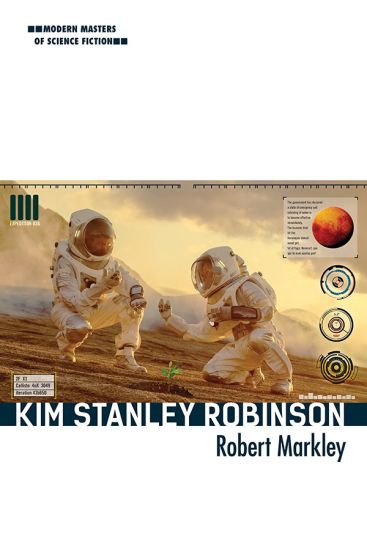
Kim Stanley Robinson

Kim Stanley Robinson

Robert Markley

University of Illinois Press
2019
nidottu
Award-winning epics like the Mars trilogy and groundbreaking alternative histories like The Days of Rice and Salt have brought Kim Stanley Robinson to the forefront of contemporary science fiction. Mixing subject matter from a dizzying number of fields with his own complex ecological and philosophical concerns, Robinson explores how humanity might pursue utopian social action as a strategy for its own survival. Robert Markley examines the works of an author engaged with the fundamental question of how we-as individuals, as a civilization, and as a species-might go forward. By building stories on huge time scales, Robinson lays out the scientific and human processes that fuel humanity's struggle toward a more just and environmentally stable world or system of worlds. His works invite readers to contemplate how to achieve, and live in, these numerous possible futures. They also challenge us to see that SF's literary, cultural, and philosophical significance have made it the preeminent literary genre for examining where we stand today in human and planetary history.
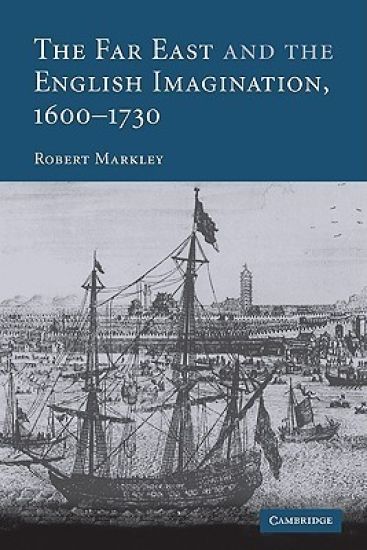
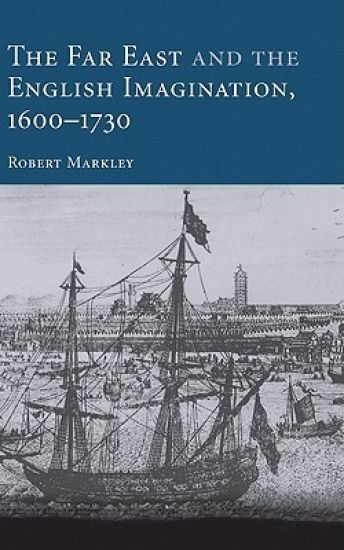
The Far East and the English Imagination, 1600–1730

The Far East and the English Imagination, 1600–1730

Robert Markley

Cambridge University Press
2009
pokkari
In the seventeenth and eighteenth centuries China, Japan and the Spice Islands dazzled the English imagination as insatiable markets for European goods, and as vast, inexhaustible storehouses of spices and luxury wares. Robert Markley explores the significance of attitudes to the wealth and power of East Asia in rethinking conceptions of national and personal identity in seventeenth- and early eighteenth-century English literature. Alongside works by canonical English authors, this study examines the writings of Jesuit missionaries, Dutch merchants, and English and continental geographers, who directly contended with the challenges that China and Japan posed to visions of western cultural and technological superiority. Questioning conventional Eurocentric histories, in this 2006 book Markley examines the ways in which the writings of Milton, Dryden, Defoe and Swift deal with the complexities of a world in which England was marginalised and which, until 1800, was dominated - economically at least - by the empires of the Far East.
The Far East and the English Imagination, 1600–1730

The Far East and the English Imagination, 1600–1730

Robert Markley

Cambridge University Press
2006
sidottu
In the seventeenth and eighteenth centuries China, Japan and the Spice Islands dazzled the English imagination as insatiable markets for European goods, and as vast, inexhaustible storehouses of spices and luxury wares. Robert Markley explores the significance of attitudes to the wealth and power of East Asia in rethinking conceptions of national and personal identity in seventeenth- and early eighteenth-century English literature. Alongside works by canonical English authors, this study examines the writings of Jesuit missionaries, Dutch merchants, and English and continental geographers, who directly contended with the challenges that China and Japan posed to visions of western cultural and technological superiority. Questioning conventional Eurocentric histories, in this 2006 book Markley examines the ways in which the writings of Milton, Dryden, Defoe and Swift deal with the complexities of a world in which England was marginalised and which, until 1800, was dominated - economically at least - by the empires of the Far East.
Dying Planet

Dying Planet

Robert Markley

Duke University Press
2005
sidottu
For more than a century, Mars has been at the center of debates about humanity’s place in the cosmos. Focusing on perceptions of the red planet in scientific works and science fiction, Dying Planet analyzes the ways Mars has served as a screen onto which humankind has projected both its hopes for the future and its fears of ecological devastation on Earth. Robert Markley draws on planetary astronomy, the history and cultural study of science, science fiction, literary and cultural criticism, ecology, and astrobiology to offer a cross-disciplinary investigation of the cultural and scientific dynamics that have kept Mars on front pages since the 1800s.Markley interweaves chapters on science and science fiction, enabling him to illuminate each arena and to explore the ways their concerns overlap and influence one another. He tracks all the major scientific developments, from observations through primitive telescopes in the seventeenth century to data returned by the rovers that landed on Mars in 2004. Markley describes how major science fiction writers-H. G. Wells, Kim Stanley Robinson, Philip K. Dick, Edgar Rice Burroughs, Ray Bradbury, Robert Heinlein, and Judith Merril-responded to new theories and new controversies. He also considers representations of Mars in film, on the radio, and in the popular press. In its comprehensive study of both science and science fiction, Dying Planet reveals how changing conceptions of Mars have had crucial consequences for understanding ecology on Earth.
Dying Planet

Dying Planet

Robert Markley

Duke University Press
2005
pokkari
For more than a century, Mars has been at the center of debates about humanity’s place in the cosmos. Focusing on perceptions of the red planet in scientific works and science fiction, Dying Planet analyzes the ways Mars has served as a screen onto which humankind has projected both its hopes for the future and its fears of ecological devastation on Earth. Robert Markley draws on planetary astronomy, the history and cultural study of science, science fiction, literary and cultural criticism, ecology, and astrobiology to offer a cross-disciplinary investigation of the cultural and scientific dynamics that have kept Mars on front pages since the 1800s.Markley interweaves chapters on science and science fiction, enabling him to illuminate each arena and to explore the ways their concerns overlap and influence one another. He tracks all the major scientific developments, from observations through primitive telescopes in the seventeenth century to data returned by the rovers that landed on Mars in 2004. Markley describes how major science fiction writers-H. G. Wells, Kim Stanley Robinson, Philip K. Dick, Edgar Rice Burroughs, Ray Bradbury, Robert Heinlein, and Judith Merril-responded to new theories and new controversies. He also considers representations of Mars in film, on the radio, and in the popular press. In its comprehensive study of both science and science fiction, Dying Planet reveals how changing conceptions of Mars have had crucial consequences for understanding ecology on Earth.