Kirjojen hintavertailu. Mukana 11 699 587 kirjaa ja 12 kauppaa.

Kirjahaku

Etsi kirjoja tekijän nimen, kirjan nimen tai ISBN:n perusteella.

5 kirjaa tekijältä Robert P. Crease

Making Physics

Making Physics

Robert P. Crease

University of Chicago Press
2000
nidottu
From Nobel Prize-winning work in atomic physics to community concerns over radiation leaks, Brookhaven National Laboratory's ups and downs track the changing fortunes of "big science" in the United States since World War II. But Brookhaven is also unique; it was the first major national laboratory built specifically for basic civilian research. This text brings to life the people, the instruments, the science, and the politics of Brookhaven's first quarter-century. The book shows the experimental energy of Brookhaven's researchers, competing among themselves as well as with other laboratories around the world. Drawing on a wide variety of sources, from oral interviews and internal memos to lab notebooks and transcripts of security clearance hearings, Robert P. Crease recounts the difficult founding and siting of Brookhaven, the successful resolution of immense engineering and technical problems in the design and construction of experimental apparatus, and changing relations with the surrounding Long Island community. But most of all, Crease tells the stories of Brookhaven's scientists and their research, which has included detailed descriptions of the structure of the nucleus, early attempts at radiotherapy for inoperable tumours, and studies of strange particles and the weak and strong interactions.
The Play of Nature

The Play of Nature

Robert P. Crease

Indiana University Press
1993
sidottu
"Crease's brilliantly exploited theatrical analogy places scientific theorizing back into the wider context of experimental inquiry." —Robert C. Scharff Crease attacks the "mystical" account of experimentation embraced by the positivist and Kantian varieties of philosophy of science, according to which experimentation takes a backseat to theory.
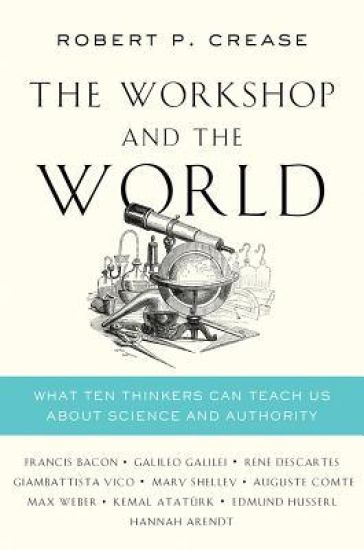
The Workshop and the World

The Workshop and the World

Robert P. Crease

WW Norton Co
2019
sidottu
Robert P. Crease looks at questions about when a scientific discovery becomes accepted fact, who decides this and how citizens should interact with the scientific process. He answers by introducing the world’s greatest thinkers and explaining how they shaped scientific progress. At a time when the Catholic Church assumed total authority, Bacon, Galileo and Descartes were the first to articulate the idea of scientific expertise, while writers such as Shelley and Comte questioned the scientific process. Centuries later, scholars such as Atatürk and Arendt examined the relationship between the scientific community and the public—especially in times of distrust in experts. An exploration of what it means to practise science for the common good and who can question expertise, this book will help readers understand how we reached the current moment of anti-science rhetoric and what we can do about it.
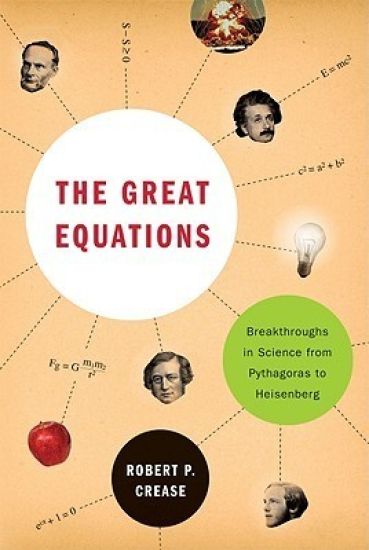
The Great Equations

The Great Equations

Robert P. Crease

WW Norton Co
2010
pokkari
While we may be familiar with some of science s greatest equations, we may not know that each and every equation emerged not in Eureka! moments but in years of cultural developments and scientific knowledge. With vignettes full of humor, drama, and eccentricity, philosopher and science historian Robert P. Crease shares the stories behind ten of history s greatest equations, from the first equation, 1 + 1 = 2, which promises a rational, well-ordered world, to Heisenberg s uncertainty principle, which reveals the limitations of human knowledge. For every equation, Crease provides a brief account of who discovered it, what dissatisfactions lay behind its discovery, and what the equation says about the nature of our world."
World in the Balance

World in the Balance

Robert P. Crease

WW Norton Co
2012
nidottu
Millions of transactions each day depend on a reliable network of weights and measures. But achieving such a network was anything but easy, as Robert P. Crease, physicist and philosopher, demonstrates in this endlessly fascinating, always entertaining look at just how this international system evolved. From the link between musical pitch and distance in the dynasties of ancient China and the use of figurines to measure gold in West Africa to the creation of the French metric and British imperial systems, Crease takes readers along on one of history’s greatest philosophical and scientific adventures.