Kirjojen hintavertailu. Mukana 11 717 486 kirjaa ja 12 kauppaa.

Kirjahaku

Etsi kirjoja tekijän nimen, kirjan nimen tai ISBN:n perusteella.

7 kirjaa tekijältä Robert Proctor

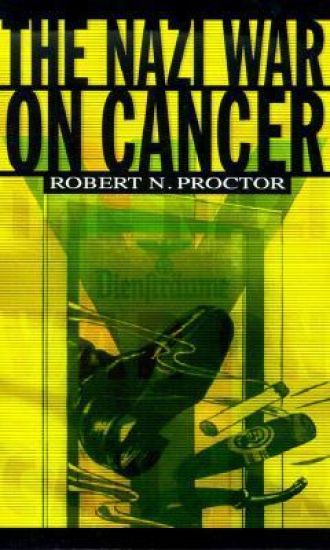
The Nazi War on Cancer

The Nazi War on Cancer

Robert Proctor

Princeton University Press
2000
pokkari
Collaboration in the Holocaust. Murderous and torturous medical experiments. The "euthanasia" of hundreds of thousands of people with mental or physical disabilities. Widespread sterilization of "the unfit." Nazi doctors committed these and countless other atrocities as part of Hitler's warped quest to create a German master race. Robert Proctor recently made the explosive discovery, however, that Nazi Germany was also decades ahead of other countries in promoting health reforms that we today regard as progressive and socially responsible. Most startling, Nazi scientists were the first to definitively link lung cancer and cigarette smoking. Proctor explores the controversial and troubling questions that such findings raise: Were the Nazis more complex morally than we thought? Can good science come from an evil regime? What might this reveal about health activism in our own society? Proctor argues that we must view Hitler's Germany more subtly than we have in the past. But he also concludes that the Nazis' forward-looking health activism ultimately came from the same twisted root as their medical crimes: the ideal of a sanitary racial utopia reserved exclusively for pure and healthy Germans. Author of an earlier groundbreaking work on Nazi medical horrors, Proctor began this book after discovering documents showing that the Nazis conducted the most aggressive antismoking campaign in modern history. Further research revealed that Hitler's government passed a wide range of public health measures, including restrictions on asbestos, radiation, pesticides, and food dyes. Nazi health officials introduced strict occupational health and safety standards, and promoted such foods as whole-grain bread and soybeans. These policies went hand in hand with health propaganda that, for example, idealized the Fuhrer's body and his nonsmoking, vegetarian lifestyle. Proctor shows that cancer also became an important social metaphor, as the Nazis portrayed Jews and other "enemies of the Volk" as tumors that must be eliminated from the German body politic. This is a disturbing and profoundly important book. It is only by appreciating the connections between the "normal" and the "monstrous" aspects of Nazi science and policy, Proctor reveals, that we can fully understand not just the horror of fascism, but also its deep and seductive appeal even to otherwise right-thinking Germans.
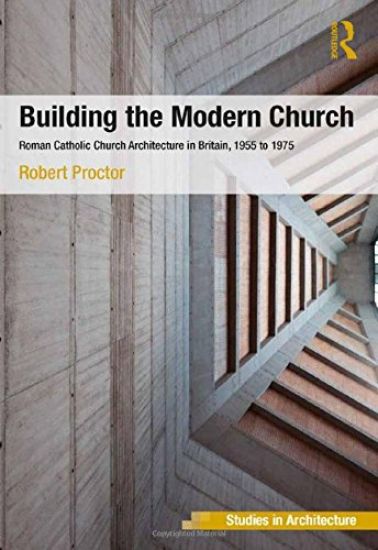
Building the Modern Church

Building the Modern Church

Robert Proctor

Routledge
2016
nidottu
Fifty years after the Second Vatican Council, architectural historian Robert Proctor examines the transformations in British Roman Catholic church architecture that took place in the two decades surrounding this crucial event. Inspired by new thinking in theology and changing practices of worship, and by a growing acceptance of modern art and architecture, architects designed radical new forms of church building in a campaign of new buildings for new urban contexts. A focussed study of mid-twentieth century church architecture, Building the Modern Church considers how architects and clergy constructed the image and reality of the Church as an institution through its buildings. The author examines changing conceptions of tradition and modernity, and the development of a modern church architecture that drew from the ideas of the liturgical movement. The role of Catholic clergy as patrons of modern architecture and art and the changing attitudes of the Church and its architects to modernity are examined, explaining how different strands of post-war architecture were adopted in the field of ecclesiastical buildings. The church building’s social role in defining communities through rituals and symbols is also considered, together with the relationships between churches and modernist urban planning in new towns and suburbs. Case studies analysed in detail include significant buildings and architects that have remained little known until now. Based on meticulous historical research in primary sources, theoretically informed, fully referenced, and thoroughly illustrated, this book will be of interest to anyone concerned with the church architecture, art and theology of this period.
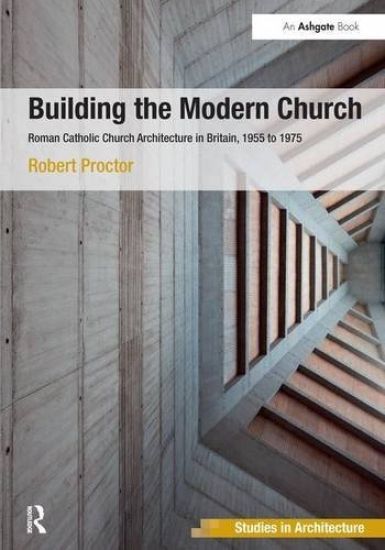
Building the Modern Church

Building the Modern Church

Robert Proctor

Ashgate Publishing Limited
2014
sidottu
Fifty years after the Second Vatican Council, architectural historian Robert Proctor examines the transformations in British Roman Catholic church architecture that took place in the two decades surrounding this crucial event. Inspired by new thinking in theology and changing practices of worship, and by a growing acceptance of modern art and architecture, architects designed radical new forms of church building in a campaign of new buildings for new urban contexts. A focussed study of mid-twentieth century church architecture, Building the Modern Church considers how architects and clergy constructed the image and reality of the Church as an institution through its buildings. The author examines changing conceptions of tradition and modernity, and the development of a modern church architecture that drew from the ideas of the liturgical movement. The role of Catholic clergy as patrons of modern architecture and art and the changing attitudes of the Church and its architects to modernity are examined, explaining how different strands of post-war architecture were adopted in the field of ecclesiastical buildings. The church building’s social role in defining communities through rituals and symbols is also considered, together with the relationships between churches and modernist urban planning in new towns and suburbs. Case studies analysed in detail include significant buildings and architects that have remained little known until now. Based on meticulous historical research in primary sources, theoretically informed, fully referenced, and thoroughly illustrated, this book will be of interest to anyone concerned with the church architecture, art and theology of this period.
Percy Thomas

Percy Thomas

Robert Proctor

UNIVERSITY OF WALES PRESS
2025
sidottu
Sir Percy Thomas was the most important twentieth-century architect in Wales, renowned for interwar civic buildings such as Swansea Guildhall and the Temple of Peace in Cardiff. His architectural practice, Sir Percy Thomas & Son, designed much of the post-1945 welfare state and industry in Wales and beyond. In the late twentieth century, the Percy Thomas Partnership specialised in complex healthcare, industrial and public buildings, becoming an international practice. This comprehensive, meticulously-researched history examines the architecture of Percy Thomas in depth for the first time, and explores its wider social and political significance. Arguing that the practice sustained an ethical approach to architecture as a ‘national service’ for the benefit of society, this book gives new insights into the role of the architect and the changing relationships between the built environment and the state throughout the century. Its unique perspective from Wales promises to reshape our understanding of modern architecture.