Kirjojen hintavertailu. Mukana 11 627 423 kirjaa ja 12 kauppaa.

Kirjahaku

Etsi kirjoja tekijän nimen, kirjan nimen tai ISBN:n perusteella.

8 kirjaa tekijältä Robert R. Janes

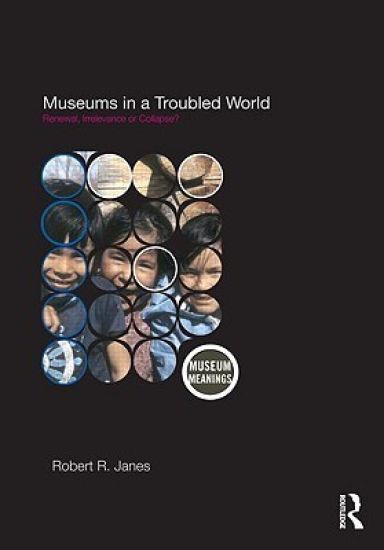
Museums in a Troubled World

Museums in a Troubled World

Robert R. Janes

Routledge
2009
sidottu
Are Museums Irrelevant? Museums are rarely acknowledged in the global discussion of climate change, environmental degradation, the inevitability of depleted fossil fuels, and the myriad local issues concerning the well-being of particular communities – suggesting the irrelevance of museums as social institutions. At the same time, there is a growing preoccupation among museums with the marketplace, and museums, unwittingly or not, are embracing the values of relentless consumption that underlie the planetary difficulties of today.Museums in a Troubled World argues that much more can be expected of museums as publicly supported and knowledge-based institutions. The weight of tradition and a lack of imagination are significant factors in museum inertia and these obstacles are also addressed. Taking an interdisciplinary approach, combining anthropology ethnography, museum studies and management theory, this book goes beyond conventional museum thinking.Robert R. Janes explores the meaning and role of museums as key intellectual and civic resources in a time of profound social and environmental change. This volume is a constructive examination of what is wrong with contemporary museums, written from an insider’s perspective that is grounded in both hope and pragmatism. The book’s conclusions are optimistic and constructive, and highlight the unique contributions that museums can make as social institutions, embedded in their communities, and owned by no one.
Museums in a Troubled World

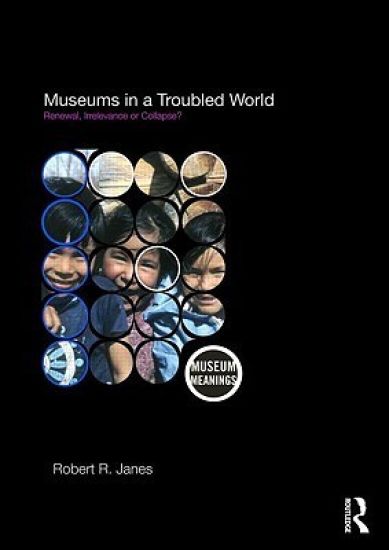
Museums in a Troubled World

Robert R. Janes

Routledge
2009
nidottu
Are Museums Irrelevant? Museums are rarely acknowledged in the global discussion of climate change, environmental degradation, the inevitability of depleted fossil fuels, and the myriad local issues concerning the well-being of particular communities – suggesting the irrelevance of museums as social institutions. At the same time, there is a growing preoccupation among museums with the marketplace, and museums, unwittingly or not, are embracing the values of relentless consumption that underlie the planetary difficulties of today.Museums in a Troubled World argues that much more can be expected of museums as publicly supported and knowledge-based institutions. The weight of tradition and a lack of imagination are significant factors in museum inertia and these obstacles are also addressed. Taking an interdisciplinary approach, combining anthropology ethnography, museum studies and management theory, this book goes beyond conventional museum thinking.Robert R. Janes explores the meaning and role of museums as key intellectual and civic resources in a time of profound social and environmental change. This volume is a constructive examination of what is wrong with contemporary museums, written from an insider’s perspective that is grounded in both hope and pragmatism. The book’s conclusions are optimistic and constructive, and highlight the unique contributions that museums can make as social institutions, embedded in their communities, and owned by no one.

Museums and the Paradox of Change

Museums and the Paradox of Change

Robert R. Janes

Routledge
2013
sidottu
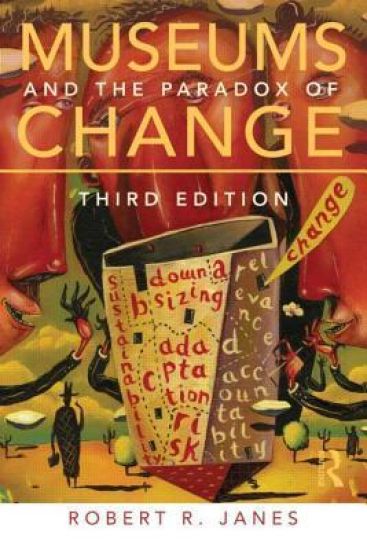
Museums throughout the world are under increasing pressure in the wake of the 2008/2009 economic recession and the many pressing social and environmental issues that are assuming priority. The major focus of concern in the global museum community is the sustainability of museums in light of these pressures, not to mention falling attendance and the challenges of the digital world.Museums and the Paradox of Change provides a detailed account of how a major Canadian museum suffered a 40 percent loss in its operating budget and went on to become the most financially self-sufficient of the ten largest museums in Canada. This book is the most detailed case study of its kind and is indispensable for students and practitioners alike. It is also the most incisive published account of organizational change within a museum, in part because it is honest, open and reflexive. Janes is the first to bring perspectives drawn from complexity science into the discussion of organizational change in museums and he introduces the key concepts of complexity, uncertainty, nonlinearity, emergence, chaos and paradox. This revised and expanded third edition also includes new writing on strengthening museum management, as well as reflections on new opportunities and hazards for museums. It concludes with six ethical responsibilities for museum leaders and managers to consider. Janes provides pragmatic solutions grounded in a theoretical context, and highlights important issues in the management of museums that cannot be ignored.
Museums and the Paradox of Change

Museums and the Paradox of Change

Robert R. Janes

Routledge
2013
nidottu
Museums throughout the world are under increasing pressure in the wake of the 2008/2009 economic recession and the many pressing social and environmental issues that are assuming priority. The major focus of concern in the global museum community is the sustainability of museums in light of these pressures, not to mention falling attendance and the challenges of the digital world.Museums and the Paradox of Change provides a detailed account of how a major Canadian museum suffered a 40 percent loss in its operating budget and went on to become the most financially self-sufficient of the ten largest museums in Canada. This book is the most detailed case study of its kind and is indispensable for students and practitioners alike. It is also the most incisive published account of organizational change within a museum, in part because it is honest, open and reflexive. Janes is the first to bring perspectives drawn from complexity science into the discussion of organizational change in museums and he introduces the key concepts of complexity, uncertainty, nonlinearity, emergence, chaos and paradox. This revised and expanded third edition also includes new writing on strengthening museum management, as well as reflections on new opportunities and hazards for museums. It concludes with six ethical responsibilities for museum leaders and managers to consider. Janes provides pragmatic solutions grounded in a theoretical context, and highlights important issues in the management of museums that cannot be ignored.
Museums and Societal Collapse

Museums and Societal Collapse

Robert R. Janes

TAYLOR FRANCIS LTD
2023
nidottu
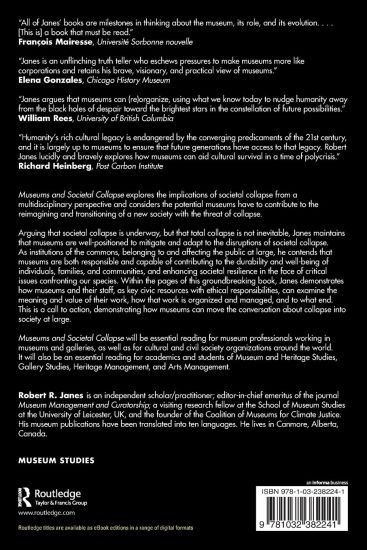
Museums and Societal Collapse explores the implications of societal collapse from a multidisciplinary perspective and considers the potential museums have to contribute to the reimagining and transitioning of a new society with the threat of collapse.Arguing that societal collapse is underway, but that total collapse is not inevitable, Janes maintains that museums are well-positioned to mitigate and adapt to the disruptions of societal collapse. As institutions of the commons, belonging to and affecting the public at large, he contends that museums are both responsible and capable of contributing to the durability and well-being of individuals, families, and communities, and enhancing societal resilience in the face of critical issues confronting our species. Within the pages of this groundbreaking book, Janes demonstrates how museums and their staff, as key civic resources with ethical responsibilities, can examine the meaning and value of their work, how that work is organized and managed, and to what end. This is a call to action, demonstrating how museums can move the conversation about collapse into society at large.Museums and Societal Collapse will be essential reading for museum professionals working in museums and galleries, as well as for cultural and civil society organizations around the world. It will also be an essential reading for academics and students of Museum and Heritage Studies, Gallery Studies, Heritage Management, and Arts Management.
Museums and Societal Collapse

Museums and Societal Collapse

Robert R. Janes

TAYLOR FRANCIS LTD
2023
sidottu
Museums and Societal Collapse explores the implications of societal collapse from a multidisciplinary perspective and considers the potential museums have to contribute to the reimagining and transitioning of a new society with the threat of collapse.Arguing that societal collapse is underway, but that total collapse is not inevitable, Janes maintains that museums are well-positioned to mitigate and adapt to the disruptions of societal collapse. As institutions of the commons, belonging to and affecting the public at large, he contends that museums are both responsible and capable of contributing to the durability and well-being of individuals, families, and communities, and enhancing societal resilience in the face of critical issues confronting our species. Within the pages of this groundbreaking book, Janes demonstrates how museums and their staff, as key civic resources with ethical responsibilities, can examine the meaning and value of their work, how that work is organized and managed, and to what end. This is a call to action, demonstrating how museums can move the conversation about collapse into society at large.Museums and Societal Collapse will be essential reading for museum professionals working in museums and galleries, as well as for cultural and civil society organizations around the world. It will also be an essential reading for academics and students of Museum and Heritage Studies, Gallery Studies, Heritage Management, and Arts Management.
Museums without Borders

Museums without Borders

Robert R. Janes

Routledge
2015
sidottu
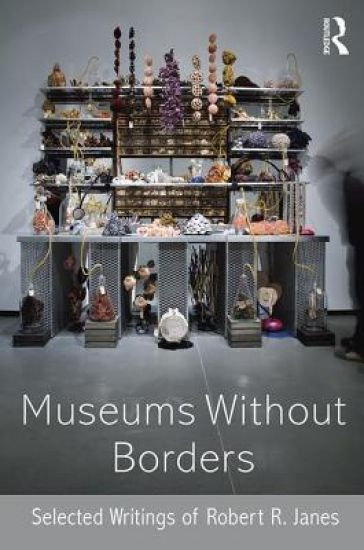
Drawing together nearly 40 years of experience, Museums without Borders presents the key works of one of the most respected practitioners and scholars in the field. Through these selected writings, Robert R. Janes demonstrates that museums have a broader role to play in society than is conventionally assumed. He approaches the fundamental questions of why museums exist and what they mean in terms of identity, community, and the future of civil life.This book consists of four Parts: Indigenous Peoples; Managing Change; Social Responsibility, and Activism and Ethics. The Parts are ordered chronologically and each begins with an introduction and an overview of the ensuing articles which situates the papers in their historical and cultural contexts. Using an interdisciplinary approach that combines anthropology, ethnography, museum studies and management theory, Janes both questions and supports mainstream museum practice in a constructive and self-reflective manner, offering readers alternative viewpoints on important issues.Considering concepts not generally recognized in museum practice, such as the Roman leadership model of primus inter pares and the Buddhist concept of mindfulness, Janes argues that the global museum community must examine how they can meet the needs of the planet and its inhabitants. Museums without Borders charts the evolving role of the contemporary museum in the face of environmental, societal and ethical challenges, and explores issues that have, and will, continue to shape the museum sector for decades to come. This book demonstrates that it is both reasonable and essential to expand the purpose of museums at this point in history – not only because of their unique characteristics and value to society, but also because of Janes’ respect and admiration for their rich legacy. It is time that museums assist in the creation of a new, caring, and more conscious future for themselves and their communities. This can only be done through authentic engagement with contemporary issues and aspirations.
Museums without Borders

Museums without Borders

Robert R. Janes

Routledge
2015
nidottu
Drawing together nearly 40 years of experience, Museums without Borders presents the key works of one of the most respected practitioners and scholars in the field. Through these selected writings, Robert R. Janes demonstrates that museums have a broader role to play in society than is conventionally assumed. He approaches the fundamental questions of why museums exist and what they mean in terms of identity, community, and the future of civil life.This book consists of four Parts: Indigenous Peoples; Managing Change; Social Responsibility, and Activism and Ethics. The Parts are ordered chronologically and each begins with an introduction and an overview of the ensuing articles which situates the papers in their historical and cultural contexts. Using an interdisciplinary approach that combines anthropology, ethnography, museum studies and management theory, Janes both questions and supports mainstream museum practice in a constructive and self-reflective manner, offering readers alternative viewpoints on important issues.Considering concepts not generally recognized in museum practice, such as the Roman leadership model of primus inter pares and the Buddhist concept of mindfulness, Janes argues that the global museum community must examine how they can meet the needs of the planet and its inhabitants. Museums without Borders charts the evolving role of the contemporary museum in the face of environmental, societal and ethical challenges, and explores issues that have, and will, continue to shape the museum sector for decades to come. This book demonstrates that it is both reasonable and essential to expand the purpose of museums at this point in history – not only because of their unique characteristics and value to society, but also because of Janes’ respect and admiration for their rich legacy. It is time that museums assist in the creation of a new, caring, and more conscious future for themselves and their communities. This can only be done through authentic engagement with contemporary issues and aspirations.