Kirjojen hintavertailu. Mukana 11 343 082 kirjaa ja 12 kauppaa.

Kirjahaku

Etsi kirjoja tekijän nimen, kirjan nimen tai ISBN:n perusteella.

15 kirjaa tekijältä Robert R. Reitano

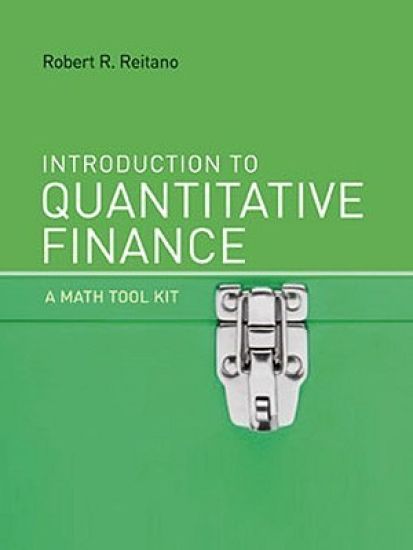
Introduction to Quantitative Finance

Introduction to Quantitative Finance

Robert R. Reitano

MIT Press
2010
sidottu
An introduction to many mathematical topics applicable to quantitative finance that teaches how to "think in mathematics" rather than simply do mathematics by rote.This text offers an accessible yet rigorous development of many of the fields of mathematics necessary for success in investment and quantitative finance, covering topics applicable to portfolio theory, investment banking, option pricing, investment, and insurance risk management. The approach emphasizes the mathematical framework provided by each mathematical discipline, and the application of each framework to the solution of finance problems. It emphasizes the thought process and mathematical approach taken to develop each result instead of the memorization of formulas to be applied (or misapplied) automatically. The objective is to provide a deep level of understanding of the relevant mathematical theory and tools that can then be effectively used in practice, to teach students how to "think in mathematics" rather than simply to do mathematics by rote.Each chapter covers an area of mathematics such as mathematical logic, Euclidean and other spaces, set theory and topology, sequences and series, probability theory, and calculus, in each case presenting only material that is most important and relevant for quantitative finance. Each chapter includes finance applications that demonstrate the relevance of the material presented. Problem sets are offered on both the mathematical theory and the finance applications sections of each chapter. The logical organization of the book and the judicious selection of topics make the text customizable for a number of courses. The development is self-contained and carefully explained to support disciplined independent study as well. A solutions manual for students provides solutions to the book's Practice Exercises; an instructor's manual offers solutions to the Assignment Exercises as well as other materials.
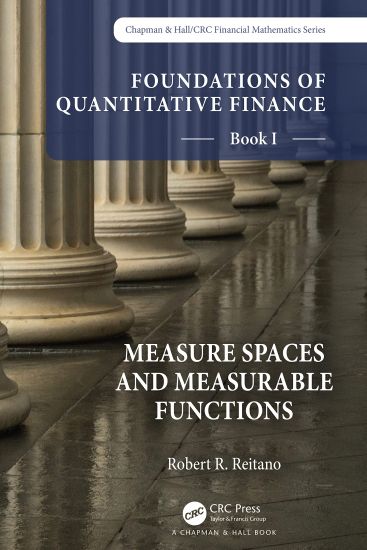
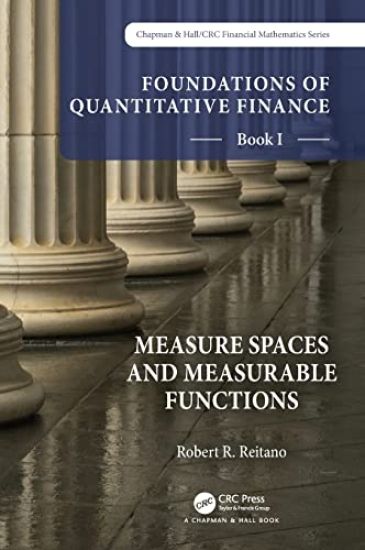
Foundations of Quantitative Finance, Book I: Measure Spaces and Measurable Functions
This is the first in a set of 10 books written for professionals in quantitative finance. These books fill the gap between informal mathematical developments found in introductory materials, and more advanced treatments that summarize without formally developing the important foundational results professionals need.Book I in the Foundations in Quantitative Finance Series develops topics in measure spaces and measurable functions and lays the foundation for subsequent volumes. Lebesgue and then Borel measure theory are developed on R, motivating the general extension theory of measure spaces that follows. This general theory is applied to finite product measure spaces, Borel measures on Rn, and infinite dimensional product probability spaces. The overriding goal of these books is a complete and detailed development of the many mathematical theories and results one finds in popular resources in finance and quantitative finance. Each book is dedicated to a specific area of mathematics or probability theory, with applications to finance that are relevant to the needs of professionals. Practitioners, academic researchers, and students will find these books valuable to their career development. All ten volumes are extensively self-referenced. The reader can enter the collection at any point or topic of interest, and then work backward to identify and fill in needed details. This approach also works for a course or self-study on a given volume, with earlier books used for reference. Advanced quantitative finance books typically develop materials with an eye to comprehensiveness in the given subject matter, yet not with an eye toward efficiently curating and developing the theories needed for applications in quantitative finance. This book and series of volumes fill this need.
Foundations of Quantitative Finance, Book I: Measure Spaces and Measurable Functions
This is the first in a set of 10 books written for professionals in quantitative finance. These books fill the gap between informal mathematical developments found in introductory materials, and more advanced treatments that summarize without formally developing the important foundational results professionals need.Book I in the Foundations in Quantitative Finance Series develops topics in measure spaces and measurable functions and lays the foundation for subsequent volumes. Lebesgue and then Borel measure theory are developed on R, motivating the general extension theory of measure spaces that follows. This general theory is applied to finite product measure spaces, Borel measures on Rn, and infinite dimensional product probability spaces. The overriding goal of these books is a complete and detailed development of the many mathematical theories and results one finds in popular resources in finance and quantitative finance. Each book is dedicated to a specific area of mathematics or probability theory, with applications to finance that are relevant to the needs of professionals. Practitioners, academic researchers, and students will find these books valuable to their career development. All ten volumes are extensively self-referenced. The reader can enter the collection at any point or topic of interest, and then work backward to identify and fill in needed details. This approach also works for a course or self-study on a given volume, with earlier books used for reference. Advanced quantitative finance books typically develop materials with an eye to comprehensiveness in the given subject matter, yet not with an eye toward efficiently curating and developing the theories needed for applications in quantitative finance. This book and series of volumes fill this need.
Foundations of Quantitative Finance Book II: Probability Spaces and Random Variables
Every financial professional wants and needs an advantage. A firm foundation in advanced mathematics can translate into dramatic advantages to professionals willing to obtain it. Many are not—and that is the advantage these books offer the astute reader.Published under the collective title of Foundations of Quantitative Finance, this set of ten books presents the advanced mathematics finance professionals need to advantage their careers, these books present the theory most do not learn in graduate finance programs, or in most financial mathematics undergraduate and graduate courses.As a high-level industry executive and authoritative instructor, Robert R. Reitano presents the mathematical theories he encountered in nearly three decades working in the financial industry and two decades teaching in highly respected graduate programs.Readers should be quantitatively literate and familiar with the developments in the first book in the set, Foundations of Quantitative Finance Book I: Measure Spaces and Measurable Functions.
Foundations of Quantitative Finance Book II: Probability Spaces and Random Variables
Every financial professional wants and needs an advantage. A firm foundation in advanced mathematics can translate into dramatic advantages to professionals willing to obtain it. Many are not—and that is the advantage these books offer the astute reader.Published under the collective title of Foundations of Quantitative Finance, this set of ten books presents the advanced mathematics finance professionals need to advantage their careers, these books present the theory most do not learn in graduate finance programs, or in most financial mathematics undergraduate and graduate courses.As a high-level industry executive and authoritative instructor, Robert R. Reitano presents the mathematical theories he encountered in nearly three decades working in the financial industry and two decades teaching in highly respected graduate programs.Readers should be quantitatively literate and familiar with the developments in the first book in the set, Foundations of Quantitative Finance Book I: Measure Spaces and Measurable Functions.
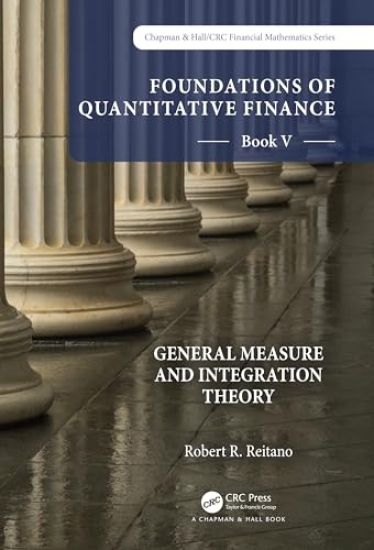
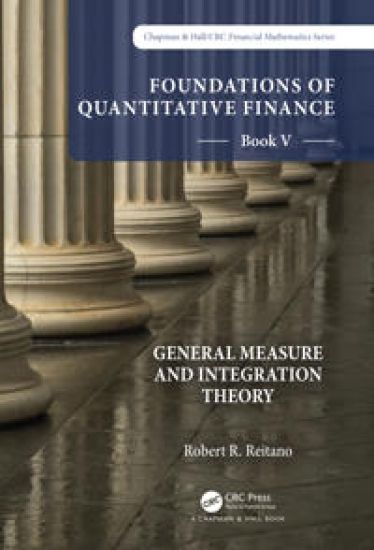
Foundations of Quantitative Finance: Book V General Measure and Integration Theory
Every finance professional wants and needs a competitive edge. A firm foundation in advanced mathematics can translate into dramatic advantages to professionals willing to obtain it. Many are not—and that is the competitive edge these books offer the astute reader.Published under the collective title of Foundations of Quantitative Finance, this set of ten books develops the advanced topics in mathematics that finance professionals need to advance their careers. These books expand the theory most do not learn in graduate finance programs, or in most financial mathematics undergraduate and graduate courses.As an investment executive and authoritative instructor, Robert R. Reitano presents the mathematical theories he encountered and used in nearly three decades in the financial services industry and two decades in academia where he taught in highly respected graduate programs.Readers should be quantitatively literate and familiar with the developments in the earlier books in the set. While the set offers a continuous progression through these topics, each title can be studied independently.FeaturesExtensively referenced to materials from earlier booksPresents the theory needed to support advanced applicationsSupplements previous training in mathematics, with more detailed developmentsBuilt from the author's five decades of experience in industry, research, and teachingPublished and forthcoming titles in the Robert R. Reitano Quantitative Finance Series:Book I: Measure Spaces and Measurable FunctionsBook II: Probability Spaces and Random VariablesBook III: The Integrals of Lebesgue and (Riemann-)StieltjesBook IV: Distribution Functions and ExpectationsBook V: General Measure and Integration TheoryBook VI: Densities, Transformed Distributions, and Limit TheoremsBook VII: Brownian Motion and Other Stochastic ProcessesBook VIII: Itô Integration and Stochastic Calculus 1Book IX: Stochastic Calculus 2 and Stochastic Differential EquationsBook X: Classical Models and Applications in Finance
Foundations of Quantitative Finance: Book V General Measure and Integration Theory
Every finance professional wants and needs a competitive edge. A firm foundation in advanced mathematics can translate into dramatic advantages to professionals willing to obtain it. Many are not—and that is the competitive edge these books offer the astute reader.Published under the collective title of Foundations of Quantitative Finance, this set of ten books develops the advanced topics in mathematics that finance professionals need to advance their careers. These books expand the theory most do not learn in graduate finance programs, or in most financial mathematics undergraduate and graduate courses.As an investment executive and authoritative instructor, Robert R. Reitano presents the mathematical theories he encountered and used in nearly three decades in the financial services industry and two decades in academia where he taught in highly respected graduate programs.Readers should be quantitatively literate and familiar with the developments in the earlier books in the set. While the set offers a continuous progression through these topics, each title can be studied independently.FeaturesExtensively referenced to materials from earlier booksPresents the theory needed to support advanced applicationsSupplements previous training in mathematics, with more detailed developmentsBuilt from the author's five decades of experience in industry, research, and teachingPublished and forthcoming titles in the Robert R. Reitano Quantitative Finance Series:Book I: Measure Spaces and Measurable FunctionsBook II: Probability Spaces and Random VariablesBook III: The Integrals of Lebesgue and (Riemann-)StieltjesBook IV: Distribution Functions and ExpectationsBook V: General Measure and Integration TheoryBook VI: Densities, Transformed Distributions, and Limit TheoremsBook VII: Brownian Motion and Other Stochastic ProcessesBook VIII: Itô Integration and Stochastic Calculus 1Book IX: Stochastic Calculus 2 and Stochastic Differential EquationsBook X: Classical Models and Applications in Finance
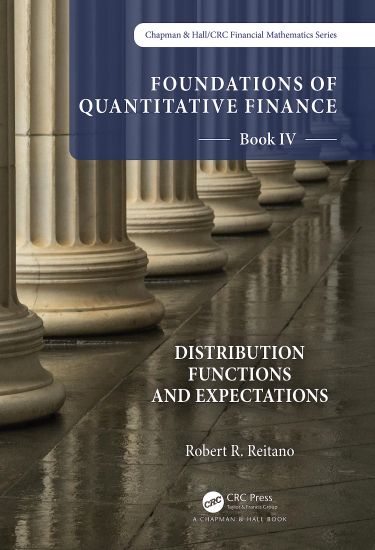
Foundations of Quantitative Finance Book IV: Distribution Functions and Expectations
Every finance professional wants and needs a competitive edge. A firm foundation in advanced mathematics can translate into dramatic advantages to professionals willing to obtain it. Many are not—and that is the competitive edge these books offer the astute reader.Published under the collective title of Foundations of Quantitative Finance, this set of ten books develops the advanced topics in mathematics that finance professionals need to advance their careers. These books expand the theory most do not learn in graduate finance programs, or in most financial mathematics undergraduate and graduate courses.As an investment executive and authoritative instructor, Robert R. Reitano presents the mathematical theories he encountered and used in nearly three decades in the financial services industry and two decades in academia where he taught in highly respected graduate programs.Readers should be quantitatively literate and familiar with the developments in the earlier books in the set. While the set offers a continuous progression through these topics, each title can be studied independently.FeaturesExtensively referenced to materials from earlier booksPresents the theory needed to support advanced applicationsSupplements previous training in mathematics, with more detailed developmentsBuilt from the author's five decades of experience in industry, research, and teachingPublished and forthcoming titles in the Robert R. Reitano Quantitative Finance Series:Book I: Measure Spaces and Measurable FunctionsBook II: Probability Spaces and Random VariablesBook III: The Integrals of Lebesgue and (Riemann-)StieltjesBook IV: Distribution Functions and Expectations Book V: General Measure and Integration TheoryBook VI: Densities, Transformed Distributions, and Limit Theorems Book VII: Brownian Motion and Other Stochastic ProcessesBook VIII: Itô Integration and Stochastic Calculus 1Book IX: Stochastic Calculus 2 and Stochastic Differential EquationsBook X: Classical Models and Applications in Finance
Foundations of Quantitative Finance Book IV: Distribution Functions and Expectations
Every finance professional wants and needs a competitive edge. A firm foundation in advanced mathematics can translate into dramatic advantages to professionals willing to obtain it. Many are not—and that is the competitive edge these books offer the astute reader.Published under the collective title of Foundations of Quantitative Finance, this set of ten books develops the advanced topics in mathematics that finance professionals need to advance their careers. These books expand the theory most do not learn in graduate finance programs, or in most financial mathematics undergraduate and graduate courses.As an investment executive and authoritative instructor, Robert R. Reitano presents the mathematical theories he encountered and used in nearly three decades in the financial services industry and two decades in academia where he taught in highly respected graduate programs.Readers should be quantitatively literate and familiar with the developments in the earlier books in the set. While the set offers a continuous progression through these topics, each title can be studied independently.FeaturesExtensively referenced to materials from earlier booksPresents the theory needed to support advanced applicationsSupplements previous training in mathematics, with more detailed developmentsBuilt from the author's five decades of experience in industry, research, and teachingPublished and forthcoming titles in the Robert R. Reitano Quantitative Finance Series:Book I: Measure Spaces and Measurable FunctionsBook II: Probability Spaces and Random VariablesBook III: The Integrals of Lebesgue and (Riemann-)StieltjesBook IV: Distribution Functions and Expectations Book V: General Measure and Integration TheoryBook VI: Densities, Transformed Distributions, and Limit Theorems Book VII: Brownian Motion and Other Stochastic ProcessesBook VIII: Itô Integration and Stochastic Calculus 1Book IX: Stochastic Calculus 2 and Stochastic Differential EquationsBook X: Classical Models and Applications in Finance
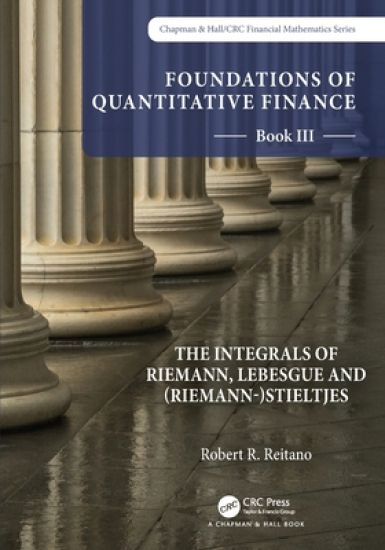
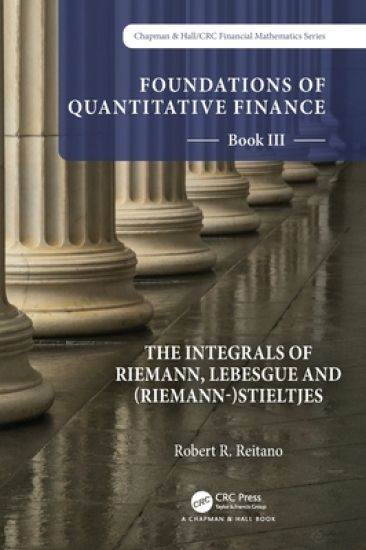
Foundations of Quantitative Finance: Book III. The Integrals of Riemann, Lebesgue and (Riemann-)Stieltjes
Every financial professional wants and needs an advantage. A firm foundation in advanced mathematics can translate into dramatic advantages to professionals willing to obtain it. Many are not—and that is the advantage these books offer the astute reader.Published under the collective title of Foundations of Quantitative Finance, this set of ten books presents the advanced mathematics finance professionals need to advance their careers. These books develop the theory most do not learn in Graduate Finance programs, or in most Financial Mathematics undergraduate and graduate courses.As an investment executive and authoritative instructor, Robert R. Reitano presents the mathematical theories he encountered and used in nearly three decades in the financial industry and two decades in education where he taught in highly respected graduate programs.Readers should be quantitatively literate and familiar with the developments in the first book in the set. While the set offers a continuous progression through these topics, each title can also be studied independently.FeaturesExtensively referenced to utilize materials from earlier booksPresents the theory needed to support advanced applicationsSupplements previous training in mathematics, with more detailed developmentsBuilt from the author's five decades of experience in industry, research, and teachingPublished and forthcoming titles in the Robert R. Reitano Quantitative Finance Series:Book I: Measure Spaces and Measurable FunctionsBook II: Probability Spaces and Random VariablesBook III: The Integrals of Lebesgue and (Riemann-)StieltjesBook IV: Distribution Functions and ExpectationsBook V: General Measure and Integration TheoryBook VI: Densities, Transformed Distributions, and Limit Theorems Book VII: Brownian Motion and Other Stochastic ProcessesBook VIII: Itô Integration and Stochastic Calculus 1Book IX: Stochastic Calculus 2 and Stochastic Differential EquationsBook X: Classical Models and Applications in Finance
Foundations of Quantitative Finance: Book III. The Integrals of Riemann, Lebesgue and (Riemann-)Stieltjes
Every financial professional wants and needs an advantage. A firm foundation in advanced mathematics can translate into dramatic advantages to professionals willing to obtain it. Many are not—and that is the advantage these books offer the astute reader.Published under the collective title of Foundations of Quantitative Finance, this set of ten books presents the advanced mathematics finance professionals need to advance their careers. These books develop the theory most do not learn in Graduate Finance programs, or in most Financial Mathematics undergraduate and graduate courses.As an investment executive and authoritative instructor, Robert R. Reitano presents the mathematical theories he encountered and used in nearly three decades in the financial industry and two decades in education where he taught in highly respected graduate programs.Readers should be quantitatively literate and familiar with the developments in the first book in the set. While the set offers a continuous progression through these topics, each title can also be studied independently.FeaturesExtensively referenced to utilize materials from earlier booksPresents the theory needed to support advanced applicationsSupplements previous training in mathematics, with more detailed developmentsBuilt from the author's five decades of experience in industry, research, and teachingPublished and forthcoming titles in the Robert R. Reitano Quantitative Finance Series:Book I: Measure Spaces and Measurable FunctionsBook II: Probability Spaces and Random VariablesBook III: The Integrals of Lebesgue and (Riemann-)StieltjesBook IV: Distribution Functions and ExpectationsBook V: General Measure and Integration TheoryBook VI: Densities, Transformed Distributions, and Limit Theorems Book VII: Brownian Motion and Other Stochastic ProcessesBook VIII: Itô Integration and Stochastic Calculus 1Book IX: Stochastic Calculus 2 and Stochastic Differential EquationsBook X: Classical Models and Applications in Finance
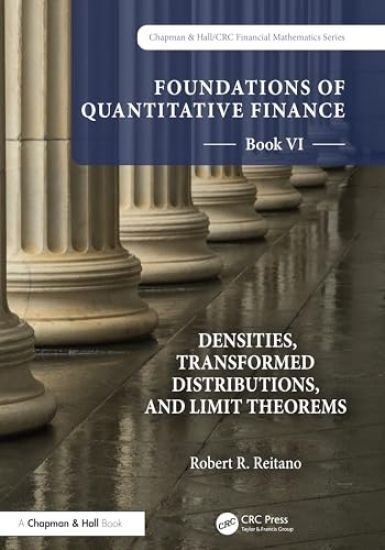
Foundations of Quantitative Finance, Book VI: Densities, Transformed Distributions, and Limit Theorems
Every finance professional wants and needs a competitive edge. A firm foundation in advanced mathematics can translate into dramatic advantages to professionals willing to obtain it. Many are not—and that is the competitive edge these books offer the astute reader.Published under the collective title of Foundations of Quantitative Finance, this set of ten books develops the advanced topics in mathematics that finance professionals need to advance their careers. These books expand the theory most do not learn in graduate finance programs, or in most financial mathematics undergraduate and graduate courses.As an investment executive and authoritative instructor, Robert R. Reitano presents the mathematical theories he encountered and used in nearly three decades in the financial services industry and two decades in academia where he taught in highly respected graduate programs.Readers should be quantitatively literate and familiar with the developments in the earlier books in the set. While the set offers a continuous progression through these topics, each title can be studied independently.FeaturesExtensively referenced to materials from earlier booksPresents the theory needed to support advanced applicationsSupplements previous training in mathematics, with more detailed developmentsBuilt from the author's five decades of experience in industry, research, and teachingPublished and forthcoming titles in the Robert R. Reitano Quantitative Finance Series:Book I: Measure Spaces and Measurable FunctionsBook II: Probability Spaces and Random VariablesBook III: The Integrals of Riemann, Lebesgue and (Riemann-)StieltjesBook IV: Distribution Functions and ExpectationsBook V: General Measure and Integration TheoryBook VI: Densities, Transformed Distributions, and Limit TheoremsBook VII: Brownian Motion and Other Stochastic ProcessesBook VIII: Itô Integration and Stochastic Calculus 1Book IX: Stochastic Calculus 2 and Stochastic Differential EquationsBook X: Classical Models and Applications in Finance
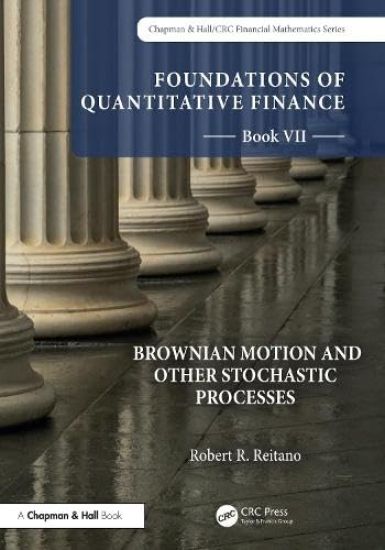
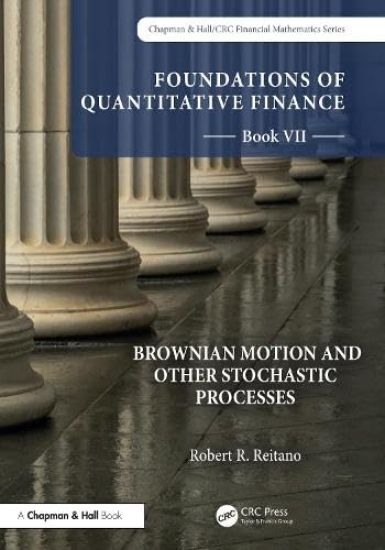
Foundations of Quantitative Finance, Book VII: Brownian Motion and Other Stochastic Processes
This is the seventh book in a set of ten published under the collective title of Foundations of Quantitative Finance. The targeted readers are students, researchers, and practitioners of quantitative finance who find that many sources for financial applications are written at a level assuming significant mathematical expertise. The goal for this series is to provide a complete and detailed development of the many foundational mathematical theories and results one finds referenced in popular resources in finance and quantitative finance. The included topics have been curated from vast mathematics and finance literature for the express purpose of supporting applications in quantitative finance. The hope is this series will advance the reader’s career. The series is logically sequential. Books I, III, and V develop foundational mathematical results needed for the probability theory and finance applications of Books II, IV, and VI, respectively. Books VII, VIII, and IX then develop results in the theory of stochastic processes, and Book X develops applications of these stochastic and other models to finance. All ten volumes are extensively self-referenced. Book VII introduces and develops properties of Brownian motion, arguably the most famous of stochastic processes, as well as two other classes of stochastic processes with properties enjoyed by Brownian motion, namely, Markov processes and martingales. Brownian motion is the central idea needed for most continuous time models in finance, and indeed most applications of stochastic processes. For some with more experience, this book will be the place to start in the series, while others will find Books I-VI provide a needed foundation. Foundations of Quantitative Finance, by Robert Reitano: Book I. Measure Spaces and Measurable Functions Book II. Probability Spaces and Random Variables Book III. The Integrals of Riemann, Lebesgue and (Riemann-)Stieltjes Book IV. Distribution Functions and Expectations Book V. General Measure and Integration Theory Book VI. Densities, Transformed Distributions, and Limit Theorems Book VII. Brownian Motion and Other Stochastic Processes Book VIII. Itô Integration and Stochastic Calculus 1 Book IX. Stochastic Calculus 2 and Stochastic Differential Equations Book X. Classical Models and Applications in Finance
Foundations of Quantitative Finance, Book VI: Densities, Transformed Distributions, and Limit Theorems
Every finance professional wants and needs a competitive edge. A firm foundation in advanced mathematics can translate into dramatic advantages to professionals willing to obtain it. Many are not—and that is the competitive edge these books offer the astute reader.Published under the collective title of Foundations of Quantitative Finance, this set of ten books develops the advanced topics in mathematics that finance professionals need to advance their careers. These books expand the theory most do not learn in graduate finance programs, or in most financial mathematics undergraduate and graduate courses.As an investment executive and authoritative instructor, Robert R. Reitano presents the mathematical theories he encountered and used in nearly three decades in the financial services industry and two decades in academia where he taught in highly respected graduate programs.Readers should be quantitatively literate and familiar with the developments in the earlier books in the set. While the set offers a continuous progression through these topics, each title can be studied independently.FeaturesExtensively referenced to materials from earlier booksPresents the theory needed to support advanced applicationsSupplements previous training in mathematics, with more detailed developmentsBuilt from the author's five decades of experience in industry, research, and teachingPublished and forthcoming titles in the Robert R. Reitano Quantitative Finance Series:Book I: Measure Spaces and Measurable FunctionsBook II: Probability Spaces and Random VariablesBook III: The Integrals of Riemann, Lebesgue and (Riemann-)StieltjesBook IV: Distribution Functions and ExpectationsBook V: General Measure and Integration TheoryBook VI: Densities, Transformed Distributions, and Limit TheoremsBook VII: Brownian Motion and Other Stochastic ProcessesBook VIII: Itô Integration and Stochastic Calculus 1Book IX: Stochastic Calculus 2 and Stochastic Differential EquationsBook X: Classical Models and Applications in Finance
Foundations of Quantitative Finance, Book VII: Brownian Motion and Other Stochastic Processes
This is the seventh book in a set of ten published under the collective title of Foundations of Quantitative Finance. The targeted readers are students, researchers, and practitioners of quantitative finance who find that many sources for financial applications are written at a level assuming significant mathematical expertise. The goal for this series is to provide a complete and detailed development of the many foundational mathematical theories and results one finds referenced in popular resources in finance and quantitative finance. The included topics have been curated from vast mathematics and finance literature for the express purpose of supporting applications in quantitative finance. The hope is this series will advance the reader’s career. The series is logically sequential. Books I, III, and V develop foundational mathematical results needed for the probability theory and finance applications of Books II, IV, and VI, respectively. Books VII, VIII, and IX then develop results in the theory of stochastic processes, and Book X develops applications of these stochastic and other models to finance. All ten volumes are extensively self-referenced. Book VII introduces and develops properties of Brownian motion, arguably the most famous of stochastic processes, as well as two other classes of stochastic processes with properties enjoyed by Brownian motion, namely, Markov processes and martingales. Brownian motion is the central idea needed for most continuous time models in finance, and indeed most applications of stochastic processes. For some with more experience, this book will be the place to start in the series, while others will find Books I-VI provide a needed foundation. Foundations of Quantitative Finance, by Robert Reitano: Book I. Measure Spaces and Measurable Functions Book II. Probability Spaces and Random Variables Book III. The Integrals of Riemann, Lebesgue and (Riemann-)Stieltjes Book IV. Distribution Functions and Expectations Book V. General Measure and Integration Theory Book VI. Densities, Transformed Distributions, and Limit Theorems Book VII. Brownian Motion and Other Stochastic Processes Book VIII. Itô Integration and Stochastic Calculus 1 Book IX. Stochastic Calculus 2 and Stochastic Differential Equations Book X. Classical Models and Applications in Finance