Kirjojen hintavertailu. Mukana 12 016 292 kirjaa ja 12 kauppaa.

Kirjahaku

Etsi kirjoja tekijän nimen, kirjan nimen tai ISBN:n perusteella.

21 kirjaa tekijältä Robert Robertson

Observations on Fevers, and Other Diseases, Which Occur on Voyages to Africa and the West Indies. By Robert Robertson, M.D.
The 18th century was a wealth of knowledge, exploration and rapidly growing technology and expanding record-keeping made possible by advances in the printing press. In its determination to preserve the century of revolution, Gale initiated a revolution of its own: digitization of epic proportions to preserve these invaluable works in the largest archive of its kind. Now for the first time these high-quality digital copies of original 18th century manuscripts are available in print, making them highly accessible to libraries, undergraduate students, and independent scholars.Medical theory and practice of the 1700s developed rapidly, as is evidenced by the extensive collection, which includes descriptions of diseases, their conditions, and treatments. Books on science and technology, agriculture, military technology, natural philosophy, even cookbooks, are all contained here.++++The below data was compiled from various identification fields in the bibliographic record of this title. This data is provided as an additional tool in helping to insure edition identification: ++++National Library of MedicineN010821With a half-title.London: printed for John Murray, 1792. xvi,196p.; 4
Observations on Fevers and Other Diseases

Observations on Fevers and Other Diseases

Robert Robertson

Cambridge University Press
2011
pokkari
Robert Robertson (1742–1829) was a Scottish doctor and surgeon. After completing his medical apprenticeship, Robertson joined the Royal Navy as a surgeon's mate in 1760. In 1768 he was appointed surgeon to the sloop Diligence, and served as surgeon on various ships in the West Indies, North America and west Africa until 1783. He was appointed surgeon to the Royal Hospital, Greenwich in 1793. This volume, first published in 1792, contains Robertson's detailed observations of malarial and yellow fever, dysentery and other diseases which he encountered while serving as surgeon in the West Indies. Robertson describes in detail the symptoms and progression of these diseases, his treatments and the outcomes, as recorded in his monthly reviews of the ships' sick lists and many detailed case histories of his patients. This volume provides valuable information concerning the treatment of common diseases and conditions on board late eighteenth-century naval ships.
A Physical Journal Kept on Board His Majesty's Ship Rainbow, During Three Voyages to the Coast of Africa, and West Indies, in the Years 1772, 1773, and 1774
The 18th century was a wealth of knowledge, exploration and rapidly growing technology and expanding record-keeping made possible by advances in the printing press. In its determination to preserve the century of revolution, Gale initiated a revolution of its own: digitization of epic proportions to preserve these invaluable works in the largest archive of its kind. Now for the first time these high-quality digital copies of original 18th century manuscripts are available in print, making them highly accessible to libraries, undergraduate students, and independent scholars.Medical theory and practice of the 1700s developed rapidly, as is evidenced by the extensive collection, which includes descriptions of diseases, their conditions, and treatments. Books on science and technology, agriculture, military technology, natural philosophy, even cookbooks, are all contained here.++++The below data was compiled from various identification fields in the bibliographic record of this title. This data is provided as an additional tool in helping to insure edition identification: ++++British LibraryT100152Half-title: 'Meteorological and physical observations, made in 1769, 1772, 1773, and 1774, on the coast of Africa, and in the West-Indies'.London: printed for E. and C. Dilly; J. Robson and Co.; T. Cadell; and T. Evans, 1777. xvi,196p.; 4
The Speech of Mr John Talbot Campo-bell, a Free Christian-negro, to his Countrymen in the Mountains of Jamaica. In two Parts.
The 18th century was a wealth of knowledge, exploration and rapidly growing technology and expanding record-keeping made possible by advances in the printing press. In its determination to preserve the century of revolution, Gale initiated a revolution of its own: digitization of epic proportions to preserve these invaluable works in the largest archive of its kind. Now for the first time these high-quality digital copies of original 18th century manuscripts are available in print, making them highly accessible to libraries, undergraduate students, and independent scholars.Delve into what it was like to live during the eighteenth century by reading the first-hand accounts of everyday people, including city dwellers and farmers, businessmen and bankers, artisans and merchants, artists and their patrons, politicians and their constituents. Original texts make the American, French, and Industrial revolutions vividly contemporary.++++The below data was compiled from various identification fields in the bibliographic record of this title. This data is provided as an additional tool in helping to insure edition identification: ++++British LibraryT084582With a half-title.London: printed for J. Roberts, 1736. 4],88p.; 8
A Supplement to the Detection of the State and Situation of the Present Sugar Planters of Barbadoes
The 18th century was a wealth of knowledge, exploration and rapidly growing technology and expanding record-keeping made possible by advances in the printing press. In its determination to preserve the century of revolution, Gale initiated a revolution of its own: digitization of epic proportions to preserve these invaluable works in the largest archive of its kind. Now for the first time these high-quality digital copies of original 18th century manuscripts are available in print, making them highly accessible to libraries, undergraduate students, and independent scholars.Delve into what it was like to live during the eighteenth century by reading the first-hand accounts of everyday people, including city dwellers and farmers, businessmen and bankers, artisans and merchants, artists and their patrons, politicians and their constituents. Original texts make the American, French, and Industrial revolutions vividly contemporary.++++The below data was compiled from various identification fields in the bibliographic record of this title. This data is provided as an additional tool in helping to insure edition identification: ++++British LibraryT092926An inhabitant = Robert Robertson. 'A detection of the state and situation of the present sugar planters, of Barbadoes and the Leward Islands' was published in 1732. With a half-title.London: printed for J. Wilford, 1733. 4],92p.; 8
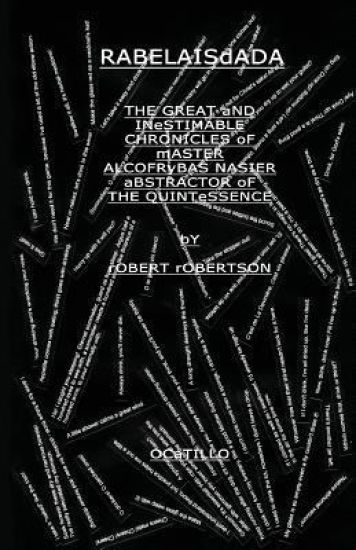
RabelaisDada: A re-invention of Francois Rabelais

RabelaisDada: A re-invention of Francois Rabelais

Robert Robertson

Createspace Independent Publishing Platform
2014
nidottu
Rabelaisdada is a re-invention of Fran ois Rabelais, fully illustrated by Ebenezer Splodge. Join our intrepid band of voyagers on their unbelievable adventures: Pantagruel the outsize leader type, the author Alcofrybas Nasier, the wily scallywag Panurge, the rather combative and generally inebriated cleric Brother Lardoon, not forgetting Captain Porepuss of The Thalamegius, all on their epic quest to discover The Ultimate Truth About Life from The Oracle Of The Holy Bottle.
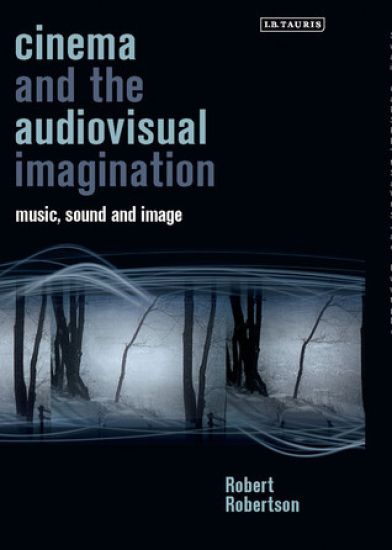
Cinema and the Audiovisual Imagination

Cinema and the Audiovisual Imagination

Robert Robertson

I.B. Tauris
2014
sidottu
So far, the study of cinema has been overwhelmingly visual. Robert Robertson instead presents cinema as an audiovisual medium, based on Sergei Eisenstein’s ideas on the montage of music, image and sound. Cinema and the Audiovisual Imagination applies an audiovisual focus to films by directors such as Spike Lee, Maya Deren, David Lynch, Alfred Hitchcock, Stanley Kubrick, Fritz Lang, Luis Buñuel, Pier Paolo Pasolini, Werner Herzog, David Lean and Sergei Eisenstein. In addition, Eisenstein’s concept of ‘nonindifferent’ nature is extended to films beyond the European tradition – by Satyajit Ray, Kaneto Shindo, Akira Kurosawa and Chris H. Lynn– and the audiovisual and landscape is explored in films by Dziga Vertov, Andrei Tarkovsky, Sergei Paradjanov, Bruce Conner, Jack Chambers, Derek Jarman and Alexander Sokurov. The audiovisual in avant-garde animation by John and James Whitney, Len Lye, Norman McLaren and in the film experiments of Busby Berkeley are considered too. Responding to recent developments in technology which have enabled practitioners to work extensively with music and sound on an equal level with the visual track, the book also examines the audiovisual creative process in opera, in a music/film collaboration with Dennis Dracup and in Robertson’s own music/film Oserake and The River That Walks.
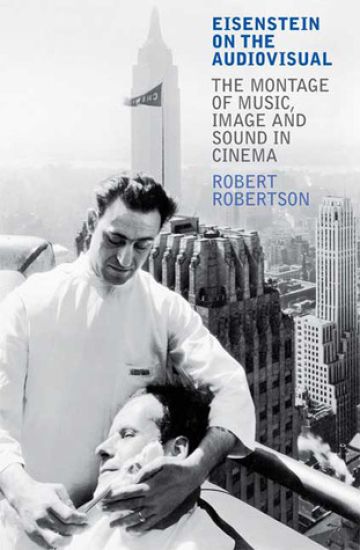
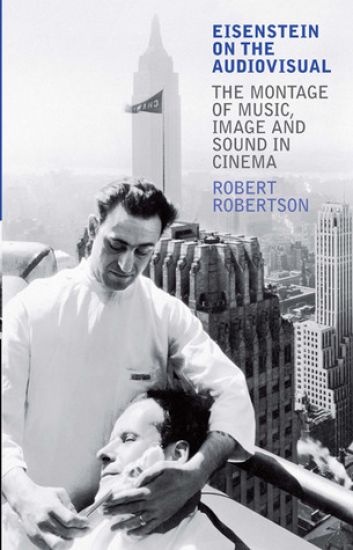
Eisenstein on the Audiovisual

Eisenstein on the Audiovisual

Robert Robertson

I.B. Tauris
2010
sidottu
The pioneering film director and theorist Sergei Eisenstein is known for the unequalled impact his films have had on the development of cinema. Less is known about his remarkable and extensive writings, which present a continent of ideas about film. Robert Robertson presents a lucid and engaging introduction to a key area of Eisenstein's thought: his ideas about the audiovisual in cinema, which are more pertinent today than ever before. With the advent of digital technology, music and sound now act as independent variables combined with the visual medium to produce a truly audiovisual result. Eisenstein explored in his writings this complex, exciting subject with more depth and originality than any other practitioner, and this is an accessible and original exploration of his ideas. Winner of the Kraszna Krausz Foundation's And/Or Award for Best Moving Image Book of 2009, "Eisenstein on the Audiovisual" is essential reading for students and practitioners of the audiovisual in cinema and related audiovisual forms, including theatre, opera, dance and multimedia.
Eisenstein on the Audiovisual

Eisenstein on the Audiovisual

Robert Robertson

I.B. Tauris
2011
nidottu
The pioneering film director and theorist Sergei Eisenstein is known for the unequalled impact his films have had on the development of cinema. Less is known about his remarkable and extensive writings, which present a continent of ideas about film. Robert Robertson presents a lucid and engaging introduction to a key area of Eisenstein's thought: his ideas about the audiovisual in cinema, which are more pertinent today than ever before. With the advent of digital technology, music and sound now act as independent variables combined with the visual medium to produce a truly audiovisual result. Eisenstein explored in his writings this complex, exciting subject with more depth and originality than any other practitioner, and this is an accessible and original exploration of his ideas. Winner of the Kraszna Krausz Foundations' And/Or Award for Best Moving Image Book of 2009, "Eisenstein on the Audiovisual" is essential reading for students and practitioners of the audiovisual in cinema and related audiovisual forms, including theatre, opera, dance and multimedia.
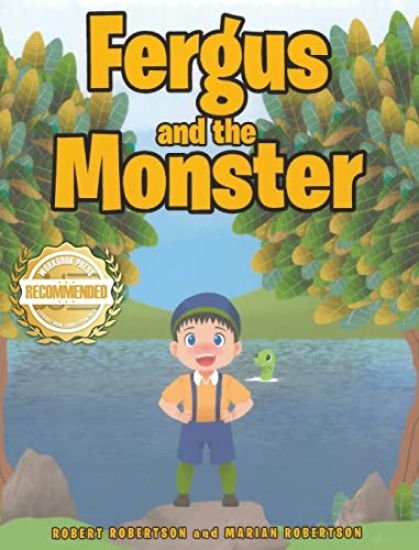
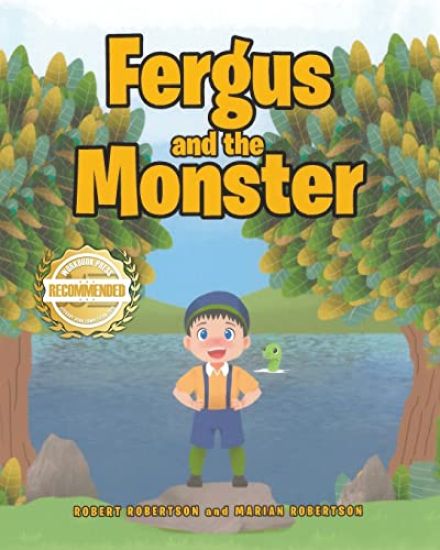
Fergus and the Monster

Fergus and the Monster

Robert Robertson

Workbook Press
2022
sidottu
Fergus is a wee laddie, twelve years of age. Being small, he is picked on by the other boys. He is chased by them at school. Fergus develops a method of running, dodging, and evading that helps him exist in his small world.His favorite hiding place is boulder on Loch Ness. There he meets the famous Loch Ness Monster, who has things in common with Ferus. Fergus and the Loch Ness Monster become friends, and through this interaction, Fergus is accepted by his peers. Through his new friend, he is encouraged to help himself and his football team. Thus, they can play as a team and win games.Being brave, courageous, and using our talents, we can improve our lives and the lives of others.
Sticky Rickie

Sticky Rickie

Robert Robertson

Workbook Press
2022
sidottu
Sticky Rickie finds himself transported from South Florida to Southern Louisiana where he has trouble finding bugs to eat due to men killing bugs. He finally finds refuge in the bayous of Southern Louisiana. Where Sticky and his family find plenty to eat. We have been charged by God, the Creator, with the care of his creation and must be aware of the needs of all his creatures.