Kirjojen hintavertailu. Mukana 11 244 527 kirjaa ja 12 kauppaa.

Kirjahaku

Etsi kirjoja tekijän nimen, kirjan nimen tai ISBN:n perusteella.

37 kirjaa tekijältä Robert Samuels

Teaching Writing, Rhetoric, and Reason at the Globalizing University
This timely intervention into composition studies presents a case for the need to teach all students a shared system of communication and logic based on the modern globalizing ideals of universality, neutrality, and empiricism. Based on a series of close readings of contemporary writing by Stanley Fish, Asao Inoue, Doug Downs and Elizabeth Wardle, Richard Rorty, Slavoj Zizek, and Steven Pinker, this book critiques recent arguments that traditional approaches to teaching writing, grammar, and argumentation foster marginalization, oppression, and the restriction of student agency. Instead, it argues that the best way to educate and empower a diverse global student body is to promote a mode of academic discourse dedicated to the impartial judgment of empirical facts communicated in an open and clear manner. It provides a critical analysis of core topics in composition studies, including the teaching of grammar; notions of objectivity and neutrality; empiricism and pragmatism; identity politics; and postmodernism. Aimed at graduate students and junior instructors in rhetoric and composition, as well as more seasoned scholars and program administrators, this polemical book provides an accessible staging of key debates that all writing instructors must grapple with.
Teaching Writing, Rhetoric, and Reason at the Globalizing University
This timely intervention into composition studies presents a case for the need to teach all students a shared system of communication and logic based on the modern globalizing ideals of universality, neutrality, and empiricism. Based on a series of close readings of contemporary writing by Stanley Fish, Asao Inoue, Doug Downs and Elizabeth Wardle, Richard Rorty, Slavoj Zizek, and Steven Pinker, this book critiques recent arguments that traditional approaches to teaching writing, grammar, and argumentation foster marginalization, oppression, and the restriction of student agency. Instead, it argues that the best way to educate and empower a diverse global student body is to promote a mode of academic discourse dedicated to the impartial judgment of empirical facts communicated in an open and clear manner. It provides a critical analysis of core topics in composition studies, including the teaching of grammar; notions of objectivity and neutrality; empiricism and pragmatism; identity politics; and postmodernism. Aimed at graduate students and junior instructors in rhetoric and composition, as well as more seasoned scholars and program administrators, this polemical book provides an accessible staging of key debates that all writing instructors must grapple with.
Mahler's Sixth Symphony: A Study in Musical Semiotics

Mahler's Sixth Symphony: A Study in Musical Semiotics

Robert Samuels

Cambridge University Press
1995
sidottu
The terms of structuralist and post-structuralist theory have been widely debated within the field of music analysis in recent years. However, very few analyses have attempted to address the repertoire of large orchestral works of the turn of the century - works which seem most obviously to escape the categories of conventional analysis. This study uses a semiotic theory of signification in order to investigate different types of musical communication. Musical meaning is defined on several levels from structures immanent to the work, through questions of tradition and genre, to consideration of the symphony as a narrative alongside other contemporary non-musical texts. Ideas from Eco, Barthes, and Derrida are deployed within the context of close analysis of the score in order to unite specifically analytical insights with cultural hermeneutics.
Mahler's Sixth Symphony

Mahler's Sixth Symphony

Robert Samuels

Cambridge University Press
2004
pokkari
The terms of structuralist and post-structuralist theory have been widely debated within the field of music analysis in recent years. However, very few analyses have attempted to address the repertoire of large orchestral works of the turn of the century - works which seem most obviously to escape the categories of conventional analysis. This study uses a semiotic theory of signification in order to investigate different types of musical communication. Musical meaning is defined on several levels from structures immanent to the work, through questions of tradition and genre, to consideration of the symphony as a narrative alongside other contemporary non-musical texts. Ideas from Eco, Barthes, and Derrida are deployed within the context of close analysis of the score in order to unite specifically analytical insights with cultural hermeneutics.
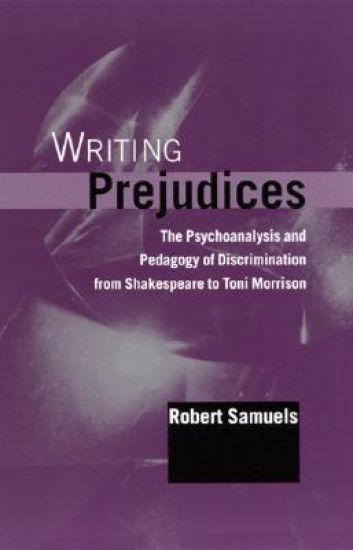
Writing Prejudices

Writing Prejudices

Robert Samuels

State University of New York Press
2001
pokkari
Examines the manifestations of racism, sexism, and homophobia in the literary works of Shakespeare, Mary Shelley, Joseph Conrad, and Toni Morrison.Writing Prejudices addresses critical attempts to undermine prejudice through education in general, and literary studies in particular. Robert Samuels argues that these attempts often fail because they do not take into account the different forms of prejudice, the role played by homophobia in racism and sexism, the structure of what Lacan calls symbolic castration, and the unconscious foundations of cultural formations. Addressing these deficiencies, Samuels uses psychoanalytic theory to examine the manifestations of racism, sexism, ethnocentrism, and homophobia in the works of Shakespeare, Mary Shelley, Joseph Conrad, and Toni Morrison, showing how these distinct modes of oppression feed off of each other and the diverse ways that cultural critics can work to undermine them.
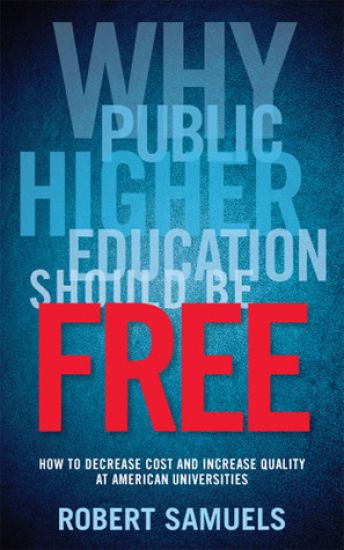
Why Public Higher Education Should Be Free

Why Public Higher Education Should Be Free

Robert Samuels

Rutgers University Press
2013
nidottu
Universities tend to be judged by the test scores of their incoming students and not on what students actually learn once they attend these institutions. While shared tests and surveys have been developed, most schools refuse to publish the results. Instead, they allow such publications as U.S. News & World Report to define educational quality. In order to raise their status in these rankings, institutions pour money into new facilities and extracurricular activities while underfunding their educational programs.In Why Public Higher Education Should Be Free, Robert Samuels argues that many institutions of higher education squander funds and mislead the public about such things as average class size, faculty-to-student ratios, number of faculty with PhDs, and other indicators of educational quality. Parents and students seem to have little knowledge of how colleges and universities have been restructured over the past thirty years.Samuels shows how research universities have begun to function as giant investment banks or hedge funds that spend money on athletics and administration while increasing tuition costs and actually lowering the quality of undergraduate education. In order to fight higher costs and lower quality, Samuels suggests, universities must reallocate these misused funds and concentrate on their core mission of instruction and related research. Throughout the book, Samuels argues that the future of our economy and democracy rests on our ability to train students to be thoughtful participants in the production and analysis of knowledge. If leading universities serve only to grant credentials and prestige, our society will suffer irrevocable harm. Presenting the problem of how universities make and spend money, Samuels provides solutions to make these important institutions less expensive and more vital. By using current resources in a more effective manner, we could even, he contends, make all public higher education free.
The Psychopathology of Political Ideologies

The Psychopathology of Political Ideologies

Robert Samuels

TAYLOR FRANCIS LTD
2023
nidottu
Inspired by Freud’s The Psychopathology of Everyday Life, this book examines the unconscious processes shaping contemporary political ideologies.Addressing ten fundamental questions, Robert Samuels identifies four basic political ideologies: liberal, conservative, Left, and Right, which are often placed in the structure of a logical square, determined by two binary oppositions, with a fifth structure of centrism complicating the square. He turns to psychoanalysis to explain the unconscious defense mechanisms that structure these political ideologies. Each chapter uses a recent, influential title as a gateway to the analysis of the ideologies and structures identified. Through this analysis, Samuels argues that belief in ideological structures is tied to triumvirates of institutions and ideals; conservatives being tied to premodern institutions of religion, feudalism, and monarchy, while modern liberals are tied to ideals of universality, objectivity, and empiricism. He concludes that this investment in universality shapes the ethics of modern globalization and democratic liberalism. Unlike other books, conclusions are reinforced through examples drawn from current events with an integrated model of different psychopathologies.The Psychopathology of Political Ideologies moves beyond providing an understanding of what drives different political investments, to offer a more rational and conscious comprehension of subjectivity and social organization. This book will be a great resource for those interested in politics, political science psychology, social psychology, globalization, and ideology.
The Psychopathology of Political Ideologies

The Psychopathology of Political Ideologies

Robert Samuels

Taylor Francis Ltd
2021
sidottu
Inspired by Freud’s The Psychopathology of Everyday Life, this book examines the unconscious processes shaping contemporary political ideologies.Addressing ten fundamental questions, Robert Samuels identifies four basic political ideologies: liberal, conservative, Left, and Right, which are often placed in the structure of a logical square, determined by two binary oppositions, with a fifth structure of centrism complicating the square. He turns to psychoanalysis to explain the unconscious defense mechanisms that structure these political ideologies. Each chapter uses a recent, influential title as a gateway to the analysis of the ideologies and structures identified. Through this analysis, Samuels argues that belief in ideological structures is tied to triumvirates of institutions and ideals; conservatives being tied to premodern institutions of religion, feudalism, and monarchy, while modern liberals are tied to ideals of universality, objectivity, and empiricism. He concludes that this investment in universality shapes the ethics of modern globalization and democratic liberalism. Unlike other books, conclusions are reinforced through examples drawn from current events with an integrated model of different psychopathologies.The Psychopathology of Political Ideologies moves beyond providing an understanding of what drives different political investments, to offer a more rational and conscious comprehension of subjectivity and social organization. This book will be a great resource for those interested in politics, political science psychology, social psychology, globalization, and ideology.
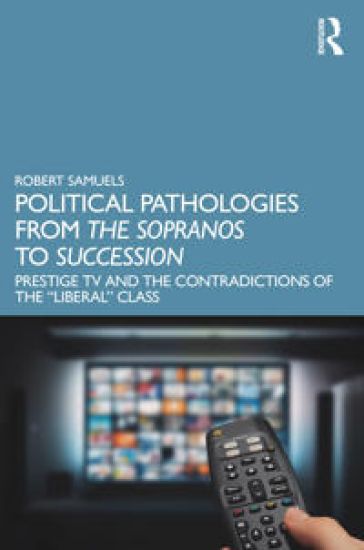
Political Pathologies from The Sopranos to Succession
Political Pathologies from The Sopranos to Succession argues that highly praised prestige TV shows reveal the underlying fantasies and contradictions of uppermiddle-class political centrists.Through a psychoanalytic interpretation of The Sopranos, Breaking Bad, The Wire, House of Cards, Dexter, Game of Thrones, and Succession, Robert Samuels uncovers how moderate “liberals” have helped to produce and maintain the libertarian Right. Samuels’ analysis explores the difference between contemporary centrists and the foundations of liberal democracy, exposing the myth of the “liberal media” and considers the consequences of these celebrated series, including the undermining of trust in modern liberal democratic institutions. Political Pathologies from The Sopranos to Succession contributes to a greater understanding of the ways media and political ideology can circulate on a global level through the psychopathology of class consciousness.This book will be of great interest to academics and scholars considering intersections of psychoanalytic studies, television studies, and politics.
Political Pathologies from The Sopranos to Succession
Political Pathologies from The Sopranos to Succession argues that highly praised prestige TV shows reveal the underlying fantasies and contradictions of uppermiddle-class political centrists.Through a psychoanalytic interpretation of The Sopranos, Breaking Bad, The Wire, House of Cards, Dexter, Game of Thrones, and Succession, Robert Samuels uncovers how moderate “liberals” have helped to produce and maintain the libertarian Right. Samuels’ analysis explores the difference between contemporary centrists and the foundations of liberal democracy, exposing the myth of the “liberal media” and considers the consequences of these celebrated series, including the undermining of trust in modern liberal democratic institutions. Political Pathologies from The Sopranos to Succession contributes to a greater understanding of the ways media and political ideology can circulate on a global level through the psychopathology of class consciousness.This book will be of great interest to academics and scholars considering intersections of psychoanalytic studies, television studies, and politics.
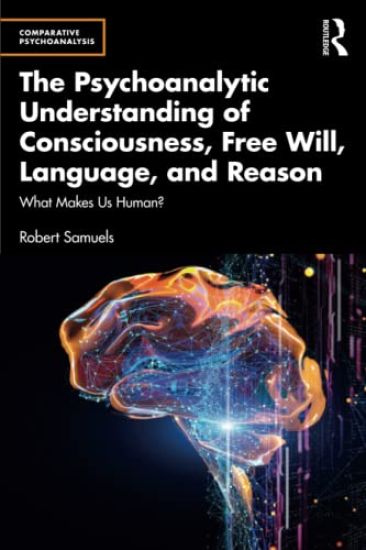
The Psychoanalytic Understanding of Consciousness, Free Will, Language, and Reason
The Psychoanalytic Understanding of Consciousness, Free Will, Language, and Reason examines the ways in which we can use psychoanalysis in order to better understand humanity and explores the question of what makes us human. For thousands of years, thinkers have been trying to define what makes us human. Some of the main questions they have asked is: What is consciousness? Do we have free will? Do animals use language? And what does reason mean? Samuels argues that we need to better understand the psychoanalytic approach to human nature in order to answer these questions, as well as using it to provide a new way of understanding issues such as addiction, political conflict, ideology, and destructive personal relationship. This book will be of vital interest to psychotherapists, as well as students and researchers across the fields of psychoanalysis, philosophy, and psychology.
The Psychoanalytic Understanding of Consciousness, Free Will, Language, and Reason
The Psychoanalytic Understanding of Consciousness, Free Will, Language, and Reason examines the ways in which we can use psychoanalysis in order to better understand humanity and explores the question of what makes us human. For thousands of years, thinkers have been trying to define what makes us human. Some of the main questions they have asked is: What is consciousness? Do we have free will? Do animals use language? And what does reason mean? Samuels argues that we need to better understand the psychoanalytic approach to human nature in order to answer these questions, as well as using it to provide a new way of understanding issues such as addiction, political conflict, ideology, and destructive personal relationship. This book will be of vital interest to psychotherapists, as well as students and researchers across the fields of psychoanalysis, philosophy, and psychology.
Trauma, Pedagogy, and the College Mental Health Crisis
Trauma, Pedagogy, and the College Mental Health Crisis argues that psychoanalytic theory and practice offers a solution to the large increase in students seeking mental health services.Robert Samuels returns to the roots of psychoanalysis, drawing from Freud’s and Lacan’s conceptions of hysteria and narcissism. This book examines the idea that the repression of psychoanalysis has resulted in a situation where students are being misdiagnosed and mistreated as the underlying structures shaping narcissism and hysteria are misrecognized. Samuels suggests that the more people are trained to focus on their own thoughts and feelings, the more they take on self-destructive thoughts and behaviors in a neurotic way and that psychoanalysis offers a solution.Trauma, Pedagogy, and the College Mental Health Crisis will be of interest to psychoanalysts in practice and in training, as well as mental health professionals working with adolescents and professionals working in higher education. It will also be relevant to readers interested in adolescent mental health, higher education, parenting, and politics.
Trauma, Pedagogy, and the College Mental Health Crisis
Trauma, Pedagogy, and the College Mental Health Crisis argues that psychoanalytic theory and practice offers a solution to the large increase in students seeking mental health services.Robert Samuels returns to the roots of psychoanalysis, drawing from Freud’s and Lacan’s conceptions of hysteria and narcissism. This book examines the idea that the repression of psychoanalysis has resulted in a situation where students are being misdiagnosed and mistreated as the underlying structures shaping narcissism and hysteria are misrecognized. Samuels suggests that the more people are trained to focus on their own thoughts and feelings, the more they take on self-destructive thoughts and behaviors in a neurotic way and that psychoanalysis offers a solution.Trauma, Pedagogy, and the College Mental Health Crisis will be of interest to psychoanalysts in practice and in training, as well as mental health professionals working with adolescents and professionals working in higher education. It will also be relevant to readers interested in adolescent mental health, higher education, parenting, and politics.
Educating Inequality

Educating Inequality

Robert Samuels

Routledge
2017
sidottu
Politicians and school officials often argue that higher education is the solution to many of our social, and economic problems. Educating Inequality argues that in order to reduce inequality and enhance social mobility, public policies are needed to revamp the financial aid system and increase the number of good jobs. Exploring topics such as the fairness of the current social system, the focus on individual competition in an unequal society, and democracy and capitalism in higher education, this important book seeks to uncover the major myths that shape how people view higher education and its relation to the economy. Looking to models that generate economic mobility and social equality, this book advocates a broader vision for public higher education to promote universal equality and global awareness.
Educating Inequality

Educating Inequality

Robert Samuels

Routledge
2017
nidottu
Politicians and school officials often argue that higher education is the solution to many of our social, and economic problems. Educating Inequality argues that in order to reduce inequality and enhance social mobility, public policies are needed to revamp the financial aid system and increase the number of good jobs. Exploring topics such as the fairness of the current social system, the focus on individual competition in an unequal society, and democracy and capitalism in higher education, this important book seeks to uncover the major myths that shape how people view higher education and its relation to the economy. Looking to models that generate economic mobility and social equality, this book advocates a broader vision for public higher education to promote universal equality and global awareness.
The Politics of Writing Studies

The Politics of Writing Studies

Robert Samuels

Utah State University Press
2017
nidottu
A friendly critique of the field, The Politics of Writing Studies examines a set of recent pivotal texts in composition to show how writing scholarship, in an effort to improve disciplinary prestige and garner institutional resources, inadvertently reproduces structures of inequality within American higher education. Not only does this enable the exploitation of contingent faculty, but it also puts writing studies--a field that inherently challenges many institutional hierarchies--in a debased institutional position and at odds with itself.Instead of aligning with the dominant paradigm of research universities, where research is privileged over teaching, theory over practice, the sciences over the humanities, and graduate education over undergraduate, writing studies should conceive itself in terms more often associated with labor. By identifying more profoundly as workers, as a collective in solidarity with contingent faculty, writing professionals can achieve solutions to the material problems that the field, in its best moments, wants to address. Ultimately, the change compositionists want to see in the university will not come from high theory or the social science research agenda; it must come from below.Offering new insight into a complex issue, The Politics of Writing Studies will be of great interest to writing studies professionals, university administrators, and anyone interested in the political economy of education and the reform of institutions of higher education in America.