Kirjojen hintavertailu. Mukana 12 390 323 kirjaa ja 12 kauppaa.

Kirjahaku

Etsi kirjoja tekijän nimen, kirjan nimen tai ISBN:n perusteella.

12 kirjaa tekijältä Robert Sharpe

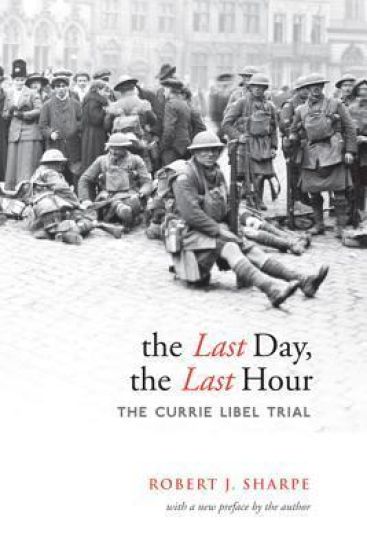
The Last Day, the Last Hour

The Last Day, the Last Hour

Robert Sharpe

University of Toronto Press
2009
pokkari
On 11 November 1918, the last day of the Great War, the Canadian Corps, led by Sir Arthur Currie, liberated Mons after four years of German occupation. The push to Mons in the last days and weeks of the war had cost many lives. Long after the war, Currie was blamed by many for needlessly wasting those lives. When the Port Hope Evening Guide published an editorial in 1927 repeating this charge, Currie was incensed. Against the advice of his friends, he decided to sue for libel and retained W.N. Tilley, Q.C., the leading lawyer of the day, to plead his case. First published in 1988, The Last Day, the Last Hour reconstructs the events - military and legal - that led to the trial and the trial itself, one of the most sensational courtroom battles in Canadian history, involving many prominent legal, military and political figures of the 1920s. Now back in print with a new preface by the author, judge and legal scholar Robert J. Sharpe, The Last Day, the Last Hour remains the definitive account of a landmark legal case.

The Heart & Soul of Caring

The Heart & Soul of Caring

Robert Sharpe

Lulu.com
2018
pokkari
The Heart and Soul of Caring highlights 11 unique true stories of the challenges and joys of being a caregiver for a loved one. Each story gives tribute and honor to the care receiver - to the essence of their spirit. Within the stories, you find one person s answers to some difficult questions such as: Can you help your mother find peace near end-of-life? What would you do if in an instant the life with your husband changed forever? How would you juggle having to provide care for your elder brother and sister at the same time? How would you cope if someone in your care could not communicate? What you ll discover are the gifts and blessings that the caregivers receive: a strength of spirit, sense of purpose, giving back to one who was a great provider, and a deep love and connection that transcends time and space.
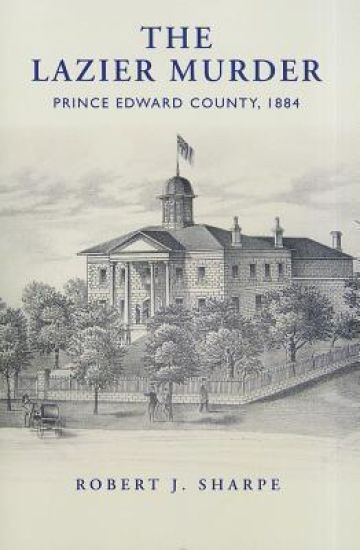
The Lazier Murder

The Lazier Murder

Robert Sharpe

University of Toronto Press
2012
pokkari
In December 1883, Peter Lazier was shot in the heart during a bungled robbery at a Prince Edward County farmhouse. Three local men, pleading innocence from start to finish, were arrested and charged with his murder. Two of them — Joseph Thomset and David Lowder — were sentenced to death by a jury of local citizens the following May. Nevertheless, appalled community members believed at least one of them to be innocent — even pleading with prime minister John A. Macdonald to spare them from the gallows. The Lazier Murder explores a community's response to a crime, as well as the realization that it may have contributed to a miscarriage of justice. Robert J. Sharpe reconstructs and contextualizes the case using archival and contemporary newspaper accounts. The Lazier Murder provides an insightful look at the changing pattern of criminal justice in nineteenth-century Canada, and the enduring problem of wrongful convictions.
The Lazier Murder

The Lazier Murder

Robert Sharpe

University of Toronto Press
2011
sidottu
In December 1883, Peter Lazier was shot in the heart during a bungled robbery at a Prince Edward County farmhouse. Three local men, pleading innocence from start to finish, were arrested and charged with his murder. Two of them — Joseph Thomset and David Lowder — were sentenced to death by a jury of local citizens the following May. Nevertheless, appalled community members believed at least one of them to be innocent — even pleading with prime minister John A. Macdonald to spare them from the gallows. The Lazier Murder explores a community's response to a crime, as well as the realization that it may have contributed to a miscarriage of justice. Robert J. Sharpe reconstructs and contextualizes the case using archival and contemporary newspaper accounts. The Lazier Murder provides an insightful look at the changing pattern of criminal justice in nineteenth-century Canada, and the enduring problem of wrongful convictions.
Good Judgment

Good Judgment

Robert Sharpe

University of Toronto Press
2018
pokkari
Good Judgment, based upon the author's experience as a lawyer, law professor, and judge, explores the role of the judge and the art of judging. Engaging with the American, English, and Commonwealth literature on the role of the judge in the common law tradition, Good Judgment addresses the following questions: What exactly do judges do? What is properly within their role and what falls outside? How do judges approach their decision-making task? In an attempt to explain and reconcile two fundamental features of judging, namely judicial choice and judicial discipline, this book explores the nature and extent of judicial choice in the common law legal tradition and the structural features of that tradition that control and constrain that element of choice. As Sharpe explains, the law does not always provide clear answers, and judges are often left with difficult choices to make, but the power of judicial choice is disciplined and constrained and judges are not free to decide cases according to their own personal sense of justice. Although Good Judgment is accessibly written to appeal to the non-specialist reader with an interest in the judicial process, it also tackles fundamental issues about the nature of law and the role of the judge and will be of particular interest to lawyers, judges, law students, and legal academics.
My Life in the Law

My Life in the Law

Robert Sharpe

UNIVERSITY OF TORONTO PRESS
2025
sidottu
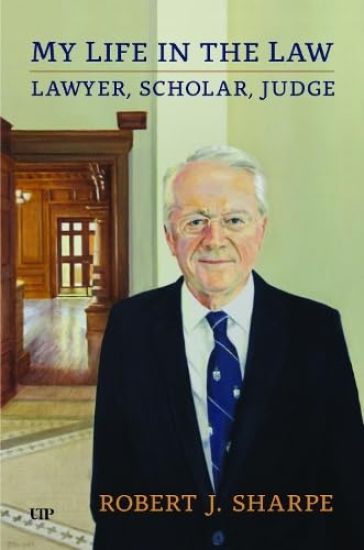
My Life in the Law is a rich, personal reflection on Robert J. Sharpe’s long, varied, and influential career as a lawyer, scholar, and judge. After giving an account of his early life and education, Sharpe examines his time as a law student in the late 1960s, an era when great emphasis was put upon formalistic legal doctrine, heavily influenced by English law. As a legal academic in the 1970s up until the 1990s, Sharpe participated in Canadian law’s emergence from the shadow of its narrow past. He then dealt with that evolution from the very different perspective of a judge and a legal history scholar during his twenty-five years on the bench. Throughout the book, Sharpe writes about the people who influenced his trajectory: the exceptional lawyers with whom he practiced, his Oxford University professors, and his University or Toronto colleagues. He describes how these people and his three-year experience working as executive legal officer to Justice Brian Dickson at the Supreme Court of Canada prepared him for his twenty-five-year career as a judge.Written in an engaging and accessible style, this memoir tells the story of a man whose fascination with the law has led to an illustrious, decades-long career of great significance.
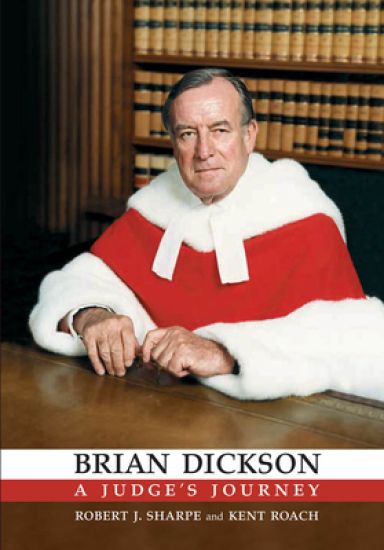
Brian Dickson

Brian Dickson

Robert Sharpe; Kent Roach

University of Toronto Press
2003
sidottu
When Brian Dickson was appointed in 1973, the Supreme Court of Canada was preoccupied with run-of-the-mill disputes. By the time he retired as Chief Justice of Canada in 1990, the Court had become a major national institution, very much in the public eye. The Court's decisions, reforming large areas of private and public law under the Charter of Rights, were the subject of intense public interest and concern. Brian Dickson played a leading role in this transformation. Engaging and incisive, Brian Dickson: A Judge's Journey traces Dickson's life from a Depression-era boyhood in Saskatchewan, to the battlefields of Normandy, the boardrooms of corporate Canada and high judicial office, and provides an inside look at the work of the Supreme Court during its most crucial period. Dickson's journey was an important part of the evolution of the Canadian judiciary and of Canada itself. Sharpe and Roach have written an accessible biography of one of Canada's greatest legal figures that provides new insights into the work of Canada's highest court.
The Persons Case

The Persons Case

Robert Sharpe; Patricia I. McMahon

University of Toronto Press
2008
pokkari
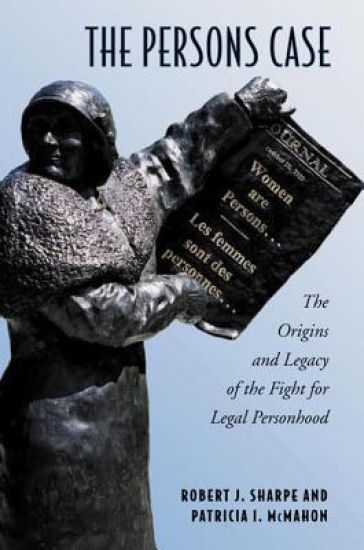
On 18 October 1929, John Sankey, England's reform-minded Lord Chancellor, ruled in the Persons case that women were eligible for appointment to Canada's Senate. Initiated by Edmonton judge Emily Murphy and four other activist women, the Persons case challenged the exclusion of women from Canada's upper house and the idea that the meaning of the constitution could not change with time. The Persons Case considers the case in its political and social context and examines the lives of the key players: Emily Murphy, Nellie McClung, and the other members of the "famous five," the politicians who opposed the appointment of women, the lawyers who argued the case, and the judges who decided it. Robert J. Sharpe and Patricia I. McMahon examine the Persons case as a pivotal moment in the struggle for women's rights and as one of the most important constitutional decisions in Canadian history. Lord Sankey's decision overruled the Supreme Court of Canada's judgment that the courts could not depart from the original intent of the framers of Canada's constitution in 1867. Describing the constitution as a "living tree," the decision led to a reassessment of the nature of the constitution itself. After the Persons case, it could no longer be viewed as fixed and unalterable, but had to be treated as a document that, in the words of Sankey, was in "a continuous process of evolution." The Persons Case is a comprehensive study of this important event, examining the case itself, the ruling of the Privy Council, and the profound affect that it had on women's rights and the constitutional history of Canada.
Brian Dickson

Brian Dickson

Robert Sharpe; Kent Roach

University of Toronto Press
2003
pokkari
When Brian Dickson was appointed in 1973, the Supreme Court of Canada was preoccupied with run-of-the-mill disputes. By the time he retired as Chief Justice of Canada in 1990, the Court had become a major national institution, very much in the public eye. The Court's decisions, reforming large areas of private and public law under the Charter of Rights, were the subject of intense public interest and concern. Brian Dickson played a leading role in this transformation. Engaging and incisive, Brian Dickson: A Judge's Journey traces Dickson's life from a Depression-era boyhood in Saskatchewan, to the battlefields of Normandy, the boardrooms of corporate Canada and high judicial office, and provides an inside look at the work of the Supreme Court during its most crucial period. Dickson's journey was an important part of the evolution of the Canadian judiciary and of Canada itself. Sharpe and Roach have written an accessible biography of one of Canada's greatest legal figures that provides new insights into the work of Canada's highest court.
The Persons Case

The Persons Case

Robert Sharpe; Patricia I. McMahon

University of Toronto Press
2017
pokkari
On 18 October 1929, John Sankey, England's reform-minded Lord Chancellor, ruled in the Persons case that women were eligible for appointment to Canada's Senate. Initiated by Edmonton judge Emily Murphy and four other activist women, the Persons case challenged the exclusion of women from Canada's upper house and the idea that the meaning of the constitution could not change with time. The Persons Case considers the case in its political and social context and examines the lives of the key players: Emily Murphy, Nellie McClung, and the other members of the "famous five," the politicians who opposed the appointment of women, the lawyers who argued the case, and the judges who decided it. Robert J. Sharpe and Patricia I. McMahon examine the Persons case as a pivotal moment in the struggle for women's rights and as one of the most important constitutional decisions in Canadian history. Lord Sankey's decision overruled the Supreme Court of Canada's judgment that the courts could not depart from the original intent of the framers of Canada's constitution in 1867. Describing the constitution as a "living tree," the decision led to a reassessment of the nature of the constitution itself. After the Persons case, it could no longer be viewed as fixed and unalterable, but had to be treated as a document that, in the words of Sankey, was in "a continuous process of evolution." The Persons Case is a comprehensive study of this important event, examining the case itself, the ruling of the Privy Council, and the profound affect that it had on women's rights and the constitutional history of Canada.