Kirjojen hintavertailu. Mukana 11 342 296 kirjaa ja 12 kauppaa.

Kirjahaku

Etsi kirjoja tekijän nimen, kirjan nimen tai ISBN:n perusteella.

7 kirjaa tekijältä Robert Snell

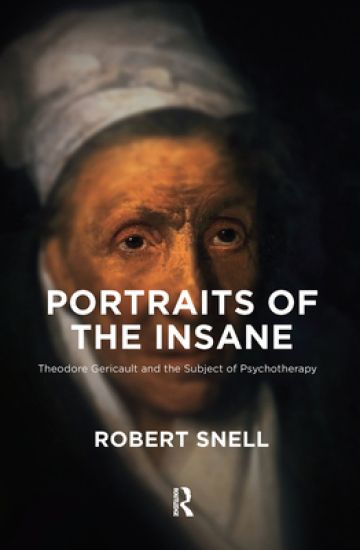
Portraits of the Insane

Portraits of the Insane

Robert Snell

Routledge
2019
sidottu
In the early 1820s, in the gloomy aftermath of the 1789 Revolution and the Napoleonic wars, the French Romantic painter Theodore Gericault (1791-1824) made five portraits of patients in an asylum or clinic. No depictions of madness before or since can compare with them for humanity, straightforwardness and immediacy. Why were they painted? For whom? Art-historical ways of accounting for them open up questions about the nature of psychoanalytic interpretation. The portraits challenge us to find responses in ourselves to the face and the embodied mysteries of the other person, and to our own internal (unsconscious, disavowed) otherness: in this sense, Gericault was a "painter-analyst". The challenge could not be more urgent, in our world of suspicion of the stranger, and of the medicalisation of madness. The book sketches the history of this last process, from the Enlightenment through to the Revolution and its public health policies, to the birth of the asylum in its interface with the penal system.
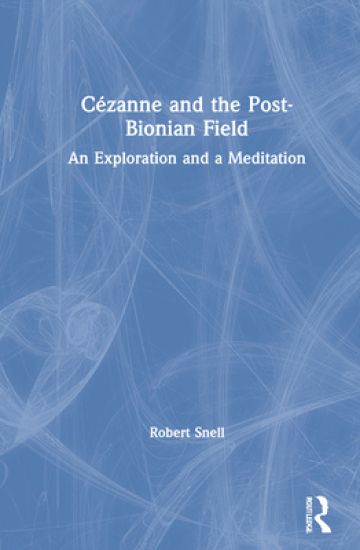
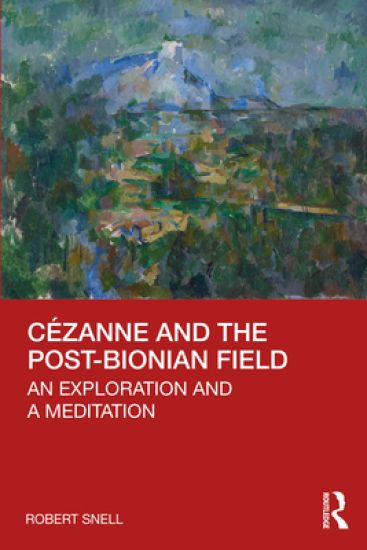
Cézanne and the Post-Bionian Field
By inviting a ‘conversation’ between them, this book offers a nuanced introduction both to Cézanne—the ‘father of modern art’—and perhaps the most vital body of theory in contemporary psychoanalysis, ‘post-Bionian field theory’, as it has been evolving in Italy in the hands of Antonino Ferro, Giuseppe Civitarese, and others. Cézanne and Bion, each insisting on his own truths, spearheaded quite new directions in painting and in psychoanalysis. Both point us towards a crucial insight: far from being isolated, self-contained ‘subjects’, we fundamentally exist only within a larger interpersonal ‘field’. Cézanne’s painting can give us a direct experience of this. For the Italian field analysts, building on Bion’s work, the field is accessed through reverie, metaphor, and dream, which now come to occupy the heart of psychoanalysis. Here primitive ‘proto-emotions’ that link us all might be transformed—as Cézanne transformed his ‘sensations’—into aesthetic form, into feelings-linked-to-thoughts that in turn enrich and expand the field. The book draws on the words of artists (Cézanne himself, Mann), philosophers (Merleau-Ponty, Bergson), art historians and theorists (Clark, Smith, Shaw), as well as psychoanalysts (Bion, Ferro, Civitarese, and others), and it is the first to focus on one particular—and seminal—painter as a way of exploring this aesthetic and ‘field’ dimension in depth and detail. Aimed at psychoanalysts, psychotherapists, artists, art historians, and the general reader, it suggests how far art and contemporary psychoanalysis are mutually generative.
Cézanne and the Post-Bionian Field
By inviting a ‘conversation’ between them, this book offers a nuanced introduction both to Cézanne—the ‘father of modern art’—and perhaps the most vital body of theory in contemporary psychoanalysis, ‘post-Bionian field theory’, as it has been evolving in Italy in the hands of Antonino Ferro, Giuseppe Civitarese, and others. Cézanne and Bion, each insisting on his own truths, spearheaded quite new directions in painting and in psychoanalysis. Both point us towards a crucial insight: far from being isolated, self-contained ‘subjects’, we fundamentally exist only within a larger interpersonal ‘field’. Cézanne’s painting can give us a direct experience of this. For the Italian field analysts, building on Bion’s work, the field is accessed through reverie, metaphor, and dream, which now come to occupy the heart of psychoanalysis. Here primitive ‘proto-emotions’ that link us all might be transformed—as Cézanne transformed his ‘sensations’—into aesthetic form, into feelings-linked-to-thoughts that in turn enrich and expand the field. The book draws on the words of artists (Cézanne himself, Mann), philosophers (Merleau-Ponty, Bergson), art historians and theorists (Clark, Smith, Shaw), as well as psychoanalysts (Bion, Ferro, Civitarese, and others), and it is the first to focus on one particular—and seminal—painter as a way of exploring this aesthetic and ‘field’ dimension in depth and detail. Aimed at psychoanalysts, psychotherapists, artists, art historians, and the general reader, it suggests how far art and contemporary psychoanalysis are mutually generative.
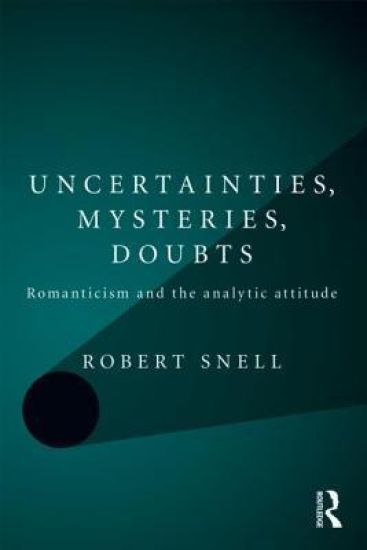
Uncertainties, Mysteries, Doubts

Uncertainties, Mysteries, Doubts

Robert Snell

Routledge
2012
sidottu
What is it to listen? How do we hear? How do we allow meanings to emerge between each other?'This book is about what Freud called "freely" or "evenly suspended attention", a form of listening, a kind of receptive incomprehension, which is fundamental and mandatory for the practice of psychoanalysis and psychotherapy. The author steps outside the usual parameters of psychoanalytic writing and explores how works of art and literature which elicit and require such listening began to appear in Europe, in abundance, from the late eighteenth-century onwards. Uncertainties, Mysteries, Doubts is a timely reminder, in the present era of audit and manualisation, of some of psychoanalysis's deep and living cultural roots. It hopes- by immersing the reader in the emotional, critical and contextual worlds of some artists and poets of Romanticism- to help psychotherapists, psychoanalysts, and counsellors in the endless challenge of staying open to their clients and patients, faced as we all are, therapists and clients alike, by multiple pressures to knowledgeable closure.
Uncertainties, Mysteries, Doubts

Uncertainties, Mysteries, Doubts

Robert Snell

Routledge
2012
nidottu
What is it to listen? How do we hear? How do we allow meanings to emerge between each other?'This book is about what Freud called "freely" or "evenly suspended attention", a form of listening, a kind of receptive incomprehension, which is fundamental and mandatory for the practice of psychoanalysis and psychotherapy. The author steps outside the usual parameters of psychoanalytic writing and explores how works of art and literature which elicit and require such listening began to appear in Europe, in abundance, from the late eighteenth-century onwards. Uncertainties, Mysteries, Doubts is a timely reminder, in the present era of audit and manualisation, of some of psychoanalysis's deep and living cultural roots. It hopes- by immersing the reader in the emotional, critical and contextual worlds of some artists and poets of Romanticism- to help psychotherapists, psychoanalysts, and counsellors in the endless challenge of staying open to their clients and patients, faced as we all are, therapists and clients alike, by multiple pressures to knowledgeable closure.
Antonino Ferro

Antonino Ferro

Robert Snell

TAYLOR FRANCIS LTD
2024
nidottu
This book provides a clear, thorough, and accessible introduction to the work of Antonino Ferro and draws on the clinical vignettes that punctuate his writings to show how Ferro has built on Bion’s revolutionary achievements to develop a distinctive, game-changing version of field theory in psychoanalysis.The book clarifies the phenomenological insight that the analyst and the patient together generate an ever-evolving, intersubjective field. Rather than the supposed psychology of the individual, it is this populous and multidimensional field, a co-created ‘in-between’ rich in characters and stories, that is to be explored and elaborated. The primary points of access to this new ‘multiverse’ are dream, reverie, metaphor, and imagination. A radical Negative Capability is called for, not least to help dissolve co-constructed ‘bastions’ obstructing the field’s expansion. The book sketches out the Italian and international context in which Ferro developed his thinking and addresses some key critical questions. It concludes that Ferro’s life’s work, which marries theoretical rigour with a revitalising increase in playfulness and freedom of response, is a transformational force within psychoanalysis and a major catalyst in its evolution.This important volume is rewarding reading for beginning and seasoned analysts alike, as well as for psychotherapists, counsellors, humanities scholars, and anyone interested in psychoanalysis.
Antonino Ferro

Antonino Ferro

Robert Snell

TAYLOR FRANCIS LTD
2024
sidottu
This book provides a clear, thorough, and accessible introduction to the work of Antonino Ferro and draws on the clinical vignettes that punctuate his writings to show how Ferro has built on Bion’s revolutionary achievements to develop a distinctive, game-changing version of field theory in psychoanalysis.The book clarifies the phenomenological insight that the analyst and the patient together generate an ever-evolving, intersubjective field. Rather than the supposed psychology of the individual, it is this populous and multidimensional field, a co-created ‘in-between’ rich in characters and stories, that is to be explored and elaborated. The primary points of access to this new ‘multiverse’ are dream, reverie, metaphor, and imagination. A radical Negative Capability is called for, not least to help dissolve co-constructed ‘bastions’ obstructing the field’s expansion. The book sketches out the Italian and international context in which Ferro developed his thinking and addresses some key critical questions. It concludes that Ferro’s life’s work, which marries theoretical rigour with a revitalising increase in playfulness and freedom of response, is a transformational force within psychoanalysis and a major catalyst in its evolution.This important volume is rewarding reading for beginning and seasoned analysts alike, as well as for psychotherapists, counsellors, humanities scholars, and anyone interested in psychoanalysis.