Kirjojen hintavertailu. Mukana 11 717 486 kirjaa ja 12 kauppaa.

Kirjahaku

Etsi kirjoja tekijän nimen, kirjan nimen tai ISBN:n perusteella.

5 kirjaa tekijältä Robert Spoo

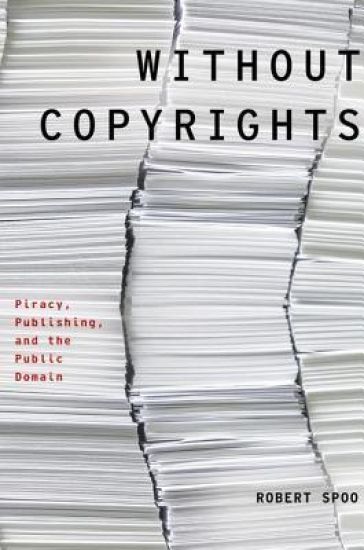
Without Copyrights

Without Copyrights

Robert Spoo

Oxford University Press Inc
2016
nidottu
The names of James Joyce and Ezra Pound ring out in the annals of literary modernism, but few recognize the name of Samuel Roth. A brash, business-savvy entrepreneur, Roth made a name--and a profit--for himself as the founding editor and owner of magazines that published selections from foreign writings--especially the risqué parts--without permission. When he reprinted segments of James Joyce's epochal novel Ulysses, the author took him to court. Without Copyrights tells the story of how the clashes between authors, publishers, and literary "pirates" influenced both American copyright law and literature itself. From its inception in 1790, American copyright law offered no or less-than-perfect protection for works published abroad--to the fury of Charles Dickens, among others, who sometimes received no money from vast sales in the United States. American publishers avoided ruinous competition with each other through "courtesy of the trade," a code of etiquette that gave informal, exclusive rights to the first house to announce plans to issue an uncopyrighted foreign work. The climate of trade courtesy, lawful piracy, and the burdensome rules of American copyright law profoundly affected transatlantic writers in the twentieth century. Drawing on previously unknown legal archives, Robert Spoo recounts efforts by James Joyce, Ezra Pound, Bennett Cerf--the founder of Random House--and others to crush piracy, reform U.S. copyright law, and define the public domain. Featuring a colorful cast of characters made up of frustrated authors, anxious publishers, and willful pirates, Spoo provides an engaging history of the American public domain, a commons shaped by custom as much as by law, and of piracy's complex role in the culture of creativity.
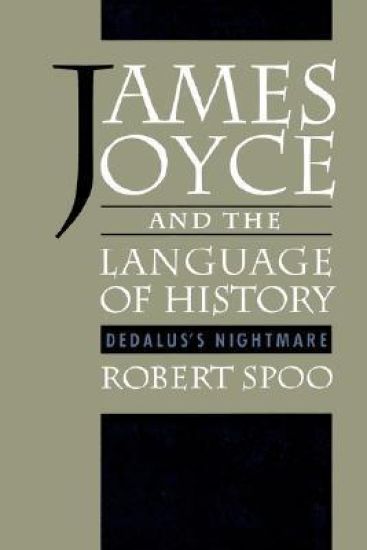
James Joyce and the Language of History

James Joyce and the Language of History

Robert Spoo

Oxford University Press Inc
1995
sidottu
"History is a nightmare from which I am trying to awake." Stephen Dedalus's famous complaint articulates a characteristic modern attitude toward the perceived burden of the past. As Robert Spoo shows in this study, Joyce's creative achievement, from the time of his sojourn in Rome in 1906-07 to the completion of Ulysses in 1922, cannot be understood apart from the ferment of historical thought that dominated the nineteenth and early twentieth centuries. Tracing James Joyce's historiographic art to its formative contexts, Spoo reveals a modernist author passionately engaged with the problem of history, forging a new language that both dramatizes and redefines that problem.
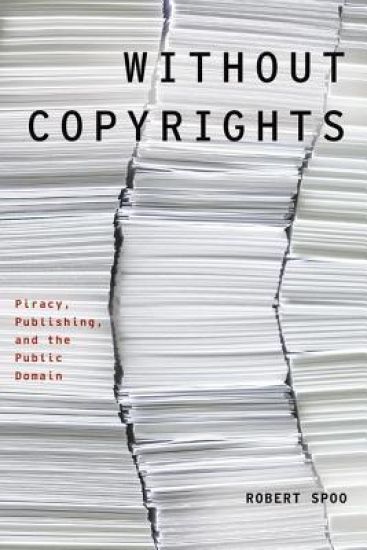
Without Copyrights

Without Copyrights

Robert Spoo

Oxford University Press Inc
2013
sidottu
This book tells the story of how the notoriously protectionist American copyright law impacted transatlantic modernism by encouraging the piracy of works published abroad. From its inception in 1790, U.S. copyright law withheld protection from foreign authors, creating an aggressive public domain that claimed works just as soon as they were published abroad. When Congress finally extended protection to foreign works, legal technicalities caused many authors to continue to lose their copyrights. The American public domain made vast numbers of foreign works freely available to American publishers. In order to avert ruinous competition for these unprotected resources, publishers evolved "trade courtesy," whereby the first house to announce plans to issue a foreign work acquired informal rights in the work-a kind of makeshift copyright grounded on unwritten norms and elaborate professional etiquette. Courtesy was a form of order without law that safeguarded publishers' interests, punished deviants from the code, and remunerated foreign authors for the exploitation of their works. Drawing on previously undiscovered archives, this book reveals the convergence of law, piracy, and courtesy in the dissemination of transatlantic modernism in the United States. The chief actors are James Joyce, Ezra Pound, and the New York pirate-pornographer Samuel Roth, with their very different attitudes toward intellectual property. Joyce's growing reputation in America, Pound's proposals for copyright reform, Roth's activities as purveyor of a hybrid modernism compounded of verbal experiment and entertainment for men-these and other developments cannot be understood apart from the contemporaneous American law and the voracious public domain it created. The book also tells the untold legal stories behind key events of modernism. When Roth reprinted the uncopyrighted Ulysses without permission, Joyce retaliated by drawing upon the punitive dimension of trade courtesy and by filing a lawsuit seeking damages for Roth's exploitation of his valuable name. Later, the courtesy tradition enabled Joyce to enjoy informal protection for Ulysses after Random House published the authorized American edition in 1934. Publishing norms, not copyright, kept pirates from Ulysses.
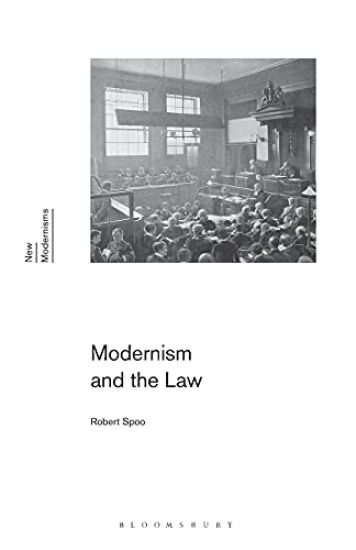
Modernism and the Law

Modernism and the Law

Robert Spoo

Bloomsbury Academic
2018
nidottu
A 2019 Choice Outstanding Academic TitleExploring critical legal issues and cases of the period—from Oscar Wilde’s prosecution for gross indecency to legal bans on such publications as D.H. Lawrence’s Lady Chatterley’s Lover, Radclyffe Hall’s The Well of Loneliness, and James Joyce’s Ulysses—Modernism and the Law is the first book to survey the legal contexts of transatlantic Anglo-American modernist culture. Written by one of the leading authorities on the subject, the book covers such topics as: · Obscenity laws and censorship · Copyrights, moral rights, and the public domain · Patronage and literary piracy · Privacy, defamation, publicity, and blackmail Including an annotated list of relevant statutes, treaties, and cases, this is an essential read for scholars and students coming to the subject for the first time as well as for experienced scholars.
Modernism and the Law

Modernism and the Law

Robert Spoo

Bloomsbury Academic
2018
sidottu
A 2019 Choice Outstanding Academic TitleExploring critical legal issues and cases of the period—from Oscar Wilde’s prosecution for gross indecency to legal bans on such publications as D.H. Lawrence’s Lady Chatterley’s Lover, Radclyffe Hall’s The Well of Loneliness, and James Joyce’s Ulysses—Modernism and the Law is the first book to survey the legal contexts of transatlantic Anglo-American modernist culture. Written by one of the leading authorities on the subject, the book covers such topics as: · Obscenity laws and censorship · Copyrights, moral rights, and the public domain · Patronage and literary piracy · Privacy, defamation, publicity, and blackmail Including an annotated list of relevant statutes, treaties, and cases, this is an essential read for scholars and students coming to the subject for the first time as well as for experienced scholars.