This scarce antiquarian book is a facsimile reprint of the original.This is a pre-1923 historical reproduction.Robert William Chambers (May 26, 1865 - December 16, 1933) was an American artist and fiction writer, best known for his book of short stories entitled The King in Yellow, published in 1895. He was born in Brooklyn, New York, to William P. Chambers (1827-1911), a notable corporate and bankruptcy lawyer, and Caroline Smith Boughton (1842-1913). His parents met when Caroline was twelve years old and William P. was interning with her father, Joseph Boughton, a prominent corporate lawyer. Eventually the two formed the law firm of Chambers and Boughton which continued to prosper even after Joseph's death in 1861. Robert's great-grandfather, William Chambers (birth unknown), a lieutenant in the British Royal Navy, was married to Amelia Saunders, (1765-1822), the great grand daughter of Tobias Saunders, of Westerly, Rhode Island. The couple moved from Westerly, to Greenfield, Massachusetts and then to Galway, New York, where their son, also William Chambers, (1798-1874) was born. The second William graduated from Union College at the age of 18, and then went to a college in Boston, where he studied to be a doctor. Upon graduating he and his wife, Eliza P. Allen, (1793-1880) a direct descendant of Roger Williams, 1] the founder of Providence, Rhode Island were among the first settlers of Broadalbin, New York. His brother was architect Walter Boughton Chambers. Robert was first educated at the Brooklyn Polytechnic Institute, and then entered the Art Students' League at around the age of twenty, where the artist Charles Dana Gibson was his fellow student. Chambers studied at the cole des Beaux-Arts, and at Acad mie Julian, in Paris from 1886 to 1893, and his work was displayed at the Salon as early as 1889. On his return to New York, he succeeded in selling his illustrations to Life, Truth, and Vogue magazines. Then, for reasons unclear, he devoted his time to writing, producing his first novel, In the Quarter (written in 1887 in Munich). His most famous, and perhaps most meritorious, effort is The King in Yellow, a collection of Art Nouveau short stories published in 1895. This included several famous weird short stories which are connected by the theme of a fictitious drama of the same title, which drives those who read it insane. E. F. Bleiler described The King in Yellow as one of the most important works of American supernatural fiction. 3] It was also strongly admired by H. P. Lovecraft and his circle. On July 12, 1898, he married Elsa Vaughn Moller (1882-1939). They had a son, Robert Edward Stuart Chambers (who sometimes used the name Robert Husted Chambers). Robert W. Chambers died on December 16, 1933, after having undergone intestinal surgery three days earlier.
"Do we part here?" I asked, sorry to quit my chance acquaintance of the Johnstown highway. He nodded, yawned again, and removed his round cap of silver-fox fur to scratch his curly head. "We certainly do part at these cross-roads, if you are bound for Varicks'," he said. I waited a moment, then thanked him for the pleasant entertainment his company had afforded me, and wished him a safe journey. "A safe journey?" he repeated, carelessly. "Oh yes, of course; safe journeys are rare enough in these parts. I'm obliged to you for the thought. You are very civil, sir. Good-bye." Robert William Chambers (May 26, 1865 - December 16, 1933) was an American artist and fiction writer, best known for his book of short stories entitled The King in Yellow, published in 1895.He was born in Brooklyn, New York, to William P. Chambers (1827-1911), a notable corporate and bankruptcy lawyer, and Caroline Smith Boughton (1842-1913). His parents met when Caroline was twelve years old and William P. was interning with her father, Joseph Boughton, a prominent corporate lawyer. Eventually the two formed the law firm of Chambers and Boughton which continued to prosper even after Joseph's death in 1861. Robert's great-grandfather, William Chambers (birth unknown), a lieutenant in the British Royal Navy, was married to Amelia Saunders, (1765-1822), the great grand daughter of Tobias Saunders, of Westerly, Rhode Island. The couple moved from Westerly, to Greenfield, Massachusetts and then to Galway, New York, where their son, also William Chambers, (1798-1874) was born. The second William graduated from Union College at the age of 18, and then went to a college in Boston, where he studied to be a doctor. Upon graduating he and his wife, Eliza P. Allen, (1793-1880) a direct descendant of Roger Williams the founder of Providence, Rhode Island were among the first settlers of Broadalbin, New York. His brother was architect Walter Boughton Chambers
The Maker of Moons is an 1896 short story collection by Robert W. Chambers which followed the publication of Chambers' most famous work, The King in Yellow (1895). It contained eight new stories, including the title story "The Maker of Moons", one of his finest weird tales, and several romantic Art Nouveau stories, concluding with two less distinguished weird tales. The latter were subsequently incorporated into the episodic novel In Search of the Unknown. The first three stories are linked by the theme of a dream wife who is named Ysonde, and they form a triptych. The weird nature of the first story has interesting echoes in the other two, which feature picturesque animal figures, such as a Red Ibis and a disagreeable porcupine. The story "In The Name of the Most High" is a war story set in the American Civil War. The next two stories are humorous romantic tales with a fishing theme and setting. Chambers' love of natural scenery illuminates most of the stories. The quality throughout is rather fine. Published by Putnam's, New York and London, in 1896. The first edition featured a frontispiece with a black and white illustration by Lancelot Speed.
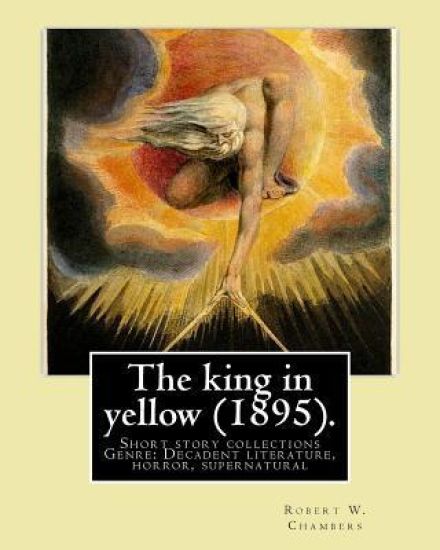
The King in Yellow is a book of short stories by American writer Robert W. Chambers, first published by F. Tennyson Neely in 1895.The book is named after a play with the same title which recurs as a motif through some of the stories.The first half of the book features highly esteemed weird stories, and the book has been described by critics such as E. F. Bleiler, S. T. Joshi and T. E. D. Klein as a classic in the field of the supernatural.There are ten stories, the first four of which ("The Repairer of Reputations", "The Mask", "In the Court of the Dragon", and "The Yellow Sign") mention The King in Yellow, a forbidden play which induces despair or madness in those who read it. "The Yellow Sign" inspired a film of the same name released in 2001. The first four stories are loosely connected by three main devices: A play in book form entitled The King in Yellow A mysterious and malevolent supernatural entity known as the King in Yellow An eerie symbol called the Yellow Sign These stories are macabre in tone, centering, in keeping with the other tales, on characters that are often artists or decadents, inhabitants of the demi-monde. The first and fourth stories, "The Repairer of Reputations" and "The Yellow Sign", are set in an imagined future 1920s America, whereas the second and third stories, "The Mask" and "In the Court of the Dragon", are set in Paris. These stories are haunted by the theme: "Have you found the Yellow Sign?" The weird and macabre character gradually fades away during the remaining stories, and the last three are written in the romantic fiction style common to Chambers' later work. They are all linked to the preceding stories by their Parisian setting and their artistic protagonists...... Robert William Chambers (May 26, 1865 - December 16, 1933) was an American artist and fiction writer, best known for his book of short stories entitled The King in Yellow, published in 1895.He was born in Brooklyn, New York, to William P. Chambers (1827-1911), a corporate and bankruptcy lawyer, and Caroline Smith Boughton (1842-1913). His parents met when Caroline was twelve years old and William P. was interning with her father, Joseph Boughton, a prominent corporate lawyer. Eventually the two formed the law firm of Chambers and Boughton which continued to prosper even after Joseph's death in 1861. Robert's great-grandfather, William Chambers (birth unknown), a lieutenant in the British Royal Navy, was married to Amelia Saunders, (1765-1822), the great grand daughter of Tobias Saunders, of Westerly, Rhode Island. The couple moved from Westerly, to Greenfield, Massachusetts and then to Galway, New York, where their son, also William Chambers, (1798-1874) was born. The second William graduated from Union College at the age of 18, and then went to a college in Boston, where he studied to be a doctor. Upon graduating, he and his wife, Eliza P. Allen (1793-1880), a direct descendant of Roger Williams, the founder of Providence, Rhode Island were among the first settlers of Broadalbin, New York. His brother was architect Walter Boughton Chambers. Robert was first educated at the Brooklyn Polytechnic Institute, and then entered the Art Students' League at around the age of twenty, where the artist Charles Dana Gibson was his fellow student. Chambers studied at the cole des Beaux-Arts, and at Acad mie Julian, in Paris from 1886 to 1893, and his work was displayed at the Salon as early as 1889. On his return to New York, he succeeded in selling his illustrations to Life, Truth, and Vogue magazines. Then, for reasons unclear, he devoted his time to writing, producing his first novel, In the Quarter (written in 1887 in Munich). His most famous, and perhaps most meritorious, effort is The King in Yellow, a collection of Art Nouveau short stories published in 1895..............
1895. Chambers, American artist and writer, later turned to writing romantic fiction to earn a living. According to some estimates, Chambers had one of the most successful literary careers of his period, with a few of his works achieving bestseller status. The book begins: All Englishmen are pigs observed a young man who stood swaying in the doorway of the Cafe Cardinal. Nobody replied to this criticism. The cafe was full. The young man advanced unsteadily to the center of the long room and looked about for a seat. His lusterless eyes traveled from table to table until they became fixed on a group of people in the embrasure of one of the windows which opened on the rue des Ecoles. Toward these people he shuffled, but when he laid a heavy hand on the shoulder of one, a woman, she cried out and shrank away. A man sitting beside her started up angrily, but sat down again when he saw who it was, and resumed his jaunty air..........Robert William Chambers (May 26, 1865 - December 16, 1933) was an American artist and fiction writer, best known for his book of short stories entitled The King in Yellow, published in 1895.He was born in Brooklyn, New York, to William P. Chambers (1827-1911), a corporate and bankruptcy lawyer, and Caroline Smith Boughton (1842-1913). His parents met when Caroline was twelve years old and William P. was interning with her father, Joseph Boughton, a prominent corporate lawyer. Eventually the two formed the law firm of Chambers and Boughton which continued to prosper even after Joseph's death in 1861. Robert's great-grandfather, William Chambers (birth unknown), a lieutenant in the British Royal Navy, was married to Amelia Saunders, (1765-1822), the great grand daughter of Tobias Saunders, of Westerly, Rhode Island. The couple moved from Westerly, to Greenfield, Massachusetts and then to Galway, New York, where their son, also William Chambers, (1798-1874) was born. The second William graduated from Union College at the age of 18, and then went to a college in Boston, where he studied to be a doctor. Upon graduating, he and his wife, Eliza P. Allen (1793-1880), a direct descendant of Roger Williams, the founder of Providence, Rhode Island were among the first settlers of Broadalbin, New York. His brother was architect Walter Boughton Chambers. Robert was first educated at the Brooklyn Polytechnic Institute, and then entered the Art Students' League at around the age of twenty, where the artist Charles Dana Gibson was his fellow student. Chambers studied at the cole des Beaux-Arts, and at Acad mie Julian, in Paris from 1886 to 1893, and his work was displayed at the Salon as early as 1889. On his return to New York, he succeeded in selling his illustrations to Life, Truth, and Vogue magazines. Then, for reasons unclear, he devoted his time to writing, producing his first novel, In the Quarter (written in 1887 in Munich). His most famous, and perhaps most meritorious, effort is The King in Yellow, a collection of Art Nouveau short stories published in 1895. This included several famous weird short stories which are connected by the theme of a fictitious drama of the same title, which drives those who read it insane.E. F. Bleiler described The King in Yellow as one of the most important works of American supernatural fiction.It was also strongly admired by H. P. Lovecraft and his circle. Chambers returned to the weird genre in his later short story collections The Maker of Moons, The Mystery of Choice and The Tree of Heaven, but none earned him as much success as The King in Yellow. Some of Chambers's work contains elements of science fiction, such as In Search of the Unknown and Police , about a zoologist who encounters monsters. Chambers later turned to writing romantic fiction to earn a living..........
Robert William Chambers (May 26, 1865 - December 16, 1933) was an American artist and fiction writer, best known for his book of short stories entitled The King in Yellow, published in 1895.He was born in Brooklyn, New York, to William P. Chambers (1827-1911), a corporate and bankruptcy lawyer, and Caroline Smith Boughton (1842-1913). His parents met when Caroline was twelve years old and William P. was interning with her father, Joseph Boughton, a prominent corporate lawyer. Eventually the two formed the law firm of Chambers and Boughton which continued to prosper even after Joseph's death in 1861. Robert's great-grandfather, William Chambers (birth unknown), a lieutenant in the British Royal Navy, was married to Amelia Saunders, (1765-1822), the great grand daughter of Tobias Saunders, of Westerly, Rhode Island. The couple moved from Westerly, to Greenfield, Massachusetts and then to Galway, New York, where their son, also William Chambers, (1798-1874) was born. The second William graduated from Union College at the age of 18, and then went to a college in Boston, where he studied to be a doctor. Upon graduating, he and his wife, Eliza P. Allen (1793-1880), a direct descendant of Roger Williams, the founder of Providence, Rhode Island were among the first settlers of Broadalbin, New York. His brother was architect Walter Boughton Chambers. Robert was first educated at the Brooklyn Polytechnic Institute, and then entered the Art Students' League at around the age of twenty, where the artist Charles Dana Gibson was his fellow student. Chambers studied at the cole des Beaux-Arts, and at Acad mie Julian, in Paris from 1886 to 1893, and his work was displayed at the Salon as early as 1889. On his return to New York, he succeeded in selling his illustrations to Life, Truth, and Vogue magazines. Then, for reasons unclear, he devoted his time to writing, producing his first novel, In the Quarter (written in 1887 in Munich). His most famous, and perhaps most meritorious, effort is The King in Yellow, a collection of Art Nouveau short stories published in 1895. This included several famous weird short stories which are connected by the theme of a fictitious drama of the same title, which drives those who read it insane.E. F. Bleiler described The King in Yellow as one of the most important works of American supernatural fiction.It was also strongly admired by H. P. Lovecraft and his circle. Chambers returned to the weird genre in his later short story collections The Maker of Moons, The Mystery of Choice and The Tree of Heaven, but none earned him as much success as The King in Yellow. Some of Chambers's work contains elements of science fiction, such as In Search of the Unknown and Police , about a zoologist who encounters monsters. Chambers later turned to writing romantic fiction to earn a living. According to some estimates, Chambers had one of the most successful literary careers of his period, his later novels selling well and a handful achieving best-seller status. Many of his works were also serialized in magazines. His novel The Man They Hanged was about Captain Kidd, and argued that Kidd was not a pirate, and had been made a scapegoat by the British government.During World War I he wrote war adventure novels and war stories, some of which showed a strong return to his old weird style, such as "Marooned" in Barbarians (1917). After 1924 he devoted himself solely to writing historical fiction.Chambers for several years made Broadalbin, New York, his summer home. Some of his novels touch upon colonial life in Broadalbin and Johnstown.On July 12, 1898, he married Elsa Vaughn Moller (1882-1939). They had a son, Robert Edward Stuart Chambers (who sometimes used the name Robert Husted Chambers).Robert W. Chambers died on December 16, 1933, after having undergone intestinal surgery three days earlier.
Robert William Chambers (May 26, 1865 - December 16, 1933) was an American artist and fiction writer, best known for his book of short stories entitled The King in Yellow, published in 1895.He was born in Brooklyn, New York, to William P. Chambers (1827-1911), a corporate and bankruptcy lawyer, and Caroline Smith Boughton (1842-1913). His parents met when Caroline was twelve years old and William P. was interning with her father, Joseph Boughton, a prominent corporate lawyer. Eventually the two formed the law firm of Chambers and Boughton which continued to prosper even after Joseph's death in 1861. Robert's great-grandfather, William Chambers (birth unknown), a lieutenant in the British Royal Navy, was married to Amelia Saunders, (1765-1822), the great grand daughter of Tobias Saunders, of Westerly, Rhode Island. The couple moved from Westerly, to Greenfield, Massachusetts and then to Galway, New York, where their son, also William Chambers, (1798-1874) was born. The second William graduated from Union College at the age of 18, and then went to a college in Boston, where he studied to be a doctor. Upon graduating, he and his wife, Eliza P. Allen (1793-1880), a direct descendant of Roger Williams, the founder of Providence, Rhode Island were among the first settlers of Broadalbin, New York. His brother was architect Walter Boughton Chambers. Robert was first educated at the Brooklyn Polytechnic Institute, and then entered the Art Students' League at around the age of twenty, where the artist Charles Dana Gibson was his fellow student. Chambers studied at the cole des Beaux-Arts, and at Acad mie Julian, in Paris from 1886 to 1893, and his work was displayed at the Salon as early as 1889. On his return to New York, he succeeded in selling his illustrations to Life, Truth, and Vogue magazines. Then, for reasons unclear, he devoted his time to writing, producing his first novel, In the Quarter (written in 1887 in Munich). His most famous, and perhaps most meritorious, effort is The King in Yellow, a collection of Art Nouveau short stories published in 1895. This included several famous weird short stories which are connected by the theme of a fictitious drama of the same title, which drives those who read it insane.E. F. Bleiler described The King in Yellow as one of the most important works of American supernatural fiction.It was also strongly admired by H. P. Lovecraft and his circle. Chambers returned to the weird genre in his later short story collections The Maker of Moons, The Mystery of Choice and The Tree of Heaven, but none earned him as much success as The King in Yellow. Some of Chambers's work contains elements of science fiction, such as In Search of the Unknown and Police , about a zoologist who encounters monsters. Chambers later turned to writing romantic fiction to earn a living. According to some estimates, Chambers had one of the most successful literary careers of his period, his later novels selling well and a handful achieving best-seller status. Many of his works were also serialized in magazines. His novel The Man They Hanged was about Captain Kidd, and argued that Kidd was not a pirate, and had been made a scapegoat by the British government.During World War I he wrote war adventure novels and war stories, some of which showed a strong return to his old weird style, such as "Marooned" in Barbarians (1917). After 1924 he devoted himself solely to writing historical fiction.Chambers for several years made Broadalbin, New York, his summer home. Some of his novels touch upon colonial life in Broadalbin and Johnstown.On July 12, 1898, he married Elsa Vaughn Moller (1882-1939). They had a son, Robert Edward Stuart Chambers (who sometimes used the name Robert Husted Chambers).Robert W. Chambers died on December 16, 1933, after having undergone intestinal surgery three days earlier.........
Robert William Chambers (May 26, 1865 - December 16, 1933) was an American artist and fiction writer, best known for his book of short stories entitled The King in Yellow, published in 1895.He was born in Brooklyn, New York, to William P. Chambers (1827-1911), a corporate and bankruptcy lawyer, and Caroline Smith Boughton (1842-1913). His parents met when Caroline was twelve years old and William P. was interning with her father, Joseph Boughton, a prominent corporate lawyer. Eventually the two formed the law firm of Chambers and Boughton which continued to prosper even after Joseph's death in 1861. Robert's great-grandfather, William Chambers (birth unknown), a lieutenant in the British Royal Navy, was married to Amelia Saunders, (1765-1822), the great grand daughter of Tobias Saunders, of Westerly, Rhode Island. The couple moved from Westerly, to Greenfield, Massachusetts and then to Galway, New York, where their son, also William Chambers, (1798-1874) was born. The second William graduated from Union College at the age of 18, and then went to a college in Boston, where he studied to be a doctor. Upon graduating, he and his wife, Eliza P. Allen (1793-1880), a direct descendant of Roger Williams, the founder of Providence, Rhode Island were among the first settlers of Broadalbin, New York. His brother was architect Walter Boughton Chambers. Robert was first educated at the Brooklyn Polytechnic Institute, and then entered the Art Students' League at around the age of twenty, where the artist Charles Dana Gibson was his fellow student. Chambers studied at the cole des Beaux-Arts, and at Acad mie Julian, in Paris from 1886 to 1893, and his work was displayed at the Salon as early as 1889. On his return to New York, he succeeded in selling his illustrations to Life, Truth, and Vogue magazines. Then, for reasons unclear, he devoted his time to writing, producing his first novel, In the Quarter (written in 1887 in Munich). His most famous, and perhaps most meritorious, effort is The King in Yellow, a collection of Art Nouveau short stories published in 1895. This included several famous weird short stories which are connected by the theme of a fictitious drama of the same title, which drives those who read it insane.E. F. Bleiler described The King in Yellow as one of the most important works of American supernatural fiction.It was also strongly admired by H. P. Lovecraft and his circle. Chambers returned to the weird genre in his later short story collections The Maker of Moons, The Mystery of Choice and The Tree of Heaven, but none earned him as much success as The King in Yellow. Some of Chambers's work contains elements of science fiction, such as In Search of the Unknown and Police , about a zoologist who encounters monsters. Chambers later turned to writing romantic fiction to earn a living. According to some estimates, Chambers had one of the most successful literary careers of his period, his later novels selling well and a handful achieving best-seller status. Many of his works were also serialized in magazines. His novel The Man They Hanged was about Captain Kidd, and argued that Kidd was not a pirate, and had been made a scapegoat by the British government.During World War I he wrote war adventure novels and war stories, some of which showed a strong return to his old weird style, such as "Marooned" in Barbarians (1917). After 1924 he devoted himself solely to writing historical fiction.Chambers for several years made Broadalbin, New York, his summer home. Some of his novels touch upon colonial life in Broadalbin and Johnstown.On July 12, 1898, he married Elsa Vaughn Moller (1882-1939). They had a son, Robert Edward Stuart Chambers (who sometimes used the name Robert Husted Chambers).Robert W. Chambers died on December 16, 1933, after having undergone intestinal surgery three days earlier.
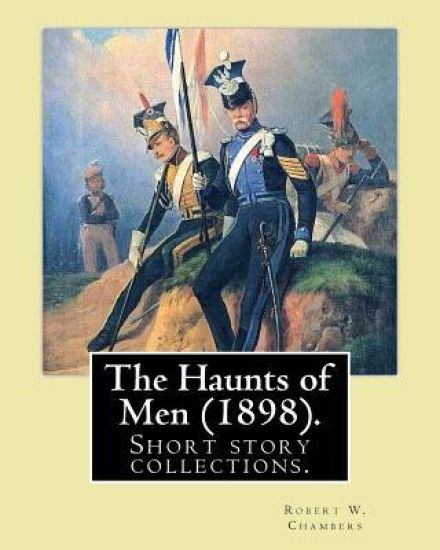
The Haunts of Men is a collection of short stories by Robert W. Chambers, author of The King In Yellow (1895) and The Maker of Moons (1896). The first four tales feature the American Civil War, and most of the stories are set in America with Chambers' love of landscape prevalent. "Ambassador Extraordinary" is set in France, and the last two tales feature less distinguished reappearances of some of the characters in Paris that appeared in The King In Yellow. Published by Frederick A. Stokes Company, New York, in 1898. Contents "The God of Battles" "Pickets" "An International Affair "Smith's Battery" "Ambassador Extraordinary" "Yo Espero" "Collector of the Port" "The Whisper" "The Little Misery" "Enter the Queen" "Another Good Man". Robert William Chambers (May 26, 1865 - December 16, 1933) was an American artist and fiction writer, best known for his book of short stories entitled The King in Yellow, published in 1895.He was born in Brooklyn, New York, to William P. Chambers (1827-1911), a corporate and bankruptcy lawyer, and Caroline Smith Boughton (1842-1913). His parents met when Caroline was twelve years old and William P. was interning with her father, Joseph Boughton, a prominent corporate lawyer. Eventually the two formed the law firm of Chambers and Boughton which continued to prosper even after Joseph's death in 1861. Robert's great-grandfather, William Chambers (birth unknown), a lieutenant in the British Royal Navy, was married to Amelia Saunders, (1765-1822), the great grand daughter of Tobias Saunders, of Westerly, Rhode Island. The couple moved from Westerly, to Greenfield, Massachusetts and then to Galway, New York, where their son, also William Chambers, (1798-1874) was born. The second William graduated from Union College at the age of 18, and then went to a college in Boston, where he studied to be a doctor. Upon graduating, he and his wife, Eliza P. Allen (1793-1880), a direct descendant of Roger Williams, the founder of Providence, Rhode Island were among the first settlers of Broadalbin, New York. His brother was architect Walter Boughton Chambers. Robert was first educated at the Brooklyn Polytechnic Institute, and then entered the Art Students' League at around the age of twenty, where the artist Charles Dana Gibson was his fellow student. Chambers studied at the cole des Beaux-Arts, and at Acad mie Julian, in Paris from 1886 to 1893, and his work was displayed at the Salon as early as 1889. On his return to New York, he succeeded in selling his illustrations to Life, Truth, and Vogue magazines. Then, for reasons unclear, he devoted his time to writing, producing his first novel, In the Quarter (written in 1887 in Munich). His most famous, and perhaps most meritorious, effort is The King in Yellow, a collection of Art Nouveau short stories published in 1895. This included several famous weird short stories which are connected by the theme of a fictitious drama of the same title, which drives those who read it insane.E. F. Bleiler described The King in Yellow as one of the most important works of American supernatural fiction.It was also strongly admired by H. P. Lovecraft and his circle....
Robert William Chambers (May 26, 1865 - December 16, 1933) was an American artist and fiction writer, best known for his book of short stories entitled The King in Yellow, published in 1895.He was born in Brooklyn, New York, to William P. Chambers (1827-1911), a corporate and bankruptcy lawyer, and Caroline Smith Boughton (1842-1913). His parents met when Caroline was twelve years old and William P. was interning with her father, Joseph Boughton, a prominent corporate lawyer. Eventually the two formed the law firm of Chambers and Boughton which continued to prosper even after Joseph's death in 1861. Robert's great-grandfather, William Chambers (birth unknown), a lieutenant in the British Royal Navy, was married to Amelia Saunders, (1765-1822), the great grand daughter of Tobias Saunders, of Westerly, Rhode Island. The couple moved from Westerly, to Greenfield, Massachusetts and then to Galway, New York, where their son, also William Chambers, (1798-1874) was born. The second William graduated from Union College at the age of 18, and then went to a college in Boston, where he studied to be a doctor. Upon graduating, he and his wife, Eliza P. Allen (1793-1880), a direct descendant of Roger Williams, the founder of Providence, Rhode Island were among the first settlers of Broadalbin, New York. His brother was architect Walter Boughton Chambers. Robert was first educated at the Brooklyn Polytechnic Institute, and then entered the Art Students' League at around the age of twenty, where the artist Charles Dana Gibson was his fellow student. Chambers studied at the cole des Beaux-Arts, and at Acad mie Julian, in Paris from 1886 to 1893, and his work was displayed at the Salon as early as 1889. On his return to New York, he succeeded in selling his illustrations to Life, Truth, and Vogue magazines. Then, for reasons unclear, he devoted his time to writing, producing his first novel, In the Quarter (written in 1887 in Munich). His most famous, and perhaps most meritorious, effort is The King in Yellow, a collection of Art Nouveau short stories published in 1895. This included several famous weird short stories which are connected by the theme of a fictitious drama of the same title, which drives those who read it insane.E. F. Bleiler described The King in Yellow as one of the most important works of American supernatural fiction.It was also strongly admired by H. P. Lovecraft and his circle. Chambers returned to the weird genre in his later short story collections The Maker of Moons, The Mystery of Choice and The Tree of Heaven, but none earned him as much success as The King in Yellow. Some of Chambers's work contains elements of science fiction, such as In Search of the Unknown and Police , about a zoologist who encounters monsters. Chambers later turned to writing romantic fiction to earn a living. According to some estimates, Chambers had one of the most successful literary careers of his period, his later novels selling well and a handful achieving best-seller status. Many of his works were also serialized in magazines. His novel The Man They Hanged was about Captain Kidd, and argued that Kidd was not a pirate, and had been made a scapegoat by the British government.During World War I he wrote war adventure novels and war stories, some of which showed a strong return to his old weird style, such as "Marooned" in Barbarians (1917). After 1924 he devoted himself solely to writing historical fiction.Chambers for several years made Broadalbin, New York, his summer home. Some of his novels touch upon colonial life in Broadalbin and Johnstown.On July 12, 1898, he married Elsa Vaughn Moller (1882-1939). They had a son, Robert Edward Stuart Chambers (who sometimes used the name Robert Husted Chambers).Robert W. Chambers died on December 16, 1933, after having undergone intestinal surgery three days earlier.......