Kirjojen hintavertailu. Mukana 11 342 296 kirjaa ja 12 kauppaa.

Kirjahaku

Etsi kirjoja tekijän nimen, kirjan nimen tai ISBN:n perusteella.

4 kirjaa tekijältä Robert Wess

Kenneth Burke

Kenneth Burke

Robert Wess

Cambridge University Press
1996
sidottu
Kenneth Burke, arguably the most important American literary theorist of the twentieth century, helped define the theoretical terrain for contemporary literary and cultural studies. His perspectives were literary and linguistic, but his influences ranged across history, philosophy, and the social sciences. In this important and original study Robert Wess traces the trajectory of Burke’s long career and situates his work in relation to postmodernity. His study is both an examination of contemporary theories of rhetoric, ideology, and the subject, and an explanation of why Burke failed to complete his Motives trilogy. Burke’s own critique of the ‘isolated unique individual’ led him to question the possibility of unique individuation, a strategy which anticipated important elements of postmodern concepts of subjectivity. Robert Wess’s study is both a timely and judicious exposition of Burke’s massive oeuvre, and a crucial intervention in current debates on rhetoric and human agency.
Kenneth Burke

Kenneth Burke

Robert Wess

Cambridge University Press
1996
pokkari
Kenneth Burke, arguably the most important American literary theorist of the twentieth century, helped define the theoretical terrain for contemporary literary and cultural studies. His perspectives were literary and linguistic, but his influences ranged across history, philosophy, and the social sciences. In this important and original study Robert Wess traces the trajectory of Burke’s long career and situates his work in relation to postmodernity. His study is both an examination of contemporary theories of rhetoric, ideology, and the subject, and an explanation of why Burke failed to complete his Motives trilogy. Burke’s own critique of the ‘isolated unique individual’ led him to question the possibility of unique individuation, a strategy which anticipated important elements of postmodern concepts of subjectivity. Robert Wess’s study is both a timely and judicious exposition of Burke’s massive oeuvre, and a crucial intervention in current debates on rhetoric and human agency.
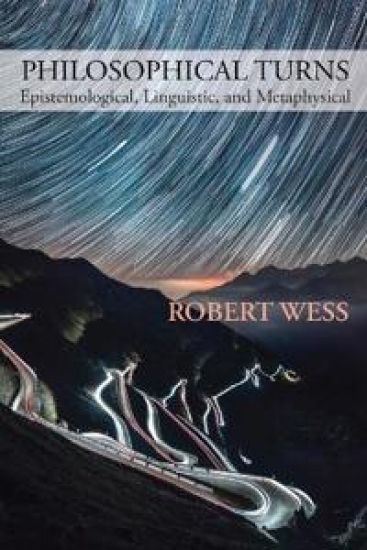
Philosophical Turns

Philosophical Turns

Robert Wess

Parlor Press
2023
pokkari
Philosophical Turns is a tour de force, a sophisticated and erudite book that not only captures the cognitive and emotive rhythms of the contemporary philosophical conversation surrounding speculative realism but also becomes a distinctive voice within that conversation. A reviewer can but adumbrate and applaud the density, complexity, and richness of the arguments Robert Wess prosecutes with rigor and artfulness, paying homage to him just as he paid homage to Richard McKeon, his mentor.-Greig E. HendersonRobert Wess speaks persuasively to the present moment in philosophy and critical theory within the human sciences. He does this not just by addressing current issues being discussed within, for example, the new materialist turn and posthumanist debates; but more importantly by placing those discussions within a larger framework of philosophical turns, a framework building on McKeon's thinking. Philosophical Turns should interest a wide range of readers in the theoretical humanities and the interpretive social sciences.-Steven MaillouxIn this thoroughly researched and thoughtful study, Robert Wess concentrates on the philosophical return to metaphysical foundations after the long reign of anti-foundationalism explicitly conceptualized by the anti-philosophies of the linguistic turn. Philosophical Turns primarily focuses on the so-named speculative realism authored by Quentin Meillassoux and Graham Harman, demonstrating the torsion and turning away from the humanist and anthropocentric confines of correlationism, the most prevalent structure of traditional philosophical thought. The claim that philosophy undergoes cyclical turns and returns is critical to Wess's study. Wess provides the background for the reader to encounter familiar philosophical terminology radically differently. This extensive study is invaluable for readers attentive to current philosophical priorities and the rhetorization of these emergent priorities. -Timothy DonovanRobert Wess was emeritus professor of English at Oregon State University. He received a BA, MA, and PhD at the University of Chicago. While at Chicago, time in Richard McKeon's classroom inspired Wess to become a lifelong student of McKeon's work, publishing a few articles on him and Kenneth Burke along the way and now publishing this book that is the product of years of work. Wess attended the 1984 conference at which the Kenneth Burke Society was formed and later received the Society's Distinguished Service Award (1999) and Lifetime Achievement Award (2017). He served as the Society's president from 2005 to 2008. He passed away in late 2022 just after completing Philosophical Turns.Wess was the author of Kenneth Burke: Rhetoric, Subjectivity, Postmodernism (1996) and coeditor (with Jack Selzer) of Kenneth Burke and His Circles (2008). His articles were published in such journals as KB: The Journal of the Kenneth Burke Society, Modern Philology, Pre/Text, The Minnesota Review, ISLE: Interdisciplinary Studies in Literature and Environment, and Restoration.
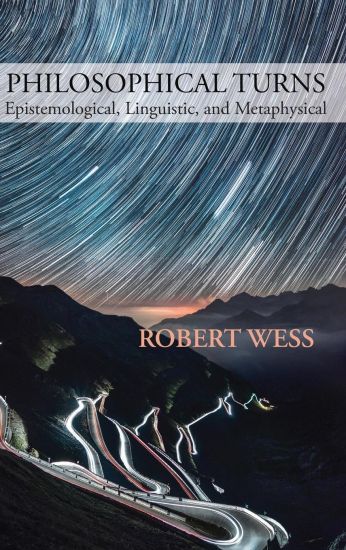
Philosophical Turns

Philosophical Turns

Robert Wess

Parlor Press
2023
sidottu
Philosophical Turns is a tour de force, a sophisticated and erudite book that not only captures the cognitive and emotive rhythms of the contemporary philosophical conversation surrounding speculative realism but also becomes a distinctive voice within that conversation. A reviewer can but adumbrate and applaud the density, complexity, and richness of the arguments Robert Wess prosecutes with rigor and artfulness, paying homage to him just as he paid homage to Richard McKeon, his mentor.-Greig E. HendersonRobert Wess speaks persuasively to the present moment in philosophy and critical theory within the human sciences. He does this not just by addressing current issues being discussed within, for example, the new materialist turn and posthumanist debates; but more importantly by placing those discussions within a larger framework of philosophical turns, a framework building on McKeon's thinking. Philosophical Turns should interest a wide range of readers in the theoretical humanities and the interpretive social sciences.-Steven MaillouxIn this thoroughly researched and thoughtful study, Robert Wess concentrates on the philosophical return to metaphysical foundations after the long reign of anti-foundationalism explicitly conceptualized by the anti-philosophies of the linguistic turn. Philosophical Turns primarily focuses on the so-named speculative realism authored by Quentin Meillassoux and Graham Harman, demonstrating the torsion and turning away from the humanist and anthropocentric confines of correlationism, the most prevalent structure of traditional philosophical thought. The claim that philosophy undergoes cyclical turns and returns is critical to Wess's study. Wess provides the background for the reader to encounter familiar philosophical terminology radically differently. This extensive study is invaluable for readers attentive to current philosophical priorities and the rhetorization of these emergent priorities. -Timothy DonovanRobert Wess was emeritus professor of English at Oregon State University. He received a BA, MA, and PhD at the University of Chicago. While at Chicago, time in Richard McKeon's classroom inspired Wess to become a lifelong student of McKeon's work, publishing a few articles on him and Kenneth Burke along the way and now publishing this book that is the product of years of work. Wess attended the 1984 conference at which the Kenneth Burke Society was formed and later received the Society's Distinguished Service Award (1999) and Lifetime Achievement Award (2017). He served as the Society's president from 2005 to 2008. He passed away in late 2022 just after completing Philosophical Turns.Wess was the author of Kenneth Burke: Rhetoric, Subjectivity, Postmodernism (1996) and coeditor (with Jack Selzer) of Kenneth Burke and His Circles (2008). His articles were published in such journals as KB: The Journal of the Kenneth Burke Society, Modern Philology, Pre/Text, The Minnesota Review, ISLE: Interdisciplinary Studies in Literature and Environment, and Restoration.