Kirjojen hintavertailu. Mukana 11 244 527 kirjaa ja 12 kauppaa.

Kirjahaku

Etsi kirjoja tekijän nimen, kirjan nimen tai ISBN:n perusteella.

16 kirjaa tekijältä Roberto Curti

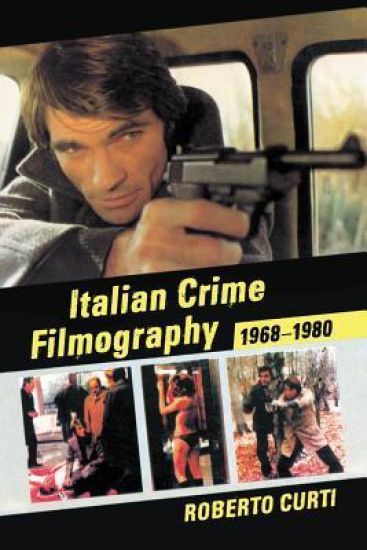
Italian Crime Filmography, 1968-1980

Italian Crime Filmography, 1968-1980

Roberto Curti

McFarland Co Inc
2013
nidottu
In 1970s Italy, after the decline of the Spaghetti Western, crime films were the most popular, profitable and controversial genre. The product of a country plagued with violence, political tensions and armed struggle, these films managed to capture and convey the widespread anxiety and anger in their tales of tough cops, ruthless criminals and urban paranoia. Recent years have seen a renewed critical interest in the genre, thanks also to such illustrious fans as Quentin Tarantino. This book includes all the crime films produced in Italy between 1968 and 1980, the period when the genre began and reached its peak. With 220+ entries, it is the most complete English language book on the subject. Films are listed year by year. A complete cast and crew list, home video releases, plot summary and the author's own analysis are given for each film. Excerpts from a variety of sources are included: academic texts, contemporary reviews, and interviews with filmmakers, scriptwriters and actors. There are many on-set stills and film posters.
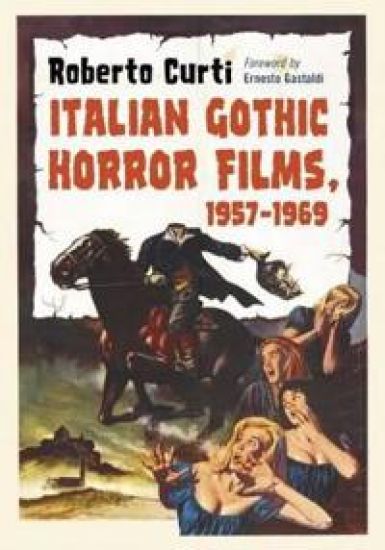
Italian Gothic Horror Films, 1957-1969

Italian Gothic Horror Films, 1957-1969

Roberto Curti

McFarland Co Inc
2015
pokkari
The "Gothic" style was a key trend in Italian cinema of the 1950s and 1960s because of its peculiar, often strikingly original approach to the horror genre. These films portrayed Gothic staples in a stylish and idiosyncratic way, and took a daring approach to the supernatural and to eroticism, with the presence of menacing yet seductive female witches, vampires and ghosts. Thanks to such filmmakers as Mario Bava (Black Sunday), Riccardo Freda (The Horrible Dr. Hichcock), and Antonio Margheriti (Castle of Blood), as well the iconic presence of actress Barbara Steele, Italian Gothic horror went overseas and reached cult status. The book examines the Italian Gothic horror of the period, with an abundance of previously unpublished production information drawn from official papers and original scripts. Entries include a complete cast and crew list, home video releases, plot summary and the author's analysis. Excerpts from interviews with filmmakers, scriptwriters and actors are included. The foreword is by film director and scriptwriter Ernesto Gastaldi.
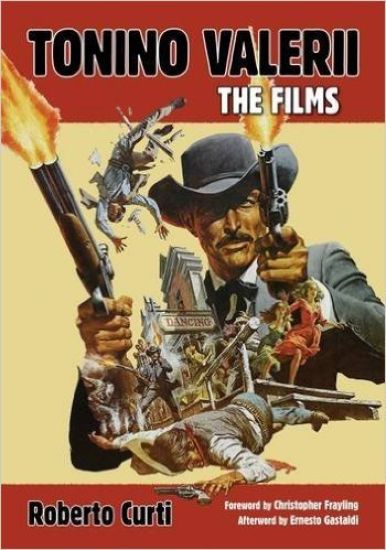
Tonino Valerii

Tonino Valerii

Roberto Curti

McFarland Co Inc
2016
pokkari
Tonino Valerii is one of Italy's best genre film directors. Starting out as Sergio Leone's assistant on For a Few Dollars More (1965), he went on to direct spaghetti westerns that stand out among the most accomplished in their class--Day of Anger (1967), The Price of Power (1969), A Reason to Live, a Reason to Die! (1972) and My Name Is Nobody (1973). He also directed the outstanding giallo My Dear Killer (1972). This book examines Valerii's life and career in depth for the first time, with exclusive interviews with the filmmaker, scriptwriters and actors, and critical analysis of his films.
Italian Gothic Horror Films, 1970-1979

Italian Gothic Horror Films, 1970-1979

Roberto Curti

McFarland Co Inc
2017
pokkari
Italian Gothic horror films of the 1970s were influenced by the violent giallo movies and adults-only comics of the era, resulting in a graphic approach to the genre. Stories often featured over-the-top violence and nudity and pushed the limits of what could be shown on the screen. The decade marked the return of specialist directors like Mario Bava, Riccardo Freda and Antonio Margheriti, and the emergence of new talents such as Pupi Avati (The House with the Laughing Windows) and Francesco Barilli (The Perfume of the Lady in Black). The author examines the Italian Gothic horror of the period, providing previously unpublished details and production data taken from official papers, original scripts and interviews with filmmakers, scriptwriters and actors. Entries include complete cast and crew lists, plot summaries, production history and analysis. An appendix covers Italian made-for-TV films and mini-series.
Riccardo Freda

Riccardo Freda

Roberto Curti

McFarland Co Inc
2017
pokkari
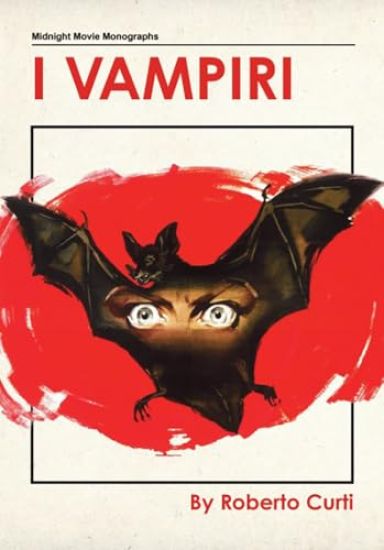
In an eclectic career spanning four decades, Italian director Riccardo Freda (1909-1999) produced films of remarkable technical skill and powerful visual style, including the swashbuckler Black Eagle (1946), an adaptation of Les Miserables (1947), the peplum Theodora, Slave Empress (1954) and a number of cult-favorite Gothic and horror films such as I Vampiri (1957), The Horrible Dr. Hichcock (1962) and The Ghost (1963). Freda was first championed in the 1960s by French critics who labeled him "the European Raoul Walsh," and enjoyed growing critical esteem over the years. This book covers his life and career for the first time in English, with detailed analyses of his films and exclusive interviews with his collaborators and family.
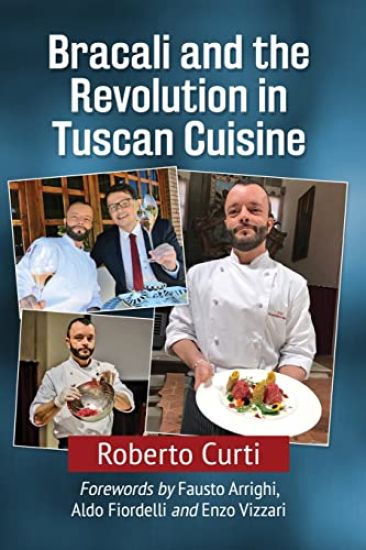
Bracali and the Revolution in Tuscan Cuisine

Bracali and the Revolution in Tuscan Cuisine

Roberto Curti

McFarland Co Inc
2018
pokkari
A self-taught culinary virtuoso, Francesco Bracali is one of Italy's top chefs. He and his brother, Luca, a sommelier, own the two-Michelin-stars restaurant Bracali in Massa Marittima, Tuscany. Once an unpretentious tavern run by their parents, the brothers turned it into a fine dining place where they revisited the region's rich gastronomic traditions in an innovative way. Their revolutionary approach--a novelty at first--today boasts international recognition. This book examines Tuscany's culinary history and analyzes the Bracali brothers' interpretation of traditional dishes and fine wine.
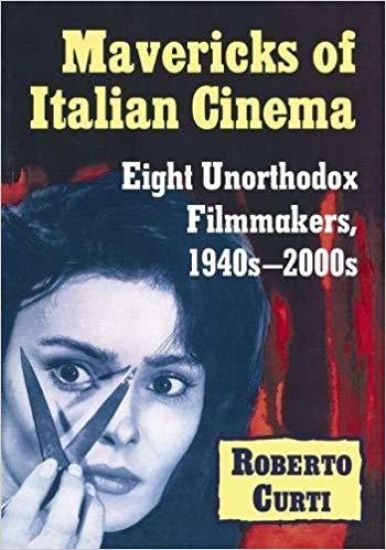
Mavericks of Italian Cinema

Mavericks of Italian Cinema

Roberto Curti

McFarland Co Inc
2018
pokkari
The history of Italian cinema includes, in addition to the renowned auteurs, a number of peculiar and lesser-known filmmakers. While their artistry was often plagued with production setbacks, their works--influenced by poetry, playwriting, advertising, literature, comics and a nonconformist, sometimes antagonistic attitude--were original and thought provoking. Drawing from official papers and original scripts, this book includes much previously unpublished information on the works and lives of post-World War II filmmakers Pier Carpi, Alberto Cavallone, Riccardo Ghione, Giulio Questi, Brunello Rondi, Paolo Spinola, Augusto Tretti and Nello Vegezzi.
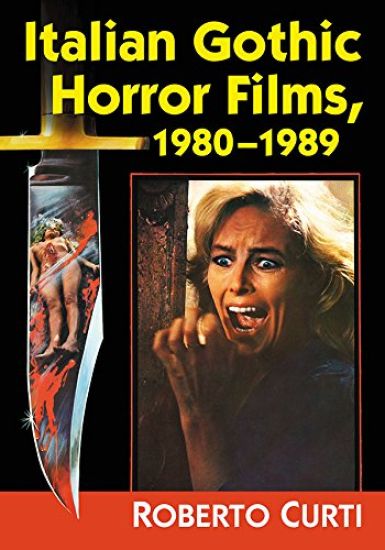
Italian Gothic Horror Films, 1980-1989

Italian Gothic Horror Films, 1980-1989

Roberto Curti

McFarland Co Inc
2019
pokkari
The Italian Gothic horror genre underwent many changes in the 1980s, with masters such as Mario Bava and Riccardo Freda dying or retiring and young filmmakers such as Lamberto Bava (Macabro, Demons) and Michele Soavi (The Church) surfacing. Horror films proved commercially successful in the first half of the decade thanks to Dario Argento (both as director and producer) and Lucio Fulci, but the rise of made-for-TV products has resulted in the gradual disappearance of genre products from the big screen. This book examines all the Italian Gothic films of the 1980s. It includes previously unpublished trivia and production data taken from official archive papers, original scripts and interviews with filmmakers, actors and scriptwriters. The entries include a complete cast and crew list, plot summary, production history and analysis. Two appendices list direct-to-video releases and made-for-TV films.
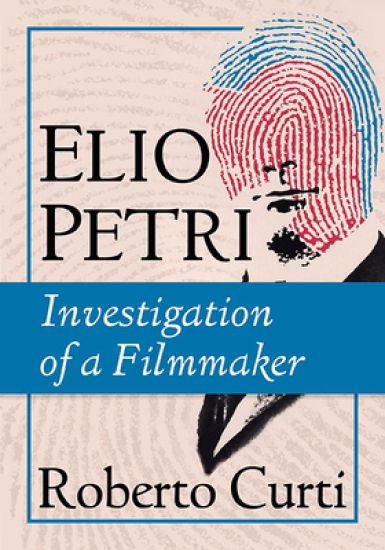
Elio Petri

Elio Petri

Roberto Curti

McFarland Co Inc
2021
pokkari
Elio Petri (1929-1982) was one of the most commercially successful and critically revered Italian directors ever. A cultured intellectual and a politically committed filmmaker, Petri made award-winning movies that touched controversial social, religious, and political themes, such as the Mafia in We Still Kill the Old Way (1967), police brutality in Investigation of a Citizen Above Suspicion (1970), and workers' struggles in Lulu the Tool (1971). His work also explored genre in a thought-provoking and refreshing manner with a taste for irony and the grotesque: among his best works are the science fiction satire The 10th Victim (1965), the ghost story A Quiet Place in the Country (1968), and the grotesque giallo Todo modo (1976). This book examines Elio Petri's life and career, and places his work within the social and political context of postwar Italian culture, politics, and cinema. It includes a detailed production history and critical analysis of each of his films, plenty of never-before-seen bits of information recovered from the Italian ministerial archives, and an in-depth discussion of the director's unfilmed projects.
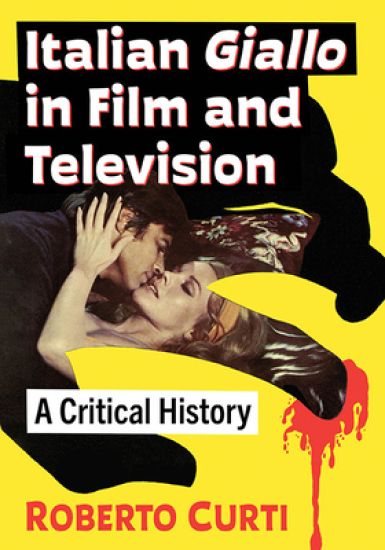
Italian Giallo in Film and Television

Italian Giallo in Film and Television

Roberto Curti

MCFARLAND CO INC
2022
pokkari
Since the release in 1929 of a popular book series with bright yellow covers, the Italian word giallo (yellow) has come to define a whole spectrum of mystery and detective fiction and films. Although most English speakers associate the term giallo with the violent and erotic thrillers popular in the 1960s and 1970s from directors like Mario Bava, Dario Argento, Lucio Fulci and others, the term encompasses a wide range of Italian media such as mysteries, thrillers and detective stories--even comedies and political pamphlets. As films like Blood and Black Lace (1964) and Deep Red (1975) have received international acclaim, giallo is a fluid and dynamic genre that has evolved throughout the decades. This book examines the many facets of the giallo genre --narrative, style, themes, and influences. It explores Italian films, made-for-TV films and miniseries from the dawn of sound cinema to the present, discussing their impact on society, culture and mores.
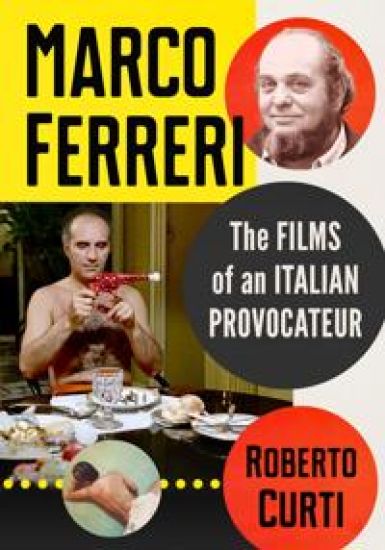
Marco Ferreri

Marco Ferreri

Roberto Curti

MCFARLAND CO INC
2024
pokkari
Marco Ferreri (1928-1997) was one of Italian cinema's most unique auteurs. A maverick personality, he worked with some of the most popular actors of the time (Marcello Mastroianni, Michel Piccoli, Catherine Deneuve, Gerard Depardieu, Ugo Tognazzi, Carroll Baker, Roberto Benigni, Isabelle Huppert, Christopher Lambert…), and directed internationally acclaimed films. His filmography includes The Conjugal Bed (1963), The Ape Woman (1964), Dillinger Is Dead (1969), the scandalous La Grande Bouffe (1973), the absurdist western Don't Touch the White Woman! (1974), The Last Woman (1976), Bye Bye Monkey (1978) and the Charles Bukowski adaptation, Tales of Ordinary Madness (1981). Ferreri's cinema dealt in highly original and thought-provoking ways with contemporary issues: the crisis of marriage, relationships between sexes, consumerism, and political disillusionment. His films were controversial and had many censorship issues, leading to Ferreri's fame as a master provocateur. Theis book examines Marco Ferreri's life and career, placing his work within the social and political context of postwar Italian culture, politics, and cinema. It includes a detailed production history and critical analysis of his films, with never-before-seen bits of information recovered from Italian ministerial archives and in-depth discussion of the director's unfilmed projects.
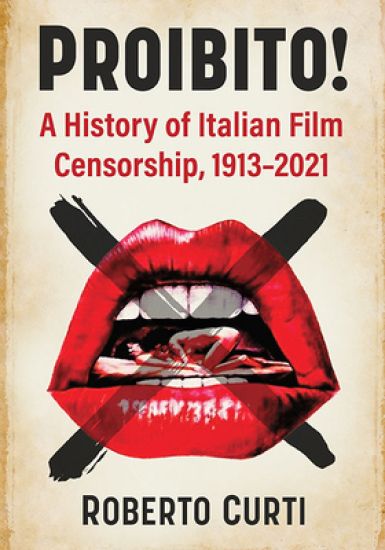
Proibito!

Proibito!

Roberto Curti

MCFARLAND CO INC
2023
pokkari
From its birth in 1913 to its abolition in 2021, film censorship marked the history of Italian cinema, and its evolution mirrored the social, political, and cultural travail of the country. During the Fascist regime and in the postwar period, censorship was a powerful political tool in the hands of the ruling party; many films were banned or severely cut. By the end of the 1960s, censors had to cope with the changing morals and the widespread diffusion of sexuality in popular culture, which led to the boom of hardcore pornography. With the crisis of the national industry and the growing influence of television, censorship gradually changed its focus and targets. The book analyzes Italian film censorship from its early days to the present, discussing the most controversial cases and protagonists. These include such notorious works as Last Tango in Paris and Salo, or the 120 Days of Sodom, and groundbreaking filmmakers such as Luchino Visconti, Federico Fellini and Pier Paolo Pasolini, who pushed the limits of what was acceptable on screen, causing scandal and public debate.
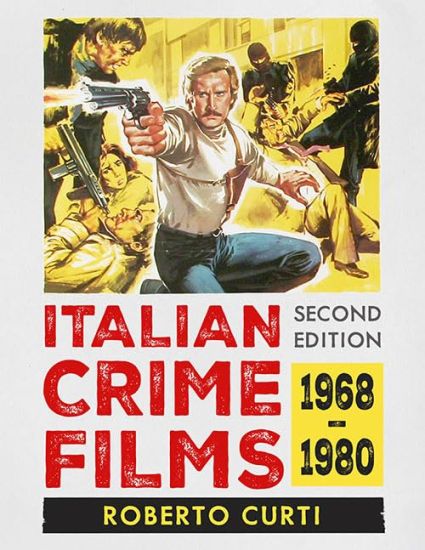
Italian Crime Films, 1968-1980, 2D Ed.

Italian Crime Films, 1968-1980, 2D Ed.

Roberto Curti

MCFARLAND CO INC
2025
nidottu
After the decline of the Spaghetti Western, crime films were the most popular, profitable and controversial genre in 1970s Italy. The product of a country plagued with violence, political tensions and armed struggle, these films managed to capture and convey the widespread anxiety and anger in their tales of tough cops, ruthless criminals, and urban paranoia. Recent years have seen a renewed critical interest in the genre, thanks also to such illustrious fans as Quentin Tarantino, and the rise to cult status to the works of filmmakers such as Fernando Di Leo, Umberto Lenzi, and Enzo G. Castellari. This book includes all the crime films produced in Italy between 1968 and 1980, the period when the genre spawned and reached its peak. With over 230 entries, it's the most complete English language book on the subject. This second edition has been thoroughly revised by the author, with the addition of new entries and relevant information, plus a newly designed appendix on Eurocrime co-productions.
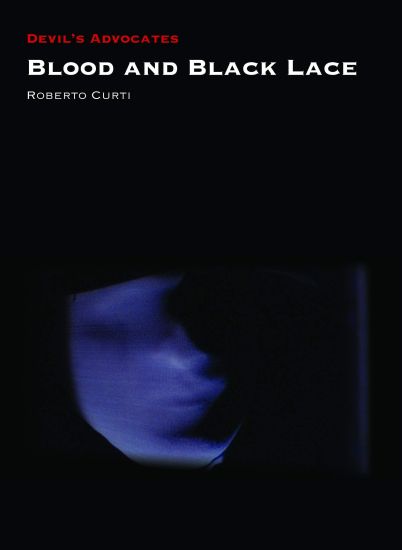
Blood and Black Lace

Blood and Black Lace

Roberto Curti

Auteur Publishing
2019
nidottu
Mario Bava’s Blood and Black Lace (1964) is a legendary title, and is commonly considered as the archetypal giallo. A murder mystery about a faceless and menacing killer stalking the premises of a luxurious fashion house in Rome, Blood and Black Lace set the rules for the genre: a masked, black-gloved killer, an emphasis on graphic violence, elaborate and suspenseful murder sequences. But Blood and Black Lace is first and foremost an exquisitely stylish film, full of gorgeous color schemes, elegant camerawork, and surrealistic imagery, testimony of Bava’s mastery and his status as an innovator within popular cinema. This book recollects Blood and Black Lace’s production history, putting it within the context of the Italian film industry of the period and includes plenty of previously unheard-of data. It analyzes its main narrative and stylistic aspects, including the groundbreaking prominence of violence and sadism and its use of color and lighting, as well as Bava’s irreverent approach to genre filmmaking and clever handling of the audience’s expectations by way of irony and pitch-black humor. The book also analyzes Blood and Black Lace’s place within Bava’s oeuvre, its historical impact on the giallo genre, and its influential status on future filmmakers.
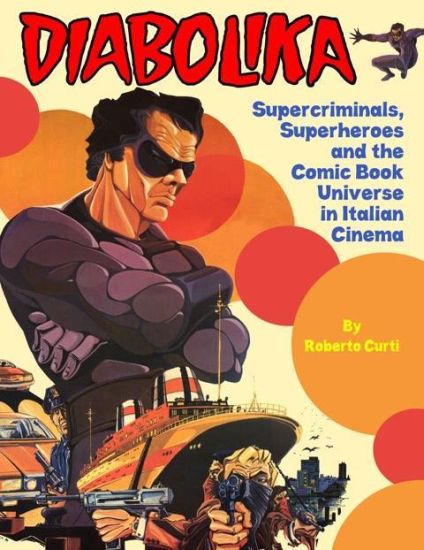
Diabolika Supercriminals, Superheroes and the Comic Book Universe in Italian Cinema
Since their heyday, comics (or fumetti as they are called in Italy) had a vital part in Italy's culture and morality, even helping break boundaries. That was the case with the so-called "fumetti neri," such as DIABOLIK, KRIMINAL, SATANIK, and many others that created a sensation in the early-to-mid-1960s. Similarly, in the late 1960s the adults-only comics paved the way for a more explicit depiction of eroticism. The 1980s saw the commercial exploitation of underground comics as well as popular genre titles such as DYLAN DOG. DIABOLIKA lists the Italian films and TV series based on (or inspired by) comics, graphic novels and photonovels, as well as movies not directly adapted from comic books sport a distinct comics feel in style, characters and plot. Included are the 1960s adaptations of the lurid "fumetti neri" such as DANGER: DIABOLIK, the two KRIMINAL movies, AVENGER X and SATANIK. And we couldn't forget the comic-inspired superheroes SUPERARGO, FLASHMAN, THE THREE FANTASTIC SUPERMEN as well as films based on erotic and adults-only comics including MS. STILETTO. DIABOLIKA also provides listings for adaptations of popular comic characters such as VALENTINA, TEX and DYLAN DOG and many, many more. Also included is an essay on Turkish films inspired by Italian comics written by Turkish film scholar Kaya zkaracalar. The book is lavishly illustrated in color with many rare set stills, lobby cards, poster art and comic book panels.