Kirjojen hintavertailu. Mukana 12 016 292 kirjaa ja 12 kauppaa.

Kirjahaku

Etsi kirjoja tekijän nimen, kirjan nimen tai ISBN:n perusteella.

6 kirjaa tekijältä Roberto Tejada

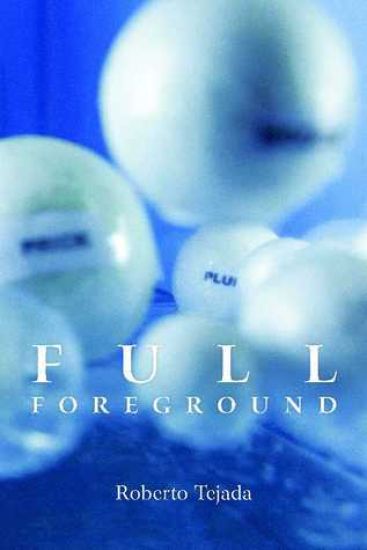
Full Foreground

Full Foreground

Roberto Tejada

University of Arizona Press
2012
nidottu
Poet Roberto Tejada uses lyrical poems to explore and give a voice to the troubles of global citizenship, US-Mexico relations, Latino identity, and the political emotion of queer sexualities. His collection provides a holistic ground-level view of pivotal world events from the mid 1990s to a more recent present. Tejada's innovative work dramatically widens the scope of Latina/o literature, showing us exactly what it can accomplish. The poems move very much like a three-act play, in which the first act is one of origins; the second, a staging of desire; and the third, a symbiosis. These acts magnify one another when unified. Each poem within the collection positions itself within the avant-garde, in which the artful use of language aims to dazzle, surprise, and enliven. The poems dance by, preserving a tension between hurry and delay, momentum and stasis, and every line is like a newly launched firecracker, sending out startling patterns of spark and flare. Tejada's exuberant language stretches the limits of selfhood and the way it is represented in poetry. He illuminates the tangled webs that are woven when identities are linked to sexuality, nationality, privilege, and temporality. The concerns and obsessions voiced here turn the construction of desire on its head, forcing us to ask ourselves what is worthy of our attentions.
National Camera

National Camera

Roberto Tejada

University of Minnesota Press
2009
sidottu
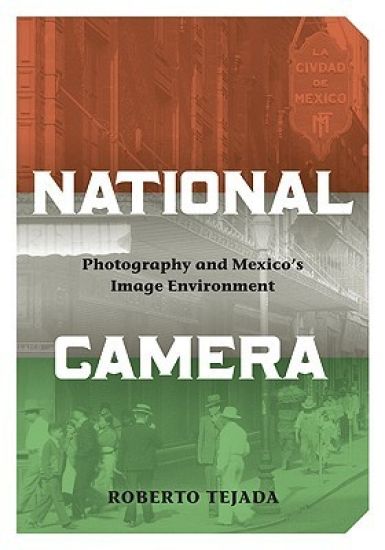
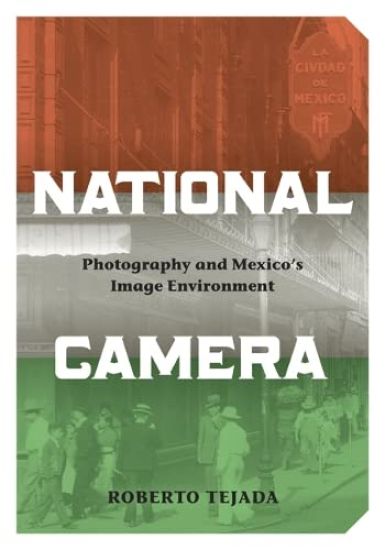
In National Camera, Roberto Tejada offers a comprehensive study of Mexican photography from the early twentieth century to today, demonstrating how images have shaped identities in Mexico, the United States, and in the borderlands where the two nations and cultures intersect—a place Tejada calls the shared image environment. The “problem” of photography in Mexico, Tejada shows, reveals cross-cultural episodes that are rife with contradictions, especially in the complex terms of cultural and sexual difference. Analyzing such topics as territory, sexuality, and social and ethnic relations in image making, Tejada delves into the work of key figures including Manuel Alvarez Bravo, Edward Weston, Tina Modotti, Marius de Zayas, and Julien Levy, as well as the Agustín Víctor Casasola Archive, the Boystown photographs, and contemporary Mexican and Latina photo-based artists. From the Mexican Revolution of 1910–1920 to the U.S.–Mexico borderlands of today, Tejada traces the connective thread that photography has provided between Mexican and U.S. American intellectual and cultural production and, in doing so, defines both nations.
National Camera

National Camera

Roberto Tejada

University of Minnesota Press
2009
nidottu
In National Camera, Roberto Tejada offers a comprehensive study of Mexican photography from the early twentieth century to today, demonstrating how images have shaped identities in Mexico, the United States, and in the borderlands where the two nations and cultures intersect-a place Tejada calls the shared image environment. The “problem” of photography in Mexico, Tejada shows, reveals cross-cultural episodes that are rife with contradictions, especially in the complex terms of cultural and sexual difference. Analyzing such topics as territory, sexuality, and social and ethnic relations in image making, Tejada delves into the work of key figures including Manuel Alvarez Bravo, Edward Weston, Tina Modotti, Marius de Zayas, and Julien Levy, as well as the AgustÍn VÍctor Casasola Archive, the Boystown photographs, and contemporary Mexican and Latina photo-based artists. From the Mexican Revolution of 1910–1920 to the U.S.–Mexico borderlands of today, Tejada traces the connective thread that photography has provided between Mexican and U.S. American intellectual and cultural production and, in doing so, defines both nations.
Why the Assembly Disbanded

Why the Assembly Disbanded

Roberto Tejada

FORDHAM UNIVERSITY PRESS
2022
pokkari
Pushing the boundaries of Latinx literature and what constitutes a borderlands poetics. Throughout Roberto Tejada's body of work, the renowned poet and celebrated critic has explored themes of Latinx culture, politics, history, language, and ecologies. In his latest collection, Why the Assembly Disbanded, he presents a unique contribution to Latinx letters that reflects on the relations between the United States and Latin America, especially their real and symbolic borderlands. Immersive, postmodern, and philosophical, Why the Assembly Disbanded provides an associative, critical Latinx aesthetic connecting the Mexico–United States borderlands to Latin America's neo-baroque heritage. Migrants, settlers, tourists, and exiles moving across various hemispheric landscapes are featured in these exuberant, capacious, and self-reflexive poems. Tejada relates the ravages of white supremacy in our culture that, together with immigrant precarity, turn home into a place of foreboding and impending eviction, even as a dream-weather makes room at last for scenes of possibility and attainment in the account of human history. The sweeping futuristic vistas open on to narratives of colonial extraction, human displacement, abuses of capitalism, mass media spectacle, the antagonism of language and technical images in the sensorium of urban and digital life-worlds, and the relations of desire encouraged by pictures and words in the economy of attention. Los Angeles and Mexico City figure prominently in poems committed to voicing modes of formation and community in an intersectional reckoning of personhoods prompted in work by artists Betye Saar, Amiri Baraka, Connie Samaras, and Rubén Ortiz Torres. With language given to pageantry, tonal precision, and a hopeful lyric radiance that can accommodate ecstasy and justice, Roberto Tejada's carnivalesque, borderland imagery pushes the boundaries of Latinx literature. World-building by way of reverie, speculation, and retro-futurist tableaux, and with vivid, sometimes violent particularity, his poems enact hallucinatory realities of the hemisphere: an imagination that triangulates history, lyricism, and art as social practice.
Celia Alvarez Muñoz

Celia Alvarez Muñoz

Roberto Tejada

UCLA Chicano Studies Research Center Press
2009
nidottu
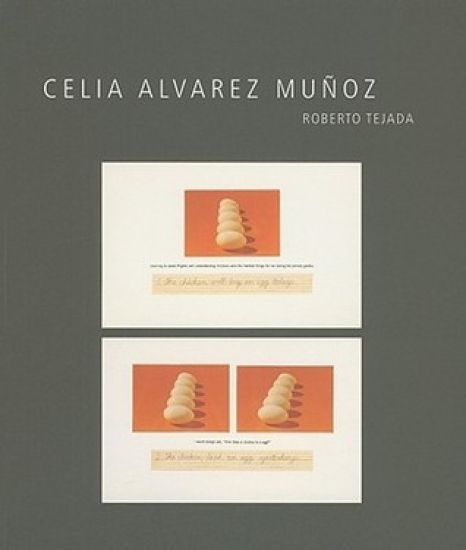
A conceptual and multimedia artist known for her writing, photography, painting, installation, and public art, Celia Alvarez Muñoz has been invited to exhibit and to create site-specific works for more than fifty major U.S. museums and was included in the 1991 Whitney Biennial. In her work Muñoz draws on family and communal memories to explore her own experiences growing up Catholic and Mexican American on the Texas-Mexico border, as well as larger issues concerning the spaces between languages and cultures and the histories that connect place to community.With more than one hundred color photographs, this book in the landmark A Ver series surveys Muñoz's career from her earliest bookmaking project, the Enlightenment series, and such installation pieces as Stories Your Mother Never Told You to her more recent works of public art and digital photography. Throughout his in-depth essay, Roberto Tejada illuminates Muñoz's feminist perspective, political engagement, and provocative use of ideas and artifacts from two cultures.
Carbonate of Copper

Carbonate of Copper

Roberto Tejada

FORDHAM UNIVERSITY PRESS
2025
pokkari
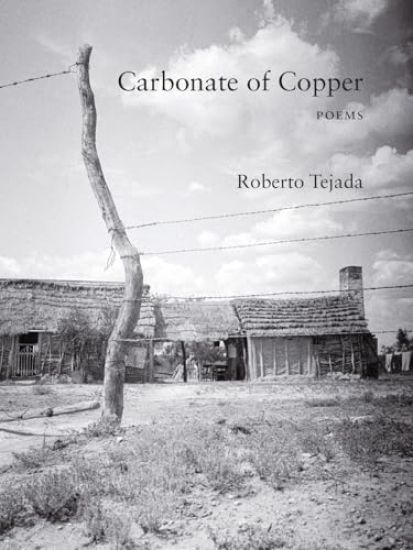
Bringing together lyric poetry, documentary photographs, and lives lived along the U.S.-Mexico borderland Written during extended periods in Brownsville, McAllen, and Marfa, Texas, in Carbonate of Copper Roberto Tejada gives voice to unsettled stories from the past, as well as to present-day experiences of custody and displacement. The poems stage scenes adjacent to the U.S.-Mexico border and to the realities of migration warped by jarring political vitriol, bearing witness to past and present-day hazards and sorrows wagered by those in search of asylum. So enabled, these poems make visible not only the infrastructure of militarized surveillance and its detention complex but also the aspiration to justice and mercy and the resilient self-organized order of time for migrants seeking human dignity while awaiting passage to the other side of the dividing line. The book's title refers also to a mineral found in azurite and malachite, a color medium that had an impact on art during the first phase of globalization, the ensuing colonial enterprise, and its systems of extraction. Carbonate of copper was less desirable than the deeper ultramarine made from ground lapis lazuli, but Renaissance artists and patrons nonetheless coveted it and prompted a market for the blue derivative used in tempera and oil pigment. The blue powder pigment serves, too, as a form of sorcery: one that would ward off those who deal in injury of the already dispossessed. Turning his attention to the forced relocation of peoples, the COVID-19 death toll, the encroaching dangers of illiberal rule, the meanings of home and eviction, the power of cultural memory, as well as his artistic forebears, Tejada accounts for the uncounted and those excluded from belonging in voices that tell the cruel fortunes and joyful vitality of human and non-human life forms.