Kirjojen hintavertailu. Mukana 11 342 296 kirjaa ja 12 kauppaa.

Kirjahaku

Etsi kirjoja tekijän nimen, kirjan nimen tai ISBN:n perusteella.

7 kirjaa tekijältä Robin A. Leaver

Bach Studies

Bach Studies

Robin A. Leaver

Routledge
2021
sidottu
This volume draws together a collection of Robin A. Leaver’s essays on Bach’s sacred music, exploring the religious aspects of this repertoire through consideration of three core themes: liturgy, hymnology, and theology. Rooted in a rich understanding of the historical sources, the book illuminates the varied ways in which Bach’s sacred music was informed and shaped by the religious, ritual, and intellectual contexts of his time, placing these works in the wider history of Protestant church music during the Baroque era.Including research from across a span of forty years, the chapters in this volume have been significantly revised and expanded for this publication, with several pieces appearing in English for the first time. Together, they offer an essential compendium of the work of a leading scholar of theological Bach studies.
Bach Studies

Bach Studies

Robin A. Leaver

TAYLOR FRANCIS LTD
2023
nidottu
This volume draws together a collection of Robin A. Leaver’s essays on Bach’s sacred music, exploring the religious aspects of this repertoire through consideration of three core themes: liturgy, hymnology, and theology. Rooted in a rich understanding of the historical sources, the book illuminates the varied ways in which Bach’s sacred music was informed and shaped by the religious, ritual, and intellectual contexts of his time, placing these works in the wider history of Protestant church music during the Baroque era.Including research from across a span of forty years, the chapters in this volume have been significantly revised and expanded for this publication, with several pieces appearing in English for the first time. Together, they offer an essential compendium of the work of a leading scholar of theological Bach studies.
The Whole Church Sings

The Whole Church Sings

Robin A. Leaver

William B Eerdmans Publishing Co
2017
muu
Authoritative study by a renowned musicologist and Reformation scholar Many scholars think that congregational singing was not established in Lutheran worship until well after the start of the Reformation. In this book Robin A. Leaver calls that view into question, presenting new research to confirm the earlier view that congregational singing was both the intention and the practice right from the beginning of the Wittenberg reforms in worship. Leaver's study focuses on the Wittenberg hymnal of 1526, which until now has received little scholarly attention. This hymnal, Leaver argues, shows how the Lutheran Reformation was to a large degree defined, expressed, promoted, and taken to heart through early Lutheran hymns. Examining what has been forgotten or neglected about the origins of congregational hymnody under Martin Luther's leadership, this study of worship, music, and liturgy is a significant contribution to Reformation scholarship.
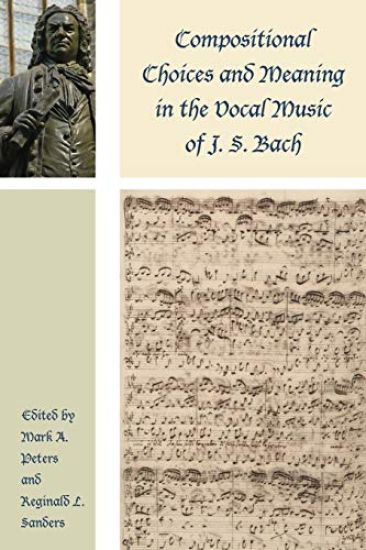
Compositional Choices and Meaning in the Vocal Music of J. S. Bach
Compositional Choices and Meaning in the Vocal Music of J. S. Bach collects seventeen essays by leading Bach scholars. The authors each address in some way such questions of meaning in J. S. Bach’s vocal compositions—including his Passions, Masses, Magnificat, and cantatas—with particular attention to how such meaning arises out of the intentionality of Bach’s own compositional choices or (in Part IV in particular) how meaning is discovered, and created, through the reception of Bach’s vocal works. And the authors do not consider such compositional choices in a vacuum, but rather discuss Bach’s artistic intentions within the framework of broader cultural trends—social, historical, theological, musical, etc. Such questions of compositional choice and meaning frame the four primary approaches to Bach’s vocal music taken by the authors in this volume, as seen across the book’s four parts: Part I: How might the study of historical theology inform our understanding of Bach’s compositional choices in his music for the church (cantatas, Passions, masses)? Part II: How can we apply traditional analytical tools to understand better how Bach’s compositions were created and how they might have been heard by his contemporaries? Part III: What we can understand anew through the study of Bach’s self-borrowing (i.e., parody), which always changed the earlier meaning of a composition through changes in textual content, compositional characteristics, the work’s context within a larger composition, and often the performance context (from court to church, for example)? Part IV: What can the study of reception teach us about a work’s meaning(s) in Bach’s time, during the time of his immediate successors, and at various points since then (including our present)? The chapters in this volume thus reflect the breadth of current Bach research in its attention not only to source study and analysis, but also to meanings and contexts for understanding Bach’s compositions.
Compositional Choices and Meaning in the Vocal Music of J. S. Bach
Compositional Choices and Meaning in the Vocal Music of J. S. Bach collects seventeen essays by leading Bach scholars. The authors each address in some way such questions of meaning in J. S. Bach’s vocal compositions—including his Passions, Masses, Magnificat, and cantatas—with particular attention to how such meaning arises out of the intentionality of Bach’s own compositional choices or (in Part IV in particular) how meaning is discovered, and created, through the reception of Bach’s vocal works. And the authors do not consider such compositional choices in a vacuum, but rather discuss Bach’s artistic intentions within the framework of broader cultural trends—social, historical, theological, musical, etc. Such questions of compositional choice and meaning frame the four primary approaches to Bach’s vocal music taken by the authors in this volume, as seen across the book’s four parts: Part I: How might the study of historical theology inform our understanding of Bach’s compositional choices in his music for the church (cantatas, Passions, masses)? Part II: How can we apply traditional analytical tools to understand better how Bach’s compositions were created and how they might have been heard by his contemporaries? Part III: What we can understand anew through the study of Bach’s self-borrowing (i.e., parody), which always changed the earlier meaning of a composition through changes in textual content, compositional characteristics, the work’s context within a larger composition, and often the performance context (from court to church, for example)? Part IV: What can the study of reception teach us about a work’s meaning(s) in Bach’s time, during the time of his immediate successors, and at various points since then (including our present)?The chapters in this volume thus reflect the breadth of current Bach research in its attention not only to source study and analysis, but also to meanings and contexts for understanding Bach’s compositions.
Luthers Liturgical Music

Luthers Liturgical Music

Robin A. Leaver

Fortress Press,U.S.
2017
pokkari
Martin Luther's relationship to music has been largely downplayed, yet music played a vital role in Luther's life -- and he in turn had a deep and lasting effect on Christian hymnody. In Luther's Liturgical Music Robin Leaver comprehensively explores these connections. Replete with tables, figures, and musical examples, this volume is the most extensive study on Luther and music ever published. Leaver's work makes a formidable contribution to Reformation studies, but worship leaders, musicians, and others will also find it an invaluable, very readable resource.