Kirjojen hintavertailu. Mukana 11 627 670 kirjaa ja 12 kauppaa.

Kirjahaku

Etsi kirjoja tekijän nimen, kirjan nimen tai ISBN:n perusteella.

13 kirjaa tekijältä Robin Alexander

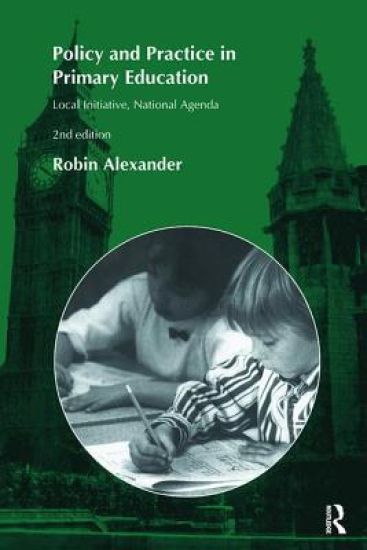
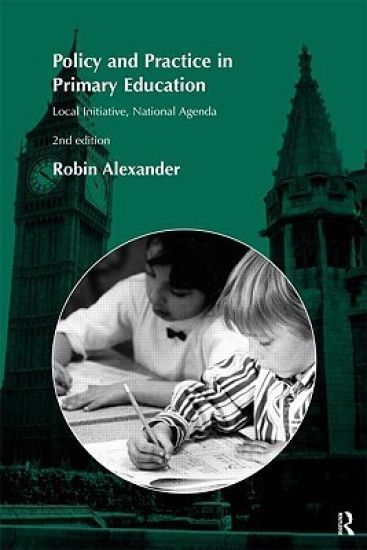
Policy and Practice in Primary Education
Detailed accounts of two influential initiatives of the 1990s, whose educational and political lessons remain highly relevant: systemic and pedagogic reform in one of Britain’s largest cities, and the controversial ‘three wise men’ government enquiry into primary teaching to which it led.Alexander's controversial and widely-read report on primary education in Leeds has now been revised as a major study of policy initiatives in primary education and their impact on practice. The book examines an ambitious programme of local reform aimed at improving teaching and learning in the primary schools of one of Britain's largest cities. It addresses important questions about children's needs, the curriculum, classroom practice and school management. When first published, Robin Alexander's report was hailed as `seminal' and `the most important document since Plowden' but it was also quoted and misquoted in support of widely opposed political and media agendas. This new edition retains Part I from the first edition, detailing the impact of Leeds LEA's programme for educational reform. However, it also provides a totally new and greatly extended Part II, which gives an insider's account of the sequel to the Leeds report - the government's 1992 'three wise men' report. There is also a new introduction.
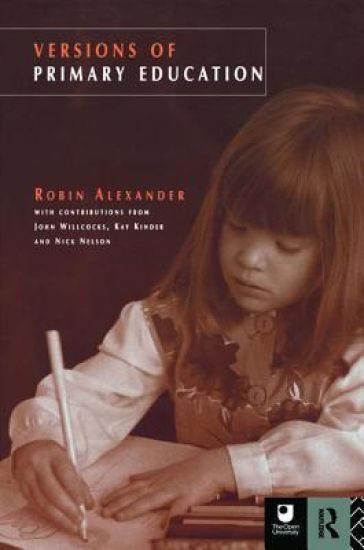
Versions of Primary Education

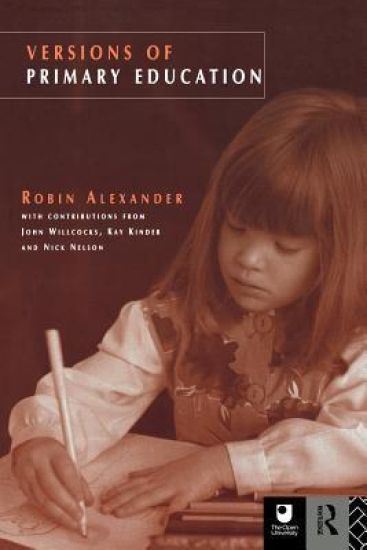
Versions of Primary Education

Robin Alexander

Routledge
1995
nidottu
Getting to the heart of primary education: six contrasting studies of teachers, teaching, learning and classroom discourse, all set in a historical frame. Contains extended lesson transcripts for re-analysis.The five studies in this book span the tumultuous period from the mid 1980s to the mid 1990s. This was a time when the dominant educational ideas and practices of the previous two decades were being questioned and primary teachers were being catapulted from the Plowden era into the very different ethos of the National Curriculum.The first four studies portray the ideas, practices and dilemmas of primary teaching at different points during this period. They also exemplify different approaches to classroom research, though all of them stay close to the interactions between teacher and child which are central to learning. They thus raise educational questions which are perennial and fundamental, rather than tied to policy or fashion. The final study uses a broader brush to provide a historical framework for understanding the particular blend of change and continuity which characterises English primary education as a whole.
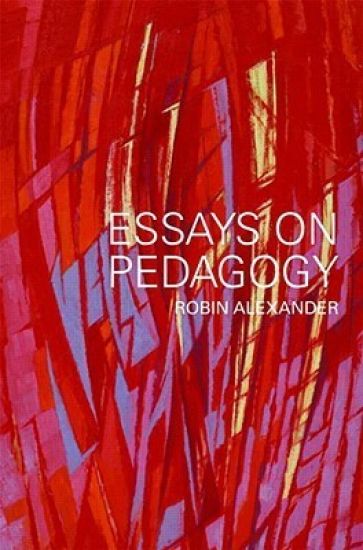
Essays on Pedagogy

Essays on Pedagogy

Robin Alexander

Routledge
2008
sidottu
Seven authoritative contributions to the emerging field of pedagogy and to comparative, cultural and policy studies in education. A must for those who want to do more than merely comply with received versions of ‘best practice’. Pedagogy is at last gaining the attention in English-speaking countries which it has long enjoyed elsewhere. But is it the right kind of attention? Do we still tend to equate pedagogy with teaching technique and little more? Now that governments, too, have become interested in it, is pedagogy a proper matter for public policy and official prescription?In Essays on Pedagogy, Robin Alexander brings together some of his most powerful recent writing, drawing on research undertaken in Britain and other countries, to illustrate his view that to engage properly with pedagogy we need to apply cultural, historical and international perspectives, as well as evidence on how children most effectively learn and teachers most productively teach. The book includes chapters on a number of themes, expertly woven together: the politicisation of school and classroom life and the trend towards a pedagogy of compliance; the benefits and hazards of international comparison; pedagogical dichotomies old and new, and how to avoid them; how education and pedagogy might respond to a world in peril; the rare and special chemistry of the personal and the professional which produces outstanding teaching; the scope and character of pedagogy itself, as a field of enquiry and action. For those who see teachers as thinking professionals, rather than as technicians who merely comply with received views of ‘best practice’, this book will open minds while maintaining a practical focus. For student teachers it will provide a framework for their development. Its strong and consistent international perspective will be of interest to educational comparativists, but is also an essential response to globalisation and the predicaments now facing humanity as a whole.
Essays on Pedagogy

Essays on Pedagogy

Robin Alexander

Routledge
2008
nidottu
Seven authoritative contributions to the emerging field of pedagogy and to comparative, cultural and policy studies in education. A must for those who want to do more than merely comply with received versions of ‘best practice’. Pedagogy is at last gaining the attention in English-speaking countries which it has long enjoyed elsewhere. But is it the right kind of attention? Do we still tend to equate pedagogy with teaching technique and little more? Now that governments, too, have become interested in it, is pedagogy a proper matter for public policy and official prescription?In Essays on Pedagogy, Robin Alexander brings together some of his most powerful recent writing, drawing on research undertaken in Britain and other countries, to illustrate his view that to engage properly with pedagogy we need to apply cultural, historical and international perspectives, as well as evidence on how children most effectively learn and teachers most productively teach. The book includes chapters on a number of themes, expertly woven together: the politicisation of school and classroom life and the trend towards a pedagogy of compliance; the benefits and hazards of international comparison; pedagogical dichotomies old and new, and how to avoid them; how education and pedagogy might respond to a world in peril; the rare and special chemistry of the personal and the professional which produces outstanding teaching; the scope and character of pedagogy itself, as a field of enquiry and action. For those who see teachers as thinking professionals, rather than as technicians who merely comply with received views of ‘best practice’, this book will open minds while maintaining a practical focus. For student teachers it will provide a framework for their development. Its strong and consistent international perspective will be of interest to educational comparativists, but is also an essential response to globalisation and the predicaments now facing humanity as a whole.
Education in Spite of Policy

Education in Spite of Policy

Robin Alexander

Routledge
2021
sidottu
A national system of education cannot function without policy. But the path to practice is seldom smooth, especially when ideology overrules evidence or when ministers seek to micromanage what is best left to teachers. And once the media join the fray the mixture becomes downright combustible.Drawing on his long experience as teacher, researcher, government adviser, campaigner and international consultant, and on over 600 published sources, Robin Alexander expertly illustrates and illuminates these processes. This selection from his recent writing, some hitherto unpublished, opens windows onto cases and issues that concern every teacher. Part 1 tackles system-level reform. It revisits the Cambridge Primary Review, an evidence-rich enquiry into the condition and future of primary education in England, which challenged the UK government’s policies on curriculum, testing, standards and more besides. Here the reform narratives and strategies of successive governments are confronted and dissected. Part 2 follows the development of England’s current National Curriculum, exposing its narrow vision and questionable use of evidence and offering a more generous aims-driven alternative. This section also investigates the expertise and leadership needed if children are to experience a curriculum of the highest quality in all its aspects.Part 3 reaches the heart of the matter: securing the place in effective pedagogy of well-founded classroom talk, a mission repeatedly frustrated by political intervention. The centrepiece is dialogic teaching, a proven tool for advancing students’ speaking, thinking, learning and arguing, and an essential response to the corrosion of democracy and the nihilism of ‘post-truth’.Part 4 goes global. It investigates governments’ PISA-fuelled flirtations with what they think can be adapted or copied from education elsewhere, examines the benefits and pitfalls of international comparison, and ends with the ultimate policy initiative: the United Nations mission to ensure ‘inclusive and equitable quality education’ for all the world’s children.Education in Spite of Policy is for all those teachers, students, school leaders and researchers who value the conversation of policy, evidence and practice, and who wish to explore the parts of education that policy cannot reach.
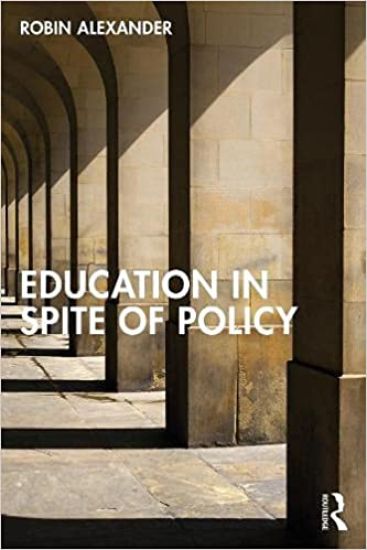
Education in Spite of Policy

Education in Spite of Policy

Robin Alexander

TAYLOR FRANCIS LTD
2021
nidottu
A national system of education cannot function without policy. But the path to practice is seldom smooth, especially when ideology overrules evidence or when ministers seek to micromanage what is best left to teachers. And once the media join the fray the mixture becomes downright combustible.Drawing on his long experience as teacher, researcher, government adviser, campaigner and international consultant, and on over 600 published sources, Robin Alexander expertly illustrates and illuminates these processes. This selection from his recent writing, some hitherto unpublished, opens windows onto cases and issues that concern every teacher. Part 1 tackles system-level reform. It revisits the Cambridge Primary Review, an evidence-rich enquiry into the condition and future of primary education in England, which challenged the UK government’s policies on curriculum, testing, standards and more besides. Here the reform narratives and strategies of successive governments are confronted and dissected. Part 2 follows the development of England’s current National Curriculum, exposing its narrow vision and questionable use of evidence and offering a more generous aims-driven alternative. This section also investigates the expertise and leadership needed if children are to experience a curriculum of the highest quality in all its aspects.Part 3 reaches the heart of the matter: securing the place in effective pedagogy of well-founded classroom talk, a mission repeatedly frustrated by political intervention. The centrepiece is dialogic teaching, a proven tool for advancing students’ speaking, thinking, learning and arguing, and an essential response to the corrosion of democracy and the nihilism of ‘post-truth’.Part 4 goes global. It investigates governments’ PISA-fuelled flirtations with what they think can be adapted or copied from education elsewhere, examines the benefits and pitfalls of international comparison, and ends with the ultimate policy initiative: the United Nations mission to ensure ‘inclusive and equitable quality education’ for all the world’s children.Education in Spite of Policy is for all those teachers, students, school leaders and researchers who value the conversation of policy, evidence and practice, and who wish to explore the parts of education that policy cannot reach.
Policy and Practice in Primary Education
Detailed accounts of two influential initiatives of the 1990s, whose educational and political lessons remain highly relevant: systemic and pedagogic reform in one of Britain‘s largest cities, and the controversialthree wise men government enquiry into primary teaching to which it led. Alexander's controversial and widely-read report on primary education in Leeds has now been revised as a major study of policy initiatives in primary education and their impact on practice. The book examines an ambitious programme of local reform aimed at improving teaching and learning in the primary schools of one of Britain's largest cities. It addresses important questions about children's needs, the curriculum, classroom practice and school management. When first published, Robin Alexander's report was hailed as `seminal' and `the most important document since Plowden' but it was also quoted and misquoted in support of widely opposed political and media agendas. This new edition retains Part I from the first edition, detailing the impact of Leeds LEA's programme for educational reform. However, it also provides a totally new and greatly extended Part II, which gives an insider's account of the sequel to the Leeds report - the government's 1992 'three wise men' report. There is also a new introduction.
Versions of Primary Education

Versions of Primary Education

Robin Alexander

Routledge
2017
sidottu
Getting to the heart of primary education: six contrasting studies of teachers, teaching, learning and classroom discourse, all set in a historical frame. Contains extended lesson transcripts for re-analysis. The five studies in this book span the tumultuous period from the mid 1980s to the mid 1990s. This was a time when the dominant educational ideas and practices of the previous two decades were being questioned and primary teachers were being catapulted from the Plowden era into the very different ethos of the National Curriculum.The first four studies portray the ideas, practices and dilemmas of primary teaching at different points during this period. They also exemplify different approaches to classroom research, though all of them stay close to the interactions between teacher and child which are central to learning. They thus raise educational questions which are perennial and fundamental, rather than tied to policy or fashion. The final study uses a broader brush to provide a historical framework for understanding the particular blend of change and continuity which characterises English primary education as a whole.
A Dialogic Teaching Companion

A Dialogic Teaching Companion

Robin Alexander

Routledge
2020
sidottu
Building on Robin Alexander’s landmark Towards Dialogic Teaching, this book shows how and why the dialogic approach has a positive impact on student engagement and learning. It sets out the evidence, examines the underpinning ideas and issues, and offers guidance and resources for the planning, implementation and review of effective dialogic teaching in a wide range of educational settings.Dialogic teaching harnesses the power of talk to engage students’ interest, stimulate their thinking, advance their understanding, expand their ideas and build and evaluate argument, empowering them for lifelong learning and for social and democratic engagement. Drawing on extensive published research as well as the high-profile, 5000-student trial and independent evaluation of Alexander’s distinctive approach to dialogic teaching in action, this book: Presents the case for treating talk as not merely incidental to teaching and learning but as an essential tool of education whose exploitation and development require understanding and skill; Explores questions of definition and conceptualisation in the realms of dialogue, argumentation and dialogic teaching, revealing the similarities and differences between the main approaches; Discusses evidence that has enriched the debate about classroom talk in relation to oracy, argumentation, student voice and philosophy for children as well as dialogic teaching itself; Identifies what it is about dialogic teaching that makes a difference to students’ thinking, learning and understanding; Presents the author’s rationale and framework for dialogic teaching, now completely revised and much expanded; Proposes a professional development strategy for making dialogic teaching happen which, like the framework, has been successfully trialled in schools; Lists resources from others working in the field to support further study and development; Includes an extensive bibliography.Robin Alexander’s A Dialogic Teaching Companion, like its popular predecessor Towards Dialogic Teaching, aims to support the work of all those who are interested in the quality of teaching and learning, but especially trainee and serving teachers, teacher educators, school leaders and researchers.
A Dialogic Teaching Companion

A Dialogic Teaching Companion

Robin Alexander

Routledge
2020
nidottu
Building on Robin Alexander’s landmark Towards Dialogic Teaching, this book shows how and why the dialogic approach has a positive impact on student engagement and learning. It sets out the evidence, examines the underpinning ideas and issues, and offers guidance and resources for the planning, implementation and review of effective dialogic teaching in a wide range of educational settings.Dialogic teaching harnesses the power of talk to engage students’ interest, stimulate their thinking, advance their understanding, expand their ideas and build and evaluate argument, empowering them for lifelong learning and for social and democratic engagement. Drawing on extensive published research as well as the high-profile, 5000-student trial and independent evaluation of Alexander’s distinctive approach to dialogic teaching in action, this book: Presents the case for treating talk as not merely incidental to teaching and learning but as an essential tool of education whose exploitation and development require understanding and skill; Explores questions of definition and conceptualisation in the realms of dialogue, argumentation and dialogic teaching, revealing the similarities and differences between the main approaches; Discusses evidence that has enriched the debate about classroom talk in relation to oracy, argumentation, student voice and philosophy for children as well as dialogic teaching itself; Identifies what it is about dialogic teaching that makes a difference to students’ thinking, learning and understanding; Presents the author’s rationale and framework for dialogic teaching, now completely revised and much expanded; Proposes a professional development strategy for making dialogic teaching happen which, like the framework, has been successfully trialled in schools; Lists resources from others working in the field to support further study and development; Includes an extensive bibliography.Robin Alexander’s A Dialogic Teaching Companion, like its popular predecessor Towards Dialogic Teaching, aims to support the work of all those who are interested in the quality of teaching and learning, but especially trainee and serving teachers, teacher educators, school leaders and researchers.