Kirjojen hintavertailu. Mukana 11 244 527 kirjaa ja 12 kauppaa.

Kirjahaku

Etsi kirjoja tekijän nimen, kirjan nimen tai ISBN:n perusteella.

5 kirjaa tekijältä Robin L. Einhorn

Property Rules

Property Rules

Robin L. Einhorn

University of Chicago Press
1991
sidottu
In Property Rules, Robin L. Einhorn uses City Council records-previously thought destroyed-and census data to track the course of city government in Chicago, providing an important reinterpretation of the relationship between political and social structures in the nineteenth-century American city.A Choice "Outstanding Academic Book""[A] masterful study of policy-making in Chicago."—Choice"[A] major contribution to urban and political history. . . . [A]n excellent book."—Jeffrey S. Adler, American Historical Review"[A]n enlightening trip. . . . Einhorn's foray helps make sense out of the transition from Jacksonian to Gilded Age politics on the local level. . . . [She] has staked out new ground that others would do well to explore."—Arnold R. Hirsch, American Journal of Legal History"A well-documented and informative classic on urban politics."—Daniel W. Kwong, Law Books in Review
Property Rules

Property Rules

Robin L. Einhorn

University of Chicago Press
2001
nidottu
In Property Rules, Robin L. Einhorn uses City Council records-previously thought destroyed-and census data to track the course of city government in Chicago, providing an important reinterpretation of the relationship between political and social structures in the nineteenth-century American city.A Choice "Outstanding Academic Book""[A] masterful study of policy-making in Chicago."—Choice"[A] major contribution to urban and political history. . . . [A]n excellent book."—Jeffrey S. Adler, American Historical Review"[A]n enlightening trip. . . . Einhorn's foray helps make sense out of the transition from Jacksonian to Gilded Age politics on the local level. . . . [She] has staked out new ground that others would do well to explore."—Arnold R. Hirsch, American Journal of Legal History"A well-documented and informative classic on urban politics."—Daniel W. Kwong, Law Books in Review
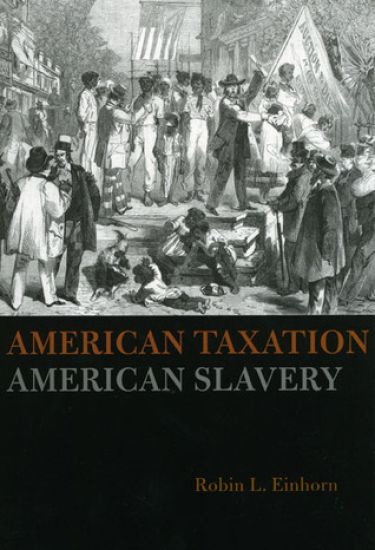
American Taxation, American Slavery

American Taxation, American Slavery

Robin L. Einhorn

University of Chicago Press
2008
nidottu
In "American Taxation, American Slavery", Robin Einhorn shows the deep, broad, and continuous influence of slavery on America's fear and loathing of taxes. From the earliest colonial times right up to the Civil War, slaveholding elites feared strong and democratic government as a threat to the institution of slavery. Einhorn reveals how the heated battles over taxation, the power to tax, and the distribution of tax burdens were rooted not in debates over personal liberty but rather in the rights of slaveholders to hold human beings as property. Along the way, she exposes the antidemocratic origins of the enduringly popular Jeffersonian rhetoric about weak government, showing that state governments were actually more democratic - and stronger - where most people were free.A strikingly original look at the role of slavery in the making of the United States, "American Taxation, American Slavery" will prove essential to anyone interested in the history of American government and politics.
Class Conflict, Slavery, and the United States Constitution

Class Conflict, Slavery, and the United States Constitution

Robin L. Einhorn

Cambridge University Press
2009
sidottu
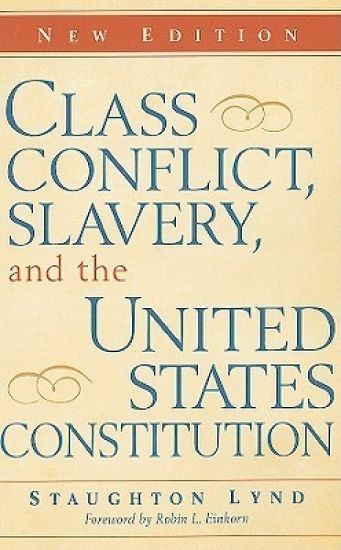
First published in 1967, Class Conflict, Slavery, and the United States Constitution was among the first studies to identify the importance of slavery to the founding of the American Republic. Provocative and powerful, this book offers explanations for the movements and motivations that underpinned the Revolution and the Early Republic. First, Staughton Lynd analyzes what motivated farm tenants and artisans during the period of the American Revolution. Second, he argues that slavery, and a willingness to compromise with slavery, were at the center of all political arrangements by the patriot leadership, including the United States Constitution. Third, he maintains that the historiography of the United States has adopted the mistaken perspective of Thomas Jefferson, who held that southern plantation owners were merely victimized agrarians. This new edition reproduces the original Preface by Edward P. Thompson and includes a new Afterword by Robin Einhorn that examines Lynd's arguments in the context of forty years of subsequent scholarship.
Class Conflict, Slavery, and the United States Constitution

Class Conflict, Slavery, and the United States Constitution

Robin L. Einhorn

Cambridge University Press
2009
pokkari
First published in 1967, Class Conflict, Slavery, and the United States Constitution was among the first studies to identify the importance of slavery to the founding of the American Republic. Provocative and powerful, this book offers explanations for the movements and motivations that underpinned the Revolution and the Early Republic. First, Staughton Lynd analyzes what motivated farm tenants and artisans during the period of the American Revolution. Second, he argues that slavery, and a willingness to compromise with slavery, were at the center of all political arrangements by the patriot leadership, including the United States Constitution. Third, he maintains that the historiography of the United States has adopted the mistaken perspective of Thomas Jefferson, who held that southern plantation owners were merely victimized agrarians. This new edition reproduces the original Preface by Edward P. Thompson and includes a new Afterword by Robin Einhorn that examines Lynd's arguments in the context of forty years of subsequent scholarship.