Kirjojen hintavertailu. Mukana 11 244 527 kirjaa ja 12 kauppaa.

Kirjahaku

Etsi kirjoja tekijän nimen, kirjan nimen tai ISBN:n perusteella.

4 kirjaa tekijältä Robin L. West

Progressive Constitutionalism

Progressive Constitutionalism

Robin L. West

Duke University Press
1994
sidottu
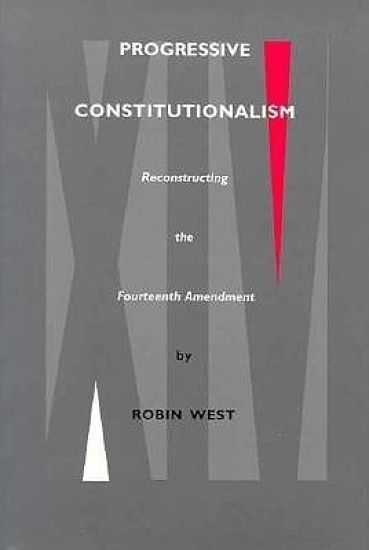
The Fourteenth Amendment guarantees all citizens equal protection under the law as well as immunity from laws that deprive them of life, liberty, or property without due process of law. In Progressive Constitutionalism, Robin West develops an interpretation of this amendment that contrasts with the views, conservative and liberal, of the Rehnquist, Burger, and Warren Courts, and with the radical "antisubordinationist" account provided by the critical legal studies movement and many prominent feminist and critical race theorists. Her interpretation consists of a "substantive" argument regarding the Amendment’s core meaning, and a jurisprudential argument regarding the role of the courts and Congress in fulfilling the Amendment’s progressive promise.West shows how the "equal protection" clause, far from insulating the private spheres of culture, market, and home life, as is commonly held, directly targets abuses of power within those spheres. She develops a number of arguments for the modern relevance of this understanding, from the failure of the state to provide equal protection against private domestic violence, permitting a "private sovereignty" of patriarchal power within the home, to the the state’s failure to provide equal protection against material deprivation, allowing "private sovereignty" between economically privileged and desperate people in private markets.West’s argument extends to the "liberty" prong of the due process clause, seen here as a protection of the positive, not negative, liberty of citizens, covering rights in such typically controversial areas as welfare, education, and domestic safety. This interpretation recasts a number of contemporary constitutional issues, such as affirmative action and hate speech, and points to very different problems-notably private, unchecked criminal violence and extreme economic deprivation-as the central constitutional dilemmas of our day. Progressive Constitutionalism urges a substantive, institutional, and jurisprudential reorientation of our understanding of the Fourteenth Amendment, one that would necessarily be pursued through Congressional rather than judicial channels. In doing so, with attention to history and both feminist and critical race scholarship, it should reinvigorate our politics and our constitutional conversations-and, perhaps, point us toward a more just society.
Teaching Law

Teaching Law

Robin L. West

Cambridge University Press
2013
sidottu
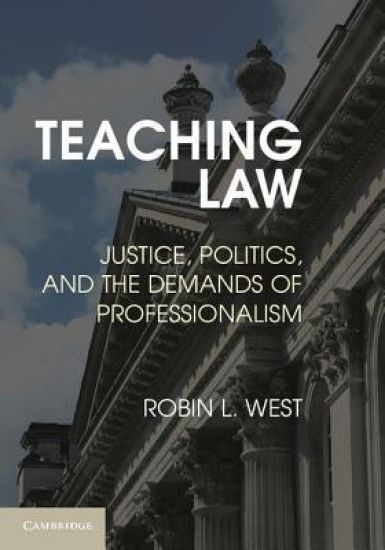
Teaching Law re-imagines law school teaching and scholarship by going beyond crises now besetting the legal academy and examining deeper and longer-lasting challenges. The book argues that the legal academy has long neglected the need to focus teaching and scholarship on the ideals of justice that law fitfully serves, the political origins of law, and the development of a respectful but critical relationship with the legal profession. It suggests reforms to improve the quality of legal education and responds to concerns that law schools eschew the study of justice, rendering students amoralist; that law schools slight the political sources of law, particularly in legislative action; and that law schools have ignored the profession entirely. These areas of neglect have impoverished legal teaching and scholarship as the academy is refashioned in response to current financial exigencies, and addressing them is long overdue.
Civil Rights

Civil Rights

Robin L. West

Cambridge University Press
2019
sidottu
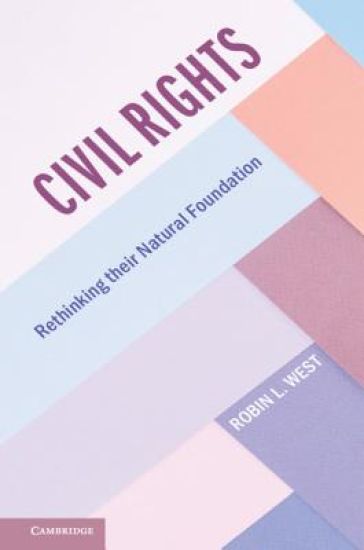
All of us are entitled to the protections of law against violence, to a high quality education, to decent employment that respects our dignity, and to necessary assistance with our caregiving. Our civil rights are our rights to the protections of ordinary law - not constitutional law, and not only antidiscrimination law - that will ensure that we can participate in civil society, and hence lead flourishing lives. In this innovative work, Robin L. West looks back to nineteenth-century Civil Rights Acts to argue that the point of civil rights law is not only non-discrimination, but also to assure that all of us receive the protection of legal rights that promote human flourishing. Since the 1960s, Supreme Court decisions on civil rights issues have focused on non-discrimination and thus have 'hollowed out' this broader meaning of civil rights law. This book reconceives civil rights as a set of legal guarantees that all will be included in the legal, political, economic and social projects central to civil society.
Civil Rights

Civil Rights

Robin L. West

Cambridge University Press
2019
pokkari
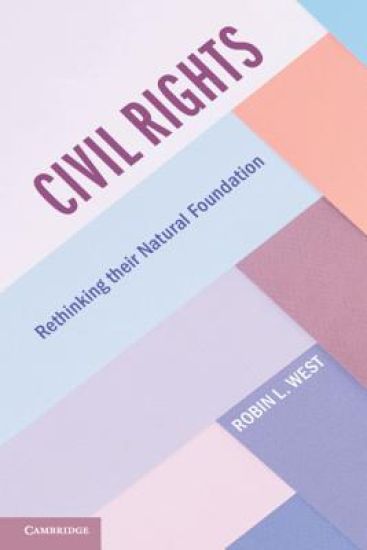
All of us are entitled to the protections of law against violence, to a high quality education, to decent employment that respects our dignity, and to necessary assistance with our caregiving. Our civil rights are our rights to the protections of ordinary law - not constitutional law, and not only antidiscrimination law - that will ensure that we can participate in civil society, and hence lead flourishing lives. In this innovative work, Robin L. West looks back to nineteenth-century Civil Rights Acts to argue that the point of civil rights law is not only non-discrimination, but also to assure that all of us receive the protection of legal rights that promote human flourishing. Since the 1960s, Supreme Court decisions on civil rights issues have focused on non-discrimination and thus have 'hollowed out' this broader meaning of civil rights law. This book reconceives civil rights as a set of legal guarantees that all will be included in the legal, political, economic and social projects central to civil society.