Kirjojen hintavertailu. Mukana 12 016 292 kirjaa ja 12 kauppaa.

Kirjahaku

Etsi kirjoja tekijän nimen, kirjan nimen tai ISBN:n perusteella.

5 kirjaa tekijältä Robin Maconie

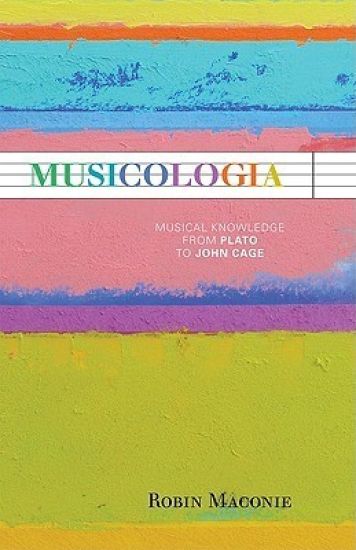
Musicologia

Musicologia

Robin Maconie

Scarecrow Press
2010
sidottu
In Musicologia—meaning "musical reasoning" as distinct from a mere love of music—author and composer Robin Maconie takes aim against the fashionable misconception that music is empty of meaning, or "auditory cheesecake." Fresh and penetrating insights draw attention to the influence of musical analogy in the history of science and philosophy from ancient Greece to modern times. Since music has always existed, it is an expression of human consciousness. The discoveries of Pythagoras, Zeno, Kepler, Newton, and Einstein would not have been possible without a tradition of musical acoustics. The story of Musicologia unfolds in thirty-one chapters from primordial considerations of silence, communication, selfhood, balance, and motion to focus on more recent and specific issues of chaos, order, relativity, and artificial intelligence, showing that even the most controversial aspects of modern art music form part of a wider endeavor to engage with universal propositions of science and philosophy.
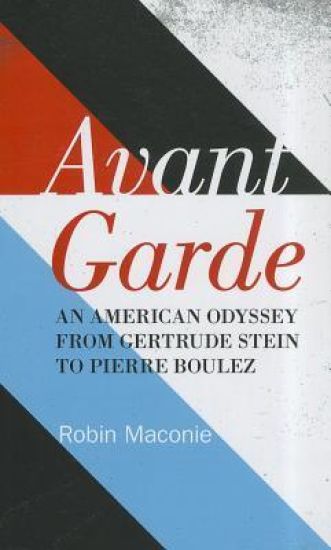
Avant Garde

Avant Garde

Robin Maconie

Scarecrow Press
2012
sidottu
Gertrude Stein and philosopher Alfred North Whitehead were unlikely friends who spent most of their mature lives in exile: Stein in France and Whitehead in the United States. Their friendship was based on a mutual admiration for the philosophical pragmatism of William James and skepticism toward the European tradition of intellectual abstraction extending as far back as Plato and Aristotle. Though neither was musical, both were leading exponents of a new orientation toward time and knowledge acquisition that would go on to influence succeeding generations of composers. Through Virgil Thomson, Stein came to influence John Cage and the New York school of abstract music; through his teaching in the United States, Whitehead’s philosophy of time and cognition came to be seen in America and abroad as an alternative to Newtonian neoclassicism, an alternative clearly acknowledged in the metric modulations of Elliott Carter and Conlon Nancarrow as well as the post-1950 total serialism of Pierre Boulez and Karlheinz Stockhausen. The seemingly unlikely influence of Stein and Whitehead on Thomson, Cage, Carter, and the minimalists tells a remarkable story of transmission within and among the arts and philosophy, one that Robin Maconie unravels through his series of essays in Avant Garde: An American Odyssey from Gertrude Stein to Pierre Boulez. Maconie explores, from Hollywood to Harvard, the way in which music functions as a form of communication across the boundaries of language, serving the causes of trade and diplomacy through its representation of national identity, emotional character, honorable intention, and social discipline. The study of music as a language inevitably became the object of information science after World War II, but, as Maconie notes, 60 years on, music’s refusal to yield to scientific elucidation has generated a stream of anti-music propaganda by a powerful collective of celebrity science writers. In a sequence of linked essays, Stockhausen specialist Robin Maconie reconsiders the role of music and music technology through careful examination of key modern concepts with respect to time, existence, identity, and relationship as formulated by such thinkers as Einstein, Russell, Whitehead, and Stein, along with Freud, Schoenberg, Wittgenstein, and Marcel Duchamp. This foray into art, music, science, and philosophy is ideally suited for students and scholars of these disciplines, as well as those seeking to understand more deeply the influence these individuals had on one another’s work and modern music.
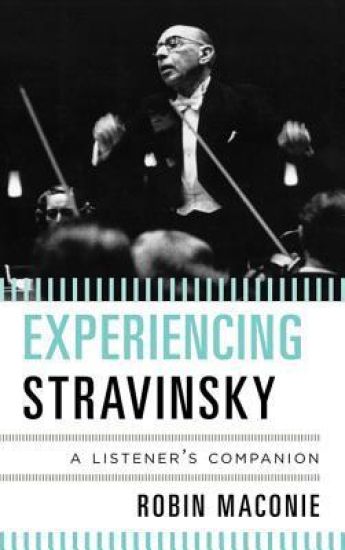
Experiencing Stravinsky

Experiencing Stravinsky

Robin Maconie

Scarecrow Press
2013
sidottu
Hear the name “Igor Stravinsky” and the first thing that comes to mind is a composer of ponderous, “serious” music. But did you know that Stravinsky lived much of his life in Hollywood? That he collaborated on musical projects with Pablo Picasso and George Balanchine? That his work subtly espoused deeply held political views and reflected key literary influences? That he was not only interested in the modern communication technologies of his time—sound recording, radio, television, even early computers—but wrote music that echoed their impact? In Experiencing Stravinsky, music historian Robin Maconie takes a fresh approach to understanding this great composer’s works, explaining what makes Stravinsky’s sound unique and what we, as listeners, need to know in order to appreciate the variety and brilliance of his compositions. Experiencing Stravinsky is more than just another work of music appreciation. In the author’s deft hands, Stravinsky’s long musical career is a guided tour through 20th-century history, from Czarist Russia and two world wars to the height of the Hollywood era and the birth of the information age. Maconie has provided nothing less than an operating manual to getting the most out of Stravinsky’s music.
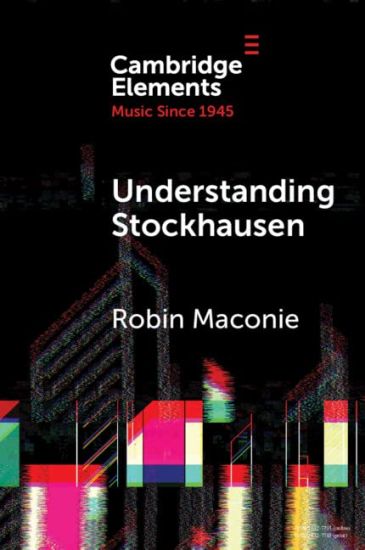
Understanding Stockhausen

Understanding Stockhausen

Robin Maconie

Cambridge University Press
2022
pokkari
This collection of essays addresses technical developments in telecommunications and sound recording that have guided the direction of musical aesthetics in the post-1950 era. Such information is readily available online but may appear counterintuitive to many who find its priorities difficult to grasp from a musical perspective. The author hopes to draw attention to the place of ideas of communication and flight in western tradition. This Element begins with Varèse and his 'noble noise', traverses the arrival of Information Theory and its influence, examples of early computer music, and ends with a defence of the sublime logic of Stockhausen's singing helicopters and tornados.
Other Planets

Other Planets

Robin Maconie

Rowman Littlefield
2016
nidottu
German composer Karlheinz Stockhausen was arguably the most influential figure of the European postwar avant-garde and unquestionably the most elusive and enigmatic musical thinker of a generation that includes Pierre Boulez, John Cage, and Luciano Berio. His radically new electronic and instrumental music converted Igor Stravinsky to serialism in the 1950s and has continued to inspire young composers for more than fifty years. Other Planets: The Complete Works of Karlheinz Stockhausen, 1950–2007 draws on more than fifty years of Maconie’s close study of Stockhausen and functions as a catalogue raisonee of Stockhausen’s complete output. With plentiful citations from the history of radio, film, and sound recording, as well as from contemporary science and technology, the book is laid out in chronological order and contains ample commentary on the composer’s sources of inspiration. Each composition is also fully documented within the text, giving full information of each work’s publisher, catalog number, instrumentation, duration, and authorized compact disc. The updated edition extends the range of the volume’s contents to include the twenty-five works Stockhausen composed between 2004 and his death in 2007. Stockhausen’s status in the history of music in the late twentieth century can now be appreciated with unprecedented clarity. All listeners will benefit from this work, and American music lovers in particular will find it an invaluable guide to the ongoing debate and rivalry over the sources of abstract expressionism and the avant-garde.